記録日時
- Mission status
- Launch Failure
変更前の情報
- Mission status
- Launch in Flight

 Android テスト版参加グループを開く クローズドテスト版1.6.0(4)では、サインイン、プレミアム、通知を利用できません。まずGoogleグループに参加し、同じGoogleアカウントでGoogle Playのテストに登録 ↗してください。
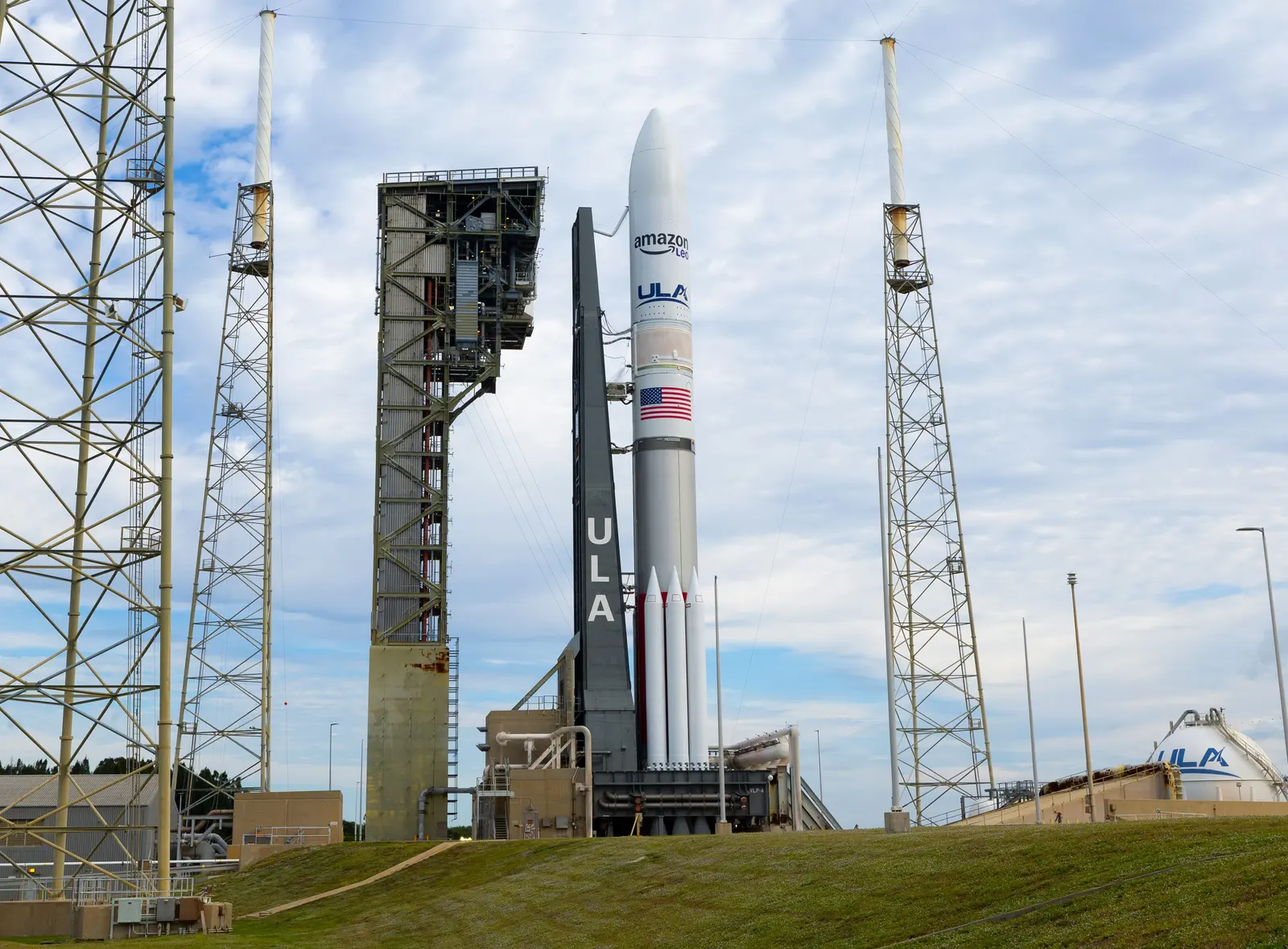
Vulcan VC6L
LV-01 is Vulcan’s first mission for Amazon Leo’s low Earth orbit broadband constellation. The flight uses a shorter Centaur V upper stage designed for this orbit regime, with two RL10 engines burning liquid hydrogen and liquid oxygen. Reducing the stage’s propellant load and structural mass makes more launch capacity available for satellites. The mission also uses Amazon-dedicated Vulcan assembly and launch infrastructure.
保存したミッションはマイページで確認できます。
発表元の情報が変わった時点の記録です。延期の理由を示すものではありません。
記録を始める前の変更は掲載していません。
関連記事・英語
LV-01 introduces an upper stage tailored to low Earth orbit, alongside a dedicated assembly building and launch platform for Amazon’s satellite fleet.
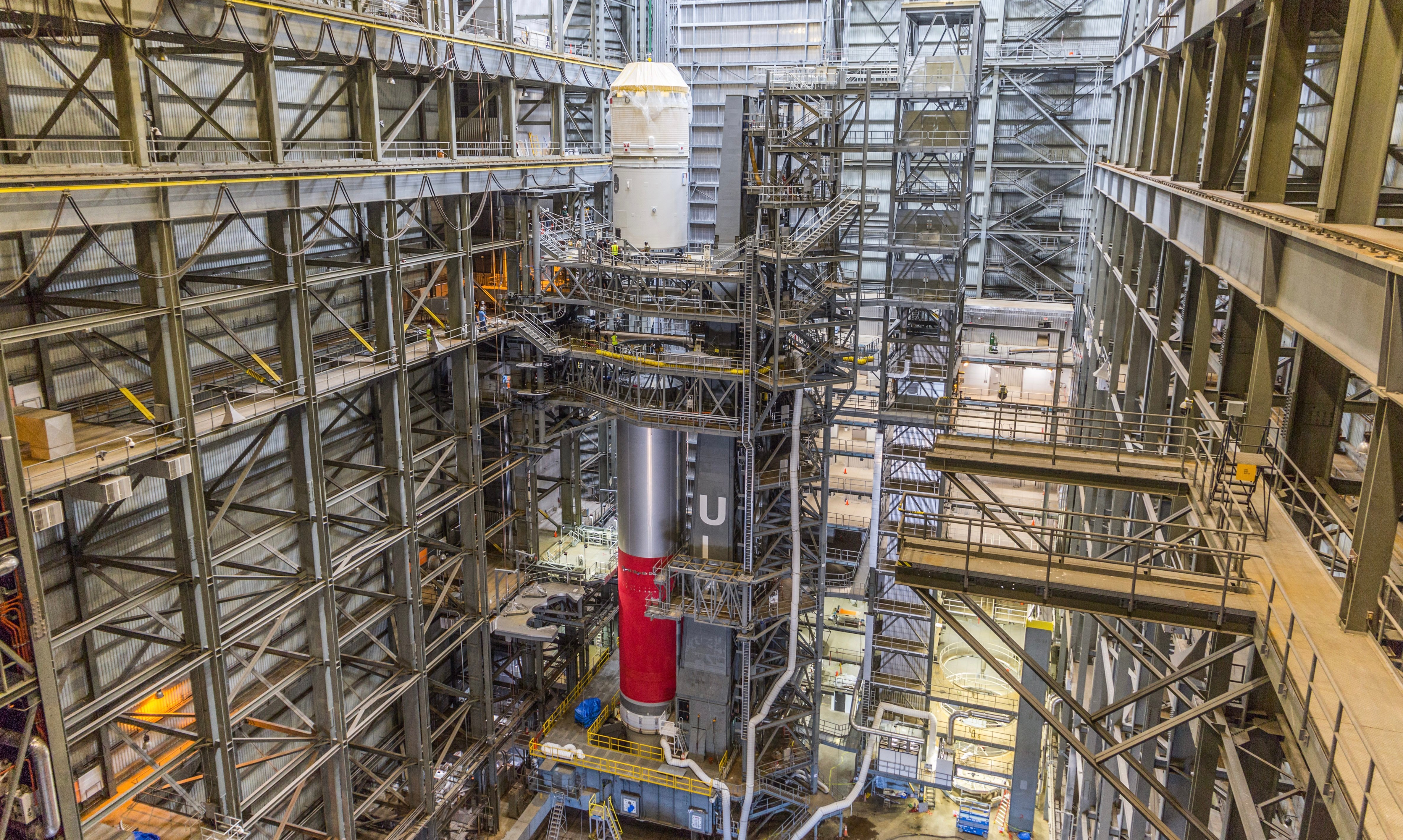
Vulcan’s first Amazon Leo mission is also a debut for a redesigned Centaur V. ULA has shortened the upper stage for missions to low Earth orbit, where it can carry less propellant than the version built for higher-energy trajectories. The mass saved in the stage can instead be allocated to satellites. [2]
ULA describes the new stage as 35 feet tall, roughly six feet shorter than the earlier version, with one-third less propellant. It retains two RL10 engines burning liquid hydrogen and liquid oxygen. The change is in the stage’s size and load, rather than a switch to a different engine family. [2]
The ground changes are substantial too. ULA has built VIF-A, an integration building dedicated to Amazon missions, and a separate Vulcan launch platform, VLP-A. An offline cell lets technicians prepare the upper stage while work proceeds on the booster. That arrangement is intended to support repeated constellation launches by allowing work on the two stages to overlap. [3]
The two processing routes converge at Space Launch Complex 41 at Cape Canaveral. ULA’s original agreement with Amazon, signed in April 2022 under the Project Kuiper name, covered 38 Vulcan missions in addition to nine Atlas launches already contracted. LV-01 is the beginning of that Vulcan assignment, rather than the beginning of Amazon’s orbital deployment. [4] [1]
In an October 13 update, Amazon reported more than 1,000 satellites manufactured and nearly 400 in low Earth orbit. Those figures illustrate the scale of the remaining launch work. They do not reveal how many finished satellites are assigned to LV-01, or how many are ready for immediate shipment. [5]
The same company report described a network demonstration at the U.S. Army’s Aberdeen Proving Ground: a Leo Pro antenna connected a laptop through passing satellites, with reported peak downloads above 400 Mbps. That was a particular test result, not a speed commitment for every customer or location. Expanding coverage still requires more spacecraft in their assigned orbits and a functioning ground network. [5]
ULA’s June engineering account documents stage integration and preparations for propellant-loading tests. It does not establish a final LV-01 countdown or payload release sequence. Spacian’s live record currently carries a day-level target; the detailed launch window and flight manifest remain the information to watch for as the mission approaches. [2] [1]
公表された仕様と、この機体の飛行歴。
機体の説明・英語
Vulcan Centaur is a two-stage-to-orbit, heavy-lift launch vehicle under development by United Launch Alliance (ULA) since 2014. It is principally designed to meet launch demands for the U.S. government's National Security Space Launch (NSSL) program for use by the United States Space Force and U.S. intelligence agencies for national security satellite launches. It will replace both of ULA's existing launchers (Atlas V and Delta IV Heavy) in this role, as these launchers are retiring.
目標 ·
目印は、公表された時間帯の中で予定時刻がどこにあるかを示します。 発表元に掲載された時刻の記録です。
Cape Canaveral SFS, FL, USA
Explore the launch pad, then pull back to see the shape of the destination orbit.
Understand this orbit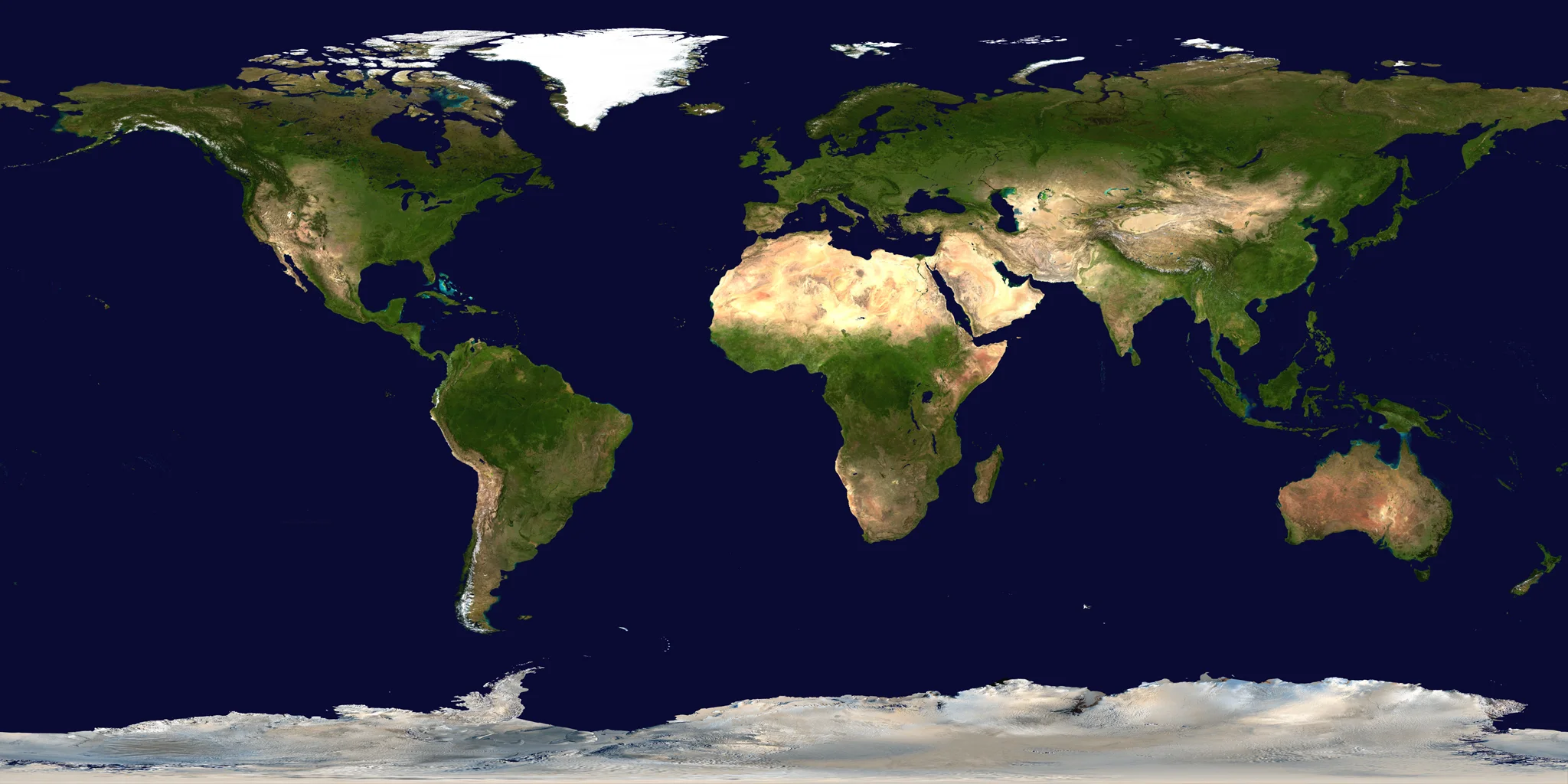
NASA geography with illustrative lighting. No live tracking or simulated ascent. Orbit motion is accelerated and representative. NASA Blue Marble source.
発表元の更新:
Android テスト版参加グループを開く クローズドテスト版1.6.0(4)では、サインイン、プレミアム、通知を利用できません。まずGoogleグループに参加し、同じGoogleアカウントでGoogle Playのテストに登録 ↗してください。