
Official Webcast by NASA has started
Update ↗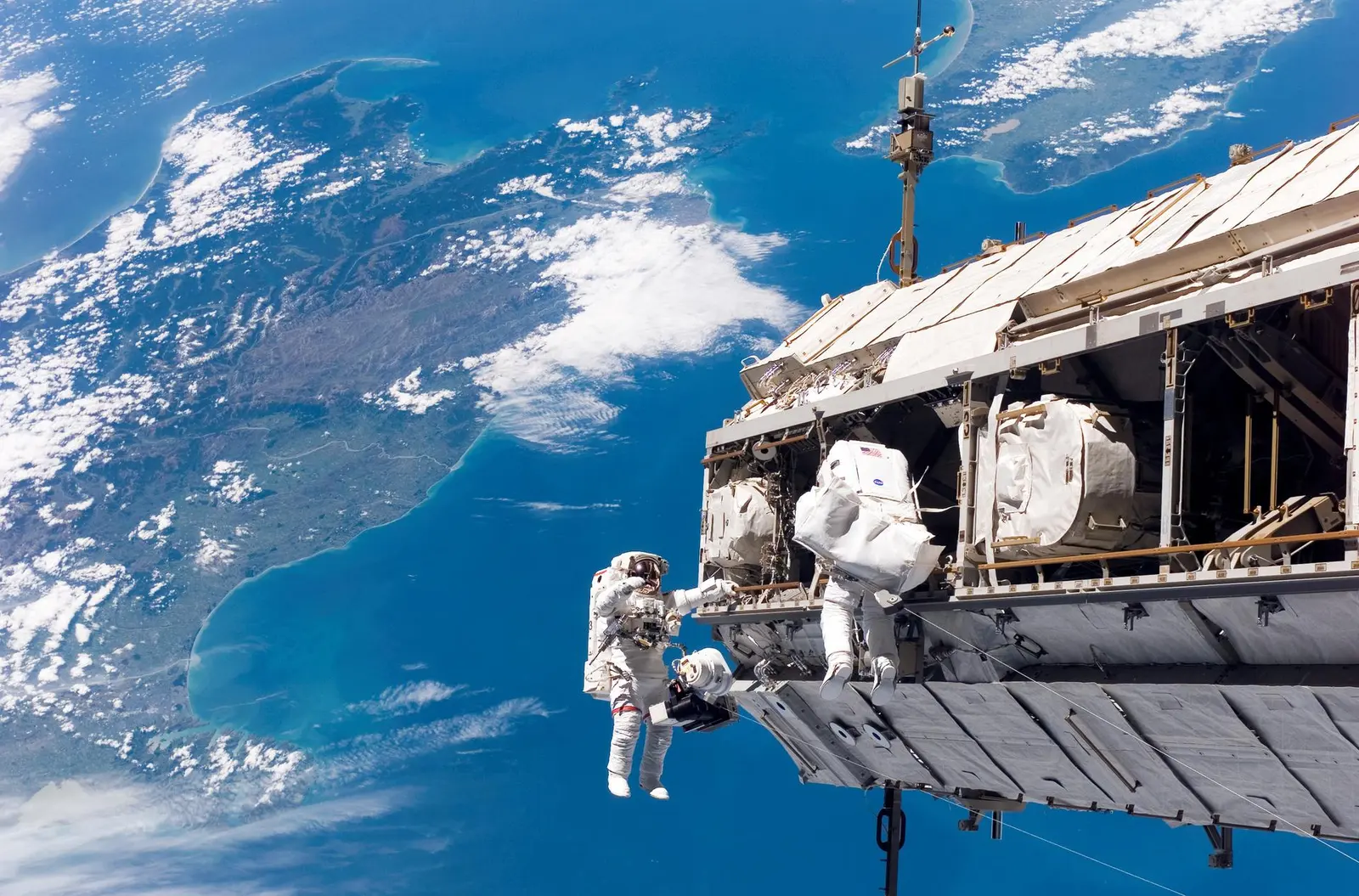
National Aeronautics and Space AdministrationEVA
US EVA-100
ミッションの目的概要は英語
US EVA-100 is planned to install the International Space Station’s seventh roll-out solar array on power channel 2A. NASA astronaut Anil Menon and CSA astronaut Joshua Kutryk will work outside Quest, with Jessica Watkins and Luke Delaney supporting suit operations and commanding Canadarm2. Final preparations include organizing tools and printing cuff-mounted procedure checklists. The array arrived aboard CRS-35 in Dragon’s unpressurized trunk; installation continues the station’s power upgrade.
2026年10月29日・時刻未定
保存したミッションはマイページで確認できます。
予定時刻を過ぎています
公表された予定時刻を過ぎています。新しい予定や結果は、まだ報告されていません。
発表元の更新:
発表元を確認:to Host News Conference Previewing US Spacewalks 100, 101 ↗・Launch Library ↗
ミッションの更新
目標時刻まで
日時未定
イベントの予定は変更される場合があります。
場所International Space Station
関連記事・英語
EVA-100 crew readies cuff checklists and Canadarm2 support
Menon and Kutryk have organized tools and printed their spacewalking procedures for the October 29 solar-array installation. Two crewmates will support suits and robotics.
In this report
Procedures travel outside on the spacesuit
Menon and Kutryk printed their procedures and put them into small checklist books worn on their suit cuffs, NASA reported on October 27. The pair also organized tools in Quest ahead of the planned October 29 installation. [7]
Jessica Watkins and Luke Delaney are assigned to help the spacewalkers in and out of their suits and command Canadarm2 during the external installation. The support work connects preparations inside the airlock with handling the array outside. [7]
A cargo delivery becomes an electrical upgrade
NASA has assigned Anil Menon and Canada’s Joshua Kutryk to install the station’s seventh roll-out solar array on power channel 2A during U.S. spacewalk 100. The October 29 operation would move the International Space Station one installation away from completing this round of power upgrades. The same pair is assigned the eighth array on channel 3B during EVA-101, scheduled for November 5. [2]
The assigned worksite
From Dragon’s trunk to the station truss
The two arrays traveled to orbit in CRS-35 Dragon’s unpressurized trunk. NASA’s October 16 station report described a separate robotic handling phase: ground controllers would use Canadarm2 to remove the hardware and park it on the station’s external logistics platforms before the astronauts’ installation work. That sequence makes the arm, the temporary storage locations and the spacewalk crew parts of the same delivery chain. [6]
Six iROSAs were installed between 2021 and 2023. NASA says power projections in 2023 led to the additional pair now awaiting installation. Redwire built and tested the arrays under contract to Boeing. They are roughly half the size of the station’s original solar wings, according to NASA’s October 15 technology account. [3]
Why the old wings stay in place
The station’s original solar arrays were designed for a 15-year service life; the first pair began operating in December 2000. NASA’s engineering explanation describes the gradual loss of output that accompanies their time in orbit. The new equipment addresses that aging without removing the entire original electrical architecture. [4]
Each added array sits in front of an older wing and shares its Sun-tracking and power-distribution systems. Portions of the original array remain exposed and continue generating electricity. This arrangement retains useful hardware while adding a more efficient collecting surface. It also means the added array’s electrical output and the station’s total available power are different quantities. [4]
The roll-out design was demonstrated at the station in 2017. It can launch as a compact cylinder and unfurl after installation, reducing the volume needed inside the cargo vehicle. The visible deployment is only part of the job: the equipment has to become a working addition to an existing power channel. [3]
Power for the station’s remaining work
NASA connects the final upgrades to research, routine station operations and the eventual controlled deorbit. The October 14 advisory identifies EVA-100 and EVA-101 as the 285th and 286th spacewalks supporting station assembly, maintenance and upgrades. “U.S. spacewalk 100” is therefore a different counting sequence from the station-wide total. [2]
NASA coverage
Loading the player connects to YouTube.
NASA’s linked coverage is the source for the operation when it begins. The poster is a clearly labeled archive photograph.
Sources and credits (7)
- Canonical Spacian mission recordSpacian / Launch Library · Checked 2026-10-23
- NASA previews US spacewalks 100 and 101NASA · Checked 2026-10-23
- Power Up: Roll Out Solar Arrays Boost Space Station Power SupplyNASA · Checked 2026-10-23
- New Solar Arrays to Power NASA’s International Space Station ResearchNASA · Checked 2026-10-23
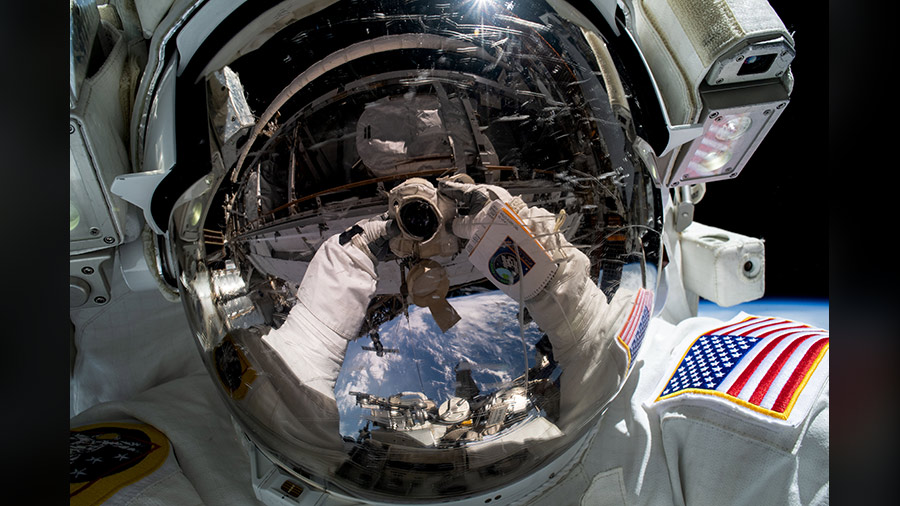
- Woody Hoburg during the June 9, 2023 spacewalkNASA · Checked 2026-10-23
- Dragon unloading and the solar-array handling planNASA · Checked 2026-10-23
- Final tools, cuff checklists and robotic support for EVA-100NASA · Checked 2026-10-28
ミッションのデータ
- 運用機関
- National Aeronautics and Space Administration
- プログラム
- International Space Station
記録された日時
2026年10月29日・時刻未定
中継・出典
 Android テスト版参加グループを開く クローズドテスト版1.6.0(4)では、サインイン、プレミアム、通知を利用できません。まずGoogleグループに参加し、同じGoogleアカウントでGoogle Playのテストに登録 ↗してください。