

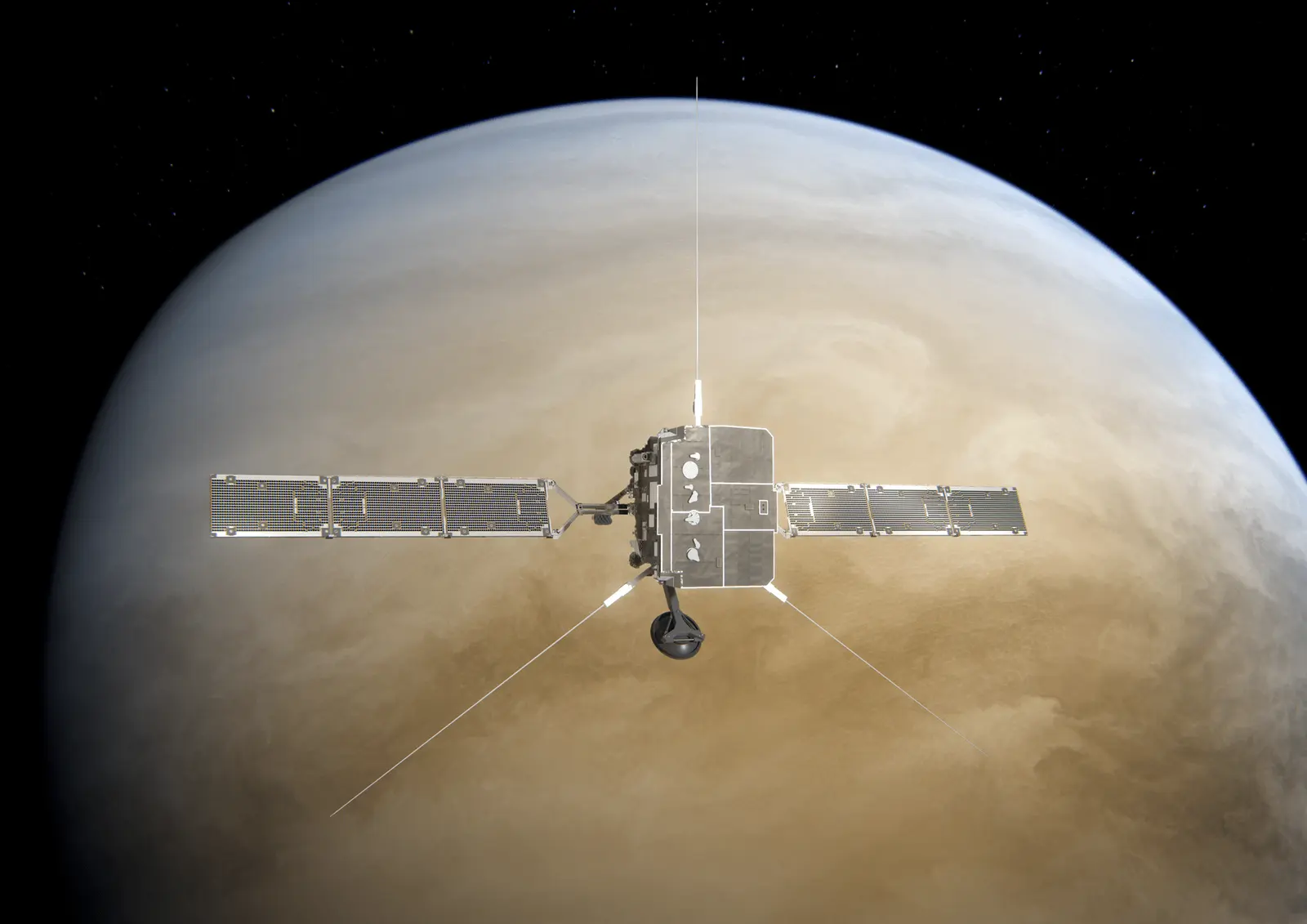
Why Solar Orbiter needs Venus to see the Sun’s poles
The December 2026 Venus flyby changes Solar Orbiter’s viewpoint. Real EUI and PHI observations show why that matters, and how to read the images.
In this report
Solar Orbiter’s planned Venus flyby on 24 December 2026 is a manoeuvre for solar science, not a change of destination. The encounter is intended to raise the orbit’s inclination from roughly 17° to 24° relative to the Sun’s equator. That gives its instruments a less edge-on view of the polar regions. The date remains subject to change; it is not a verified closest-approach time. [1] [2]
Why a bigger telescope is not the whole answer
Imagine looking across a tabletop rather than down at it. Objects near its far edge can overlap even when your eyesight is excellent. A comparable perspective problem affects observations near the edge of the Sun’s visible disc: surface features are compressed along the line of sight. Enlarging the image also enlarges that compressed view. Changing the observer’s position addresses a different problem from improving image resolution. [2]
What Venus changes
A gravity assist changes a spacecraft’s direction as it passes a planet. In the idealised planet-centred picture, its speed far before and far after the encounter can be the same even though its path has bent. The Sun-centred picture differs because the planet itself is moving. Combining that motion with the redirected spacecraft velocity changes the spacecraft’s orbit around the Sun. A flyby can therefore reshape an orbit rather than merely make a spacecraft “go faster”. [3]
For Solar Orbiter, the useful change is a more inclined orbit. An inclination of 24° does not mean a polar orbit, nor a permanent viewpoint directly above a solar pole. The spacecraft’s viewing latitude varies as it follows its path. ESA’s schedule lists additional Venus encounters after 2026 that will increase the inclination further. The December encounter is one step in that sequence, not a single jump to an overhead view. [1]
The first polar images already exist
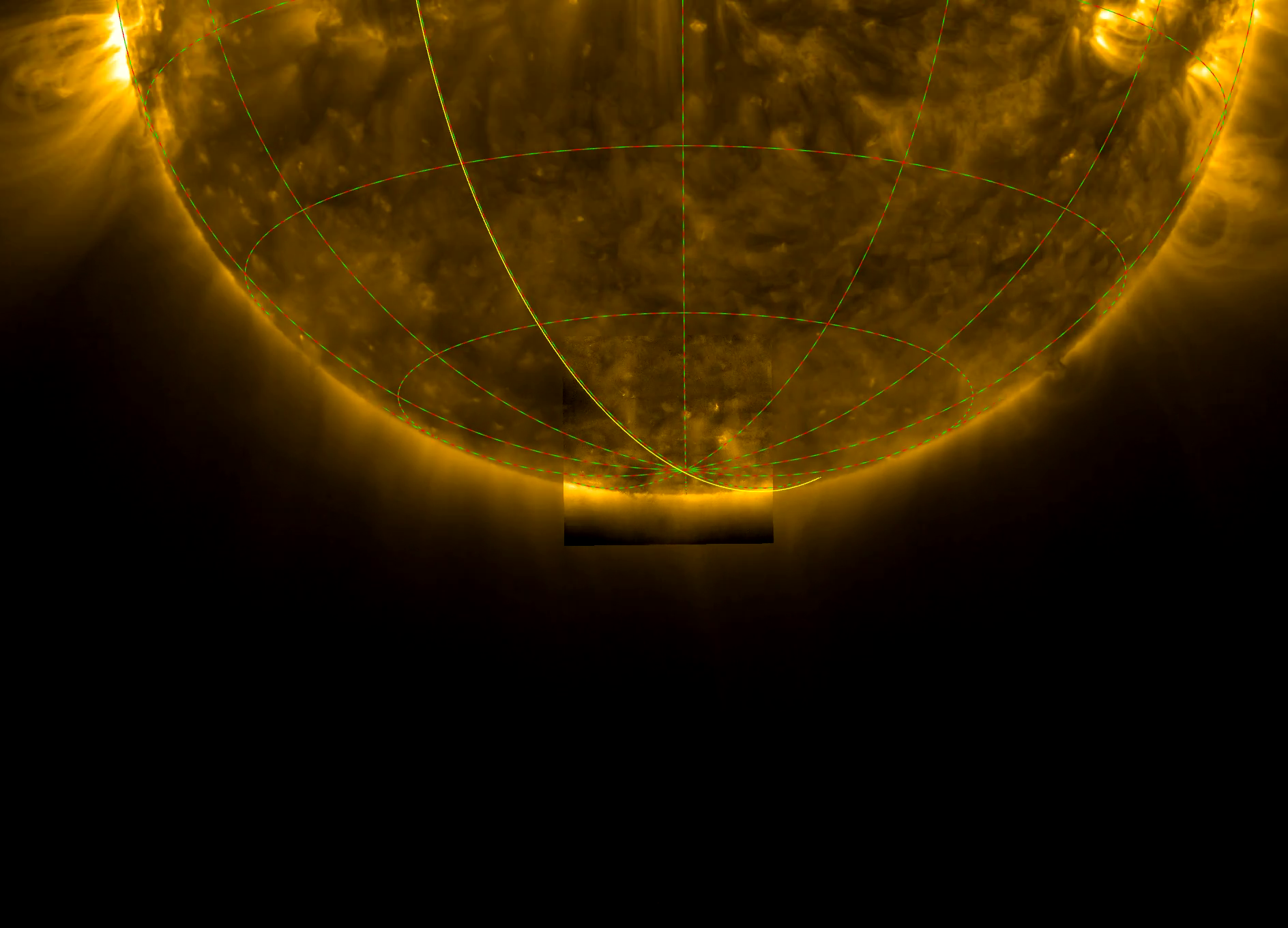
Solar Orbiter made its first high-angle polar observations in March 2025. In the 23 March view, the spacecraft was 17° below the solar equator. Those observations are evidence of what the changed viewpoint can reveal; they are not pictures from the future December 2026 encounter. [2]
A solar image and a magnetic map answer different questions
PHI, the Polarimetric and Helioseismic Imager, measures polarised light to produce magnetic-field information and line-of-sight velocities in the photosphere. Its full-disc telescope supplies context across the visible Sun; its high-resolution telescope examines a smaller region. The instrument team uses those surface measurements to help interpret structures and activity higher in the atmosphere. A magnetic map is therefore a measured data product, not a photograph of coloured magnetic material. [4]
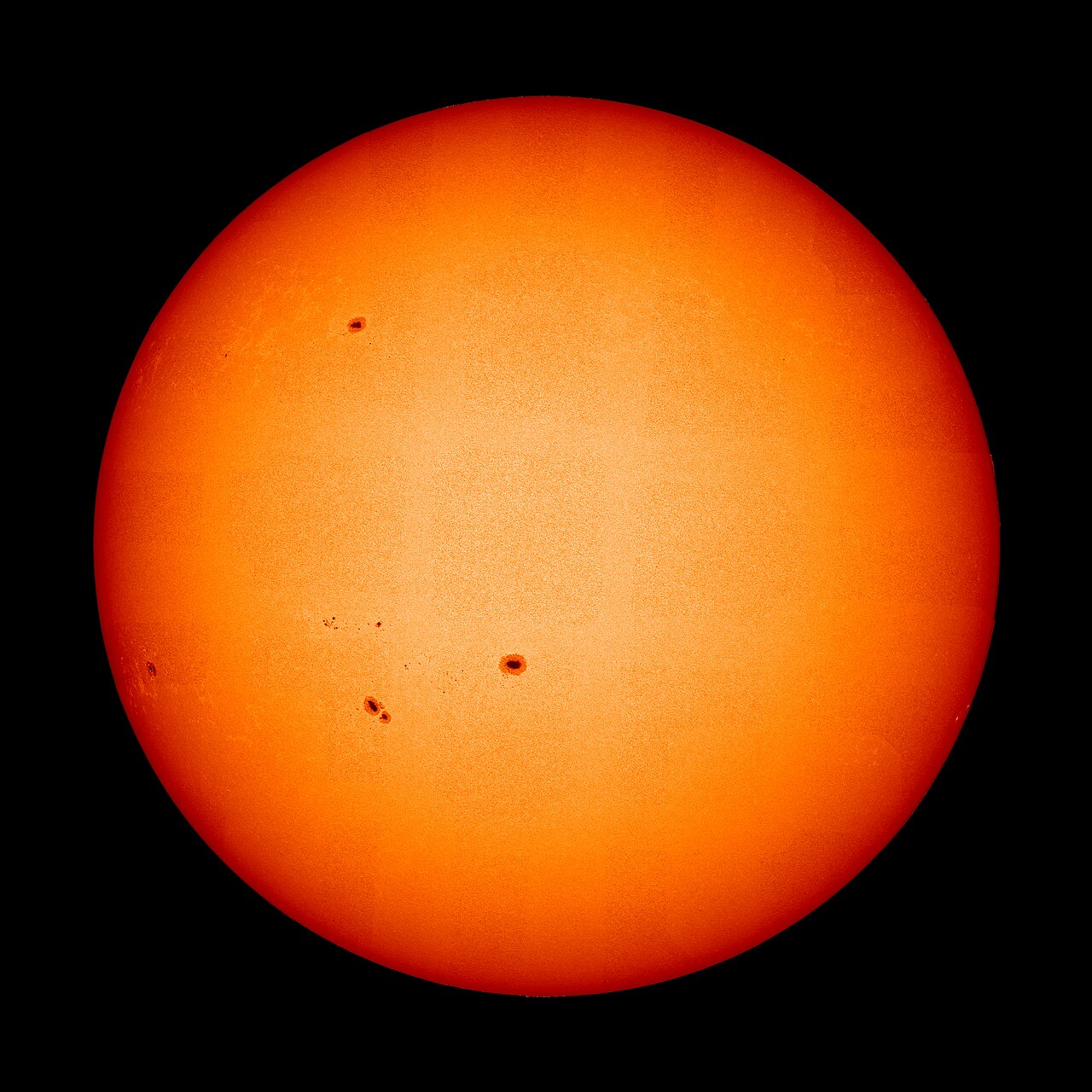
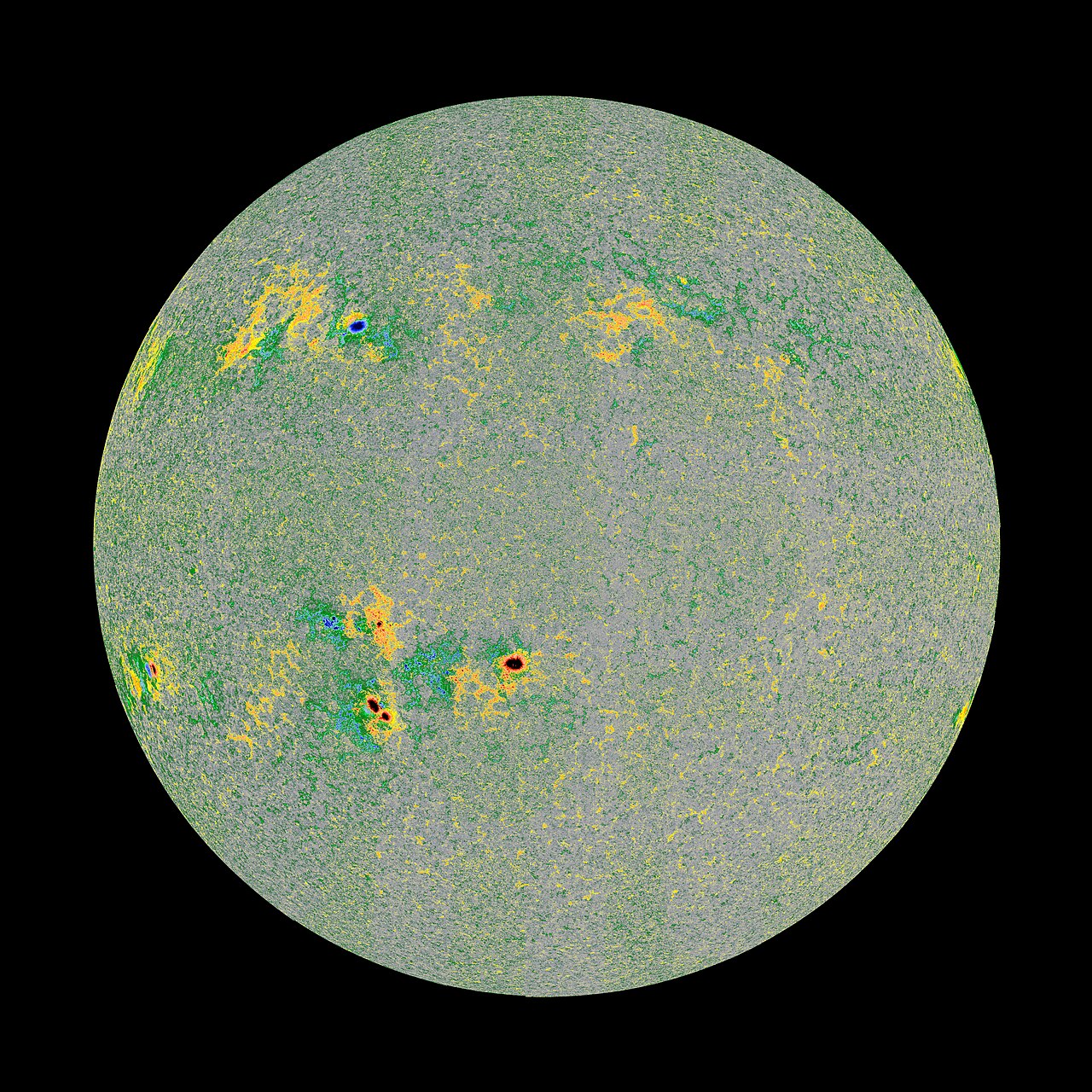
The 2025 polar results combined different instruments rather than treating every bright or coloured patch as the same phenomenon. EUI observed ultraviolet emission; PHI mapped surface magnetism; SPICE measured spectral information, including motion along the line of sight. This separation matters when reading the pictures: a colour in one instrument’s image need not mean the same thing in another. [2]
What to watch after the encounter
Follow two separate milestones: the spacecraft’s encounter and the later release of scientific observations. A successful trajectory change is not itself a new magnetic-field measurement. Future images should be read with their acquisition dates, instrument names and map legends, rather than interpreted as immediate proof of a forecasting breakthrough. [1] [2]
The accompanying Spacian film shows the flyby geometry and compares the EUI and PHI observations. Open “Spacian Solar Orbiter film” in Sources and credits to watch it. [8] [1]
Watch the film
Loading the player connects to YouTube.
Follow how the Venus flyby changes Solar Orbiter’s orbit, and how light measurements reveal the Sun. The film distinguishes the planned encounter from dated archival observations.
Sources and credits (9)
- ESA flight scheduleESA · Checked 2026-11-13
- ESA first polar observationsESA · Checked 2026-11-13
- NASA gravity-assist primerNASA · Checked 2026-11-13
- MPS PHI instrument teamMPS · Checked 2026-11-13
- solar-orbiter-s-view-of-the-sun-s-south-poleESA · Checked 2026-11-12
- phi-s-view-of-the-sun-in-visible-lightESA · Checked 2026-11-12
- phi-s-map-of-the-sun-s-magnetic-fieldESA · Checked 2026-11-12
- Spacian Solar Orbiter filmSpacian · Checked 2026-11-13
- Creative Commons Attribution-ShareAlike 3.0 IGOCreative Commons · Checked 2026-11-13