
Added launch.
Update ↗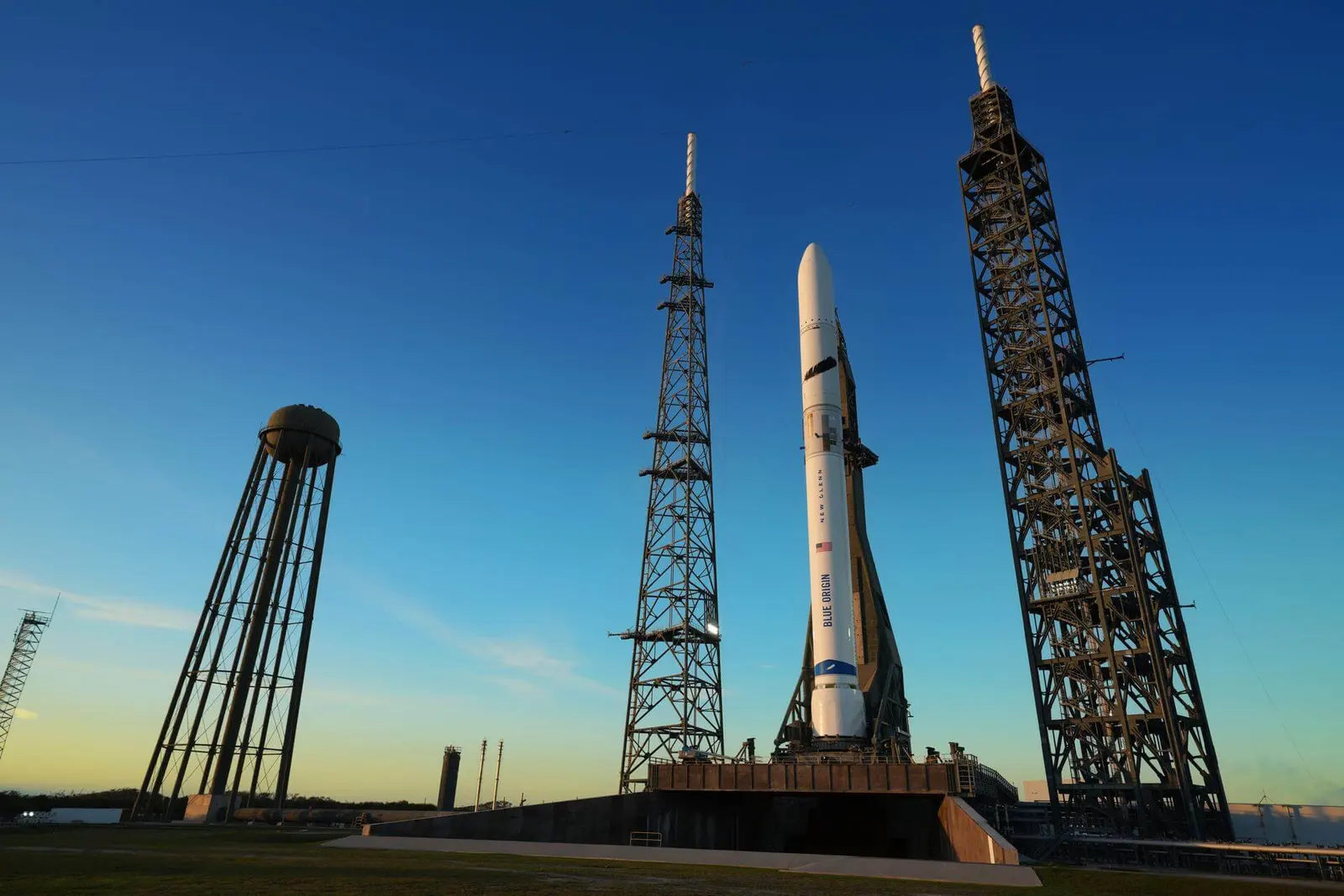
Blue Origin日程未定
Mars Telecommunications Orbiter
New Glenn
ミッションの目的概要は英語
NASA selected Blue Origin to develop and operate the future Mars Telecommunications Orbiter. The planned relay will support returning science data from Mars. NASA sets delivery no later than31December2028 and expects Mars operations by2030; these milestones do not establish a confirmed launch date. Orbital relay, suitable antennas and store-and-forward networking can improve data return while radio signal travel time remains limited by the distance toEarth.
日時未定
保存したミッションはマイページで確認できます。 リマインダーや予定変更の通知を受け取るには、iPhoneアプリでこのミッションをフォローしてください。
日程は、まだ決まっていません
この記録では、確定した日付が公表されていません。
発表元の更新:
発表元を確認:Official Page ↗・Launch Library ↗
ミッションの更新
発表元からのお知らせ
このページを表示している間、予定の変更を確認します。
このタブを開いて表示している間だけ、通知を受け取れます。
目標時刻まで
日時未定
打ち上げ予定は変更される場合があります。
発射場所Cape Canaveral SFS, FL, USA
関連記事・英語
Why a better Mars connection still leaves us waiting
NASA’s planned Mars relay is intended to return more science data. Following one observation and the journey of a reply explains why a better connection still leaves a long wait.
In this report
NASA selected Blue Origin in September 2026 to develop the future Mars Telecommunications Orbiter. The relay is intended to bring more science data back from Mars. Why will a better connection still leave us waiting minutes for a reply? [1]

From the surface to an orbiter
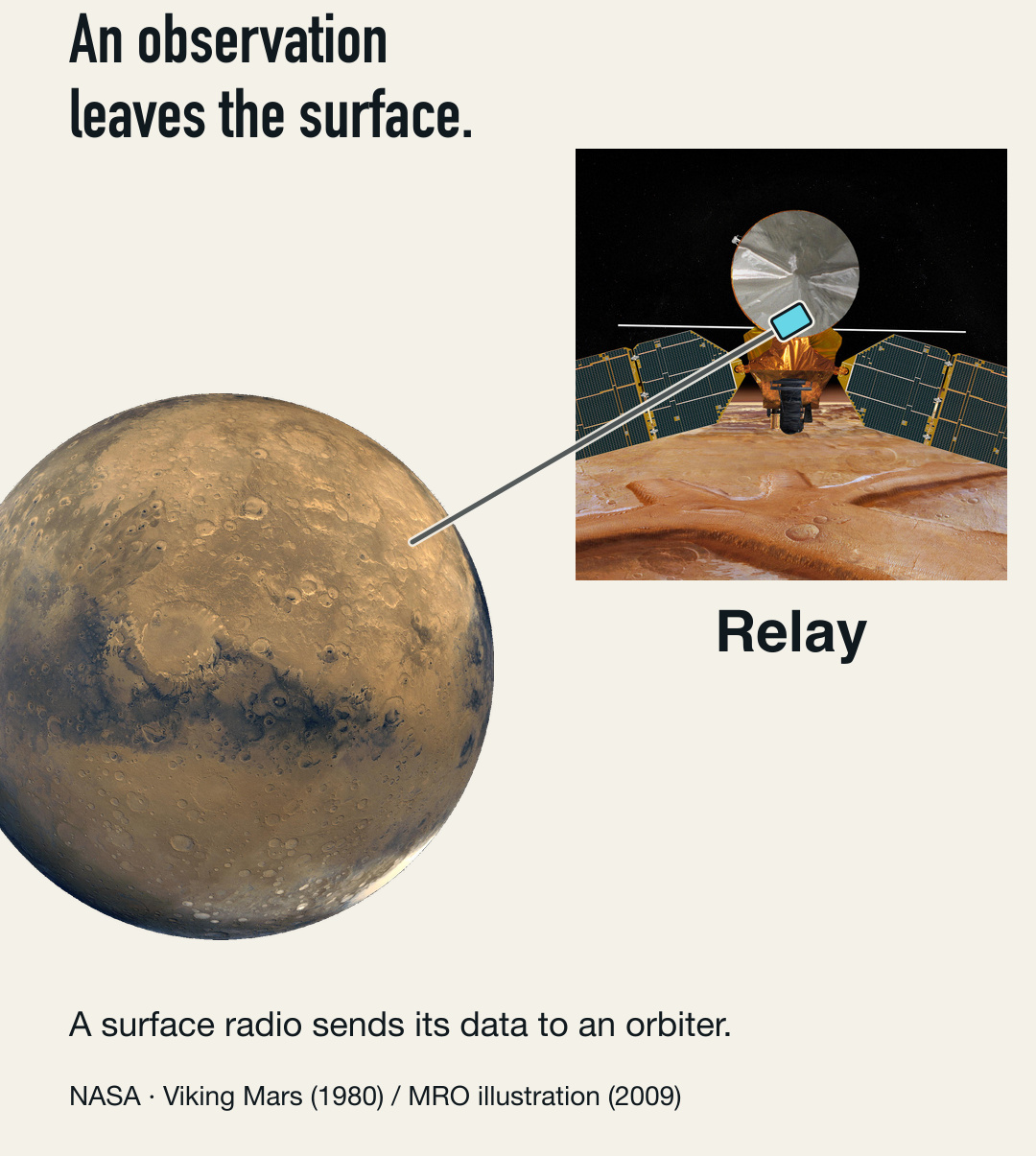
A surface mission can send observations to an orbiter passing overhead. The orbiter receives the data and forwards it toward Earth through another link. This divides the job between the radio on the surface and an orbital relay supporting the much longer interplanetary connection. [2]
The connection is not always available from end to end. Store-and-forward networking lets a node retain information until the next link is available: receive, store, then forward. Waiting for a contact and travelling across space are different parts of the elapsed time. [4] [3]
A round trip crosses the distance twice
Choose an illustrative Earth–Mars distance of 180 million kilometres. Dividing that distance by the approximate speed of light, 300,000 kilometres per second, gives 600 seconds: about ten minutes in one direction. [3]
An immediate reply sent back over the same assumed distance needs about ten more minutes. The minimum physical round trip is therefore twenty minutes in this example. Processing and waiting for a contact add to that travel time. [3] [4]
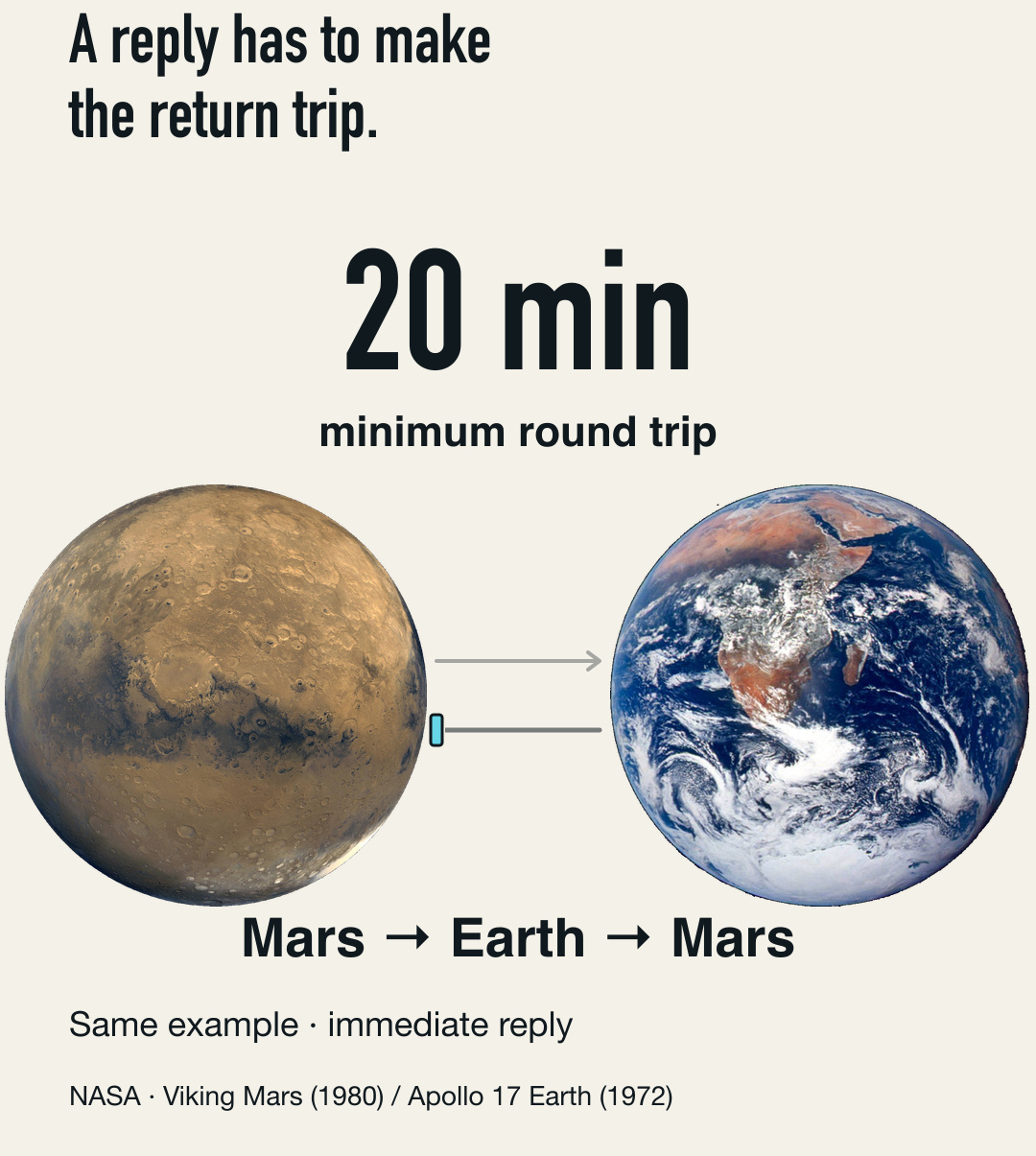
A relay cannot shorten the interplanetary separation. NASA’s communications architecture paper explains that a relayed signal crosses the same distance or more. Better contact availability helps the delivery of data while the light-time remains. [3]
What a better connection changes
Data rate describes how much information a link can carry in a given time. Propagation delay describes how long a signal takes to reach its destination. A stronger connection can improve the first without removing the second. A photograph can be transferred more efficiently while its first bit still has a long journey. [2] [3]
Antenna capability and the available contact affect how much data gets through. Returning more observations during a contact is useful even when every radio signal still needs minutes to reach Earth. [2] [1]
The planned Mars relay
NASA’s September 2026 award requires delivery of the orbiter no later than 31 December 2028 and describes Mars operations planned by 2030. Delivery and operation are different milestones; the delivery deadline does not confirm a launch date. [1]
The future orbiter is intended to support science-data return, navigation and communications. Commands and observations will still need to cross interplanetary space. [1] [2] [3]
Sources and credits (9)
- NASA Selects Blue Origin as Mars Telecommunications Network ProviderNASA · Checked 2026-11-03
- Mars Relay NetworkNASA Science · Checked 2026-11-03
- Mars Communications Disruption and DelayNASA · Checked 2026-11-03
- Delay/Disruption Tolerant NetworkingNASA · Checked 2026-11-03
- Mosaic assembled from about100Viking orbiter images acquired in1980. Not a current Mars view or an MTO observation.NASA/JPL-Caltech · Checked 2026-11-03
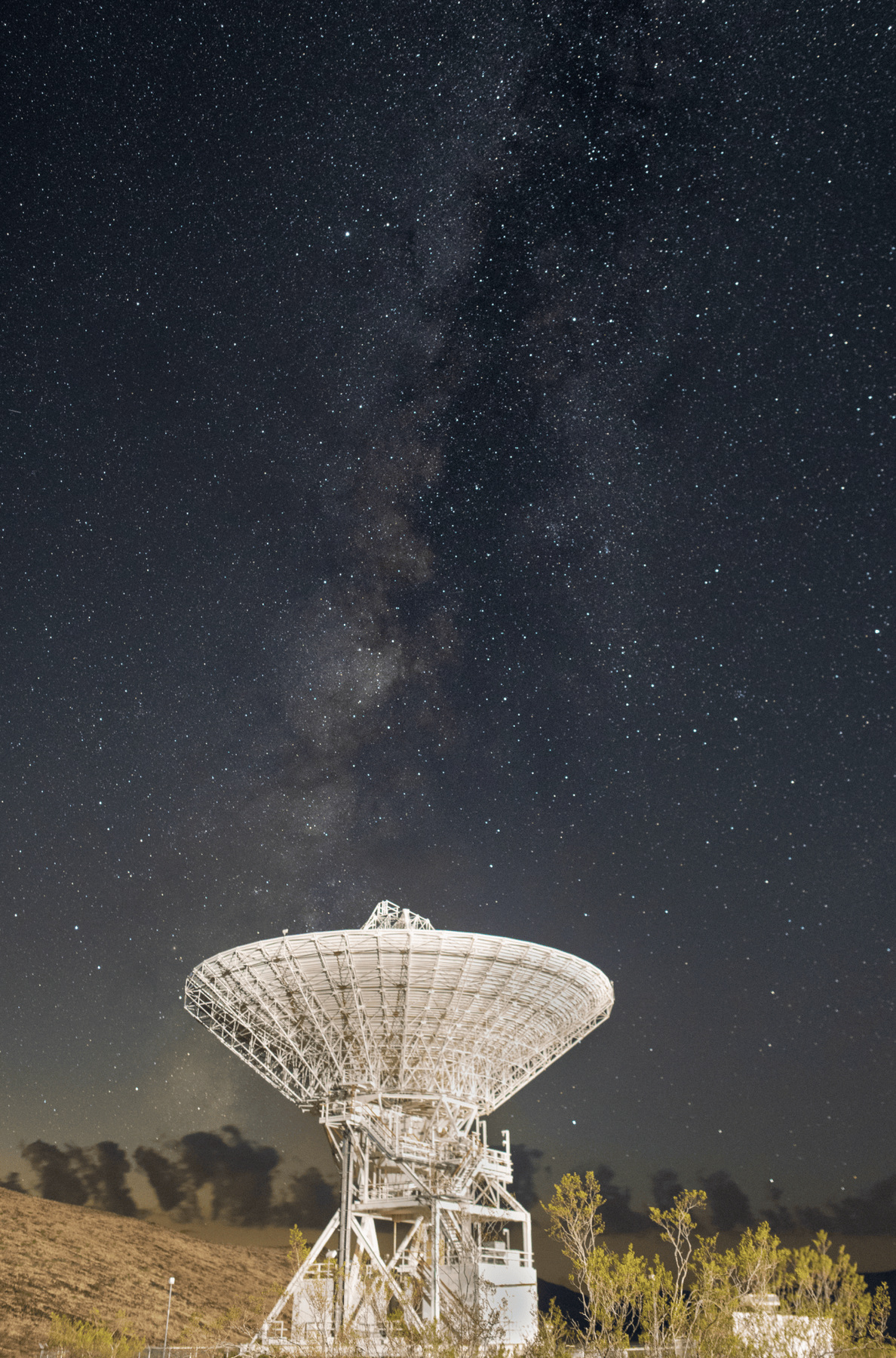
- Goldstone DSS-15 antenna in California beneath the Milky Way, photographedSeptember2025. Real Earth receiving infrastructure; not the future MTO spacecraft or its measured link.NASA/JPL-Caltech · Checked 2026-11-03
- Artist concept of Mars Reconnaissance Orbiter, published14July2009. Its large dish provides heritage relay context. This is not a photograph and does not depict MTO.NASA/JPL-Caltech · Checked 2026-11-03
- NASA Images and Media Usage GuidelinesNASA · Checked 2026-11-03
- Apollo 17 Blue MarbleNASA · Checked 2026-11-03
ミッションのデータ
- 打ち上げ機
- New Glenn
- ミッションの種類
- Communications
- 投入先の軌道
- Mars Orbit
- Launch pad
- Launch Complex 36A
- 運用機関
- Blue Origin
機体の構成
公表された仕様と、この機体の飛行歴。
打ち上げ機
New Glenn
機体の説明・英語
The New Glenn is a privately funded orbital launch vehicle in development by Blue Origin. New Glenn is described as a 7-meter-diameter (23 ft), two- or three-stage rocket.
- 高さ
- 98 m
- 直径
- 7 m
- 段数
- 2
- 記録された打ち上げ数
- 3
- 初飛行
- 2025-01-16
Core
Unknown NG
打ち上げ可能時間帯
詳しい打ち上げ可能時間帯は、まだ公表されていません。
発射場所
Cape Canaveral SFS, FL, USA

発射場所Launch Complex 36A
Drag to rotate
この表示について
Published destination: Mars Orbit.
NASA geography with illustrative lighting. No live tracking or simulated ascent. NASA Blue Marble source.
中継・出典
ミッションの中継
配信リンクは、まだ公開されていません。
 Android テスト版参加グループを開く クローズドテスト版1.6.0(4)では、サインイン、プレミアム、通知を利用できません。まずGoogleグループに参加し、同じGoogleアカウントでGoogle Playのテストに登録 ↗してください。