

A star vanished. The infrared evidence is harder to read.
N6946-BH1 faded without a normal supernova. Webb found light at its position, but light alone cannot tell us what survived.
Start with the missing point
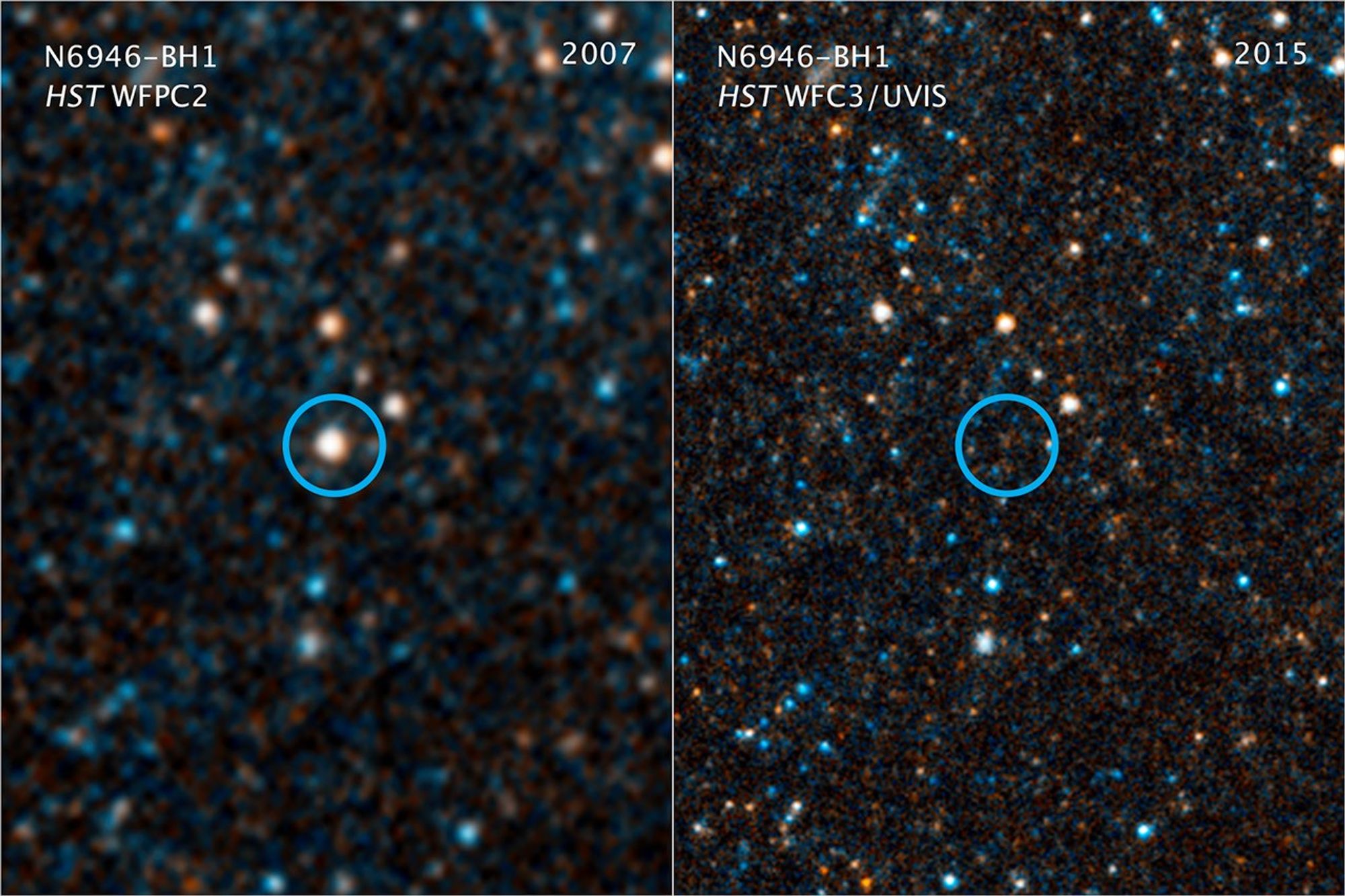
Look inside the blue circles. In the 2007 Hubble image, a bright point sits among the stars of NGC 6946. In the 2015 image, it is gone from view. The surrounding field is still there. The target is N6946-BH1, a massive star that brightened in 2009, then faded without the brilliant supernova astronomers had expected. [1]
That sequence made it a candidate for a failed supernova: a stellar core collapsing into a black hole without successfully blowing the star apart. NASA’s 2017 coverage presented that interpretation prominently. But the pictures establish an optical disappearance, not a photograph of a newly formed black hole. Those are different claims. [1]
A hidden star still has an energy bill
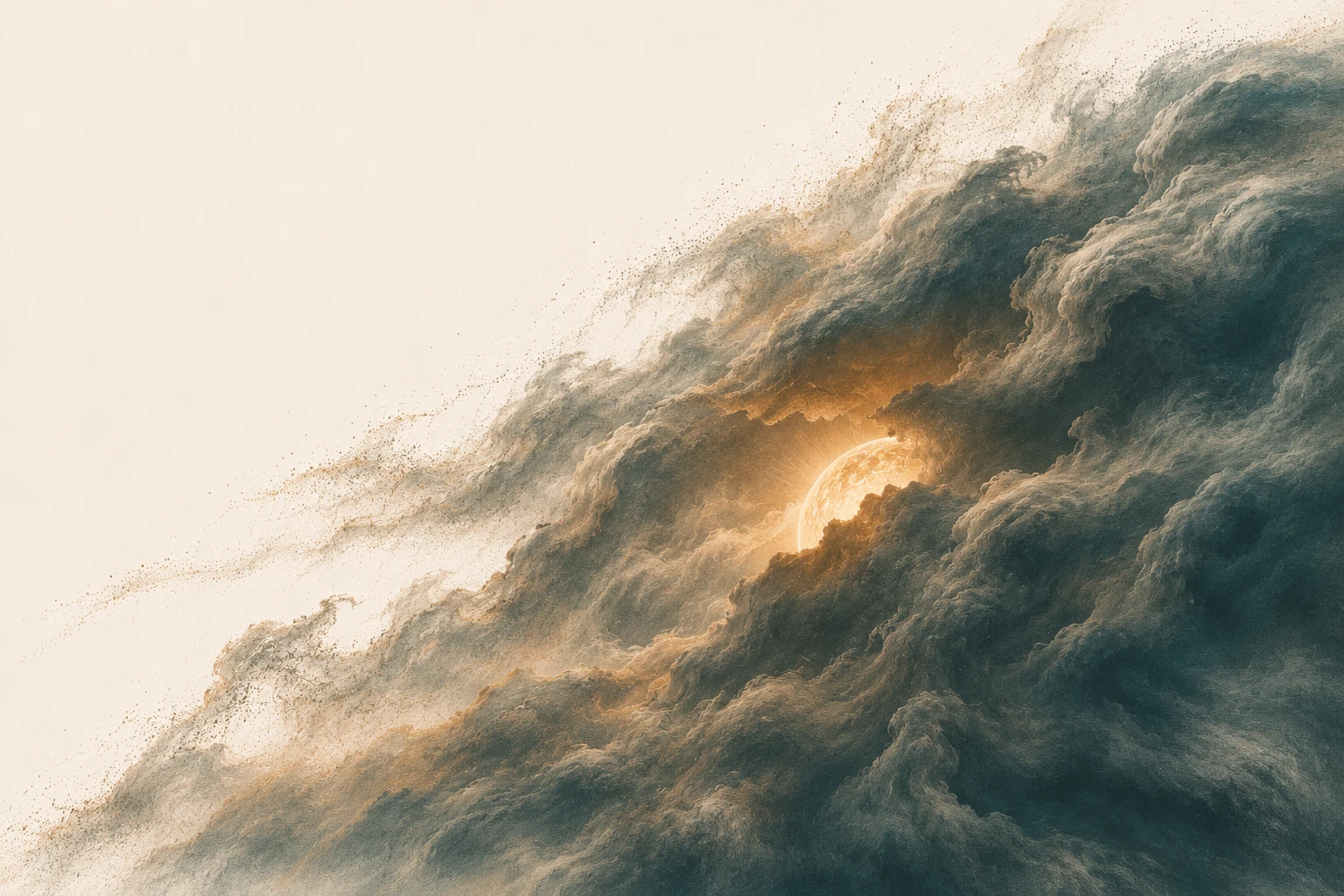
Dust offers a tempting alternative. Put enough material in front of a star and its visible light can disappear from our view. The absorbed energy, however, does not simply vanish. Warm dust radiates at longer wavelengths. An infrared observation therefore asks a harder question than “Is the star still visible?” It asks where its energy went. [2] [3]
There is a catch: the infrared glow can belong to dust rather than the stellar surface. And in a crowded field, light from several objects can fall into the same blurred patch. Finding something glowing at the right address is the beginning of the investigation, not its conclusion. [2] [3]
Webb made the address more complicated
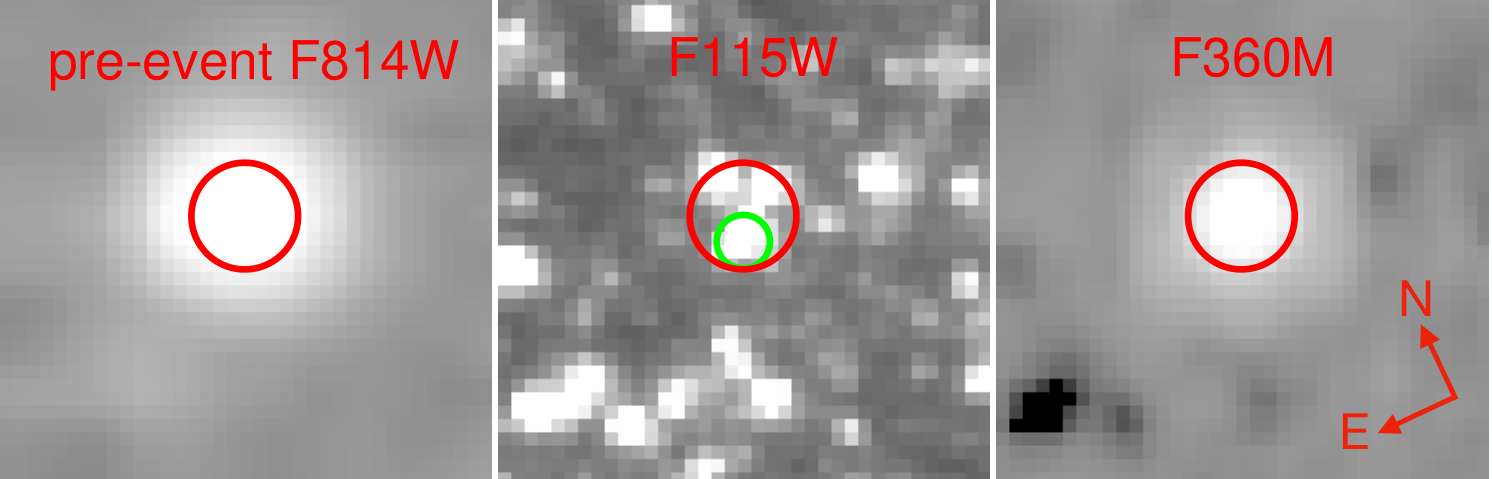
In observations taken in August 2023, Webb detected an infrared source near N6946-BH1. Beasor and colleagues reported the results in 2024. The sharper near-infrared view separated sources that earlier observations had blended together. Their analysis left room for a stellar merger, in which two stars combine and surround the remnant with material. [2]
This was not a simple announcement that the missing star had returned. The source was faint at short wavelengths, much brighter farther into the infrared, and its interpretation depended on which light belonged to which object. To infer what remained, the team had to reconstruct the energy output across wavelengths rather than count one bright pixel. [2]
The 2026 counterargument: it is too faint
Raquel Forés-Toribio and Christopher Kochanek revisited the Webb data in 2026. They identified four nearby stars in the near-infrared images and argued that these neighbors were not responsible for the candidate’s mid-infrared emission. Location matters: a close neighbor is not automatically the surviving original star. [3]
Their other test compared the brightness of remnants with their progenitors. In the merger sample they studied, late remnants were roughly 10–100 times more luminous than the original systems. Failed-supernova candidates instead lay roughly a factor of ten below their progenitors. Their dust models could not bridge that contrast simply by putting the source behind a disk. [3]
That is evidence favoring a failed supernova, not a direct detection of a black hole. The comparison depends on the samples and the models used to infer luminosity. “Webb found infrared light” and “a star survived” are not interchangeable statements. [3]
What the pictures cannot settle
Read the evidence in three steps: the optical point faded; infrared emission remained; researchers disagree about which physical remnant best explains that emission. The first two are observations. The last requires an interpretation. [2] [3]
The useful question is no longer whether a star can disappear in a picture. It is whether the light left behind can be explained by a surviving, dust-covered system, or whether the original power source has genuinely gone. N6946-BH1 is compelling because the observations let us test those alternatives, not because they have already given us an unambiguous ending. [2] [3]
Watch the investigation
The companion film follows the Hubble disappearance, Webb’s infrared observations and the competing explanations. Watch it here or open it on YouTube. [4]
Loading the player connects to YouTube.
Hubble and Webb images are observations; dust scenes illustrate possible explanations, rather than a confirmed reconstruction.
Poster: NASA, ESA, and C. Kochanek (OSU) [4]Sources & image credits
- NASA/Hubble · N6946-BH1 observations and historical interpretation (2017) ↗
- Beasor et al. · JWST observations of N6946-BH1 (2024) ↗
- Forés-Toribio & Kochanek · The Neighboring Stars of N6946-BH1 and the Observational Characteristics of Failed Supernovae (2026) ↗
- Watch Spacian’s companion film: the star that vanished ↗