Launch target updated
変更前の目標日時
変更後の予定
Recorded by Spacian . Mission source ↗

 Android テスト版参加グループを開く クローズドテスト版1.6.0(4)では、サインイン、プレミアム、通知を利用できません。まずGoogleグループに参加し、同じGoogleアカウントでGoogle Playのテストに登録 ↗してください。
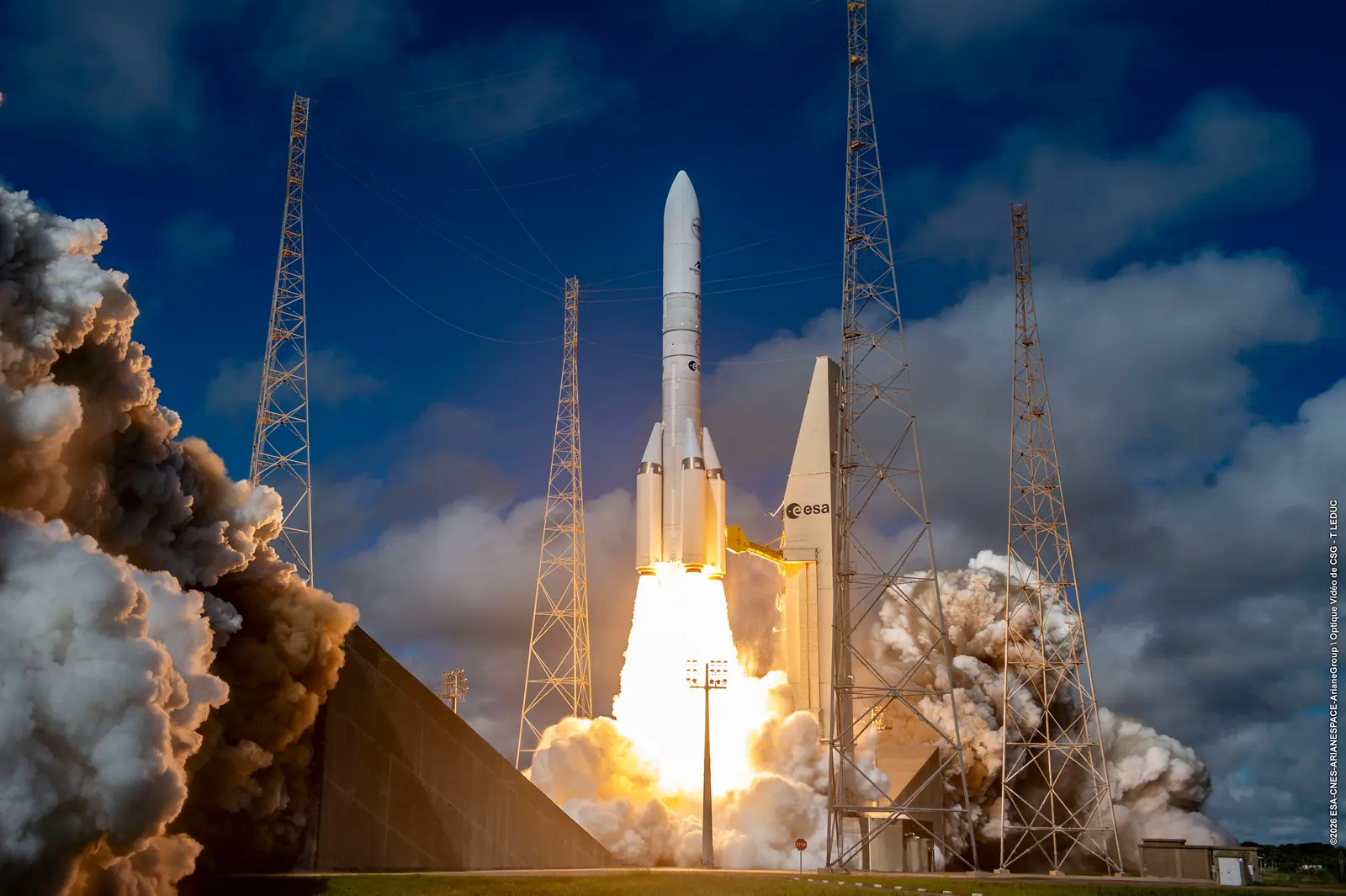
Ariane 64 Block 2
LE-04, designated VA271 by Arianespace, is assigned to carry 36 Amazon Leo broadband satellites on Ariane 64. The planned release altitude is 465 kilometres; the satellites must then climb to their 630-kilometre operating orbit. Amazon’s operations centre in Redmond takes control after deployment.
保存したミッションはマイページで確認できます。 リマインダーや予定変更の通知を受け取るには、iPhoneアプリでこのミッションをフォローしてください。
2026年11月23日 11:09 UTCが現在の予定です。今後変更されることがあります。
発表元の更新:
Recorded by Spacian . Mission source ↗
発表元の情報が変わった時点の記録です。延期の理由を示すものではありません。
記録を始める前の変更は掲載していません。
このページを表示している間、予定の変更を確認します。
打ち上げ予定は変更される場合があります。
関連記事・英語
Ariane 64 is preparing to launch 36 Amazon Leo satellites. Release near 465 kilometres begins a separate climb to their planned 630-kilometre operating orbit.
On the upcoming LE-04 mission, Ariane 64 is assigned to carry 36 Amazon Leo satellites from French Guiana. Arianespace is targeting November 23 at the earliest, with the launch window still unannounced. But releasing that load will not make all 36 spacecraft ready for service: their planned operating orbit is higher than the orbit where the launcher leaves them. [2] [3]
Arianespace identifies this flight as VA271, Ariane 6’s tenth mission and its fourth for Amazon. Its October announcement describes preparation and integration of the satellite stack and launcher components at the Guiana Space Centre. That establishes an active campaign; it does not establish that integration is finished or that a specific liftoff hour has been approved. [2]
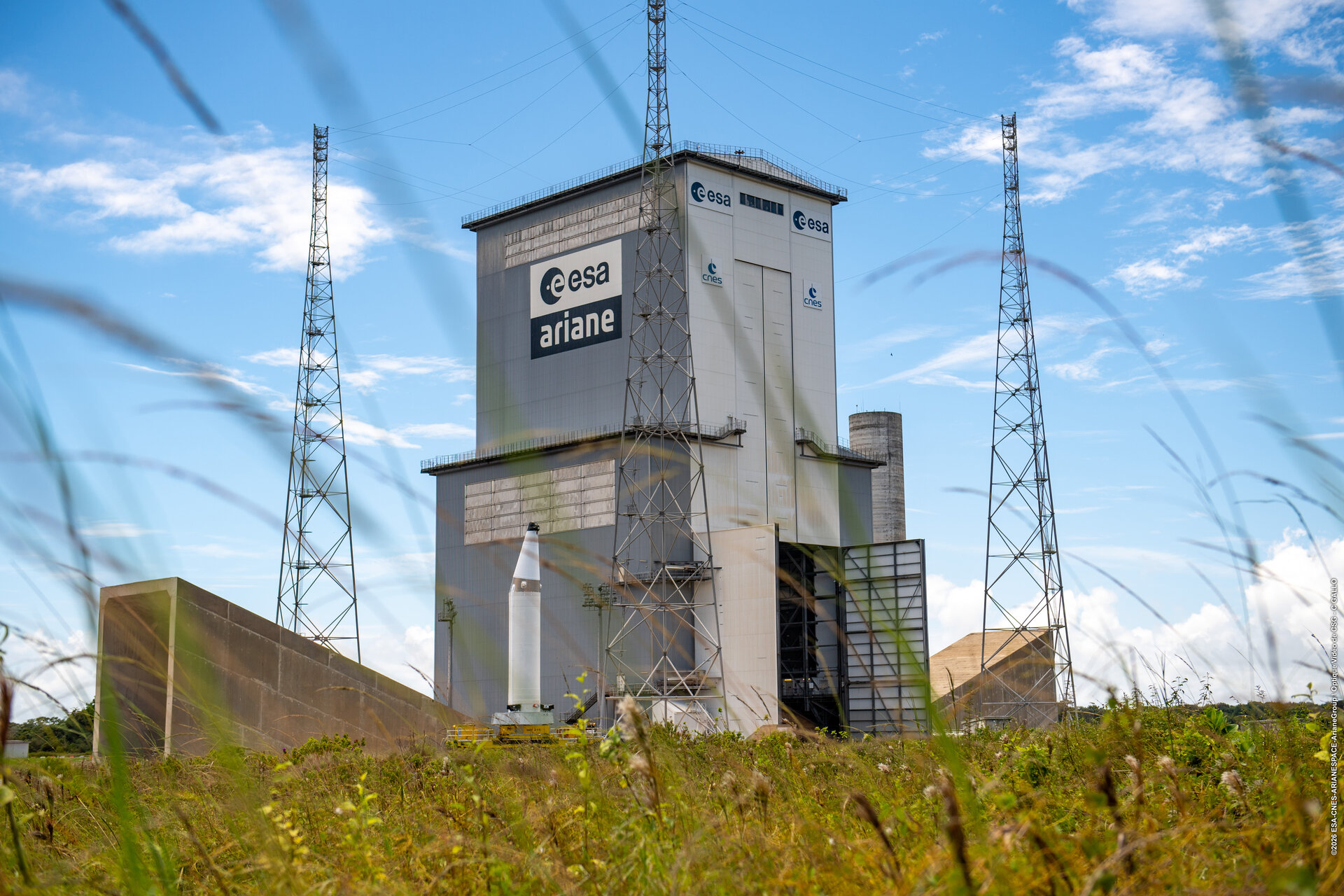
The launcher is the four-booster Ariane 64 configuration, using P160C solid motors. LE-04 is planned as the second Ariane mission with these boosters, after LE-03 in June. The archive photograph above shows a booster being brought to the pad for that earlier mission. It is evidence of the hardware type, rather than a photograph of today’s LE-04 preparations. [2] [4]
Amazon puts the release altitude at approximately 465 kilometres. After separation, its round-the-clock mission operations centre in Redmond, Washington, takes control of the satellites. Initial contact lets the team establish that the spacecraft can communicate; health checks come before the next flight phase. The plan then calls for orbit raising to the assigned 630-kilometre operating altitude and full commissioning. [3]
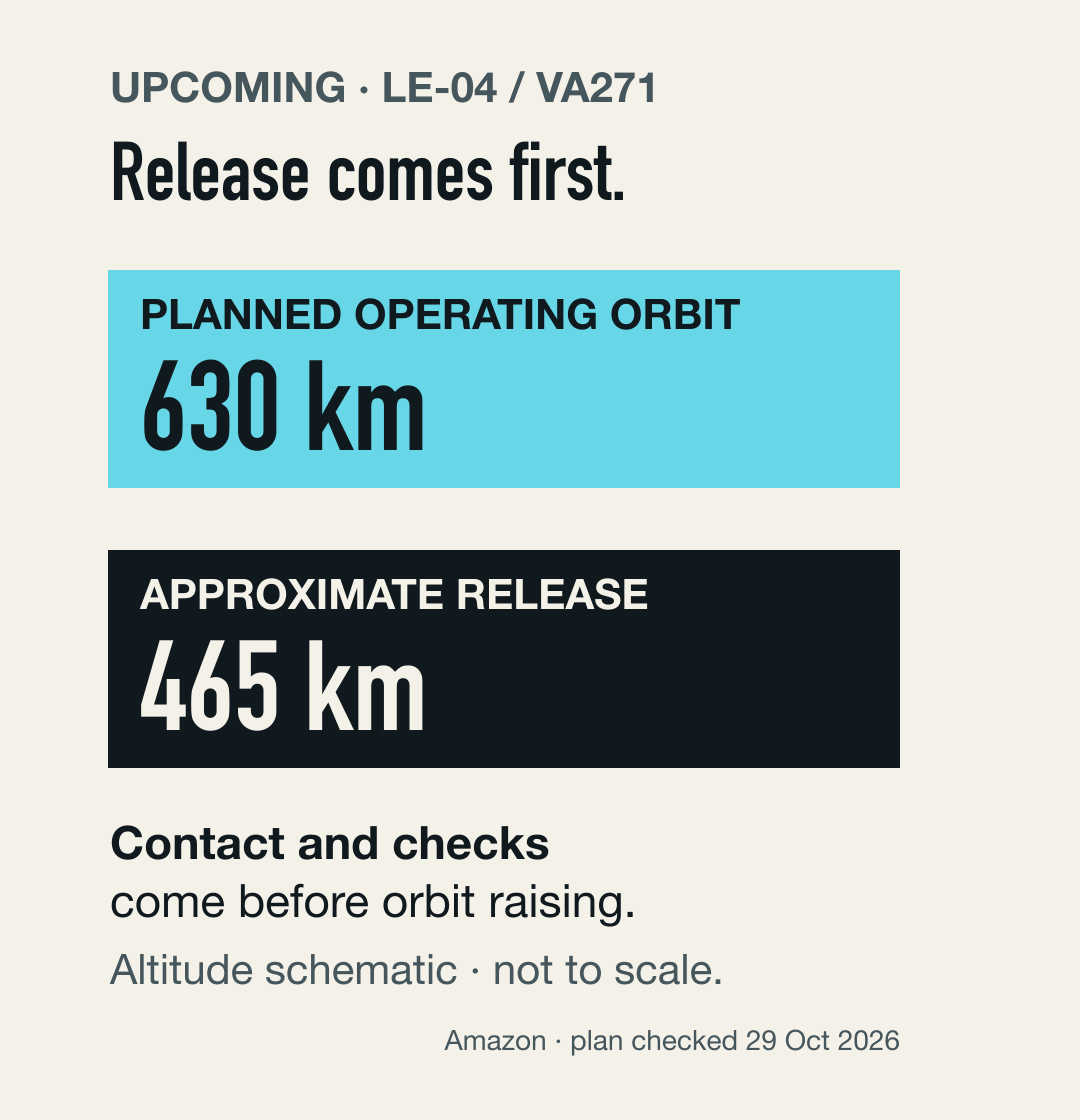
The two published altitudes imply an approximately 165-kilometre increase after release. That subtraction describes an altitude difference, not a journey time, burn schedule or measured trajectory. Amazon’s update does not give a mission-specific date for completing the later work. A launch success and an operational satellite are therefore separate milestones in this plan. [3]
Arianespace gives approximately two hours and four minutes from liftoff to deployment of the final satellite. That duration covers the launcher’s delivery task. It does not say that the last spacecraft begins operating at that moment, or that every satellite is released simultaneously. An individual release timetable is not published in the announcement. [2] [3]
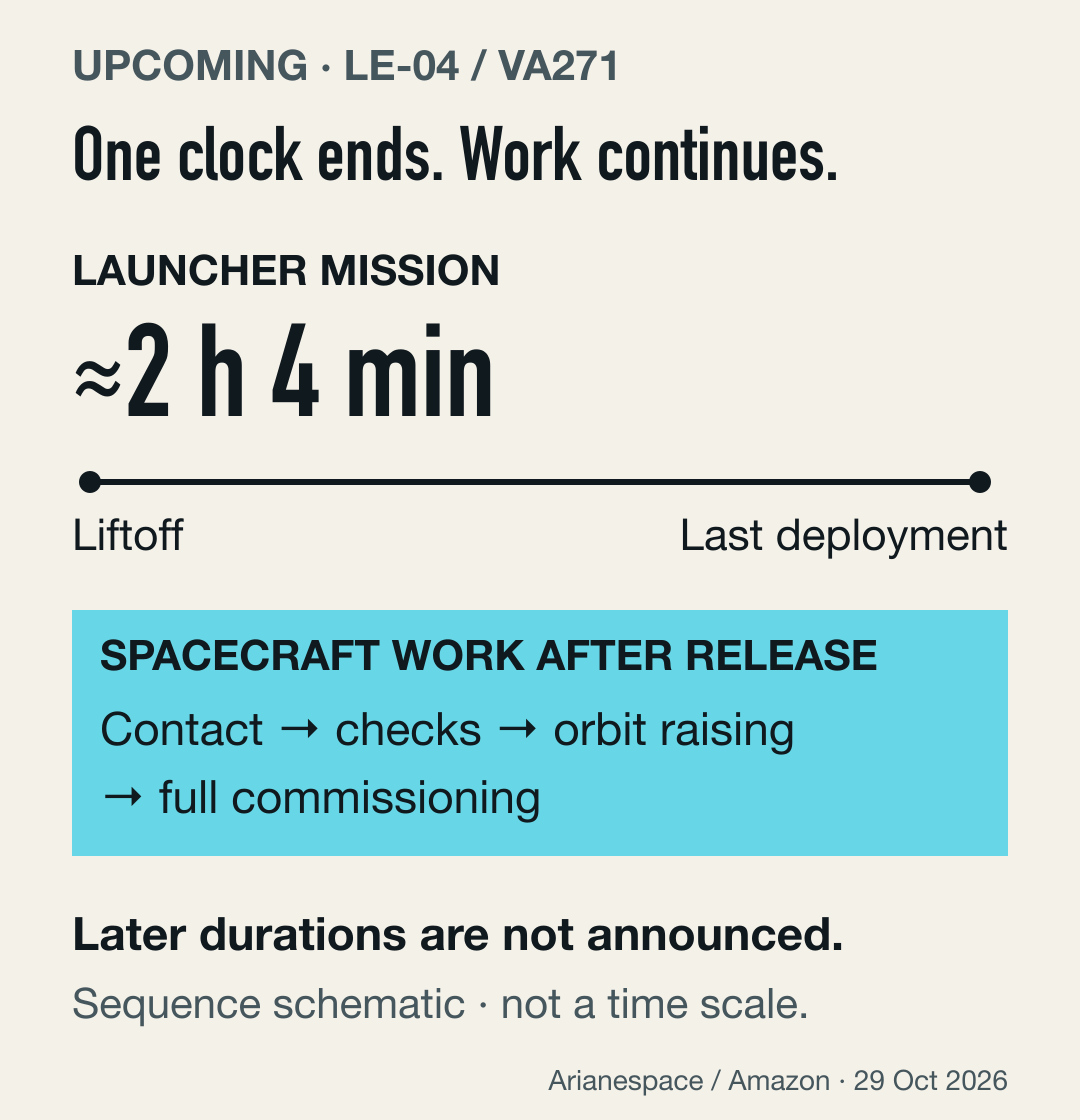
The division of responsibility helps explain the gap between deployment and service. Arianespace delivers the satellites to release. Amazon then manages contact, spacecraft checks, orbit raising and commissioning. The operations centre’s location tells us where that work is coordinated; it does not specify which ground antenna makes first contact. [2] [3]
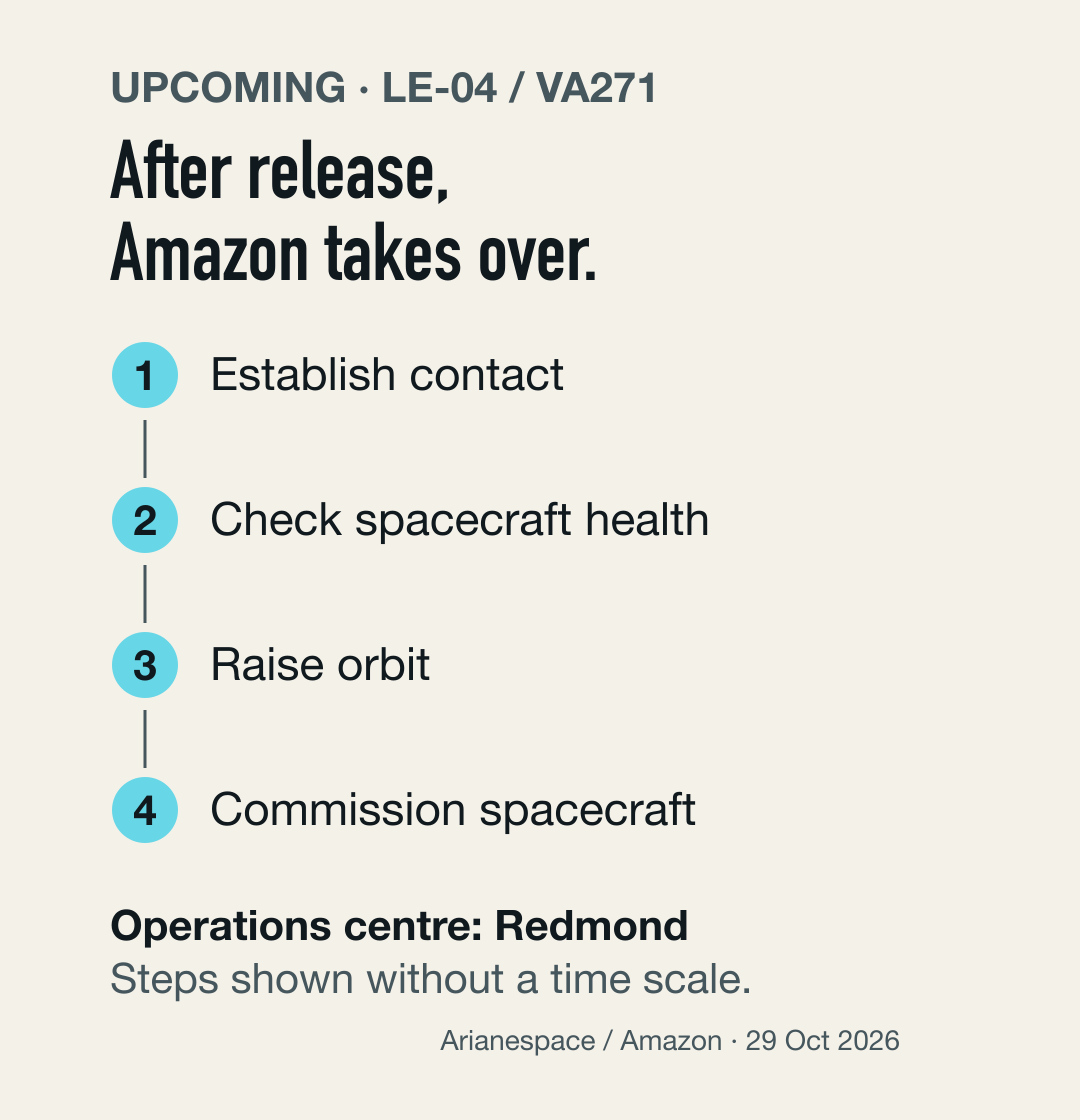
For now, the useful distinction is between a dated launch target and the separate milestones that follow it. Watch for an announced launch window, verified deployment, and later confirmation of spacecraft commissioning. November 23 remains an earliest date. Neither the campaign announcement nor the planned release altitude supplies a first-service date for this batch. [2] [3]
公表された仕様と、この機体の飛行歴。
機体の説明・英語
Ariane 6 variant with four upgraded P160C solid boosters, enabling heavier payloads. Each P160C booster holds 14 additional tons of propellant, compared to the P120C boosters of the Block 1 variant.
目標 ·
目印は、公表された時間帯の中で予定時刻がどこにあるかを示します。 打ち上げまでに予定が変わることがあります。
計画上の進行順序です。時刻は打ち上げの目標時刻を基準とし、実際の飛行データは示していません。
Guiana Space Centre, French Guiana
Explore the launch pad, then pull back to see the shape of the destination orbit.
Understand this orbit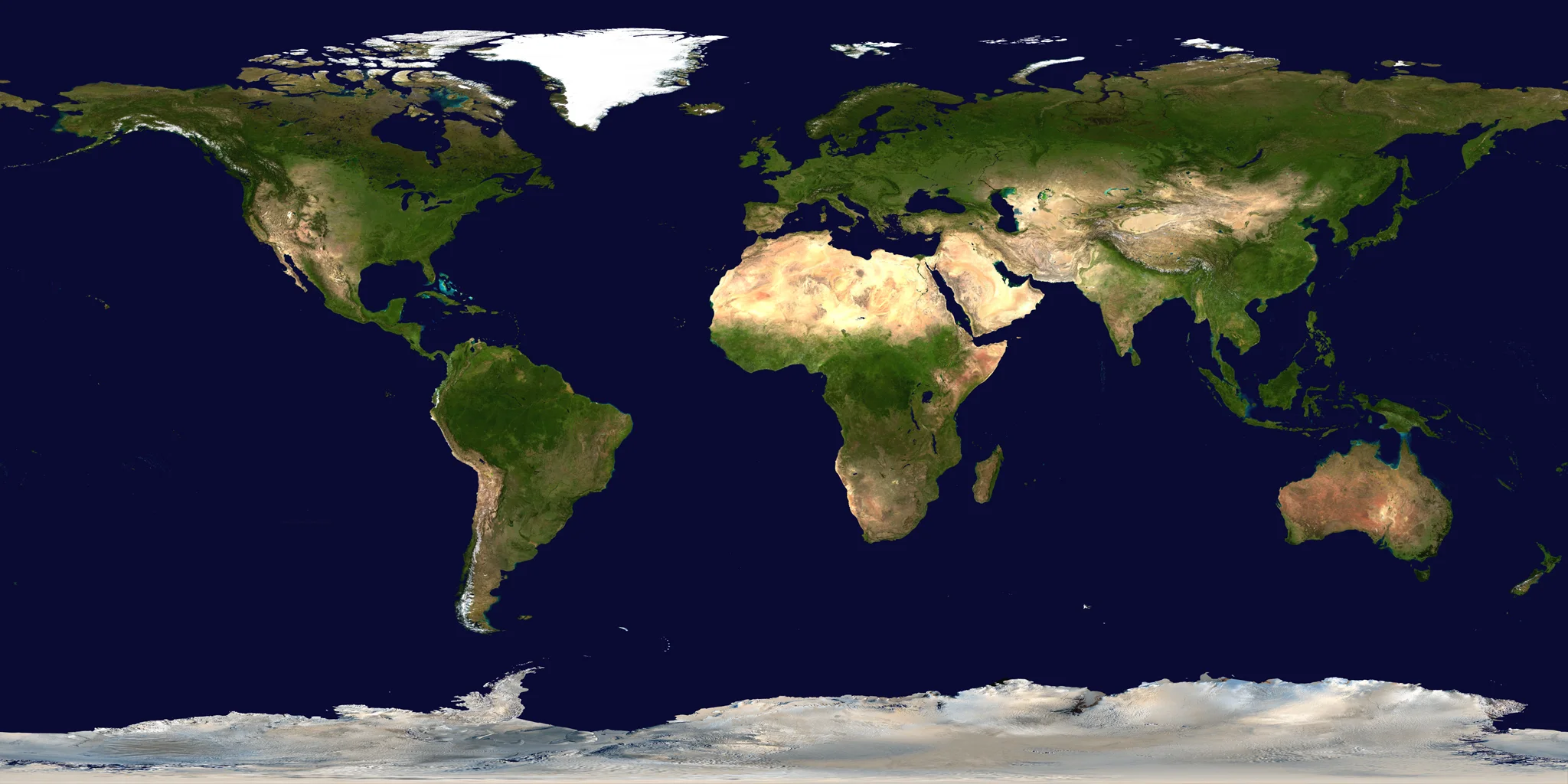
NASA geography with illustrative lighting. No live tracking or simulated ascent. Orbit motion is accelerated and representative. NASA Blue Marble source.
Public viewing access varies by launch site. Check the operator’s official information before travelling.
延期に備えて日程に余裕を持ち、当日も予定時刻、現地の天気、道路の規制を確認してください。
Android テスト版参加グループを開く クローズドテスト版1.6.0(4)では、サインイン、プレミアム、通知を利用できません。まずGoogleグループに参加し、同じGoogleアカウントでGoogle Playのテストに登録 ↗してください。