記録日時
- Launch target
- Date to be confirmed
変更前の情報
- Launch target
- November 2026 · date to be confirmed

 Android テスト版参加グループを開く クローズドテスト版1.6.0(4)では、サインイン、プレミアム、通知を利用できません。まずGoogleグループに参加し、同じGoogleアカウントでGoogle Playのテストに登録 ↗してください。
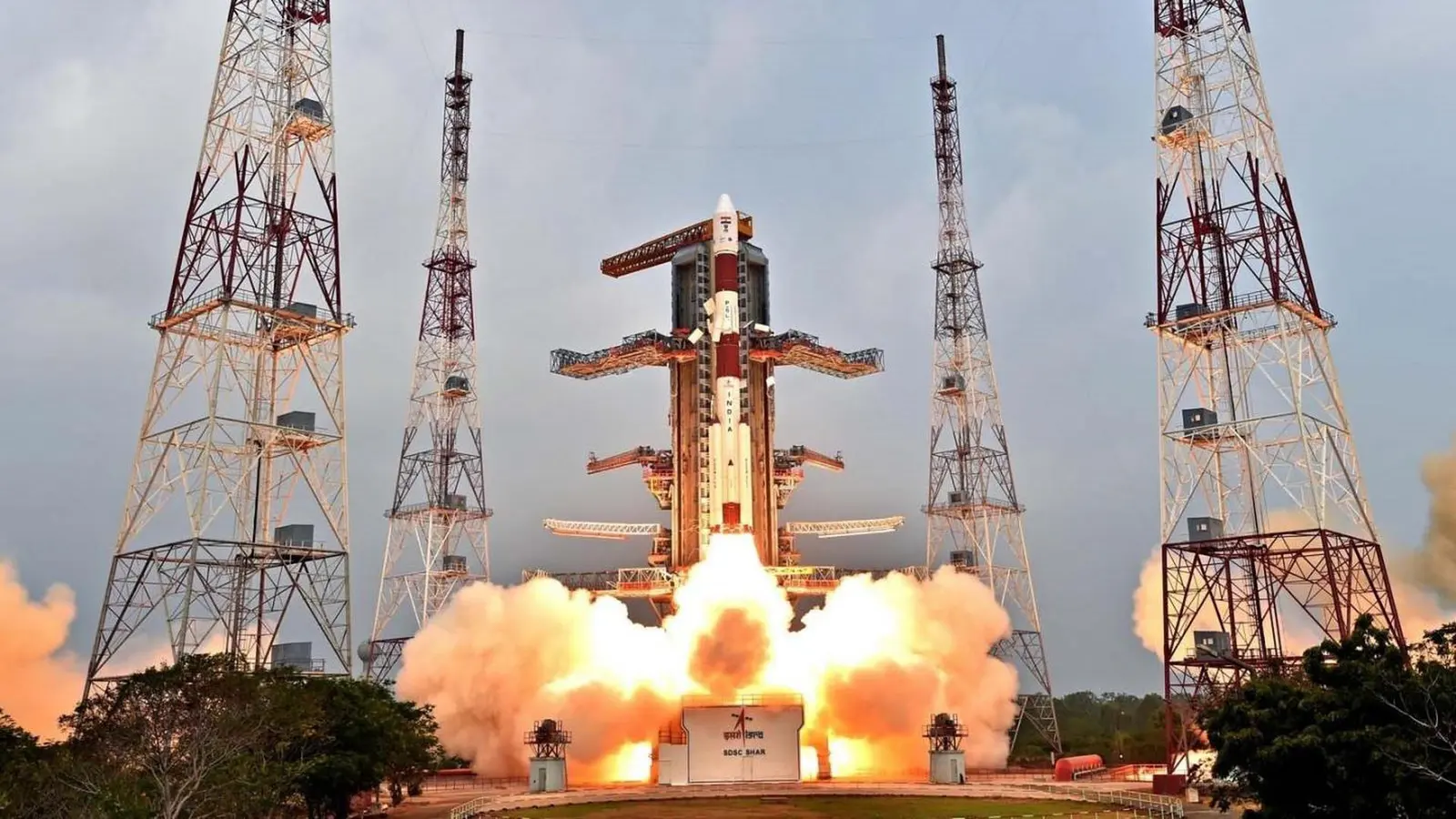
PSLV XL
TDS-01 is ISRO’s technology-demonstration satellite for electric propulsion, an Indian-built travelling-wave-tube amplifier and quantum key distribution. Its 300 mN stationary plasma thruster uses xenon and is intended to raise the spacecraft toward geostationary orbit. ISRO completed a 1,000-hour ground life test in March 2025 at 5.4 kW, monitoring liner erosion to help estimate operating life. The flight is intended to validate technologies for later navigation and communications satellites; these are demonstration objectives, not reported in-orbit results.
保存したミッションはマイページで確認できます。 リマインダーや予定変更の通知を受け取るには、iPhoneアプリでこのミッションをフォローしてください。
この記録では、確定した日付が公表されていません。
発表元の更新:
発表元を確認:Launch Library ↗
発表元の情報が変わった時点の記録です。延期の理由を示すものではありません。
記録を始める前の変更は掲載していません。
このページを表示している間、予定の変更を確認します。
打ち上げ予定は変更される場合があります。
関連記事・英語
ISRO ran the engine for 1,000 hours while measuring the wear inside. An earlier Indian liner study explains why endurance matters for the satellite’s electric orbit-raising test.
ISRO’s 1,000-hour plasma-thruster test was also a wear test. While the engine ran in a vacuum chamber, engineers periodically checked the erosion of its liners—the surfaces exposed to the plasma inside. The agency completed the run on March 27, 2025, before the system’s intended flight demonstration on TDS-01. [2]
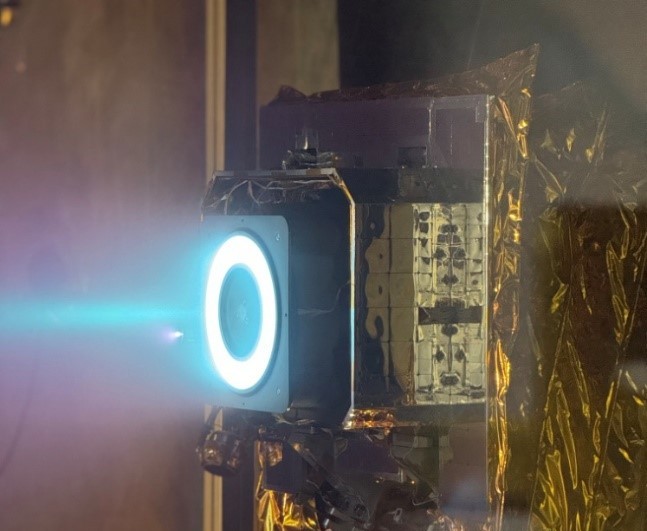
The test matters because ISRO wants electric propulsion to do work that costs satellites substantial propellant: raising their orbit and keeping them in position. The agency says the resulting mass savings could leave room for more communications capacity. TDS-01 is intended to validate the system while raising its orbit toward geostationary altitude. [2]
The stationary plasma thruster is a Hall-type engine. It expels xenon using electrical energy. In this design, a magnetic field constrains the motion of electrons inside the channel. Their collisions turn neutral xenon atoms into charged ions; an electric field then accelerates the ions into the exhaust. Sending that material away pushes the spacecraft in the opposite direction. [5] [6] [7]
Electric thrusters can use propellant efficiently, but their thrust is low and must accumulate over long operating periods. That makes endurance part of propulsion performance. An engine chosen for sustained orbit raising has to keep producing useful thrust as its internal surfaces age. [7]
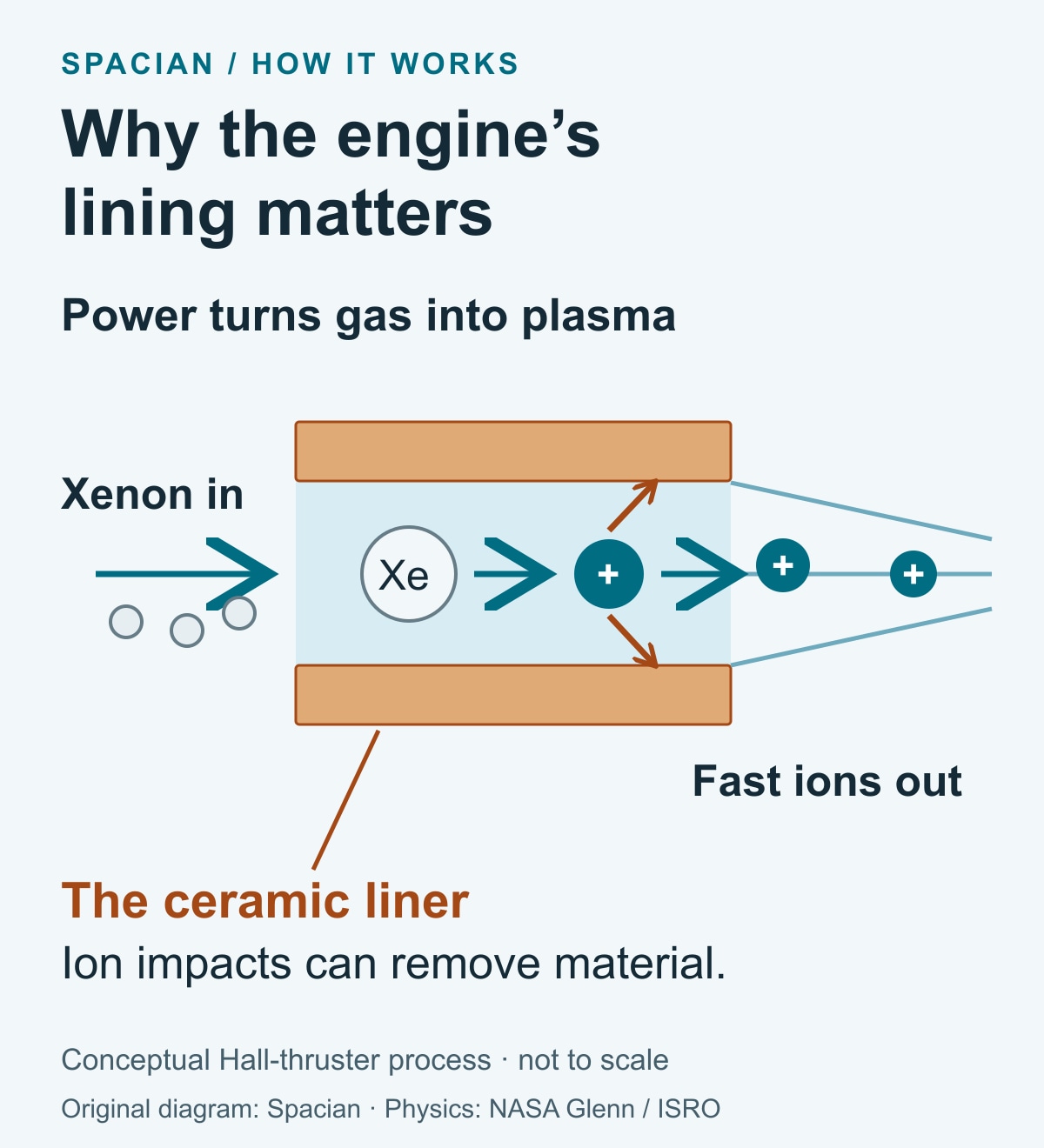
Some of the ions strike the channel walls. NASA Glenn describes erosion of ceramic channel material as a limitation on Hall-thruster operating life. The issue connects the bright plume in ISRO’s photograph to the less visible material surrounding it: the engine’s interior must survive the process that produces its thrust. [6]
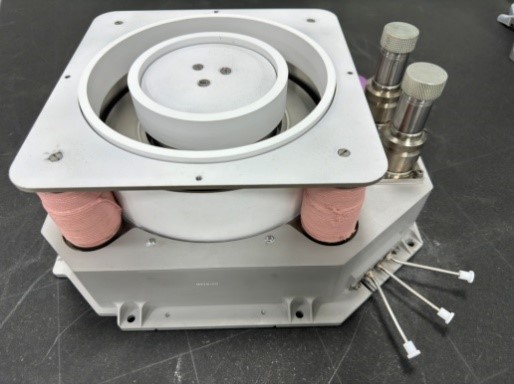
The Indian research trail reaches back to a material study reported by the Institute for Plasma Research in February 2022. Working with the Vikram Sarabhai Space Centre, IPR tested an Indian-developed boron-nitride/silica liner with a low-energy ion beam. The institute reported 20% less erosion than the imported comparison material, while retaining the other required properties. [4]
That comparison concerns the material under the reported test conditions. It does not establish a corresponding extension of a satellite’s life. The later full-thruster trial addressed a different question: how wear develops while an assembled engine operates. ISRO ran its 300-millinewton thruster at 5.4 kilowatts and used the measured erosion to help estimate its operating life. [4] [2]
TDS-01 takes the work from material samples and a vacuum chamber toward an engine performing an orbital task. ISRO identifies the flight as a validation step for electric orbit raising. The agency’s test report does not give a TDS-01 propellant load or a time for completing that transfer, so the 1,000-hour ground result cannot be used to calculate either. [2]
Propulsion is only one part of the demonstration. The Department of Space also lists an Indian-built travelling-wave-tube amplifier and quantum key distribution. The amplifier concerns hardware used in satellite communications; the quantum experiment tests a separate technology. The department intends the mission’s validated technologies to support later navigation and communications satellites. [3]
公表された仕様と、この機体の飛行歴。
機体の説明・英語
PSLV-XL is the upgraded version of Polar Satellite Launch Vehicle in its standard configuration boosted by more powerful, stretched strap-on boosters with 12 tonne propellant load. Weighing 320t at lift-off, the vehicle uses larger strap-on motors (PSOM-XL or S12) to achieve higher payload capability. On 29 December 2005, ISRO successfully tested the improved version of strap-on booster for the PSLV. The first use of PSLV-XL was the launch of Chandrayaan-1 by PSLV C11. The payload capability for this variant is 1,800 kg to SSO.
詳しい打ち上げ可能時間帯は、まだ公表されていません。
Satish Dhawan Space Centre, India
Explore the launch pad, then pull back to see the shape of the destination orbit.
Understand this orbit
NASA geography with illustrative lighting. No live tracking or simulated ascent. Orbit motion is accelerated and representative. NASA Blue Marble source.
配信リンクは、まだ公開されていません。
Android テスト版参加グループを開く クローズドテスト版1.6.0(4)では、サインイン、プレミアム、通知を利用できません。まずGoogleグループに参加し、同じGoogleアカウントでGoogle Playのテストに登録 ↗してください。