
NET November.
Update ↗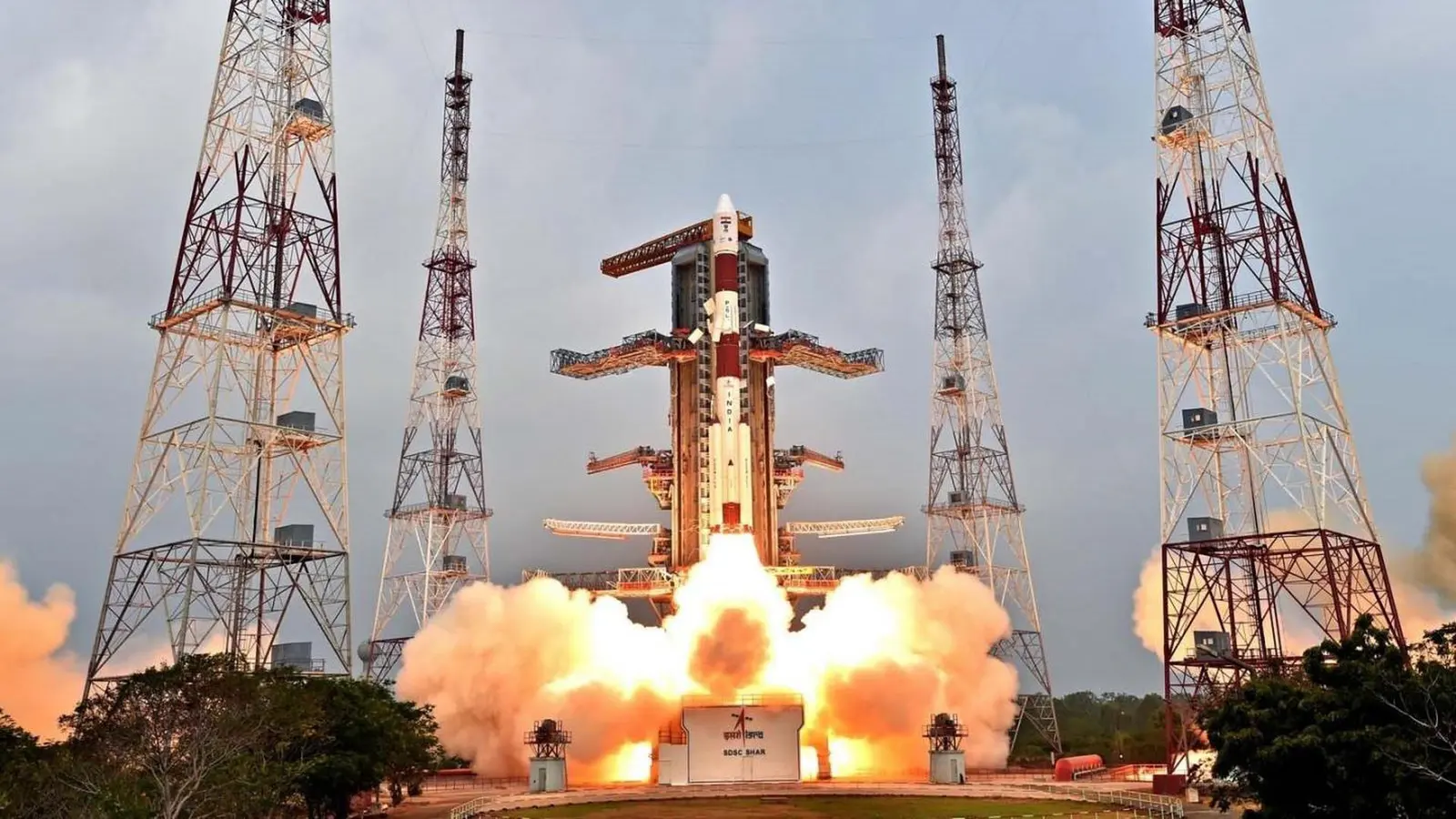
Indian Space Research OrganizationTo Be Determined
TDS-01
PSLV XL
November 2026 · day pending
Latest published target
November 2026 · date to be confirmed. The day and time remain unconfirmed.
Source record updated . This is a source update, not a confirmed launch time.
Check the source: Launch Library ↗
Checks for schedule changes while this page is visible.
Time to target
Target pending
Target time, not a confirmed liftoff.
LAUNCH SITESatish Dhawan Space Centre, India
Mission
TDS-01 (Technology Demonstration Satellite-01) is an Indian geostationary orbit technology demonstration satellite carrying payloads for the Indian Space Research Organisation (ISRO)’s Institute of Plasma Research, Gandhinagar and the CSIR-CEERI, Pilani. Payloads to be tested included an internally developed 300 mN electric powered thrusters, atomic clocks, travelling wave tube amplifiers (TWTA) & a quantum communication suite (QuTDS).
- Launch vehicle
- PSLV XL
- Mission type
- Technology
- Destination orbit
- Geostationary Transfer Orbit
- Launch pad
- Satish Dhawan Space Centre First Launch Pad
- Provider
- Indian Space Research Organization
The vehicle
Published configuration and flight history.
Launch vehicle
PSLV XL
PSLV-XL is the upgraded version of Polar Satellite Launch Vehicle in its standard configuration boosted by more powerful, stretched strap-on boosters with 12 tonne propellant load. Weighing 320t at lift-off, the vehicle uses larger strap-on motors (PSOM-XL or S12) to achieve higher payload capability. On 29 December 2005, ISRO successfully tested the improved version of strap-on booster for the PSLV. The first use of PSLV-XL was the launch of Chandrayaan-1 by PSLV C11. The payload capability for this variant is 1,800 kg to SSO.
- Height
- 44 m
- Diameter
- 2.8 m
- Stages
- 4
- Recorded launches
- 27
- First flight
- 2008-10-22
Launch window
A calendar entry will be available when a date is confirmed.
A precise launch window has not been published.
Launch site & orbit
Satish Dhawan Space Centre, India
The mission in perspective
Launch site & orbit
Explore the launch pad, then pull back to see the shape of the destination orbit.
Understand this orbit
Watch in person
Plan around the launch.
Public viewing access varies by launch site. Check the operator’s official information before travelling.
Leave room for delays. Recheck the launch target, local weather and road closures on the day.
Before you set off
- Confirm the target and launch window.
- Check official viewing access and any booking requirements.
- Use a permitted viewing area. The launch pad is not a visitor destination.
- Keep the mission’s coverage link as a backup.
Coverage & sources
Links supplied by the mission data provider.
Coverage and times may change.
Mission coverage
No viewing link has been published yet.
Further reading
Launch Library ↗Follow on iPhone
Get reminders and schedule-change alerts. One active mission free.
Open mission in Spacian ↗