Three Singaporean satellites lifted off Thursday on an Indian Polar Satellite Launch Vehicle and rocketed into an orbit more than 350 miles above Earth to begin missions supporting military surveillance, technology demonstrations, and solar research. The Polar Satellite Launch Vehicle, or PSLV, climbed away from its firing stand on India’s east coast at 8:32 a.m. EDT (1232 GMT) Thursday with more than a million pounds of thrust from its solid-fueled core stage. The Indian launcher flew in its “Core Alone” configuration without any strap-on solid rocket boosters, sending the three Singaporean payloads into a 354-mile-high (570-kilometer) orbit inclined 10 degrees to the equator. “All of the satellites were placed in the right orbit,” said S. Somanath, chairman of the Indian Space Research Organization, India’s space agency. The primary payload on the mission was the DS-EO satellite, a high-resolution Earth-imaging spacecraft developed by ST Engineering and Singapore’s Defense Science and Technology Agency, the acquisitions and systems development division for the Singapore Armed Forces. The DS-EO satellite weighed about 804 pounds (365 kilograms) at launch. In a
Summary supplied by Spaceflight Now.
NASA
Florida Students to Hear from NASA Astronauts Aboard Space Station
Source link unavailable
Read summary
Florida students will have an opportunity soon to hear from NASA astronauts aboard the International Space Station.
United Launch Alliance will now deploy a pair of Space Force technology demonstration payloads using its Atlas V rocket no earlier than Friday. The USSF-12 mission was due to liftoff from Cape Canaveral on Thursday, but persisting lightning storms in the area prevented a launch attempt throughout the entirety of a two-hour window.
Officials scrubbed the launch of an Atlas 5 rocket for the U.S. Space Force Thursday due to the risk of lightning from nearby thunderstorms, delaying the liftoff of the $1.1 billon mission until Friday evening.
Chinese state-owned and commercial companies are developing capabilities to launch liquid propellant rockets from sea platforms to boost the country's launch options.
Eleven months after SpaceX submitted several applications, the FCC has given the company permission to connect moving vehicles to its constellation of...
House appropriators eliminated most of a proposed budget increase for the FAA’s commercial space transportation office while also directing the agency on spaceports and cooperation with another agency on spaceflight investigations.
Canada’s Kepler Communications said June 30 it plans to use D-Orbit’s orbital transfer vehicle for the next two satellites in its low-data-rate constellation.
SpaceX has successfully launched the SES-22 communications satellite to a geostationary transfer orbit, ending the first half of 2022 with 27 orbital...
Virgin Orbit has scrubbed the launch the fifth flight of the LauncherOne rocket, after propellant temperature was deemed to be “slightly out of bounds”. The decision was made prior to the take off of Cosmic Girl, the carrier aircraft.
NASA Administrator Bill Nelson has tested positive for COVID-19, he announced June 29, but is continuing to lead the agency as he isolates at home.
Summary supplied by SpaceNews.
NASA
NASA to Industry: Let’s Develop Flight Tech to Reduce Carbon Emissions
Source link unavailable
Read summary
NASA announced Wednesday the agency is seeking partners to develop technologies needed to shape a new generation of lower-emission, single-aisle airliners that passengers could see in airports in the 2030s.
Space Force acquisition executive Frank Calvelli said he would be open to a different model than the current two-vendor approach for national security launch services procurement
Summary supplied by SpaceNews.
NASA
NASA Shares Climate, Earth Science Resources at Folklife Festival
Source link unavailable
Read summary
Members of the public are invited to explore the many ways space science helps families, communities, and our nation better understand our home planet and become more climate resilient through hands-on and virtual activities during NASA Day at the Smithsonian Folklife Festival Saturday, July 2, on the National Mall in Washington.
United Launch Alliance teams at Cape Canaveral rolled an Atlas 5 rocket to its launch pad Wednesday, moving the launcher into position for liftoff Thursday evening with a pair of geostationary satellites for the U.S. Space Force.
SpaceX has launched the SES-22 communications satellite to geostationary transfer orbit on the 27th Falcon 9 launch of 2022. The launch occurred on Wednesday, June 29, at 5:04 PM EDT (21:04 UTC). This was the beginning of a two-hour and 10-minute launch window from Launch Complex 40 at the Cape Canaveral Space Force Station.
SpaceX closed out the first half of 2022 with its 27th mission of the year, powering a commercial television broadcasting satellite into orbit for SES on a Falcon 9 rocket as the company is poised to break its annual launch record in the coming weeks.
Sierra Space announced an agreement with the Turkish Space Agency and an affiliated company June 29 that could lead to cooperation on human spaceflight and lunar missions.
With commissioning of the James Webb Space Telescope nearly complete, project officials and NASA leadership promise the telescope’s first images will stun scientists and the public alike.
The first nighttime flight of Virgin Orbit’s commercial air-launched rocket is on track for Wednesday night off the coast of California, carrying seven small satellites into orbit on a mission for the U.S. military’s Space Test Program.
Virgin Orbit says it’s ready for a nighttime launch for the U.S. Space Force as it attempts to get into a more frequent rhythm of building and launching vehicles.
NASA’s $30 million CAPSTONE mission lifted off Tuesday on a Rocket Lab launcher from New Zealand, departing Earth on a circuitous but fuel-efficient four-month journey toward a halo orbit around the moon to test technologies and operations for the Artemis moon program.
By identifying clouds in data collected by NASA’s Mars Reconnaissance Orbiter, the public can increase scientists’ understanding of the Red Planet’s atmosphere.
Chinese launch service provider Expace has secured $237 million in B round funding, following last week's return to flight of its Kuaizhou-1A solid rocket.
A commercial Cygnus supply ship from Northrop Grumman departed the International Space Station Tuesday, completing a four-month stay after delivering more than 8,000 pounds of cargo and boosting the research lab into a slightly higher orbit. The Cygnus spacecraft was expected to deploy a CubeSat before heading for a destructive re-entry.
An Electron rocket successfully launched a NASA-funded cubesat mission June 28 that will test the stability of the orbit around the moon the agency plans to use for future Artemis lunar missions.
The successful launch of a NASA lunar cubesat mission was the culmination of two and a half years of work at Rocket Lab that, the company’s chief executive says, could enable “ridiculously low cost” planetary missions.
A new European-built television broadcasting satellite to cover the United States is set for liftoff Wednesday on a SpaceX Falcon 9 rocket, the first of 11 SES-owned telecom spacecraft scheduled to fly on six launches from Cape Canaveral by the end of the year.
Rocket Lab has launched the CAPSTONE (Cislunar Autonomous Positioning System Technology Operations and Navigation Experiment) satellite to the Moon. It’s the first official mission of NASA’s Artemis program that is seeking to permanently return humans to the surface of our nearest astronomical body.
NASA’s billion-dollar Psyche asteroid mission will not launch this year, officials confirmed Friday, after delays in completing software verification testing for the spacecraft’s guidance, navigation and control system.
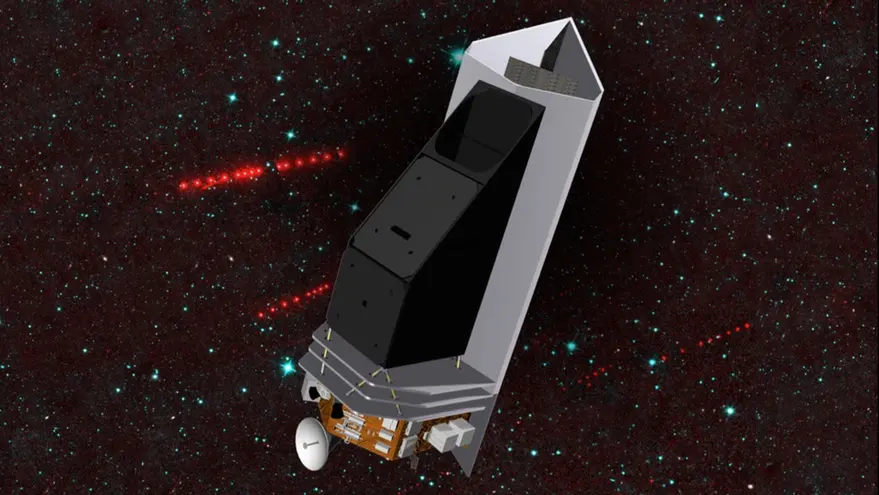
House appropriators partially restored funding for a planetary defense mission as part of a spending bill while also raising concerns about NASA’s closure of an airborne observatory and plans to return samples from Mars.
SpaceX has entered the next phase of preparations to send Starship to orbit. Following the key milestone of passing the Federal Aviation Administration’s (FAA’s) Programmatic Environmental Assessment (PEA) with a mitigated Finding Of No Significant Impact (FONSI), SpaceX rolled out Super Heavy Booster 7 to the Orbital Launch Site for a third time to begin its static fire test campaign which will set the stage for Starship’s first Orbital Test Flight – paired with Ship 24 – later this year.
Summary supplied by NASA Spaceflight.
NASA
NASA to Cover Northrop Grumman Cygnus Departure from Space Station
Source link unavailable
Read summary
Northrop Grumman’s uncrewed Cygnus spacecraft is scheduled to depart the International Space Station on Tuesday, June 28, more than four months after delivering 8,300 pounds of supplies, scientific investigations, commercial products, hardware, and other cargo to the orbiting laboratory for NASA.