The European Space Agency (ESA) is providing the European Service Module (ESM), the provider of propulsion and life support for the Orion crew capsule. The ESM sits on top of the Interim Cryogenic Propulsion Stage (ICPS) on the Space Launch System (SLS), which is being prepared for its third launch attempt on the Artemis I mission. As the prime contractor for the ESM, Airbus is leading the construction and assembly for ESA.
With a legendary career spanning 45 years, it is impossible to adequately describe David McFarland's vast contributions to America's space launch capabilities, from a propulsion engineer on workhorse rockets to crafting new launch sites to his role t...
Axiom Space will fly two astronauts from Saudi Arabia, one of them a woman, to space as soon as next year, the company and the Saudi government announced Sept. 22.
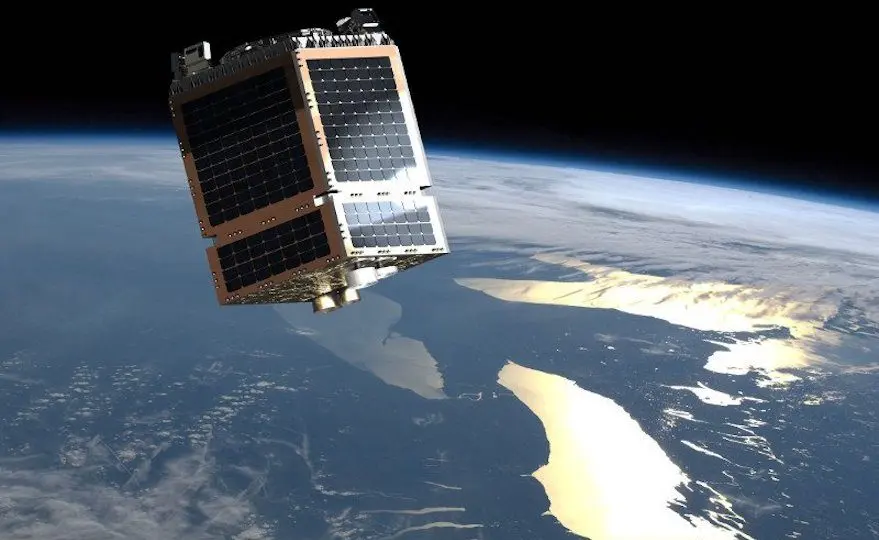
A technology demonstration satellite for which SES will lead the development could be a prototype of a constellation by the satellite operator providing quantum-encrypted communications.
The European Space Agency has tasked an SES-led consortium to develop a satellite and begin operating it in 2024 to validate quantum key distribution technology.
DoD and the intelligence community are laying out requirements for how they would use commercial space systems during wartime
Summary supplied by SpaceNews.
NASA
NASA to Provide Media Update on Demonstration Test, Artemis I Mission
Source link unavailable
Read summary
NASA will hold a media teleconference at 12:30 p.m. EDT Friday, Sept. 23, to discuss the cryogenic demonstration test conducted Wednesday, Sept. 21, ahead of the next Artemis I launch attempt.
Fresh images from the James Webb Space Telescope show the faraway planet Neptune hung amid a colorful tapestry of even more distant galaxies, the latest view from a now-regular flow of observations from astronomers’ new eye on the universe.
Mangata Networks, a U.S. satellite startup founded by a former OneWeb executive, has applied for a U.K. license to connect broadband terminals to its planned multi-orbit constellation.
United Launch Alliance (ULA) engineer Sreyas Krishnanis a propulsion systems specialist who will help certify the Delta IV Heavy rocket to launch the NROL-91 mission for the U.S. National Reconnaissance Office.
Maritime connectivity specialist Marlink will offer Starlink to its customers as SpaceX’s broadband service turns to partners to expand beyond the consumer market.
One part of an instrument on the James Webb Space Telescope is out of service temporarily, although project officials are confident it will not be a long-term problem.
The Pentagon plans to end procurements of very large geosynchronous Earth orbit (GEO) infrared satellites and transition to a proliferated architecture in lower orbits
Despite severely strained U.S.-Russian foreign relations, an American astronaut joined two Russian cosmonauts aboard a Soyuz spacecraft in Kazakhstan and rocketed into orbit Wednesday on a two-orbit flight to the International Space Station.
Amazon and Telesat said Sept. 21 they have finalized spectrum arrangements to keep their planned satellites in non-geostationary orbit from interfering with each other.
Summary supplied by SpaceNews.
NASA
NASA Astronaut Frank Rubio, Crewmates Arrive Safely at Space Station
Source link unavailable
Read summary
NASA astronaut Frank Rubio and two cosmonauts arrived at the International Space Station Wednesday, bringing its number of residents to 10 for the coming week.
Arkisys plans to launch Applique, a universal interface adapter designed to connect any spacecraft payload, using a variety of common interface standards and protocols.
In a little over a week, the crowdfunding platform Spaced Ventures has obtained pledges of $11.4 million from 758 individuals eager to invest in SpaceX.
The first launches of commercial landers to the moon under CLPS are slated late this year or early next, marking an important milestone for a 2018 NASA program that saw one of its awardees file for bankruptcy this summer.
The Russian federal space agency, Roscosmos, has launched three people to the International Space Station (ISS) from Site 31/6 at the Baikonur Cosmodrome in Kazakhstan. Liftoff occurred at 13:54:49 UTC on Wednesday, Sept. 21.
Engineers filled up the Artemis 1 moon rocket with more than 750,000 gallons of super-cold propellants in a tanking test Wednesday at Kennedy Space Center after successfully troubleshooting another hydrogen leak. NASA’s launch director said she was “extremely encouraged” by the test, but officials have not yet committed to another attempt to launch the uncrewed test flight to the moon at the next opportunity Sept. 27.
On Sept. 5, 2021, NASA’s InSight lander “heard” the impact of an asteroid slamming into the surface of Mars — in fact the space rock broke into three pieces, each hitting the planet and creating a crater. Not only that, but it also detected the acoustic waves generated by the asteroid as it rammed through the thin air of Mars too!
Nations that have signed the U.S.-led Artemis Accords met in person for the first time Sept. 19 as an initial step to elaborate on the principles for safe and sustainable space exploration.
As part of continued troubleshooting and seal replacement validation efforts, teams at the Kennedy Space Center in Florida took the SLS rocket through a Core Stage and Interim Cryogenic Propulsion System (ICPS) fueling test on Wednesday, Sept. 21. NASA officials hoped the test would reveal no leaks of the liquid hydrogen (LH2) system, which has so far plagued the agency in all fueling operations where the commodity was loaded onto SLS at the pad.
British small satellite startup Open Cosmos announced plans Sept. 21 for OpenConstellation, shared space infrastructure designed to offer partners access to satellite data.
OneWeb said Sept. 20 its latest batch of 36 broadband satellites has arrived in India ahead of plans to launch them next month on the country's largest rocket.
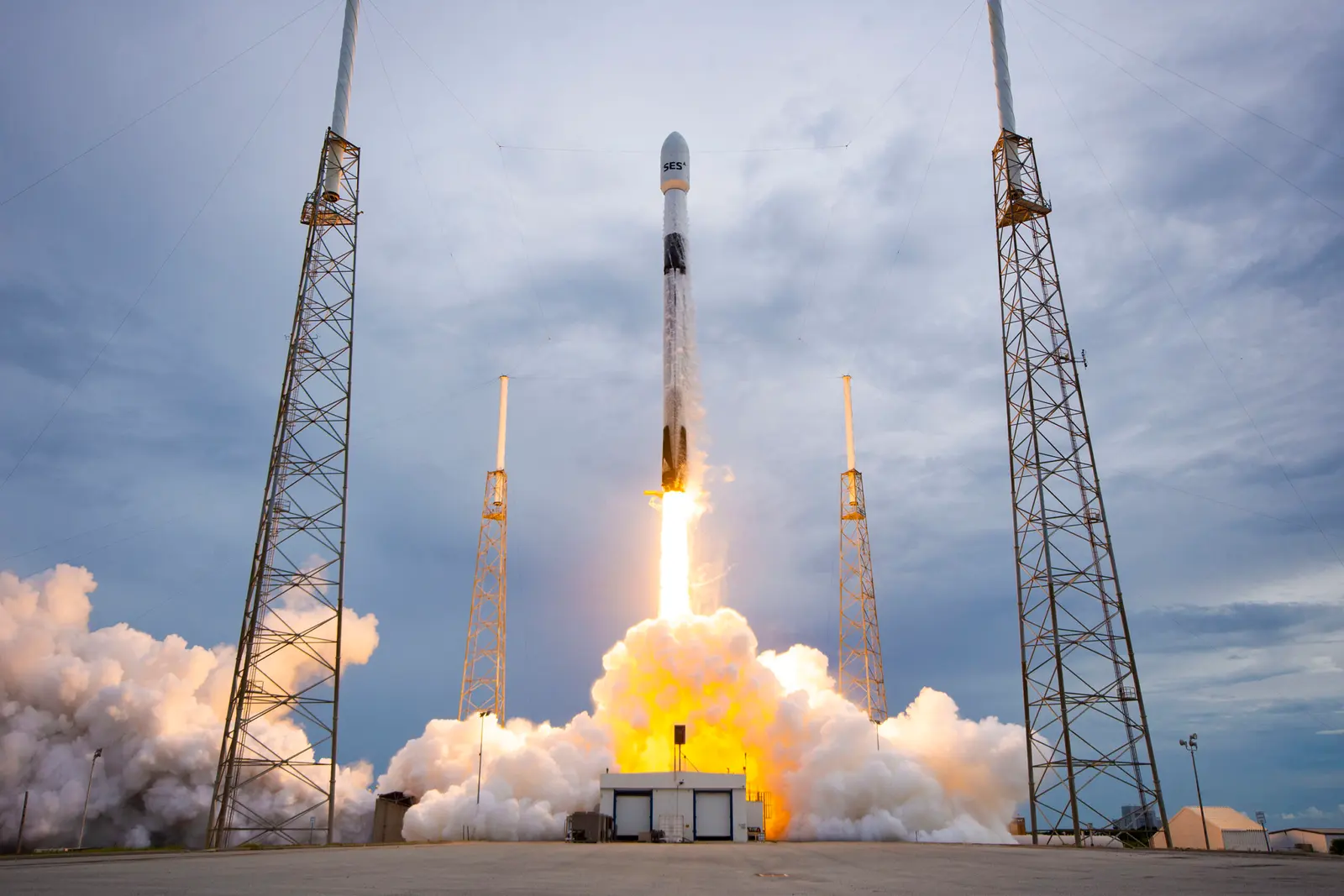
Two commercial satellites that will relay television channels to millions of homes across America are aboard their shared United Launch Alliance (ULA) Atlas V rocket at Cape Canaveral, Florida, for launch into near-geosynchronous orbit.Global commerc...
Summary supplied by United Launch Alliance.
NASA
NASA’s Stakeholder Collaborations Help Inform Moon to Mars Planning
NASA officials say they’re ready to try a new approach to fueling the Space Launch System to prevent the return of leaks that scrubbed an earlier launch attempt even though they are not certain what caused that leak.
SpinLaunch, a company developing a launch system that uses a centrifuge as a first stage, raised $71 million to continue work on that system and a line of satellites.