Virgin Galactic’s suborbital spaceplane flew freely for the first time in nearly two years April 26 on a glide flight that prepares the company for powered flights and commercial service.
Payloads: Actiwatch-Plus: Actiwatch devices were attached to the HRF-1 rack for data downlink and charging. The Actiwatch-Plus is a waterproof, non-intrusive, sleep-wake activity monitor worn on the wrist of a crewmember and contains a miniature uniaxial accelerometer that produces a signal as the subject moves. The data is stored in non-volatile memory within the Actiwatch …
Virgin Galactic conducted a successful glide test of their VSS Unity spacecraft in New Mexico, marking the final step before the company can resume powered flight and begin commercial operations.
Summary supplied by The Launch Pad.
NASA
NASA Experts Available for Interviews About Sea and Sky Campaign
Source link unavailable
Read summary
This spring, NASA’s S-MODE (Sub-Mesoscale Ocean Dynamics Experiment) began conducting its final plane, ship, and ocean glider campaign to better understand the ocean’s impact on Earth’s climate.
The spacecraft takes a step toward commercial spaceflight.
Summary supplied by Arstechnica.
NASA
NASA Announces Winners of 2023 Human Exploration Rover Challenge
Source link unavailable
Read summary
NASA has announced the winners of the 2023 Human Exploration Rover Challenge (HERC) with Escambia High School in Pensacola, Florida, winning first place in the high school division, and the University of Alabama in Huntsville, capturing the college and university title. The complete list of award winners a as follows:
The United States and South Korea signed an agreement April 25 to enhance cooperation on space activities ranging from lunar exploration to Earth science, while providing few specific about those efforts.
Launched in 1977, the Voyager 2 spacecraft is more than 12 billion miles (20 billion kilometers) from Earth, using five science instruments to study interstellar space. To help keep those instruments operating despite a diminishing power supply, the aging spacecraft has begun using a small reservoir of backup power set aside as part of an onboard safety mechanism. The move will enable the mission to postpone shutting down a science instrument until 2026, rather than this year.
X-Bow Systems, an Albuquerque, N.M., solid propulsion startup, announced a $60 million U.S. Air Force Strategic Funding Increase, or STRATFI, agreement.
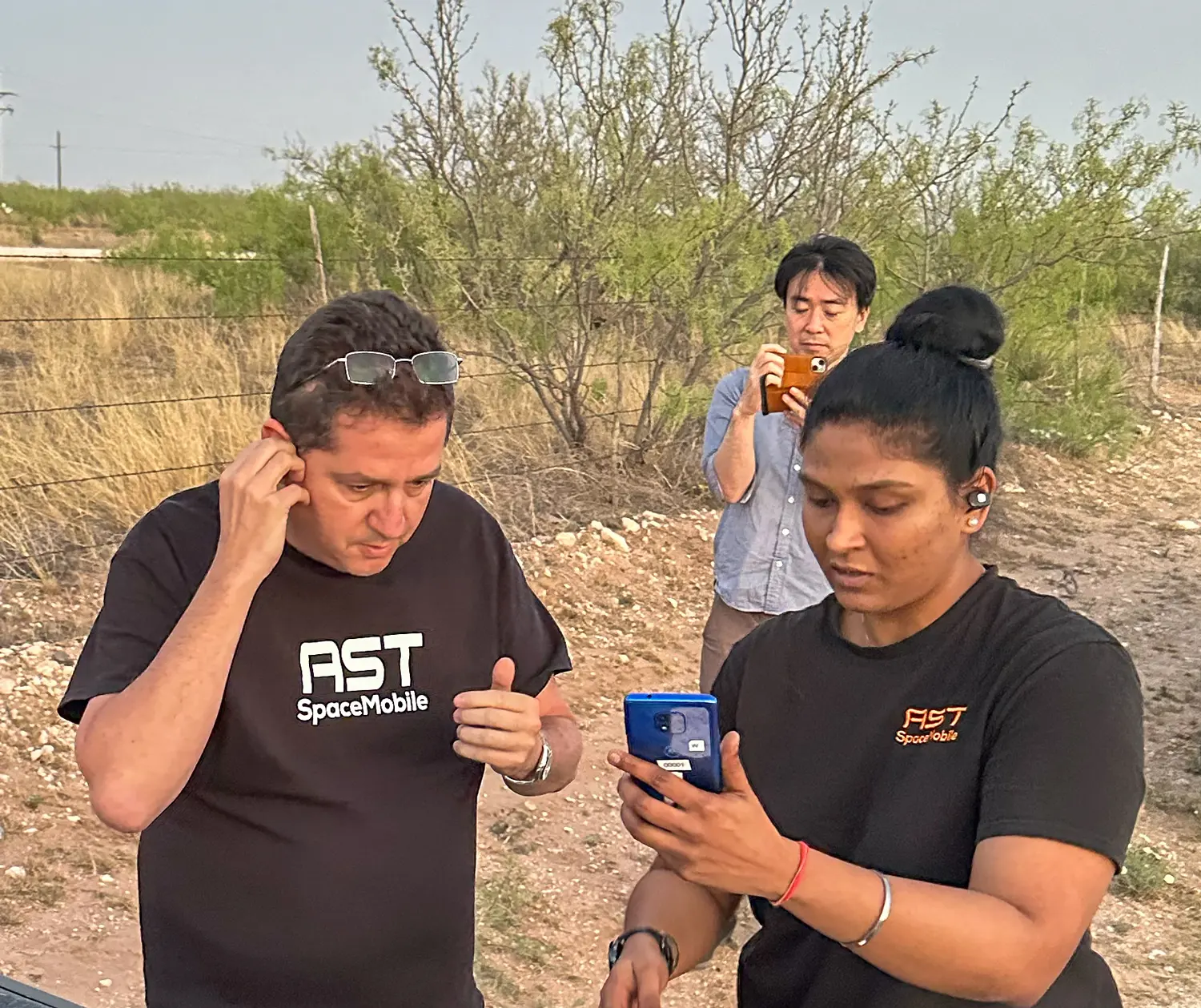
AST SpaceMobile announced April 25 it made the first voice call last week with a standard smartphone using its BlueWalker 3 test satellite in low Earth orbit.
“We already confirmed that we have established communication until the very end of the landing – however, now we have lost the communication, so we have to assume that… we could not complete the landing on the lunar surface.”
SpaceX is getting a second launch pad on the West Coast after gaining approval to lease Space Launch Complex 6 (SLC-6) at Vandenberg Space Force Base, California, a historic pad previously occupied by United Launch Alliance.
Summary supplied by SpaceNews.
NASA
NASA Selects 12 Companies to Collaborate on Key Technology Development
Source link unavailable
Read summary
NASA has selected 16 proposals from 12 companies under the 2022 Announcement of Collaboration Opportunity (ACO) to advance capabilities and technologies related to NASA's Moon to Mars Objectives. The cadre of U.S. industry-led teams will test a new lunar rover tire design, develop a robotically assembled power system, build an electrically actuated
Ursa Major CEO, Joe Laurienti, says that the partnership with Astra “marks an important industry milestone in outsourcing propulsion to unlock growth and innovation for launch providers”
Controllers lost contact with a lunar lander developed by a Japanese company moments before its scheduled touchdown, raising fears the spacecraft crashed during its final descent.
Japanese lunar exploration company ispace attempted to land its first cargo mission on the moon on Tuesday, but lost communication with the spacecraft and has deemed the attempt unsuccessful, CEO Takeshi Hakamada said.
Summary supplied by CNBC.
NASA
NASA Announces Student Winners of Power to Explore Challenge
Source link unavailable
Read summary
NASA selected three winners out of nine finalists in the second annual Power to Explore Challenge, a national competition for elementary through high school students featuring the power of radioisotopes for space exploration.
Plenty of operational synergies await SES and Intelsat if the world’s largest fixed satellite service providers can craft a merger able to clear regulatory scrutiny.
Payloads: JEM Water Recovery System (JWRS): Treated Water Bag and Cation Exchange Tank Port valves were opened as part of system verification objectives. The demonstration of JWRS generates potable water from urine. In the past, urine and wastewater were collected and stored, or vented overboard. However, for long-term space missions, water supply could become a …
Hydrosat received $20 million in government grants and investment for its campaign to measure water stress in plants and other indicators of climate change.
Quantum Space is accelerating work on a transfer vehicle designed to take payloads to both geostationary orbit and cislunar space to support growing demand from commercial and government customers.
SpaceX’s 27th launch of the year occurred Thursday, April 26, 2023, lofting another batch of 46 Starlink satellites into low Earth orbit. Liftoff was at 6:40 AM PDT (13:40 UTC) from Space Launch Complex 4 East (SLC-4E) at Vandenberg Space Force Base in California. This was the third launch attempt of this mission.
A delayed launch of commercial satellites on a Falcon Heavy could upend the schedule of flights to the International Space Station, including a private astronaut mission that was scheduled for early May.
Rocket propulsion startup Ursa Major announced April 24 that Astra Space selected the company’s Hadley liquid engine to power the upper stage of its new Rocket 4 launch vehicle.
The Space Force is investing in new sensors and technologies to better characterize objects in orbit, but is not taking full advantage of commercially available data and services, says a new report by the Government Accountability Office.
Kall Morris Inc. handed out a deck of cards at the Space Symposium to advertise prices the company plans to charge for grabbing space junk.
Summary supplied by SpaceNews.
NASA
NASA, Rocket Lab Set Coverage for Tropical Cyclones Mission
Source link unavailable
Read summary
NASA and Rocket Lab are targeting 9 p.m. EDT, Sunday, April 30 (1 p.m. New Zealand Standard Time, Monday, May 1), to launch two storm tracking CubeSats into orbit.
Throughout the universe, supermassive black holes can typically be found at the center of massive galaxies that stretch tens of light years across. However, using Hubble, a team of researchers has discovered a supermassive black hole that appears to have been ejected from its galaxy. The black hole, which is around 20 million times more massive than our Sun, is traveling incredibly fast — so fast that it could travel the distance between Earth and the Moon in just 14 minutes.
Summary supplied by NASASpaceflight.
NASA
VP Harris, South Korea President Yoon Suk Yeol to Visit NASA Goddard
Source link unavailable
Read summary
Vice President Kamala Harris and Republic of Korea (ROK) President Yoon Suk Yeol will visit NASA’s Goddard Space Flight Center in Greenbelt, Maryland, on Tuesday, April 25, to see firsthand the agency’s climate change work. NASA Deputy Administrator Pam Melroy and Goddard Center Director Makenzie Lystrup will join them on tour.
Payloads: NanoRacks CubeSats Deployer-25 (NRCSD-25): The NRCSD satellites were successfully deployed. NRCSD-25 deployed six different satellites: NEUDOSE will measure and map the real-time radiation dose received by astronauts performing EVAs. YukonSat demonstrates using student-designed satellites for on-demand display of art and audio recordings from Northern Peoples. The project also supports a world-wide game with coded …
SpaceNews interviewed Peter Hardinger, Inmarsat’s chief technology officer, about how the operator plans to take advantage of emerging direct-to-smartphone capabilities that are breathing new life into the mobile satellite services industry.
Virgin Orbit says it is moving ahead with plans to return its LauncherOne rocket to flight later this year even though there is no certainty the company will emerge from bankruptcy.
Since their initial launch in 2019, SpaceX’s Starlink internet satellites have become infamous for photobombing observations from ground-based telescopes. While Starlink — along with other satellite “megaconstellations” — has been a primary concern for ground-based telescope observations, a new issue has begun to pop up; the satellites are now occasionally obstructing images from one of NASA’s flagship space telescopes, the Hubble Space Telescope. These “photobombings” point to a concerning future for astronomy in low Earth orbit (LEO), as telescopes in LEO may begin to face the same problems ground-based telescopes face today — especially as these satellite megaconstellations grow.
The U.S. Space Force in its 2024 budget allocated $59 million to buy satellite communications services from SES’ new broadband constellation in medium Earth orbit known as O3b mPower.
The U.S. Space Force in 2025 plans to start replacing decades-old parabolic satellite dishes with electronic phased array antennas developed by BlueHalo.
Inmarsat has restored maritime and aviation safety capabilities on its I-4 F1 satellite over Asia Pacific but is still trying to recover services for L-band phones that have been down for nearly a week.
Payloads: CapiSorb Visible System (CVS): Experiment operations continued. The CVS investigation demonstrates a liquid control using capillary forces over a range of liquid properties that are characteristic of liquid carbon dioxide sorbents. Since microgravity makes it difficult to control the flow of liquids, carbon dioxide removal methods on the ISS have been unable to take …
The NASA Exploration Ground Systems (EGS) program is now working on collecting, analyzing, and applying lessons learned during the long Artemis I launch processing flow to streamline future launch campaigns, beginning with the launch of the first Artemis crew on the Artemis II mission in a couple of years. The first Space Launch System (SLS) rocket lifted off early on Nov. 16 from Kennedy Space Center (KSC) in Florida and sent an uncrewed Orion spacecraft to the Moon.