A team of scientists, using archival data from NASA’s now-retired Cassini mission, has discovered the presence of phosphorus in the massive plumes of water being ejected from the southern regions of Saturn’s moon Enceladus. Phosphorus — a chemical element essential for life and often considered a building block for life — is locked inside of salt-rich ice grains ejected in these plumes.
The U.S. Space Force’s Space Development Agency said it received initial images from its first missile-warning satellites launched April 2 to low Earth orbit.
Here is SpacePolicyOnline.com’s list of space policy events for the week of June 18-24, 2023 and any insight we can offer about them. The House and Senate are in session […]
Rocket Lab has successfully conducted a secretive suborbital test launch of its Electron vehicle. The mission, named Hypersonic Accelerator Suborbital Test Electron (HASTE), took place at Launch Complex 2 at the Mid-Atlantic Regional Spaceport on Wallops Island, Virginia; with minimal public awareness and no live webcast, the launch remained shrouded in secrecy until after liftoff.
Operating under a veil of secrecy pierced only by the ignition of the rocket’s engines, Rocket Lab launched the first suborbital variant of its Electron vehicle June 17.
The Federal Aviation Administration (FAA) has determined that the existing airspace restrictions for most Florida launches were unnecessarily large and could be safely reduced, thanks to extensive risk analyses conducted for every launch in collaboration with the U.S. Space Force and space launch operators.
In what will be a quiet week for orbital launches, Rocket Lab launched its first suborbital Electron mission; SpaceX launched the Satria satellite to geostationary transfer orbit; China launched the Shiyan 25 payload to a Sun-synchronous low-Earth orbit; United Launch Alliance (ULA) will launch the penultimate Delta IV Heavy on the NROL-68 mission; and SpaceX launched two Starlink missions.
The two House committees that authorize and appropriate money for the Department of Defense made progress this week on legislation for FY2024, which begins on October 1. Defense spending is […]
The two House committees that provide policy guidance and money for national security space activities made it clear this week that the location of U.S. Space Command headquarters is a […]
A group of US House members have introduced a bill seeking to transform the National Oceanic and Atmospheric Administration (NOAA) into an independent agency while retaining its commercial space responsibilities within the Commerce Department.
The US Space Force launch procurement office has announced that an additional 12 missions have been assigned to SpaceX and United Launch Alliance (ULA) under the National Security Space Launch Phase 2 contract.
ISS Reboost: Last night, the ISS performed a reboost using the Aft Progress 83P rendezvous and docking (R&D) thrusters. This reboost was one in a series of reboosts to set up proper phasing conditions for the upcoming 85P 34-orbit rendezvous in August. The burn duration was 12 minutes 39 seconds with a delta-V of 1.2 …
Remote-sensing space companies worry that U.S. defense and intelligence agencies are not adopting commercial products and services at the pace and scale they hoped.
Summary supplied by SpaceNews.
NASA
NASA Awards Institutional, Maintenance, Operations, and Repair Contract
Source link unavailable
Read summary
NASA Awards Institutional, Maintenance, Operations, and Repair Contract
Summary supplied by NASA.
NASA
NASA Awards Transformational Shared Services Support Contract
Source link unavailable
Read summary
NASA has selected COLSA Corporation of Huntsville, Alabama to provide a broad range of support to the NASA Shared Services Center (NSSC). The contract includes support for financial management, human resources, procurement, and other services the NSSC provides.
Firefly Aerospace has agreed to buy Virgin Orbit’s remaining assets — inventory at two company production facilities — as part of Virgin Orbit’s bankruptcy proceedings.
On June 15, the National Aeronautics and Space Administration (NASA) announced its intention to partner with seven U.S. aerospace companies in order to advance human spaceflight and the commercial low-Earth orbit economy.
Summary supplied by NASASpaceflight.
NASA
NASA Invites Media to View Orion Spacecraft for Next Artemis Missions
Source link unavailable
Read summary
Media are invited to view NASA’s Orion spacecraft for upcoming Artemis missions at the agency’s Kennedy Space Center in Florida later this summer.
As artificial intelligence takes center stage in the technology landscape, U.S. national security agencies see huge opportunities but also frightening risks. The rise of AI — and what it means […]
NASA partnerships announced June 15 would support development of new commercial capabilities that include a Blue Origin crewed spacecraft and a Starship-derived space station from SpaceX.
Arianespace has postponed the final launch of the Ariane 5, potentially for several weeks, after discovering a potential problem with pyrotechnical systems on the rocket.
Eutelsat told the Paris stock exchange June 15 it is selling its European retail broadband activities to “an experienced private operator” to return focus to wholesale services.
In a significant move to foster innovation and advance the future of human spaceflight and the U.S. commercial low Earth orbit economy, NASA has announced the second Collaborations for Commercial Space Capabilities-2 initiative (CCSC-2) and is partners with with seven American companies.
Summary supplied by The Launch Pad.
NASA
Seven US Companies Collaborate with NASA to Advance Space Capabilities
Source link unavailable
Read summary
NASA will partner with seven U.S. companies to meet future business and government needs, ultimately benefitting human spaceflight and the U.S. commercial low Earth orbit economy.
Virgin Galactic announced June 15 that it plans to conduct the first commercial flight of its SpaceShipTwo suborbital vehicle in late June on a mission for the Italian Air Force.
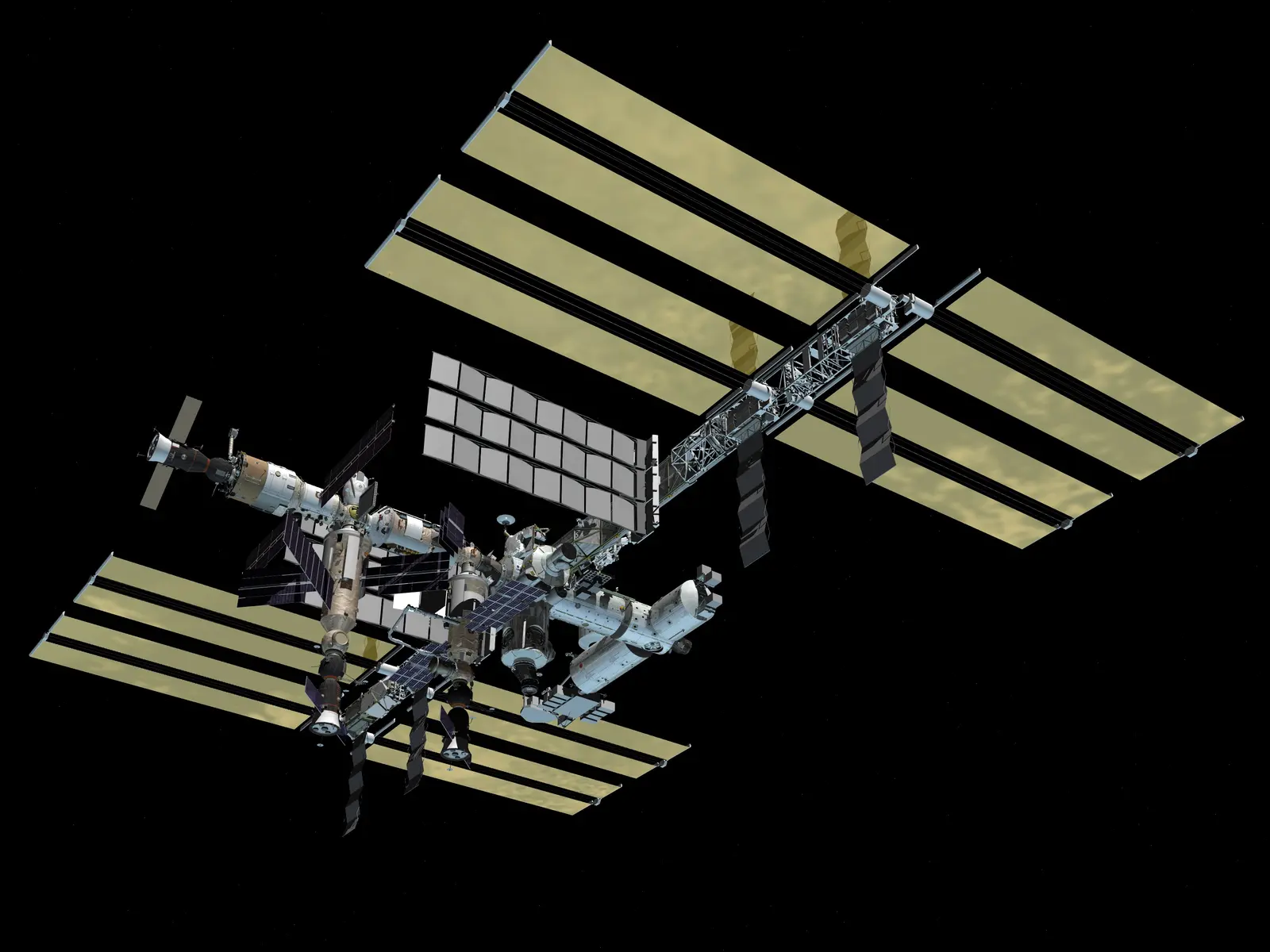
The International Space Station’s iROSA (ISS Roll-Out Solar Array) solar panel upgrade, started in 2021, has finished its initial upgrade plan with the successful installation of the last two arrays this month. The arrays for the 1A and 1B power channels were brought to ISS aboard the CRS-28 Cargo Dragon flight and then installed in a pair of EVAs by NASA astronauts Steve Bowen and Woody Hoburg.
The iROSA project was started due to the ongoing degradation of the Station’s existing solar panels after years in low-Earth orbit. The original solar array complement, finished in March 2009 with the installation of the S6 truss, was capable of 240 kilowatts when new. However, the radiation environment in orbit has degraded the arrays to the point where they can now only generate 160 kilowatts.
The European Space Agency has announced that astronaut reserve Marcus Wandt will fly aboard an Axiom Space flight to the International Space Station. With the announcement, Wandt has become the first of the newest ESA astronaut class to secure a seat on a spacecraft heading for space. ESA opened up applications for a new class […]
The post ESA Reserve Astronaut Secures Seat Aboard Axiom Flight appeared first on European Spaceflight.
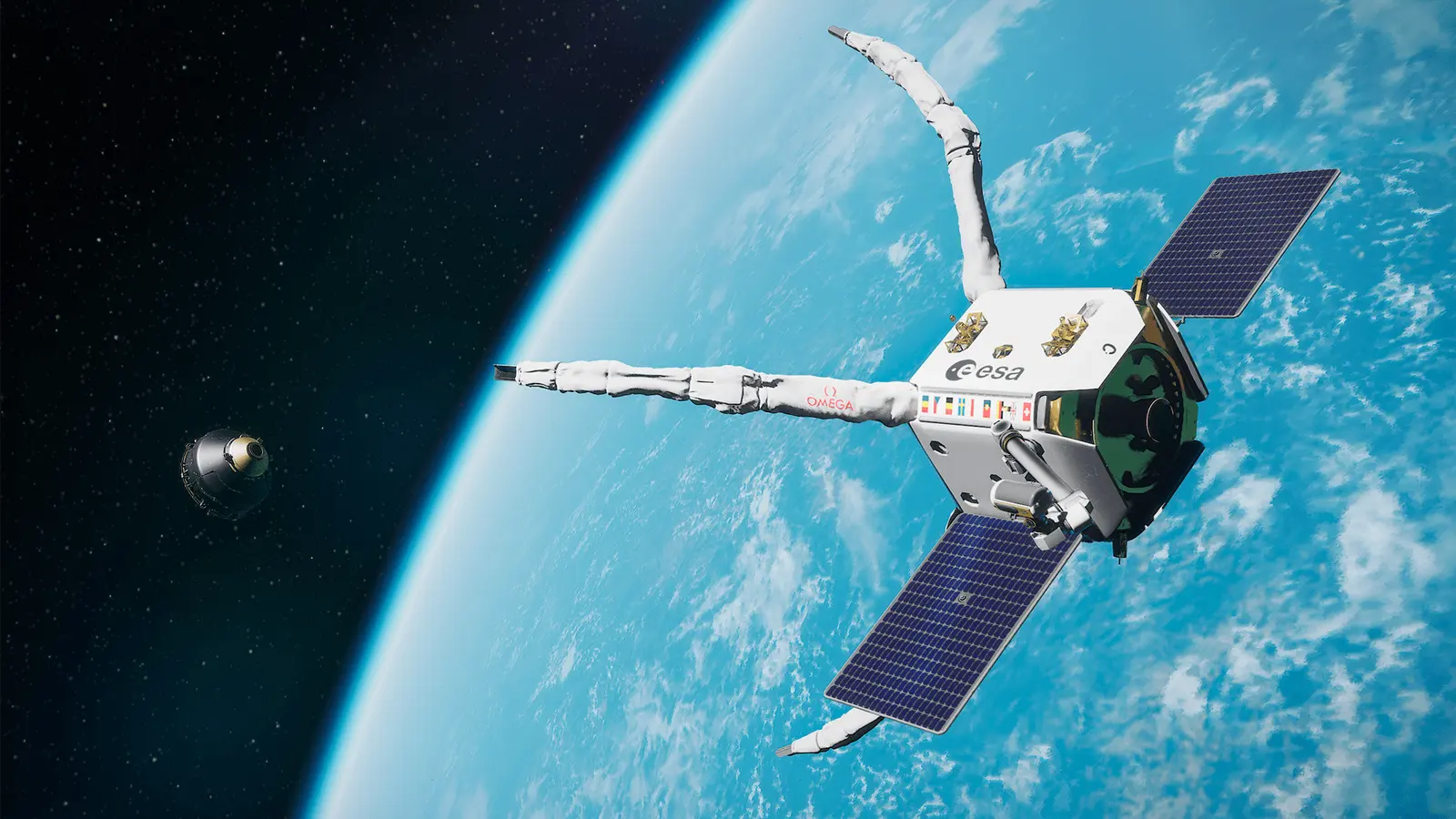
Governments should consider requiring satellites over a certain altitude to be maneuverable to improve space sustainability, according to an executive for Amazon’s proposed Project Kuiper constellation.
SES said June 15 that Luxembourg has approved a program to carve out capacity from its O3b mPower medium Earth orbit broadband network for the country and NATO allies.
USOS Extravehicular Activity (EVA) #88 ISS Roll-Out Solar Array (IROSA) 1B Install: Today, Woody Hoburg and Steve Bowen conducted USOS EVA #88 to install and deploy the IROSA 1B. Operators Frank Rubio and Sultan Al Neyadi provided SSRMS M1/M2 support during the EVA. The IROSA will augment power generation for the 1B power channel on …
Despite an overwhelming vote of support by the United Nations General Assembly six months ago, advocates of a moratorium on one type of anti-satellite tests say they are still working to get more countries to adopt it.
The World Economic Forum (WEF) has released The Space Industry Debris Mitigation Recommendations, new set of guidelines aimed at reducing its creation.