The first launch of Canada's new spaceport is in the record books. Today a group of young Canadian STEM enthusiasts from the Arbalest Rocketry team, hailing from York University in Ontario, successfully launched their amateur high-powered rocket, named 'Goose 3,' from Spaceport Nova Scotia.
Europe, temporarily lacking its own access to space, plans to rely more on SpaceX to launch key science and navigation spacecraft while working to restore its launch capabilities.
A group founded by European air traffic controllers has signed a deal to bring improved airspace-tracking capabilities from Viasat’s constellation to market next year.
In order to better keep tabs on adversaries, the U.S. military needs satellites that can actively maneuver in orbit, the deputy commander of U.S. Space Command said July 6.
Progress toward the second flight of the world’s most powerful launch vehicle continues to take place at Starbase. With Ship 25 passing its six-engine Static Fire test, the focus has returned to completing upgrades to the Orbital Launch Mount (OLM), with the installation of a steel plate water deluge system now taking place.
Payloads: Combustion Integration Rack (CIR): The crew gained access to the CIR, and replaced the CIR input/output processor (IOP). The current IOP has a failed cooling fan, which is needed to support CIR operations. CIR includes an optics bench, combustion chamber, fuel and oxidizer control, and five different cameras for performing combustion investigations in microgravity. …
ESA has established an Independent Enquiry Commission to investigate the failure of the Avio-led Vega C Zefiro 40 (Z40) static fire test. “An Independent Enquiry Commission has been established by ESA Director General Josef Aschbacher to investigate the recent results of the static firing test of the Vega-C Zefiro 40 motor, which took place on […]
The post ESA Launch Independent Enquiry Commission to Investigate Vega C Z40 Test Failure appeared first on European Spaceflight.
HawkEye 360, a commercial operator of remote-sensing satellites, announced July 6 it was selected by the government of Australia to help detect illegal fishing activity using radio-frequency sensors.
The last launch of Europe’s Ariane 5 rocket went off without a hitch today. Carrying two communications satellites, one for Germany and one for France, it brought to a close […]
One chapter in European access to space came to a close July 5 with the final launch of the Ariane 5, but the beginning of the next chapter faces additional delays.
The Ariane 5 is set to fly for the very last time on Wednesday, July 5, sending government communication satellites for Germany and France into space. Also known as flight VA261, the rocket will launch from the Centre Spatial Guyanais (CSG) in Kourou, French Guiana, with a target window between 22:00 UTC to 23:05 UTC. The current T0 is at the start of the window.
International regulators have waived a requirement for Rivada Space Networks to launch 10% of its proposed 576 satellites by September, boosting plans to fund the multibillion-dollar connectivity constellation.
The Polish Space Agency (POLSA) has announced that it has completed the acceptance phase of three observatories that will be used to track satellites and space debris. The three observatories are hosted at cooperating facilities in Australia (Siding Spring Observatory), Chile (Deep Sky), and South Africa (South African Astronomical Observatory). Funding for the project was […]
The post Poland Complete Acceptance Phase for Three Space Debris Observatories appeared first on European Spaceflight.
Payloads: Food Physiology: The crew collected samples in support of the Food Physiology investigation. The Integrated Impact of Diet on Human Immune Response, the Gut Microbiota, and Nutritional Status During Adaptation to Spaceflight (Food Physiology) experiment is designed to characterize the key effects of an enhanced spaceflight diet on immune function, the gut microbiome, and …
Large satellite constellations can unintentionally generate electromagnetic noise, creating an additional source of interference for radio astronomers.
As two companies prepare to begin or resume commercial suborbital human spaceflights, they are facing uncertainty about how the safety of the people on those flights will be regulated.
The French space agency CNES announced 28 June that it had created a Space Mission Ethics Committee that will be tasked with informing the agency’s governing bodies on any question of ethics relating to space activities. The creation of the new committee is a consequence of the agency’s adoption of a charter of ethics and […]
The post CNES Creates Space Mission Ethics Committee appeared first on European Spaceflight.
Here are links to all the articles published on SpacePolicyOnline.com during the week of June 26-July 2, 2023, including our “What’s Happening in Space Policy” for this coming week. Click […]
Three launches are currently planned for the week of July 2 through July 9. The first one took place on Wednesday, July 5, with a European rocket successfully making its 117th and final flight. Later in the week, SpaceX plans two Falcon 9 flights with Starlink payloads on Friday, July 7 and Sunday, July 9 – with the first successfully conducted from Vandenberg. These three flights will be the 98th, 99th, and 100th orbital launch attempts of 2023, respectively.
Payloads: Astrobee: The Astrobee systems were powered on and stowage in the area cleared away to allow the performance of free-flight maneuvers. This type of activity is commonly called “crew minimal” and the goal is for the ground to command the Astrobee experiment systems to complete the session objectives with minimal crew involvement. Astrobee is …
Europe's Vega C rocket, which has been working towards a return to flight following a launch failure in December 2022, has experienced another setback.
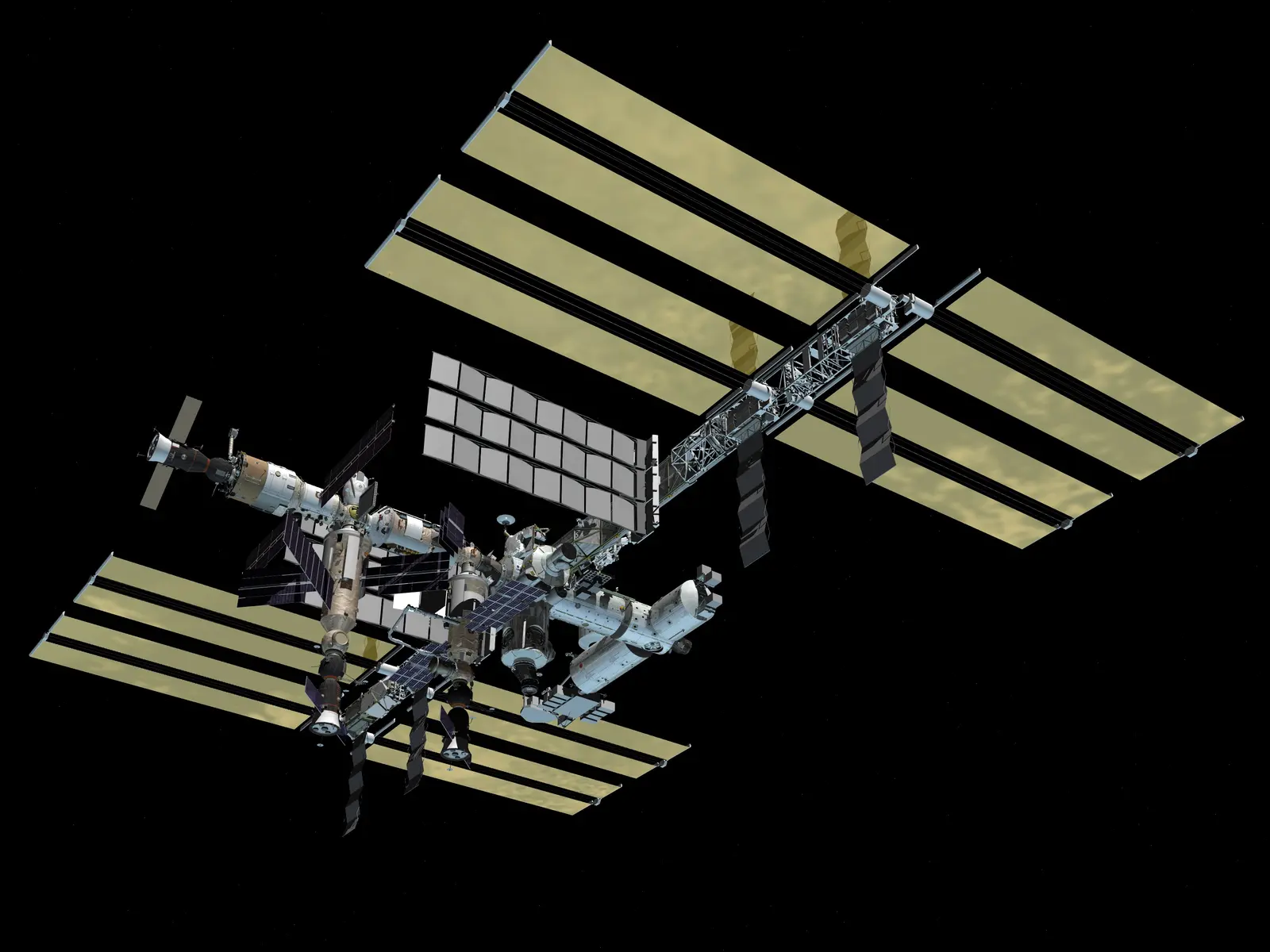
NASA has now revealed its plans to enhance the station's capabilities even further. The space agency has partnered with Boeing and Redwire to add two additional solar arrays, known as ISS Roll-Out Solar Arrays (IROSA), to the ISS.
Here is SpacePolicyOnline.com’s list of space policy events for the next TWO weeks, July 2-14, 2023 and any insight we can offer about them. The House and Senate are in […]
ESA’s Euclid spacecraft is on its way to the L2 Lagrange point where it will spend six years collecting data to help scientists understand the nature of dark energy and […]
At 11:12 AM ET, SpaceX's Falcon 9 rocket took to the Florida skies from SLC-40 with ESA's Euclid Telescope onboard. This mission, a rather unique one to add to the now seemingly never-ending list of SpaceX launches, saw F9 loft Euclid to an L2 orbit, the same orbit as NASA's James Webb Space Telescope, and a first-of-its-kind mission for SpaceX.
SpaceX launched its 45th mission of the year, carrying the Euclid telescope from the European Space Agency (ESA). Liftoff was Saturday, July 1, at 11:12 AM EDT (15:12 UTC) from Space Launch Complex 40 (SLC-40) in Florida.
After completing an upgrade to the International Space Station’s power system in June, NASA is moving ahead with plans to add two more solar arrays to the station.
Following the anomaly investigation into the Centaur V upper stage, United Launch Alliance is de-stacking the Vulcan Centaur rocket and shipping the...
A Chinese satellite manufacturer and constellation operator says it has successfully demonstrated space-to-ground high-speed laser communications which could help China break bottlenecks in getting data from space down to the ground.
AST SpaceMobile is continuing to search for funds ahead of deploying commercial direct-to-device satellites next year after getting more breathing room with a $60 million discounted share sale.
Summary supplied by SpaceNews.
NASA
NASA Hosts OSIRIS-REx Sample Lab Media Day in Houston
Source link unavailable
Read summary
Ahead of the first asteroid sample collected by the U.S. arriving on Earth in September, media are invited on Monday, July 24, to see NASA’s newly-built OSIRIS-REx Sample Curation Laboratory where the agency will study the sample at its Johnson Space Center in Houston.
The Defense Innovation Unit is seeking proposals from commercial launch companies that can provide “responsive and precise point-to-point delivery of cargo to, from, and through space.”
Recently, Blue Origin has completed several milestones in its programs, as it inches closer to a debut flight of its New Glenn rocket. The successful BE-4 firings below the Vulcan rocket, modifications on pad and infrastructure, and winning the contract for the Artemis V lander have put Blue Origin in a better position than their previous situation, with a delayed rocket and a struggle to secure contracts. Ongoing efforts also include the possibility of a fully-reusable New Glenn.
Payloads: Cold Atom Lab (CAL): A checkout of the of the new CAL fiber optic inspection system was successfully performed. CAL produces clouds of atoms that are chilled to about one ten billionth of a degree above absolute zero — much colder than the average temperature of deep space. At these low temperatures, atoms have …