
Added launch.
Update ↗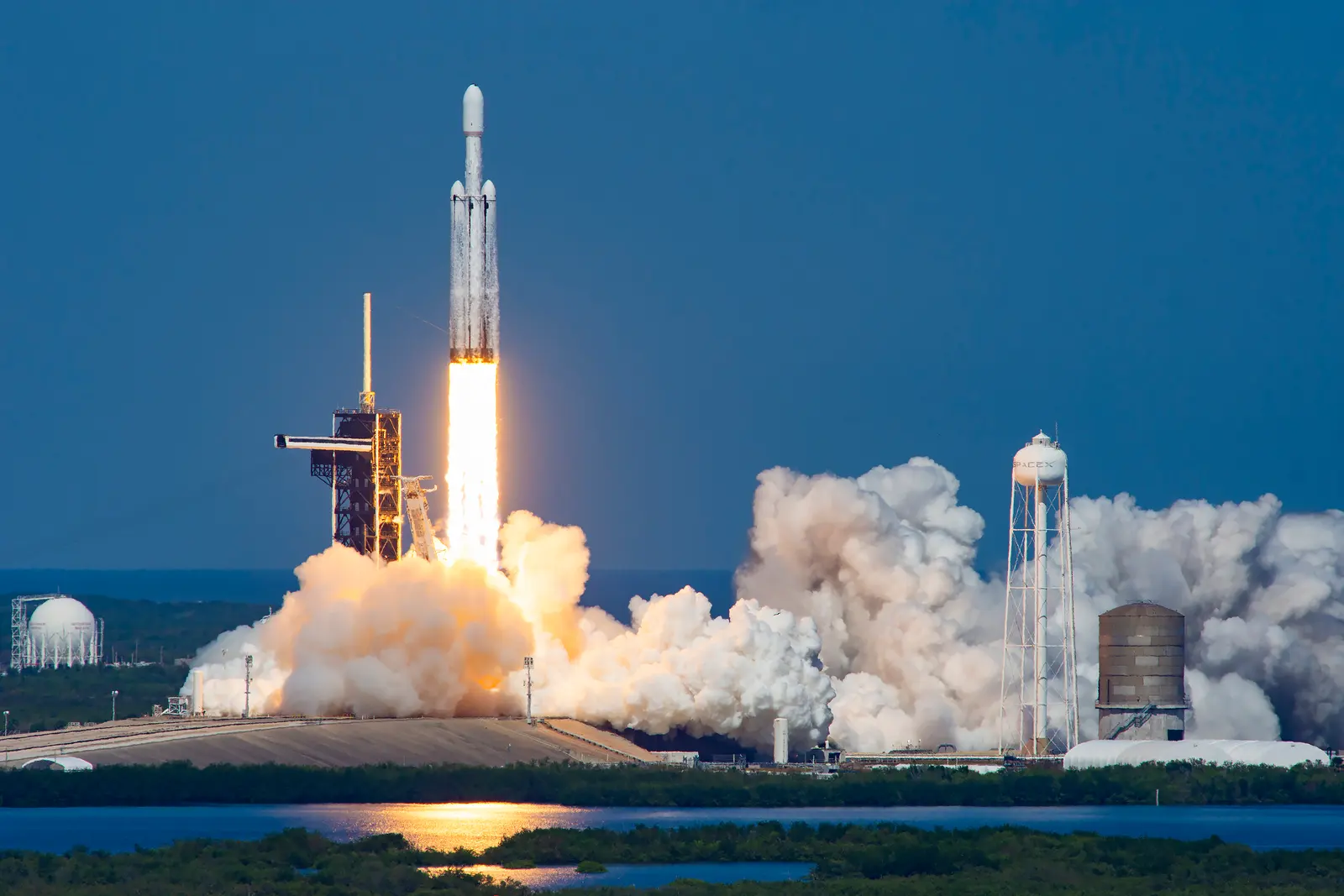
SpaceX日程未定
Dragonfly
Falcon Heavy
ミッションの目的概要は英語
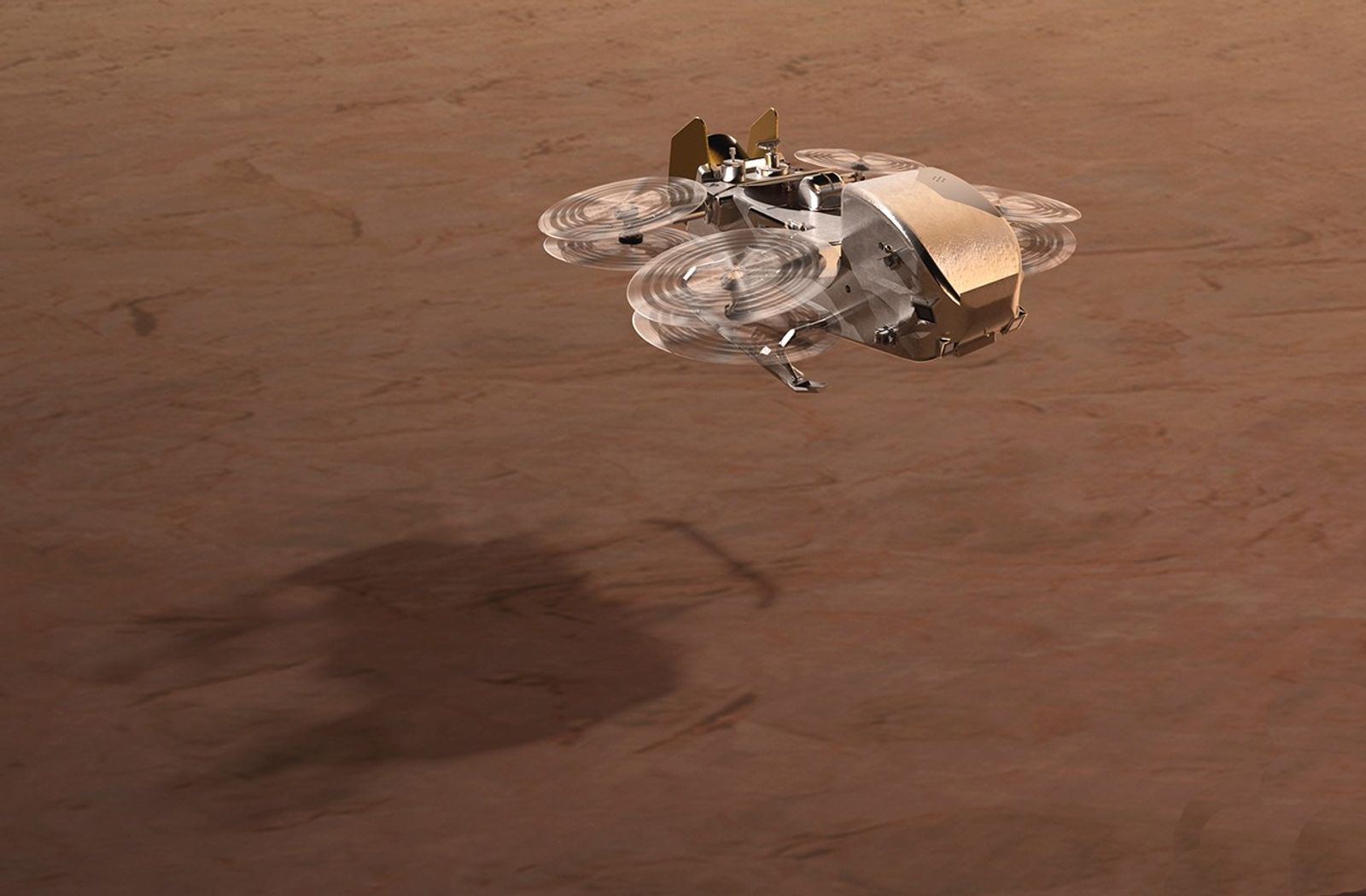
Dragonfly is NASA's 4th New Frontiers program mission that will send a robotic rotorcraft to fly within the atmosphere of Saturn's moon Titan to sample materials and determine surface composition in different geologic settings, advancing humanity's search for the building blocks of life. The craft is a large quadcopter with double rotors with mass of about 875 kg, featuring rotors of 1.35 m in diameter. It can fly through several kilometers within an hour and will perform 1 flight per Titan day (~16 Earth days). During the planned 3.3-year mission, Dragonfly is expected to cover distance up to several hundred km. Dragonfly will use a Multi-Mission Radioisotope Thermoelectric Generator (MMRTG) to power its instruments. The planned science instrument suite is: * DragonCam: Camera Suite * DrACO: Drill for Acquisition of Complex Organics * DraMS: Mass Spectrometer * DraGNS: Gamma-ray and Neutron Spectrometer * DraGMet: Geophysics and Meteorology
2028年7月5日・時刻未定
保存したミッションはマイページで確認できます。 リマインダーや予定変更の通知を受け取るには、iPhoneアプリでこのミッションをフォローしてください。
公表されている予定
2028年7月5日。詳しい時刻は、まだ公表されていません。
発表元の更新:
発表元を確認:Dragonfly ↗・Launch Library ↗
ミッションの更新
発表元からのお知らせ
このページを表示している間、予定の変更を確認します。
このタブを開いて表示している間だけ、通知を受け取れます。
目標時刻まで
日時未定
打ち上げ予定は変更される場合があります。
発射場所Kennedy Space Center, FL, USA
関連記事・英語
Why NASA’s Dragonfly will fly from dune to crater on Titan
An ancient impact may have mixed Titan’s organic material with liquid water. Dragonfly will carry a chemical laboratory from site to site to look for the products.
In this report
NASA’s Dragonfly will travel to Titan to study ground that is rich in organic molecules and cold enough for water ice to behave like rock. The plan is to start near equatorial dunes, then fly toward Selk, an impact crater where heat may once have mixed those molecules with liquid water. [1] [2] [4]
The comparison could answer a question that a single landing cannot: how much did the chemistry change from one environment to another? To investigate, Dragonfly must carry the same instruments across the landscape, collect samples and connect their composition to the places they came from. [3]
A world that makes its own organic sand
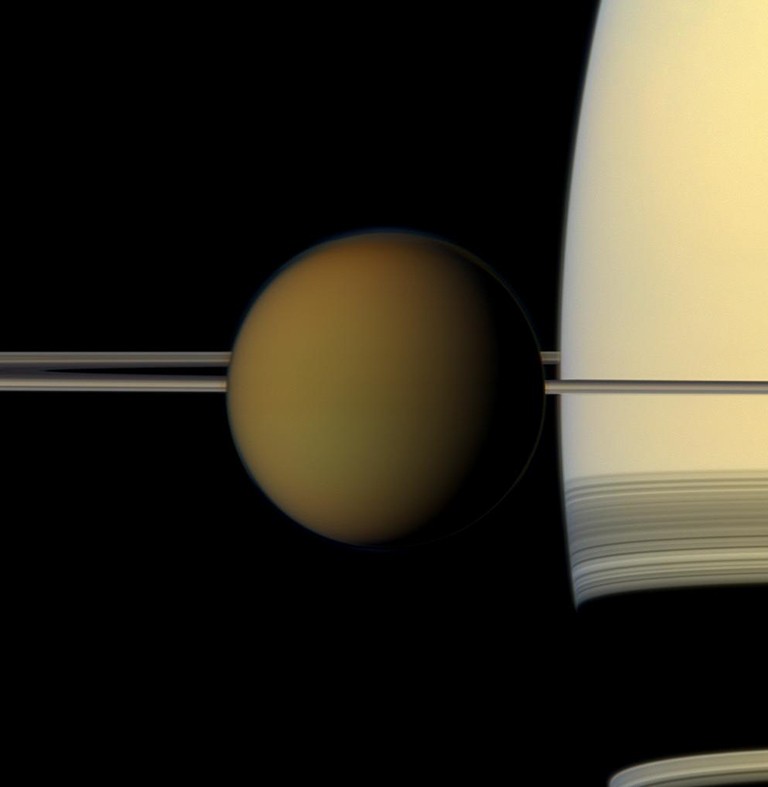
High in Titan’s atmosphere, ultraviolet light and energetic particles break apart nitrogen and methane molecules. Their fragments recombine into more complicated compounds, some of which settle toward the surface. Wind gathers organic grains into dunes. Dragonfly will be able to sample material that this atmospheric chemistry has supplied to the ground. [2]
The familiar landforms can be misleading. At a surface temperature of about −179°C, water is frozen hard enough to act as rock. Methane and ethane take the liquid role in Titan’s rivers and lakes. A shoreline on Titan therefore does not imply the sort of water-rich environment that supports life on Earth. [2]
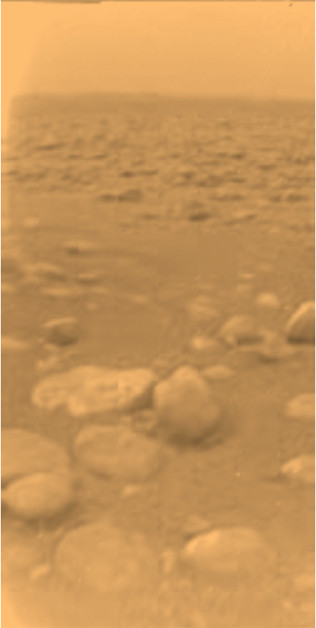
Carbon-containing molecules can form without organisms. Dragonfly will measure which compounds are present, how their abundances change between environments, and which processes could have produced them. The presence of organic material alone cannot show that life exists. [6]
Why an impact crater belongs in this story
Selk is about 80 kilometres across. An impact of that scale can melt crustal ice, bringing liquid water into contact with organic material. After the melt freezes again, its products may remain in the landscape. The landing-site study identifies water-rich material around Selk in Cassini observations and treats possible interactions between melted ice and organics as a scientific opportunity. [4]
Scientists do not yet know which reactions occurred there, how far they proceeded, or what survives within reach of a drill. Dune material offers one point of comparison for deposits that may have experienced heat and liquid water. Measurements from several sites can test whether their chemical differences fit that history. [4]
The safest first landing and the richest scientific target need not coincide. Relatively flat terrain between dunes can provide an initial landing area, while a mobile spacecraft can later approach more varied terrain. Flight separates those two choices. [4] [5]
Titan makes a heavy aircraft practical
Titan’s thick atmosphere gives the rotors substantial air to accelerate downward. Its gravity is only about one-seventh of Earth’s, so the same machine weighs much less there even though its mass is unchanged. Four pairs of rotors can carry a laboratory that would be a much harder flying proposition on Earth. [8]
NASA’s current spacecraft overview describes a mission visiting 20–30 sites and reaching about 115 kilometres from the initial landing site. Those are plans, not a completed route. The scientific value lies in crossing boundaries between terrains: Dragonfly can pass over a difficult stretch of dunes instead of needing a drivable path through every metre of it. [5]
What happens to a pinch of Titan
At a selected site, the Drill for Acquisition of Complex Organics, or DrACO, collects a sample smaller than a gram. The material goes to the Dragonfly Mass Spectrometer, DraMS. This is where a patch of ground becomes a chemical measurement: the instrument turns sample material into charged particles and examines their mass-to-charge relationships to help identify its components. [6]
Titan’s atmosphere helps inside the spacecraft as well as outside it. A flow of local air carries drill tailings through chilled lines into a collection cup. A carousel moves that cup into position for analysis. This pneumatic transfer system links a drill on the outside to the protected laboratory within. [7]
DraMS has complementary ways to investigate a mixture. Laser pulses can release larger organic molecules from a sample. In another mode, an oven heats material and the released compounds pass through a gas chromatograph, which separates the mixture before mass spectrometry. Separation matters because a complicated sample contains overlapping chemical signals; taking the mixture apart makes those signals easier to interpret. [7] [6]
DragonCam images will place each sample in its geological surroundings. Other instruments measure elemental composition, weather and the ground’s physical properties. These observations help scientists distinguish chemical differences associated with the local terrain from ingredients distributed more widely across Titan. [3]
The first landing cannot wait for Earth
A radio signal takes roughly 70–90 minutes to travel one way between Titan and Earth. By the time controllers saw a hazard and sent back a correction, a landing would be long over. People will plan the mission, but the aircraft must make its own immediate flight decisions. [8]
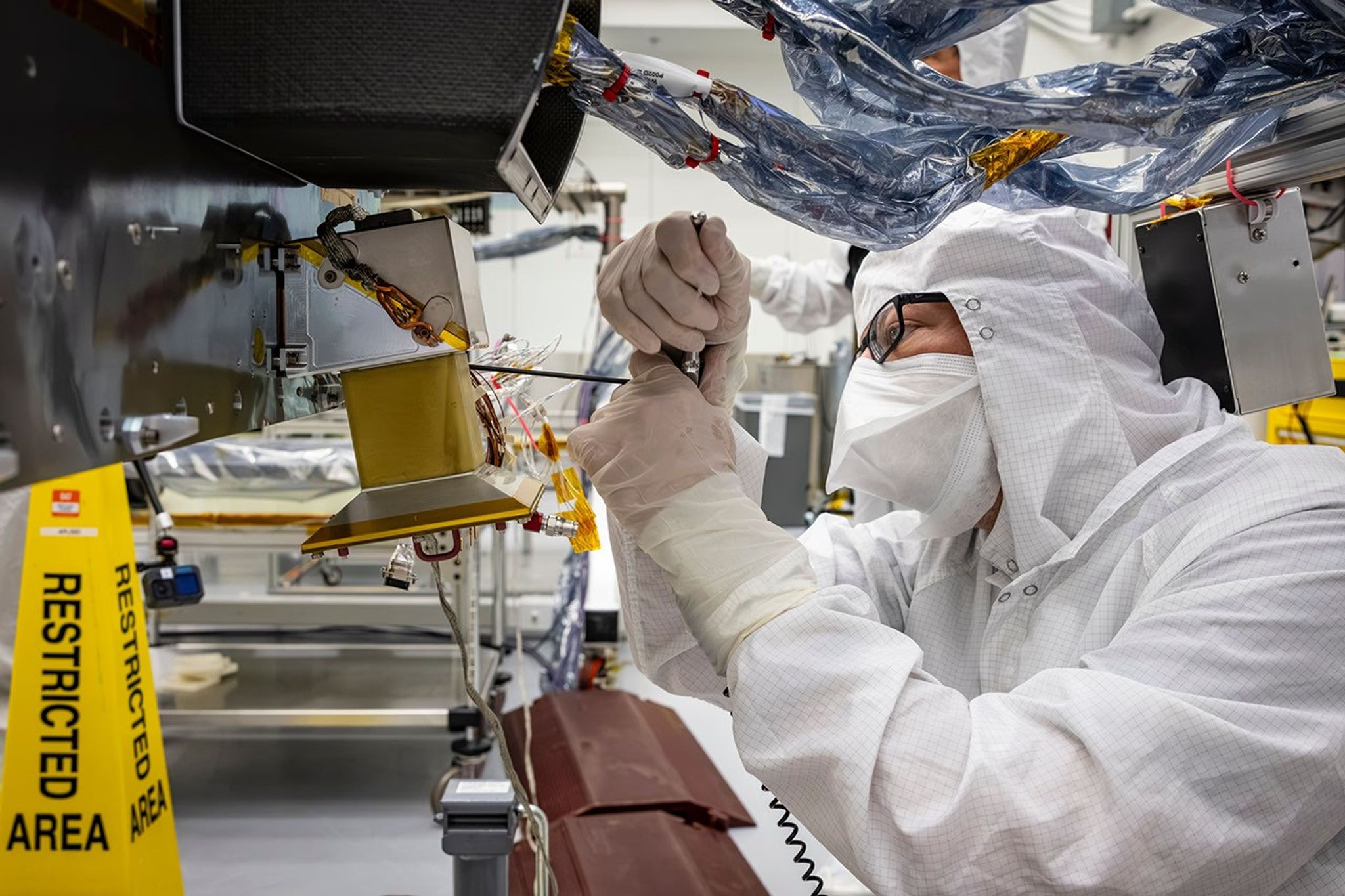
In an update published on October 23, 2026, NASA reported a real-time rehearsal of the first flight on a computer testbed with flight-like avionics. Flight software received simulated camera, inertial-sensor and lidar data, then searched for a safe area, turned back and landed in the simulated terrain. [9]
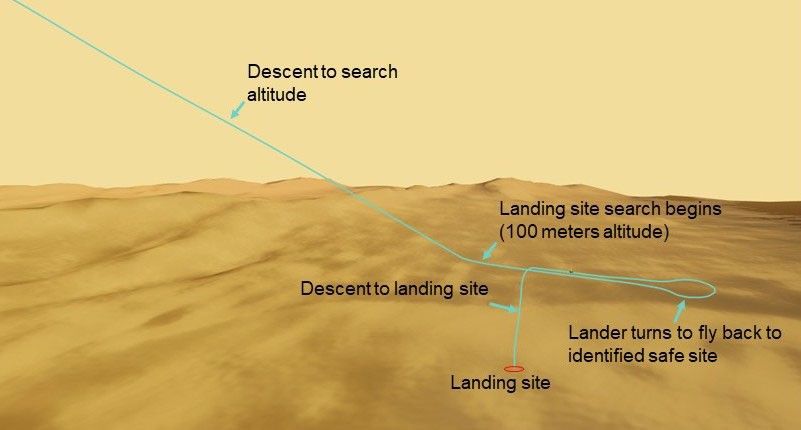
That rehearsal tests whether sensing, software and timing work together. It does not demonstrate a flight on Titan. NASA said tests on the actual flight system and deliberate fault scenarios were still ahead. The engineering question is whether the aircraft can keep making sound decisions when a real sequence departs from the ideal one. [9]
Why flights will be weeks apart
Flight consumes energy quickly; collecting it can be slow. Dragonfly pairs a battery with a radioisotope power source. The generator turns heat from radioactive decay into electricity, and its waste heat also helps keep the insulated interior warm. Stored electrical energy supports flight, while time on the ground allows recharging and science. [10] [8]
NASA expects flights roughly once every one or two Titan days, each about 16 Earth days long. Between them, Dragonfly can analyse samples and monitor its surroundings. The long stays make the mission a series of local investigations connected by short flights. [1]
What a successful journey would tell us
As of November 10, 2026, NASA’s mission overview targets launch no earlier than July 2028, arrival in late 2034 and a 3.3-year primary mission. The development work now under way must turn a promising combination of aircraft and instruments into a spacecraft able to operate far beyond real-time help. [1]
If the mission succeeds, scientists will be able to compare material deposited from the atmosphere with samples from terrain that may have held liquid water. Which compounds appear in both? Which occur only in a particular setting? Those differences could show how local conditions helped build biologically relevant molecules, even if Titan has never hosted an organism. [3]
Watch the film
Loading the player connects to YouTube.
Explore Dragonfly’s planned science, flight, sampling, autonomy and power on Titan. The film distinguishes design studies and simulations from future operations.
Sources and credits (13)
- Dragonfly mission overviewNASA · Checked 2026-11-10
- Titan factsNASA · Checked 2026-11-10
- Dragonfly scienceNASA · Checked 2026-11-10
- Selection and Characteristics of the Dragonfly Landing Site near Selk Crater, TitanLorenz et al. / The Planetary Science Journal, via NASA NTRS · Checked 2026-11-10
- Dragonfly spacecraft and instrumentsNASA · Checked 2026-11-10
- NASA Instrument Bound for Titan Could Reveal Chemistry Leading to LifeNASA · Checked 2026-11-10
- The Science of Dragonfly: animation transcriptNASA Goddard · Checked 2026-11-10
- Small Steps, Giant Leaps: Episode 168, Dragonfly — Mission to TitanNASA · Checked 2026-11-10
- NASA’s Dragonfly Completes First Simulated FlightNASA · Checked 2026-11-10
- NASA Dragonfly Mission MMRTGIdaho National Laboratory / U.S. Department of Energy · Checked 2026-11-10
- Titan: Cassini imagery and mission contextNASA · Checked 2026-11-10
- First colour view of Titan’s surfaceESA · Checked 2026-11-10
- Why NASA Is Sending a Flying Laboratory to TitanSpacian · Checked 2026-11-13
ミッションのデータ
- 打ち上げ機
- Falcon Heavy
- ミッションの種類
- Planetary Science
- 投入先の軌道
- Heliocentric N/A
- Launch pad
- Launch Complex 39A
- 運用機関
- SpaceX
機体の構成
公表された仕様と、この機体の飛行歴。
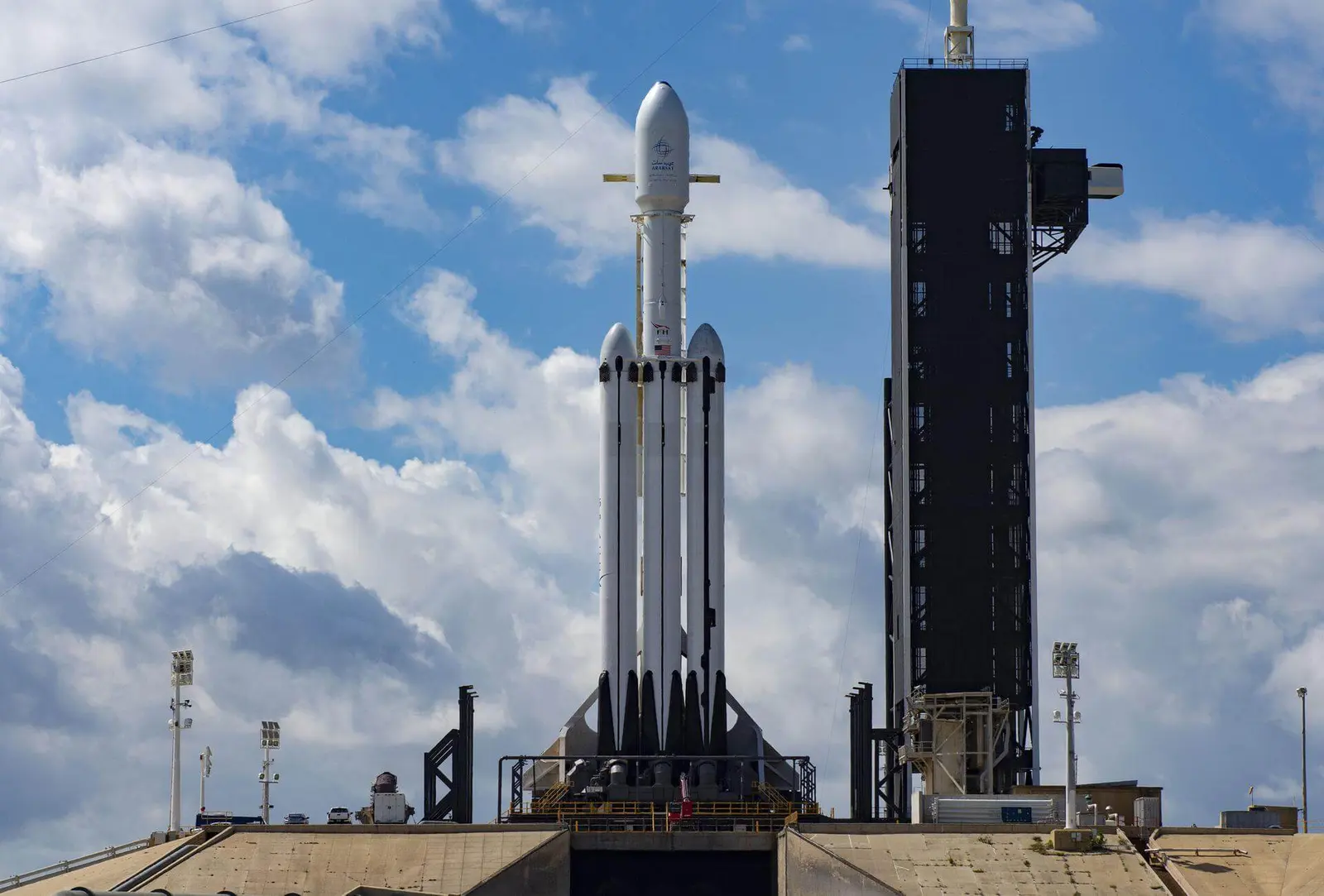
打ち上げ機
Falcon Heavy
機体の説明・英語
The Falcon Heavy is a variant of the Falcon 9 full thrust launch vehicle and consists of a standard Falcon 9 rocket core, with two additional boosters derived from the Falcon 9 first stage.
- 高さ
- 70 m
- 直径
- 12.2 m
- 段数
- 3
- 記録された打ち上げ数
- 14
- 初飛行
- 2018-02-06

Core
Unknown FH
Strap-On Booster
Unknown FH
Strap-On Booster
Unknown FH
打ち上げ可能時間帯
詳しい打ち上げ可能時間帯は、まだ公表されていません。
発射場所
Kennedy Space Center, FL, USA
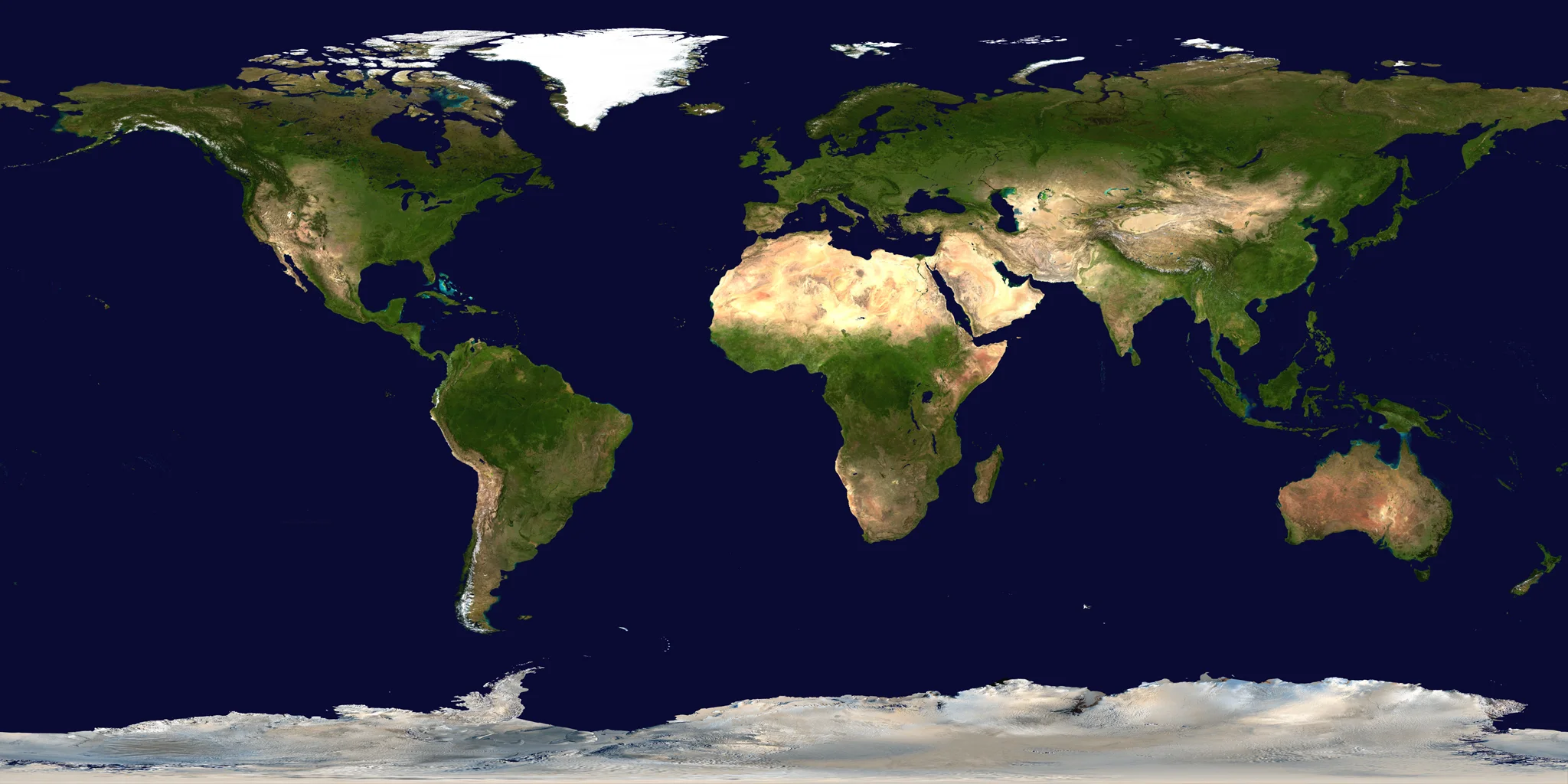
発射場所Launch Complex 39A
Drag to rotate
この表示について
Published destination: Heliocentric N/A.
NASA geography with illustrative lighting. No live tracking or simulated ascent. NASA Blue Marble source.
現地で見る
見学前に確認すること
Check the visitor complex’s viewing options, admission and availability for this specific launch.
延期に備えて日程に余裕を持ち、当日も予定時刻、現地の天気、道路の規制を確認してください。
Kennedy Space Center launch viewing ↗出発前の確認
- 予定日時と打ち上げ可能時間帯を確認する。
- 公式の見学場所と、予約の要否を確認する。
- 許可された見学場所を利用する。発射台へ向かわない。
- 現地で見られない場合に備えて、配信のリンクを控えておく。
中継・出典
ミッションの中継
配信リンクは、まだ公開されていません。
 Android テスト版参加グループを開く クローズドテスト版1.6.0(4)では、サインイン、プレミアム、通知を利用できません。まずGoogleグループに参加し、同じGoogleアカウントでGoogle Playのテストに登録 ↗してください。