Saved Download on the App Store
← Back to launches
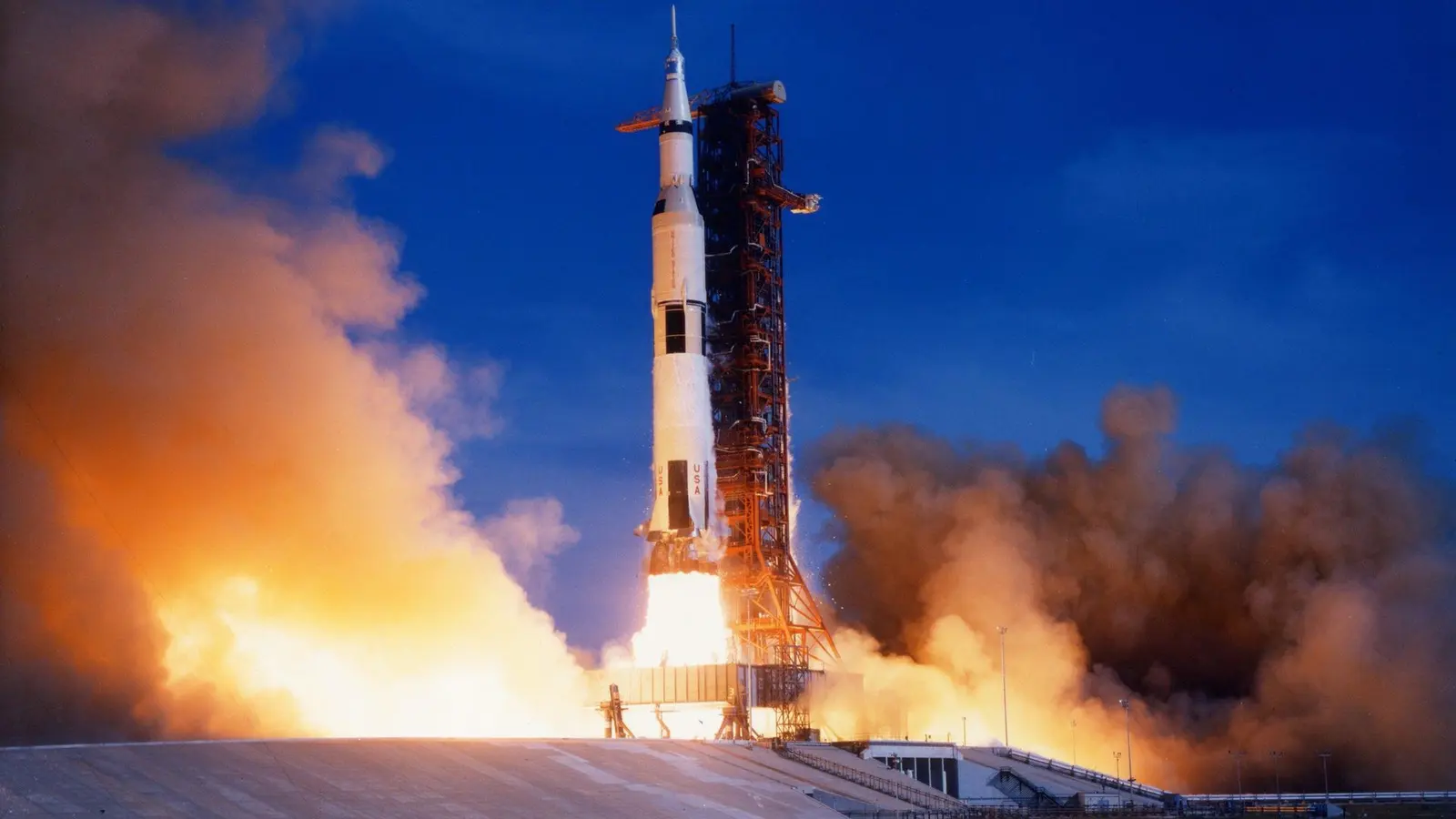
Saturn V | Apollo 6
National Aeronautics and Space AdministrationLaunch was a Partial Failure

Apollo 6

Saturn V

Historical mission record

This page records Saturn V | Apollo 6 and its reported outcome: Launch was a Partial Failure. The date above is a historical record.

Source record updated . This is a source update, not a confirmed launch time.

Check the source: Apollo 6 - Wikipedia ↗ · Launch Library ↗

How to read launch targets and status

Mission status
Launch was a Partial Failure

Status reported by the mission data provider.

LAUNCH SITEKennedy Space Center, FL, USA

Mission

Apollo 6 was intended to send a Command and Service Module (CSM) plus a Lunar Module Test Article (LTA), a simulated Lunar Module (LM) with mounted structural vibration sensors, into a translunar trajectory. However, the Moon would not be in position for a translunar flight, and the Service Module engine would be fired about five minutes later to slow the craft, dropping its apogee to 11,989 nautical miles (22,204 km) and causing the CSM to return to Earth, simulating a "direct-return" abort. On the return leg, the engine would fire once more to accelerate the craft to simulate the nominal lunar return trajectory with a re-entry angle of -6.5 degrees and velocity of 36,500 feet per second (11,100 m/s). The entire mission would last about 10 hours.

Launch vehicle
Saturn V
Mission type
Human Exploration
Destination orbit
Elliptical Orbit
Spacecraft
Apollo CSM-020
Destination
Highly Elliptical Earth Orbit
Launch pad
Launch Complex 39A
Provider
National Aeronautics and Space Administration
Programs
Apollo

The vehicle

Published configuration and flight history.

Saturn V
Launch vehicle

Saturn V

The Saturn V was a human-rated expendable rocket used by NASA between 1967 and 1973. Most notably, the Saturn V took the Apollo program to the Moon. It still remains the world's tallest, heaviest, and most powerful rocket ever brought to operational status and is the only launch vehicle to take humans beyond LEO.

Height
110.6 m
Diameter
10.1 m
Stages
3
Recorded launches
13
First flight
1967-11-09

Recorded timing

This is a mission record, not an upcoming calendar appointment.

Instantaneous windowPublished target
SCHEDULED MOMENT

A single scheduled moment. The schedule may change before launch.

Launch site & orbit

Kennedy Space Center, FL, USA

The mission in perspective

Launch site

DestinationElliptical Orbit

Explore the launch pad on Earth using its published coordinates.

Explore Earth’s orbits
NASA Blue Marble map of Earth's continents and oceans
Geographic view · illustrative lightingNo live tracking or simulated ascent. NASA Blue Marble.

Coverage & sources

Links supplied by the mission data provider.
Coverage and times may change.

Explore on iPhone

Browse mission details and discover upcoming launches in Spacian.

Open mission in Spacian ↗
Download on the App Store