
Updated payload identity (see also https://www.astroforge.com/updates-collection/introducing-autonomy-1-the-first-autonomous-space-mission-powered-by-solo).
Update ↗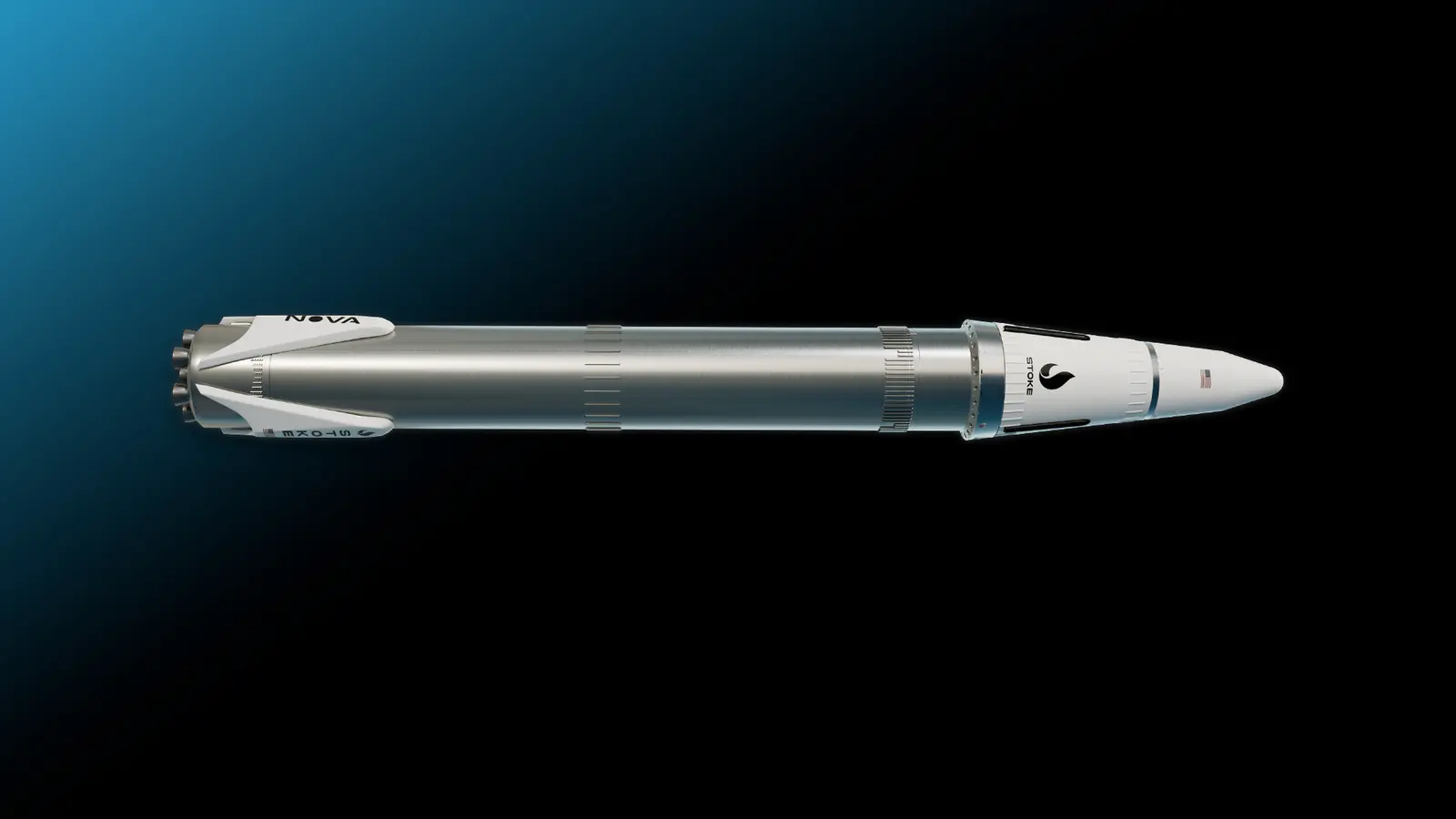
Stoke SpaceTo Be Determined
AstroForge Autonomy-1 (Demo Flight)
Nova
Date to be confirmed
Has a launch date been confirmed?
A confirmed launch date has not been published in this record. Placeholder dates are not launch appointments.
Source record updated . This is a source update, not a confirmed launch time.
Check the source: Launch Library ↗
Checks for schedule changes while this page is visible.
Time to target
Target pending
Target time, not a confirmed liftoff.
LAUNCH SITECape Canaveral SFS, FL, USA
Mission
First launch of Stoke Space’s Nova launch vehicle. Asteroid mining technologies company AstroForge's Autonomy-1 will fly on this launch. Autonomy-1 will be the first full-scale flight demonstration of AstroForge's own spacecraft artificial intelligence model, Solo. The spacecraft will be tested for functionality in orbit without being commanded from the ground, and will transmit telemetry and science data back to Earth without human interference, including from COMPASS, a heliophysics science payload from NASA Goddard.
- Launch vehicle
- Nova
- Mission type
- Test Flight
- Destination orbit
- Low Earth Orbit
- Launch pad
- Space Launch Complex 14
- Provider
- Stoke Space
The vehicle
Published configuration and flight history.
Launch vehicle
Nova
Stoke Space’s Nova launch vehicle is a planned fully reusable 2-stage rocket. The 1st stage uses 7 Zenith Full-flow staged-combustion (FFSC) engines using Liquified natural gas/liquid oxygen (LNG/LOX) as fuel, with restartable capability and landing legs for landing. The 2nd stage is unconventionally designed around a 24-thrust chamber liquid hydrogen/liquid oxygen (LH2/LOX) expander cycle rocket engine that surrounds a regeneratively cooled heat shield, thus enabling the upper stage to return to Earth from orbit without thermal tiles. The nozzle accommodates deep throttle operation even in the presence of atmospheric pressure and serves as an actively cooled metallic heat shield during atmospheric reentry. There is also a center passive bleed that aims to create an aerospike engine-like effect for improved efficiency.
- Height
- 40.2 m
- Diameter
- 4.2 m
- Stages
- 2
- Recorded launches
- 0
Launch window
A calendar entry will be available when a date is confirmed.
A precise launch window has not been published.
Launch site & orbit
Cape Canaveral SFS, FL, USA
The mission in perspective
Launch site & orbit
Explore the launch pad, then pull back to see the shape of the destination orbit.
Understand this orbit
Coverage & sources
Links supplied by the mission data provider.
Coverage and times may change.
Mission coverage
No viewing link has been published yet.
Further reading
Launch Library ↗Follow on iPhone
Get reminders and schedule-change alerts. One active mission free.
Open mission in Spacian ↗