← Back to launches
H-IIA 202 | LRE
Japan Aerospace Exploration AgencyLaunch Successful

LRE

H-IIA 202

Open watch mode ↗

Historical mission record

This page records H-IIA 202 | LRE and its reported outcome: Launch Successful. The date above is a historical record.

Source record updated . This is a source update, not a confirmed launch time.

Check the source: Launch Library ↗

How to read launch targets and status

Mission status
Launch Successful

Status reported by the mission data provider.

LAUNCH SITETanegashima Space Center, Japan

Mission

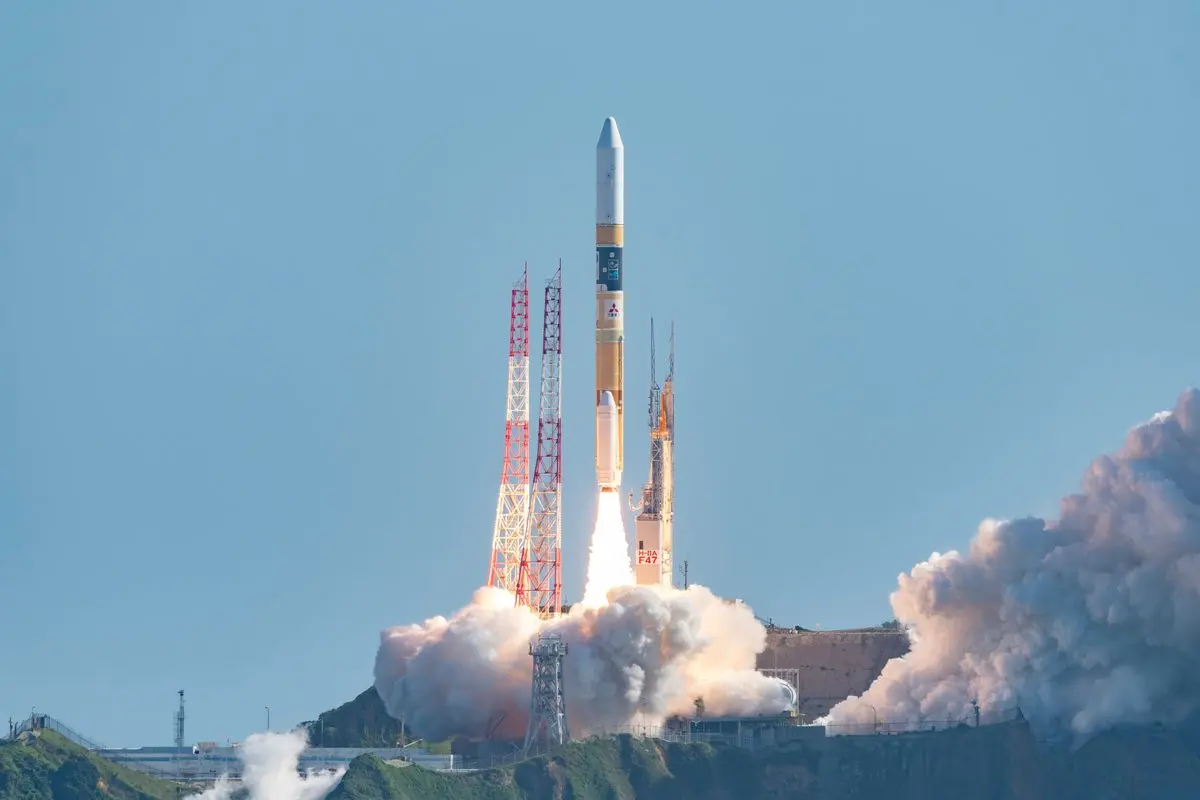
The H-IIA Launch Vehicle No.1 (H-IIA/F1) was launched at 4:00 p.m. on August 29, 2001, Japan Standard Time, from Tanegashima Space Center. The launch vehicle was successfully lifted off with its flight azimuth of 90 degrees. The H-IIA Launch Vehicle No.1 flied normally, and the second stage was successfully injected into the geostationary transfer orbit. The separation of the Laser Ranging Equipment (LRE) was confirmed about 39 minutes and 47 seconds after the lift-off.

Launch vehicle
H-IIA 202
Mission type
Planetary Science
Destination orbit
Geosynchronous Transfer Orbit
Launch pad
Yoshinobu Launch Complex LP-1
Provider
Japan Aerospace Exploration Agency

The vehicle

Published configuration and flight history.

H-IIA 202
Mitsubishi Heavy Industries
Launch vehicle

H-IIA 202

H-IIA (H2A) is an active expendable launch system operated by Mitsubishi Heavy Industries (MHI) for the Japan Aerospace Exploration Agency. The liquid-fueled H-IIA rockets have been used to launch satellites into geostationary orbit, to launch a lunar orbiting spacecraft, and to launch Akatsuki, which studied the planet Venus. Launches occur at the Tanegashima Space Center.

Height
53 m
Diameter
4 m
Stages
2
Recorded launches
35
First flight
2001-08-29

Recorded timing

This is a mission record, not an upcoming calendar appointment.

Instantaneous windowPublished target
SCHEDULED MOMENT

A single scheduled moment. The schedule may change before launch.

Launch site & orbit

Tanegashima Space Center, Japan

The mission in perspective

Launch site & orbit

Explore the launch pad, then pull back to see the shape of the destination orbit.

Understand this orbit
NASA Blue Marble map of Earth's continents and oceans
Representative orbit · accelerated illustrationNo live tracking or simulated ascent. NASA Blue Marble.

Coverage & sources

Links supplied by the mission data provider.
Coverage and times may change.

Mission coverage

No viewing link has been published yet.

Further reading

Launch Library ↗

Explore on iPhone

Browse mission details and discover upcoming launches in Spacian.

Open mission in Spacian ↗
Download on the App Store