
Spacecrafts now in contact.
Update ↗
Historical mission record
This page records PSLV-XL | Proba-3 and its reported outcome: Launch Successful. The date above is a historical record.
Source record updated . This is a source update, not a confirmed launch time.
Check the source: www.isro.gov.in ↗ · About Proba-3 ↗ · Proba-3 ↗
Mission status
Launch Successful
Status reported by the mission data provider.
LAUNCH SITESatish Dhawan Space Centre, India
Mission
Proba-3 (Project for On-Board Autonomy 3) is the first close formation flying mission for the European Space Agency (ESA). It consists of two independent, three-axis stabilised spacecraft flying 150 meters from one another with the ability to accurately control the attitude and separation of the two craft. Such formation flying will be maintained for 6 hours, creating ″artificial solar eclipse″ for the satellite below. The spacecraft pair will fly a highly elliptical orbit divided between periods of accurate formation flying around apogee, when payload operations will be possible, and periods of free flight.
- Launch vehicle
- PSLV XL
- Mission type
- Technology
- Destination orbit
- Elliptical Orbit
- Launch pad
- Satish Dhawan Space Centre First Launch Pad
- Provider
- Indian Space Research Organization
The vehicle
Published configuration and flight history.
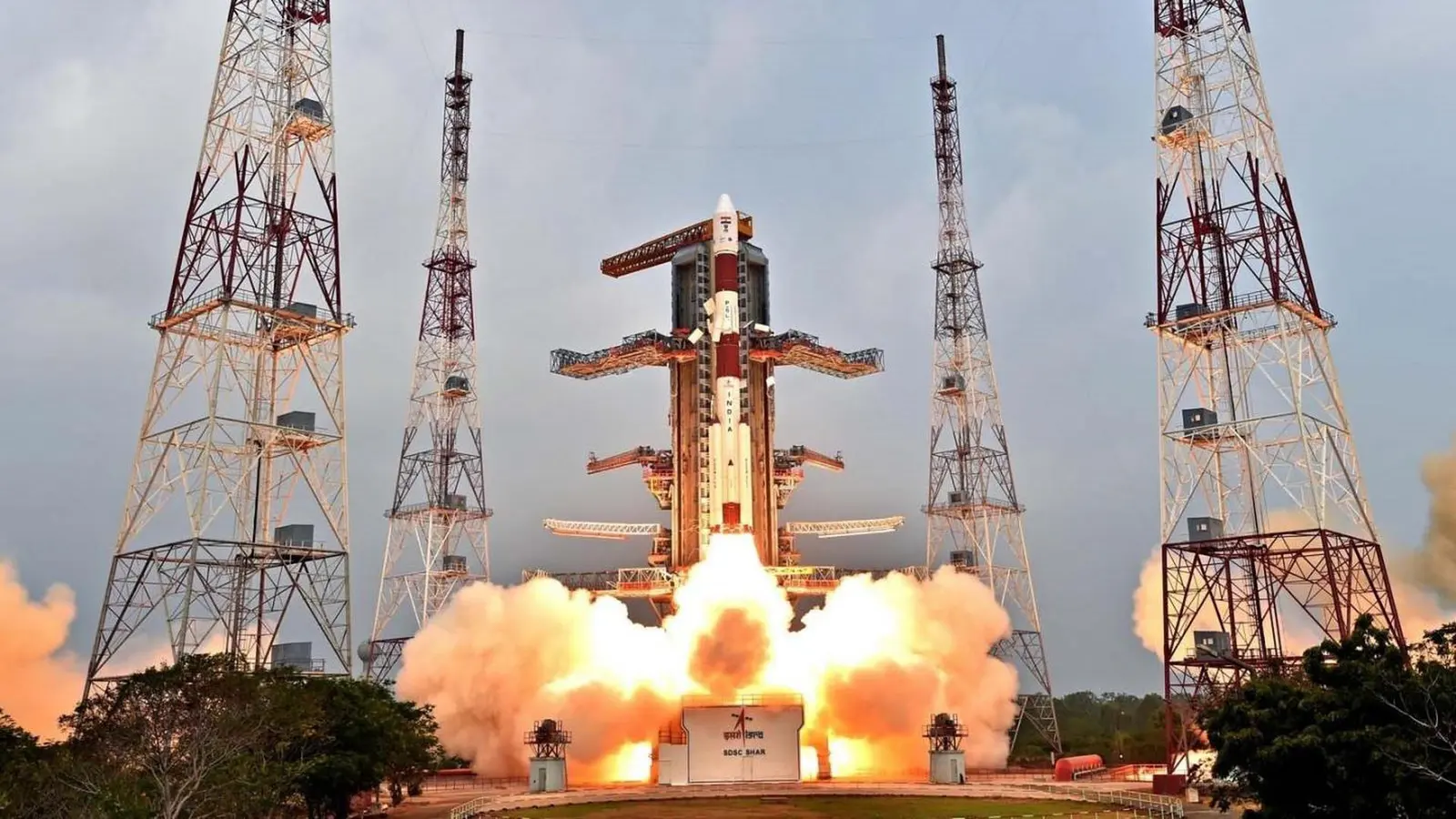
Launch vehicle
PSLV XL
PSLV-XL is the upgraded version of Polar Satellite Launch Vehicle in its standard configuration boosted by more powerful, stretched strap-on boosters with 12 tonne propellant load. Weighing 320t at lift-off, the vehicle uses larger strap-on motors (PSOM-XL or S12) to achieve higher payload capability. On 29 December 2005, ISRO successfully tested the improved version of strap-on booster for the PSLV. The first use of PSLV-XL was the launch of Chandrayaan-1 by PSLV C11. The payload capability for this variant is 1,800 kg to SSO.
- Height
- 44 m
- Diameter
- 2.8 m
- Stages
- 4
- Recorded launches
- 27
- First flight
- 2008-10-22
Recorded timing
This is a mission record, not an upcoming calendar appointment.
Instantaneous windowPublished target
SCHEDULED MOMENT
A single scheduled moment. The schedule may change before launch.
Flight timeline
Planned sequence, not live telemetry. Times are relative to the launch target.
- T−00:00:03
Ignition
- T+00:00:00
Booster Ignition
- T+00:00:01
Liftoff
- T+00:00:25
Booster Ignition
- T+00:01:10.1
Booster Separation
- T+00:01:32
Booster Separation
Show the full sequence (14 events)
- T+00:01:49.7
Stage 2 Separation
- T+00:01:49.9
SES
- T+00:04:22.38
Stage 2 Separation
- T+00:04:23.58
Stage 3 Ignition
- T+00:08:9.22
Stage 3 Separation
- T+00:08:19.62
Kick Stage Ignition
- T+00:16:55.48
Kick Stage Cut-off
- T+00:18:42.48
Payload Separation
Launch site & orbit
Satish Dhawan Space Centre, India
The mission in perspective
Launch site
DestinationElliptical Orbit
Explore the launch pad on Earth using its published coordinates.
Explore Earth’s orbits
Drag to rotate
Coverage & sources
Links supplied by the mission data provider.
Coverage and times may change.
Mission coverage
PSLV-C59/PROBA-3 Mission ↗Explore on iPhone
Browse mission details and discover upcoming launches in Spacian.
Open mission in Spacian ↗