
Launch success
Update ↗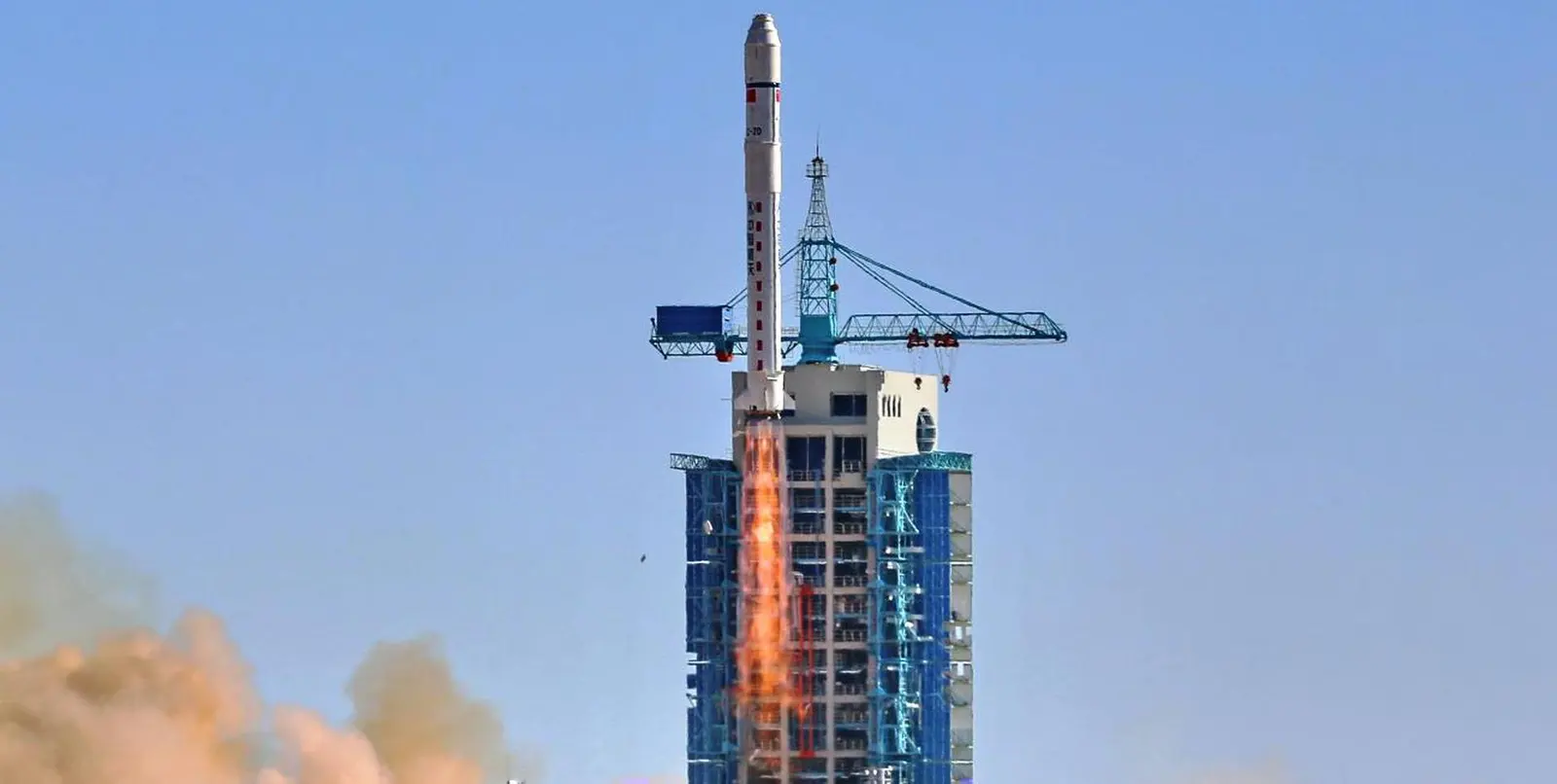
China Aerospace Science and Technology CorporationLaunch Successful
Advanced Space-borne Solar Observatory (ASO-S)
Long March 2D
Historical mission record
This page records Long March 2D | Advanced Space-borne Solar Observatory (ASO-S) and its reported outcome: Launch Successful. The date above is a historical record.
Source record updated . This is a source update, not a confirmed launch time.
Check the source: Launch Library ↗
The latest on this mission
What changed?
Mission status
Launch Successful
Status reported by the mission data provider.
LAUNCH SITEJiuquan Satellite Launch Center, People's Republic of China
Mission
ASO-S (Advanced Space-borne Solar Observatory) is a Chinese solar space observatory that aims to study the interaction between the Sun's magnetic field, solar flares and coronal mass ejections. It's the first space solar observatory of China. ASO-S is a 3-axis stabilized satellite with a mass of less than 1,000 kg with a pointing accuracy of 0.01° and an orientation stability of 1 to 2 arc seconds every 20 seconds. The payload has a mass below 335 kg and consumes about 300 watts. The platform's pointing accuracy is lower than 0.01°, the measurement accuracy is lower than 1 arc second and the orientation drift is below 0.0004°/s. ASO-S has three instruments: - The Full-Disc Vector Magnetograph (FMG) instrument is intended to map the magnetic field of the photosphere over the entire solar disk. It includes an imager, an optical polarization system and a CCD detector. - The Hard X-ray Imager (HXI) camera should image the whole solar disk in X-rays. The instrument is optimized to take images of solar flares. - A set of three LST (Lyman-alpha Solar Telescope) telescopes is used to observe the Lyman-alpha line (121.6 nm) of solar flares up to a distance of several solar radii from the Sun's disk. These three telescopes are SDI (to obtain an image of the solar disk), SCI (coronagraph for observation between 1.1 and 2.5 solar radii) and WST (white light emitted by the solar disk used for calibration purposes).
- Launch vehicle
- Long March 2D
- Mission type
- Heliophysics
- Destination orbit
- Sun-Synchronous Orbit
- Launch pad
- Launch Area 94 (SLS-2 / 603)
- Provider
- China Aerospace Science and Technology Corporation
The vehicle
Published configuration and flight history.
Launch vehicle
Long March 2D
The Long March 2D, also known as the Chang Zheng 2D, CZ-2D and LM-2D, is a Chinese orbital carrier rocket. It is a 2-stage carrier rocket mainly used for launching LEO and SSO satellites.
- Height
- 38.3 m
- Diameter
- 3.35 m
- Stages
- 2
- Recorded launches
- 96
- First flight
- 1992-08-09
Recorded timing
This is a mission record, not an upcoming calendar appointment.
27 minute windowPublished target
WINDOW OPENS
WINDOW CLOSES
Target ·
The target marker shows its position within the published window. The schedule may change before launch.
Launch site & orbit
Jiuquan Satellite Launch Center, People's Republic of China
The mission in perspective
Launch site & orbit
Explore the launch pad, then pull back to see the shape of the destination orbit.
Understand this orbit
Coverage & sources
Links supplied by the mission data provider.
Coverage and times may change.
Mission coverage
No viewing link has been published yet.
Further reading
Launch Library ↗Explore on iPhone
Browse mission details and discover upcoming launches in Spacian.
Open mission in Spacian ↗