
Launch failure.
Update ↗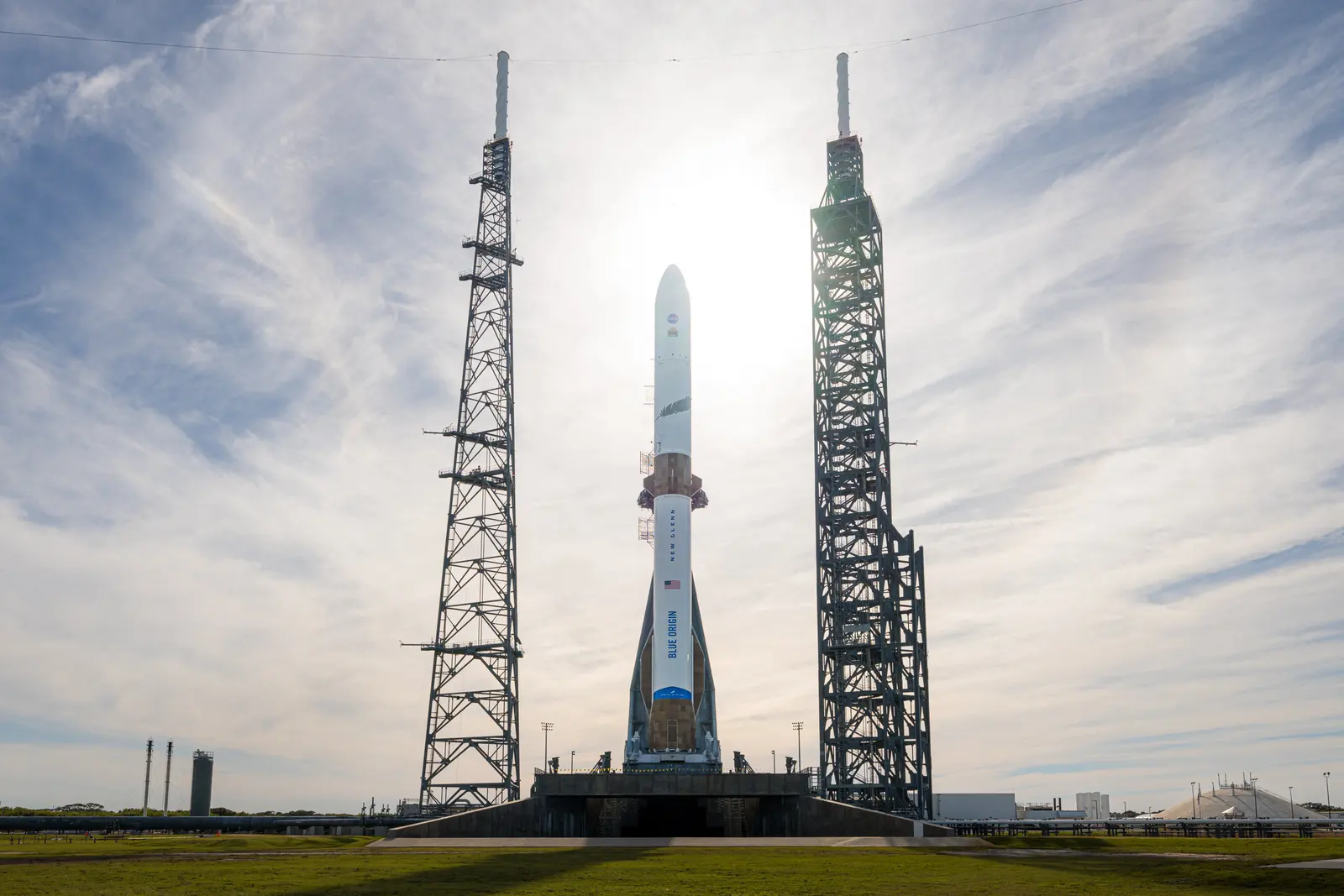
Historical mission record
This page records New Glenn | BlueBird Block 2 #2 and its reported outcome: Launch Failure. The date above is a historical record.
Source record updated . This is a source update, not a confirmed launch time.
Check the source: Official Page ↗ · Launch Library ↗ · Flight Club ↗
The latest on this mission
What changed?
Mission status
Launch Failure
Status reported by the mission data provider.
LAUNCH SITECape Canaveral SFS, FL, USA
Mission
AST SpaceMobile’s Block 2 BlueBird satellites are designed to deliver up to 10 times the bandwidth capacity of the BlueBird Block 1 satellites, required to achieve 24/7 continuous cellular broadband service coverage in the United States, with beams designed to support a capacity of up to 40 MHz, enabling peak data transmission speeds up to 120 Mbps, supporting voice, full data and video applications. The Block 2 BlueBirds, featuring as large as 2400 square foot communications arrays, will be the largest satellites ever commercially deployed in Low Earth orbit once launched. This launch will feature 1 satellite, BlueBird 7/BlueBird Block 2 FM2.
- Launch vehicle
- New Glenn
- Mission type
- Communications
- Destination orbit
- Low Earth Orbit
- Launch pad
- Launch Complex 36A
- Provider
- Blue Origin
- Recovery
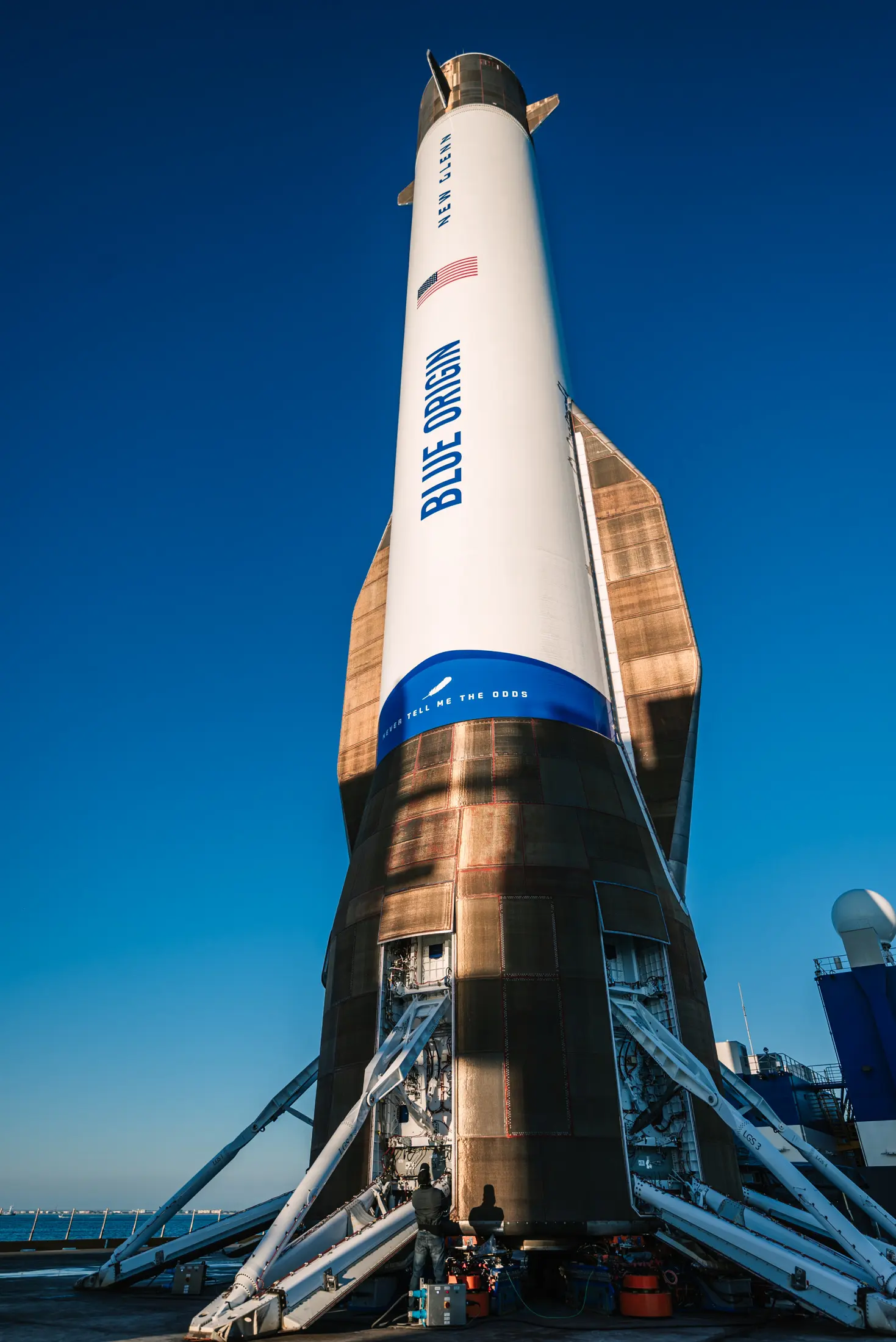
- Autonomous Spaceport Drone Ship, New Glenn booster GS1-SN002 has landed on Jacklyn after its 2nd flight. +1
The vehicle
Published configuration and flight history.
Launch vehicle
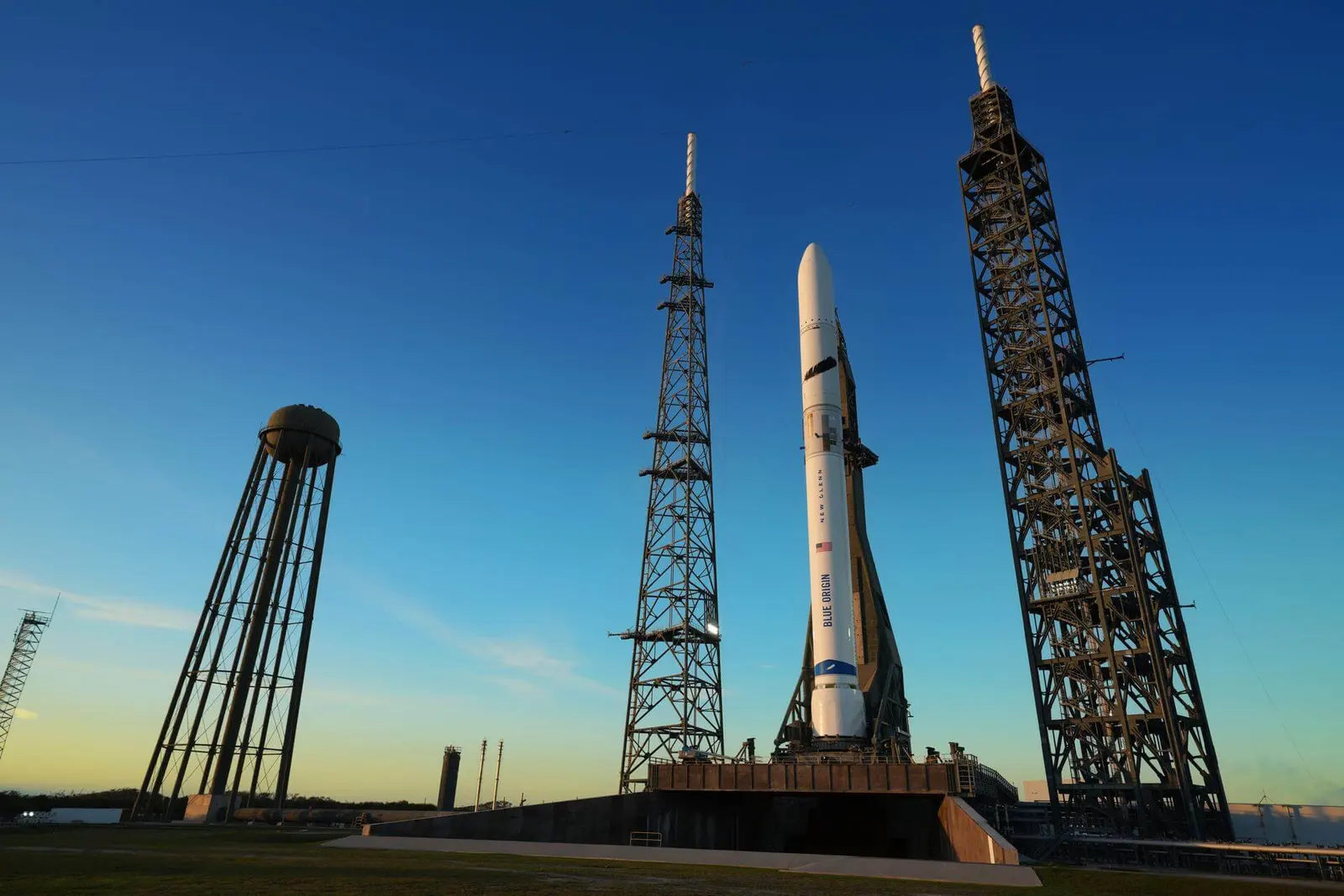
New Glenn
The New Glenn is a privately funded orbital launch vehicle in development by Blue Origin. New Glenn is described as a 7-meter-diameter (23 ft), two- or three-stage rocket.
- Height
- 98 m
- Diameter
- 7 m
- Stages
- 2
- Recorded launches
- 3
- First flight
- 2025-01-16
Recorded timing
This is a mission record, not an upcoming calendar appointment.
2h windowPublished target
WINDOW OPENS
WINDOW CLOSES
Target ·
The target marker shows its position within the published window. The schedule may change before launch.
Weather concerns
Cumulus Cloud Rule, Thick Cloud Layers Rule
Mission update
AST SpaceMobile’s BlueBird 7 successfully launched on Blue Origin’s New Glenn rocket, but was placed into an unusable lower orbit and will be deorbited despite the booster landing successfully.
Flight timeline
Planned sequence, not live telemetry. Times are relative to the launch target.
- T−04:30:00
Prop Load
- T−00:45:00
Prop Load Complete
- T−00:30:00
Weather Check
- T−00:17:00
Ready Poll
- T−00:04:00
Terminal Count
- T−00:02:30
Tank Press
Show the full sequence (27 events)
- T−00:01:30
Internal Power
- T−00:00:30
Startup
- T−00:00:30
Water Deluge
- T−00:00:5.6
Ignition
- T+00:00:00
Liftoff
- T+00:01:36
Max-Q
- T+00:03:05
MECO
- T+00:03:09
Stage 2 Separation
- T+00:03:16
SES-1
- T+00:03:42
Fairing Separation
- T+00:07:06
Boosters Entry Burn Startup
- T+00:07:37
Boosters Entry Burn Shutdown
- T+00:08:45
Boosters Landing Burn
- T+00:09:23
Boosters Landing
- T+00:13:01
SECO-1
- T+01:09:41
SES-2
- T+01:10:49
SECO-2
- T+01:15:44
Payload Separation
- T+02:49:12
SES-3
- T+02:49:24
SECO-3
- T+03:05:08
Mission End
Launch site & orbit
Cape Canaveral SFS, FL, USA
The mission in perspective
Launch site & orbit
Explore the launch pad, then pull back to see the shape of the destination orbit.
Understand this orbit
Coverage & sources
Links supplied by the mission data provider.
Coverage and times may change.
Explore on iPhone
Browse mission details and discover upcoming launches in Spacian.
Open mission in Spacian ↗