Saved Download on the App Store
← Back to launches
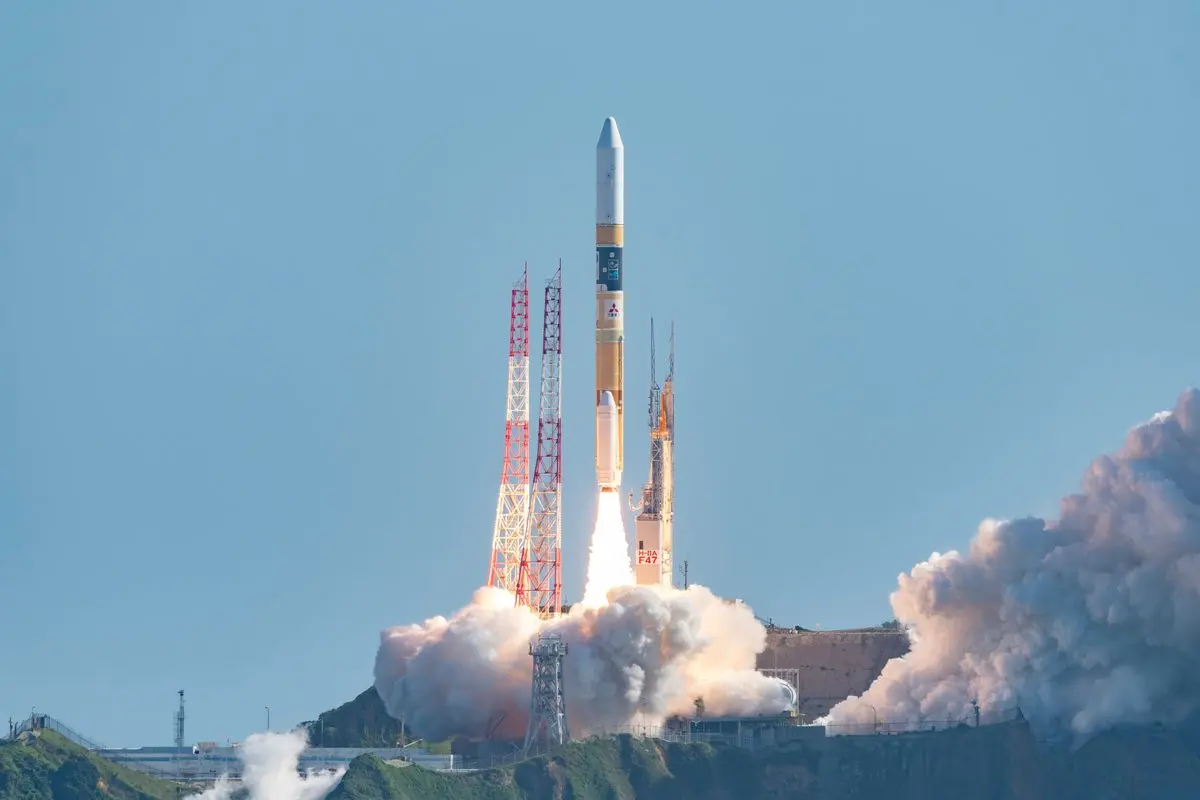
H-IIA 202 | Hayabusa-2
Mitsubishi Heavy IndustriesLaunch Successful

Hayabusa-2

H-IIA 202

Watch recorded coverage ↗

Historical mission record

This page records H-IIA 202 | Hayabusa-2 and its reported outcome: Launch Successful. The date above is a historical record.

Source record updated . This is a source update, not a confirmed launch time.

Check the source: Launch Library ↗

How to read launch targets and status

Mission status
Launch Successful

Status reported by the mission data provider.

LAUNCH SITETanegashima Space Center, Japan

Mission

Hayabusa2 (Japanese: はやぶさ2, "Peregrine falcon 2") is an asteroid sample-return mission operated by the Japanese space agency, JAXA. It follows on from the Hayabusa mission which returned asteroid samples in June 2010. Hayabusa2 carries multiple science payloads for remote sensing, sampling, and four small rovers that investigated the asteroid surface to inform the environmental and geological context of the samples collected.

Launch vehicle
H-IIA 202
Mission type
Robotic Exploration
Destination orbit
Heliocentric N/A
Launch pad
Yoshinobu Launch Complex LP-1
Provider
Mitsubishi Heavy Industries

The vehicle

Published configuration and flight history.

H-IIA 202
Mitsubishi Heavy Industries
Launch vehicle

H-IIA 202

H-IIA (H2A) is an active expendable launch system operated by Mitsubishi Heavy Industries (MHI) for the Japan Aerospace Exploration Agency. The liquid-fueled H-IIA rockets have been used to launch satellites into geostationary orbit, to launch a lunar orbiting spacecraft, and to launch Akatsuki, which studied the planet Venus. Launches occur at the Tanegashima Space Center.

Height
53 m
Diameter
4 m
Stages
2
Recorded launches
35
First flight
2001-08-29

Recorded timing

This is a mission record, not an upcoming calendar appointment.

Instantaneous windowPublished target
SCHEDULED MOMENT

A single scheduled moment. The schedule may change before launch.

Launch site & orbit

Tanegashima Space Center, Japan

The mission in perspective

Launch site

DestinationHeliocentric N/A

Explore the launch pad on Earth using its published coordinates.

Explore Earth’s orbits
NASA Blue Marble map of Earth's continents and oceans
Geographic view · illustrative lightingNo live tracking or simulated ascent. NASA Blue Marble.

Coverage & sources

Links supplied by the mission data provider.
Coverage and times may change.

Explore on iPhone

Browse mission details and discover upcoming launches in Spacian.

Open mission in Spacian ↗
Download on the App Store