
Launch failure.
Update ↗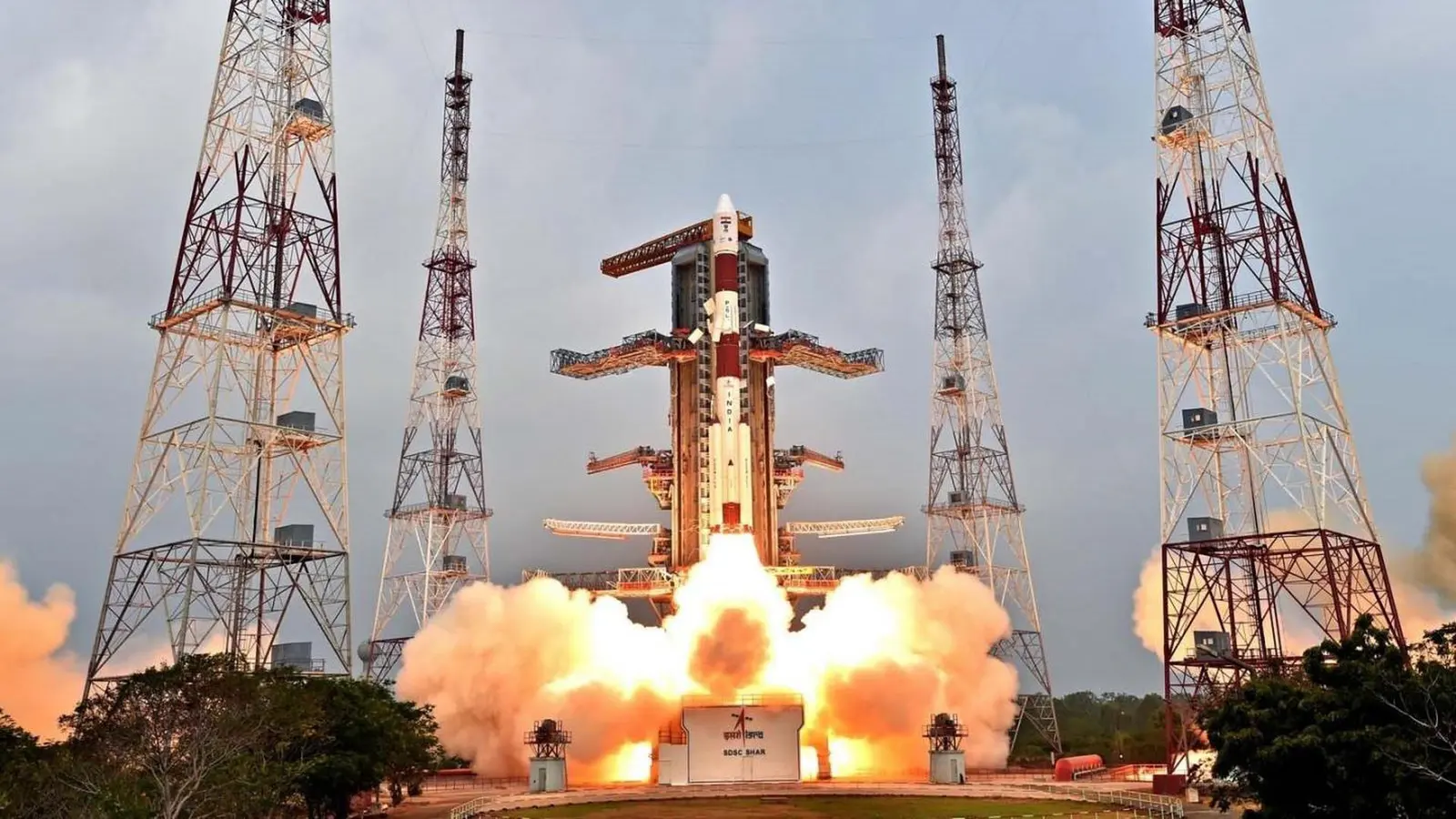
Indian Space Research OrganizationLaunch Failure
EOS-09 (RISAT-1B)
PSLV XL
Historical mission record
This page records PSLV-XL | EOS-09 (RISAT-1B) and its reported outcome: Launch Failure. The date above is a historical record.
Source record updated . This is a source update, not a confirmed launch time.
Check the source: PSLV-C61 / EOS-09 Mission ↗ · www.isro.gov.in ↗ · Launch Library ↗
The latest on this mission
What changed?
Mission status
Launch Failure
Status reported by the mission data provider.
LAUNCH SITESatish Dhawan Space Centre, India
Mission
RISAT-1B is the third in the series of radar imaging RISAT-1 satellites of ISRO using an active C-band SAR (Synthetic Aperture Radar), providing all-weather as well as the day-and-night SAR observation capability in applications such as agriculture, forestry, soil moisture, geology, sea ice, coastal monitoring, object identification, and flood monitoring, in addition to military surveillance. The RISAT-1 series is developed, manufactured and integrated by ISRO. The 3-axis stabilized spacecraft bus consists of a hexagonal prism shape build around a central cylinder. Most of the spacecraft subsystems and the payload are integrated in the prism structure and the central cylinder. The solar panels and some subsystems are mounted on the cube-shaped section of the spacecraft.
- Launch vehicle
- PSLV XL
- Mission type
- Government/Top Secret
- Destination orbit
- Sun-Synchronous Orbit
- Launch pad
- Satish Dhawan Space Centre First Launch Pad
- Provider
- Indian Space Research Organization
The vehicle
Published configuration and flight history.
Launch vehicle
PSLV XL
PSLV-XL is the upgraded version of Polar Satellite Launch Vehicle in its standard configuration boosted by more powerful, stretched strap-on boosters with 12 tonne propellant load. Weighing 320t at lift-off, the vehicle uses larger strap-on motors (PSOM-XL or S12) to achieve higher payload capability. On 29 December 2005, ISRO successfully tested the improved version of strap-on booster for the PSLV. The first use of PSLV-XL was the launch of Chandrayaan-1 by PSLV C11. The payload capability for this variant is 1,800 kg to SSO.
- Height
- 44 m
- Diameter
- 2.8 m
- Stages
- 4
- Recorded launches
- 27
- First flight
- 2008-10-22
Recorded timing
This is a mission record, not an upcoming calendar appointment.
4h windowPublished target
WINDOW OPENS
WINDOW CLOSES
Target ·
The target marker shows its position within the published window. The schedule may change before launch.
Mission update
3rd stage failure during burn.
Flight timeline
Planned sequence, not live telemetry. Times are relative to the launch target.
- T−00:00:03
RCT Ignition
- T+00:00:00
Ignition
- T+00:00:0.42
Booster Ignition
- T+00:00:0.62
Booster Ignition
- T+00:00:25
Booster Ignition
- T+00:01:9.9
Booster Separation
Show the full sequence (24 events)
- T+00:01:10.1
Booster Separation
- T+00:01:32
Booster Separation
- T+00:01:51.64
Stage 2 Separation
- T+00:01:51.84
SES
- T+00:02:32.78
Fairing Separation
- T+00:02:37.78
CLG Start
- T+00:04:24.34
Stage 3 Separation
- T+00:04:25.54
Stage 3 Ignition
- T+00:08:13
Kick Stage Separation
- T+00:08:23.4
Kick Stage Ignition
- T+00:16:52.24
Kick Stage Cut-off
- T+00:17:39.24
Payload Separation
- T+00:37:11.52
Kick Stage Ignition
- T+00:45:56.78
Kick Stage Cut-off
- T+01:22:32.52
Kick Stage Ignition
- T+01:31:2.04
Kick Stage Cut-off
- T+01:32:52.04
MON Passivation
- T+01:41:52.04
MMH Passivation
Launch site & orbit
Satish Dhawan Space Centre, India
The mission in perspective
Launch site & orbit
Explore the launch pad, then pull back to see the shape of the destination orbit.
Understand this orbit
Coverage & sources
Links supplied by the mission data provider.
Coverage and times may change.
Mission coverage
ISRO’s 101st Launch | PSLV-C61 / EOS-09 | 18 May 2025 ↗Explore on iPhone
Browse mission details and discover upcoming launches in Spacian.
Open mission in Spacian ↗