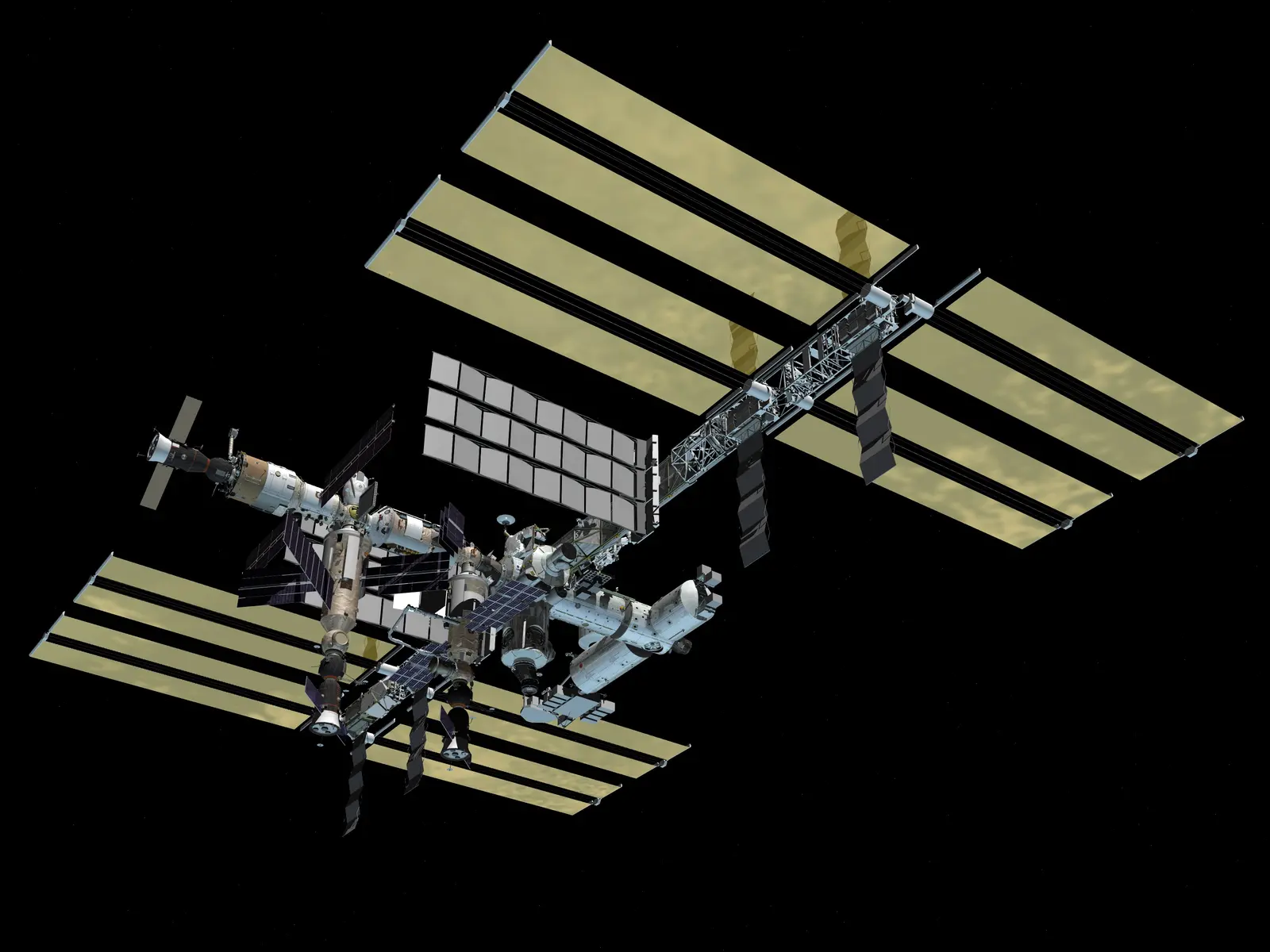
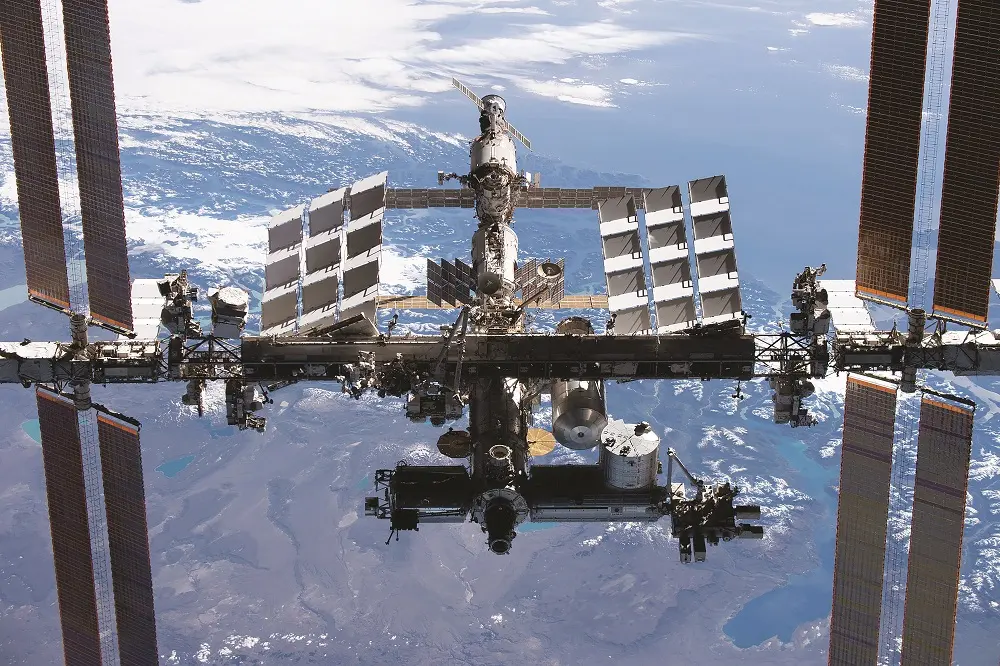
Payloads: Complement of Integrated Protocols for Human Exploration Research on Varying Mission Durations (CIPHER): A crewmember completed a 13-hour blood pressure measurement session. The CIPHER investigation aims to improve our understanding of physiological and psychological changes in humans on missions that range from weeks to one year in duration. Conducting the same research over missions …
Thales Alenia Space is laying groundwork for a small satellite factory in Italy that it hopes will be at the forefront of constellation manufacturing in Europe, bringing the continent closer to mass production capabilities across the Atlantic.
Virgin Galactic says it does not expect an investigation into an issue on its most recent suborbital launch to delay its next one as it turns its focus to a new generation of vehicles.
Rocket Lab says it could launch its first Neutron rocket before the end of the year as it outlines a long-term vision for the company that involves its own satellite constellation.
An Assessment of Environmental Effects (AEE) report published by the UK Civil Aviation Authority for public consultation has given greater insight into Rocket Factory Augsburg’s (RFA) proposed operations at SaxaVord Spaceport in Scotland.
The founders of satellite propulsion and launch vehicle company Astra have sharply cut their offer to take the company private, warning of “imminent bankruptcy” if the company doesn’t accept their new proposal.
Rocket Lab is making steady progress on the development of its Neutron vehicle, as the company reported fourth-quarter results that saw its contract backlog soar above $1 billion.
India introduced its first group of astronauts today. They will not be the first Indians to fly into space — that distinction belongs to Rakesh Sharma — but are the […]
The German Aerospace Center (DLR) MAPHEUS 14 flight was successfully launched from Esrange Space Center in Sweden on 27 February, carrying several scientific experiments. The flight was the third suborbital mission launched from Esrange in 2024.
SpaceX is nearing its clearance for the third Starship launch following the closure of a Federal Aviation Administration (FAA) investigation that was...
Payloads: Cell Biology Experiment Facility-Left (CBEF-L): Switches 1 and 4 were toggled in preparation for Space Organogenesis. CBEF-L is a JAXA subrack facility, which is an upgraded to the original CBEF currently aboard the ISS. CBEF-L provides new capabilities with additional resources such as Full High-Definition video interface, Ethernet, 24 VDC power supply, and a …
NASA’s next crew to depart for the International Space Station, Crew-8, are nearly ready for launch, set to embark on a voyage of scientific discovery onboard the orbiting laboratory for the benefit of all on Earth. Made up of a diverse, multinational crew – the astronauts and cosmonauts onboard Expedition 70/71 will oversee several key milestones in ISS development during their 6 month stay onboard the ISS, including key upgrades, certification flights of new crew and cargo spacecraft, and testing new technologies that will power the Artemis program back to the moon and beyond.
Astranis is moving its debut satellite to a geostationary position over Asia after a malfunction last year derailed plans to beam broadband to Alaska, the Californian manufacturer said Feb. 27.
The company is setting up shop in Chantilly, home to agencies like the National Reconnaissance Office, the Space Force's Commercial Space Office and the Space Development Agency
The FAA has closed its investigation into the second Starship/Super Heavy launch in November, bringing SpaceX a step closer to launching its third test flight as soon as mid-March.
Bremen-based startup POLARIS Spaceplanes announced late last week that it is preparing to begin testing systems to enable the aerial refueling of its AURORA multipurpose spaceplane and hypersonic transport system.
France-based Unseenlabs has raised 85 million euros ($92 million) behind plans to double its maritime surveillance constellation to 25 nanosatellites for tracking vessels in near real-time.
Intuitive Machines’ Odysseus lunar lander has sent back images days after tipping over while landing near the Moon’s South Pole. The U.S. company was not sure precisely where Odysseus set […]
The FAA said today it has closed its mishap investigation of the second orbital flight test of SpaceX’s Starship, OFT-2, that took place last November. SpaceX must implement a set […]
The Federal Aviation Administration on Monday announced the close of its investigation alongside SpaceX into the second Starship flight, as Elon Musk’s company seeks a license to launch the towering rocket again.
After two Wet Dress Rehearsal (WDR) aborts, SpaceX opted to destack Ship 28 before removing Booster 10 from the Orbital Launch Mount (OLM). The Booster has since rolled back to the Production Site, while Ship 28 conducted standalone testing on Pad B, opening with a Spin Prime test on Monday.
Intuitive Machines said Feb. 26 it expects to communicate with its Odysseus lunar lander, tipped on its side on the lunar surface, for only one more day, a much shorter timeline than previously expected.
ISS Reboost: On Friday, February 23rd, the ISS performed a reboost using the Aft Progress 87P rendezvous and docking (R&D) thrusters. The purpose of this reboost was to set up proper phasing conditions for the upcoming Soyuz 71S launch and 70S landing in late March/early April. The burn duration was 18 minutes 25 seconds with …
Intuitive Machines’ cargo lander, Odysseus, returned its first images from the moon’s surface over the weekend, as the spacecraft settles in to its lunar destination.
NASA and SpaceX are proceeding with a commercial crew mission to the International Space Station later this week, part of a busy schedule of missions to the station this year.
Acquisition executive Frank Calvelli said the Space Force will award cost-plus contracts for the upcoming Evolved Strategic Satellite Communications System
Using the joint NASA, European Space Agency, and Canadian Space Agency James Webb Space Telescope (JWST), an international team of astronomers has found evidence of a neutron star in the remnants of a recent supernova. The supernova, called SN 1987A, was first observed on Feb. 24, 1987, and occurred 160,000 light-years from Earth in the Large Magellanic Cloud. It was the most recent supernova in the Local Group of galaxies and the first one to have been observable with the naked eye since Kepler’s Supernova in 1604.
Here is SpacePolicyOnline.com’s list of space policy events for the week of February 25-March 2, 2024 and any insight we can offer about them. The Senate returns to work on […]
Congress is expected to decide in the next two weeks whether to extend current restrictions on regulating the safety of commercial human spaceflight occupants, and if so, for how long.
Space industry executives and investors at a U.S. Chamber of Commerce event grappled with unanswered questions on the Pentagon’s plans to commercialize activities.
Intuitive Machines co-founder and CEO Steve Altemus told reporters this afternoon that initial indications yesterday that the Odysseus lander was upright on the lunar surface were wrong. Apparently it is […]
The Federal Aviation Administration will establish a committee to get industry input on ways to improve a new launch licensing process, two years before all launch providers must switch to the new regulations.
On Thursday, February 22nd, Intuitive Machines’ Nova-C lander Odysseus successfully touched down on the Moon, achieving the “ultimate milestone” for the IM-1 mission and marking the first major victory for NASA’s Commercial Lunar Payload Services (CLPS) initiative. After Powered Descent Initiation occurred at 5:11 PM CST, Odysseus’s main engine fired for approximately eleven minutes, bringing the vehicle down for a soft landing on the lunar highlands at 5:23 CST. Despite a slight pointing error which delayed acquisition of signal, the lander was confirmed to be on the surface and transmitting a few minutes after touchdown. At a press conference on February 23rd, Intuitive Machines CEO Stephen Altemus reported that the team currently believes the lander to be lying on its side, but otherwise intact. Odysseus is the first American spacecraft to have safely landed on the Moon since Apollo 17 in 1972, and the first to do so near the lunar South Pole.
The purpose of the webinar was to explore how today’s SmallSat leaders are employing automation in satellite operations and manufacturing. Among the questions the webinar addressed: Sponsored by Apogee Semiconductor […]
Technology advances and novel businesses are opening up new ways to qualify materials in space. To avoid jeopardizing mission success, manufacturers rigorously test and validate novel materials before using their potentially performance-improving capabilities on customer satellites.
After decades of dreaming, We Are Going! The rockets are flying, crews are in training, and the landers are under contract. Artemis will put the first woman and first person of color on the Moon by the end of this decade… But then what? A plan is slowly coming together. NASA along with its commercial and international partners intends to do so much more than flags and footprints. That next landing will be the start of a sustained campaign on the Lunar surface, one that will open up the Moon as a new frontier for international scientific collaboration and where we learn what we need to go to Mars.