

What will happen when Apophis passes Earth in 2029?
On 13 April 2029, Apophis will pass about 32,000 kilometres above Earth’s surface. It will be a close encounter, but NASA’s refined orbit rules out an Earth impact for at least the next century. The scientific opportunity is to observe how a small asteroid responds to a strong gravitational encounter.
Measure the close approach from the right place
The commonly quoted distance of roughly 32,000 kilometres is an altitude above Earth’s surface, not a distance from its centre. It places the flyby inside the altitude of geosynchronous satellites, which orbit about 36,000 kilometres above the equator. [1]
That comparison conveys scale, but it does not mean the asteroid follows the same path as those satellites. Apophis travels on a flyby trajectory with its own geometry and timing. A near approach is determined by the full three-dimensional orbit, not by comparing two distances in isolation. [1]
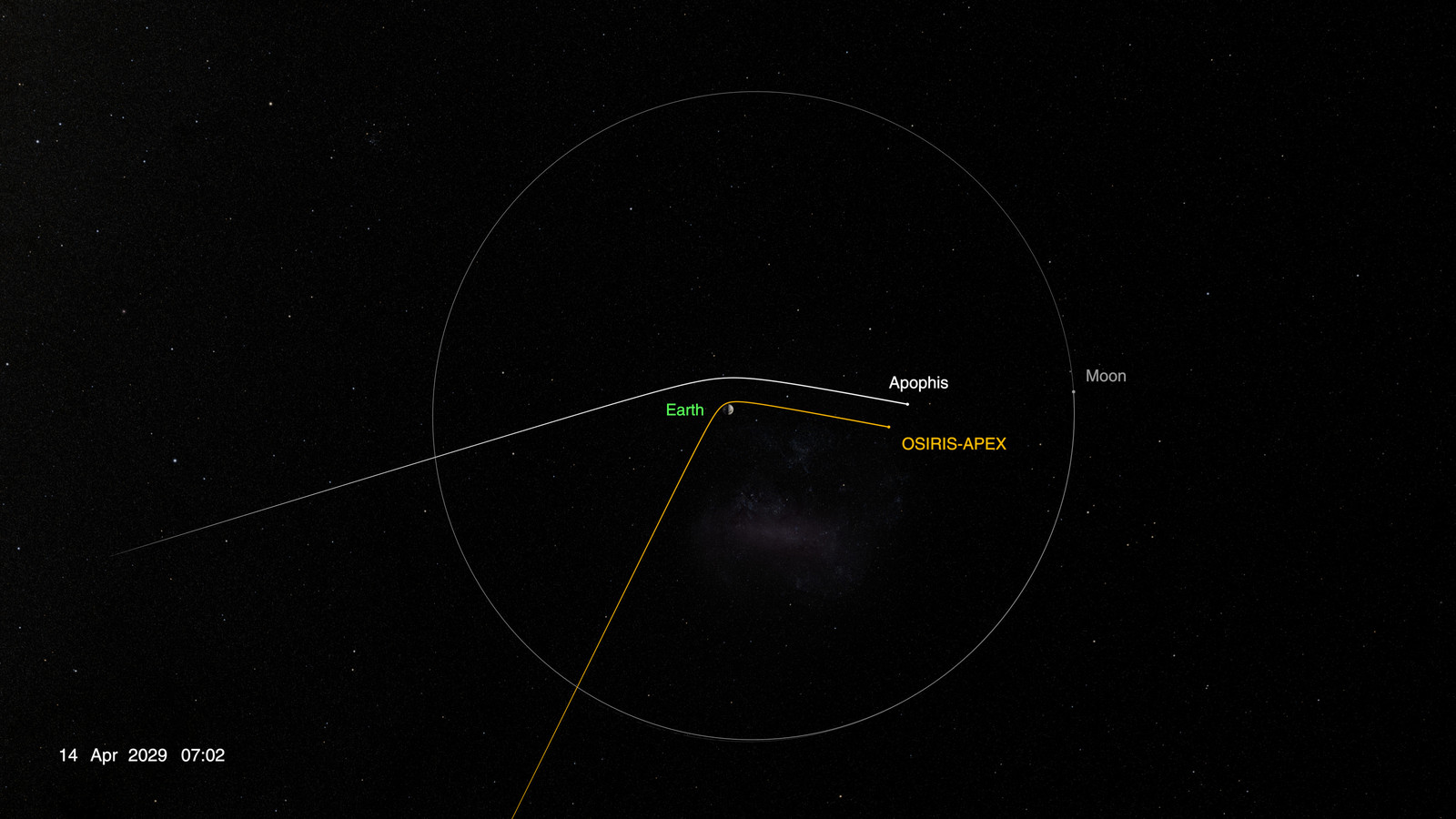
Apophis is roughly 340 metres across. At its closest approach it will be sufficiently near and bright to be visible without a telescope from favourable locations, while observatories will obtain much more detailed measurements. [1]
Why an early risk estimate changed
When Apophis was discovered in 2004, the available observations covered only a limited part of its motion. A range of possible orbits fit the early data, and some allowed future impacts. Additional observations progressively narrowed that range. [1] [2]
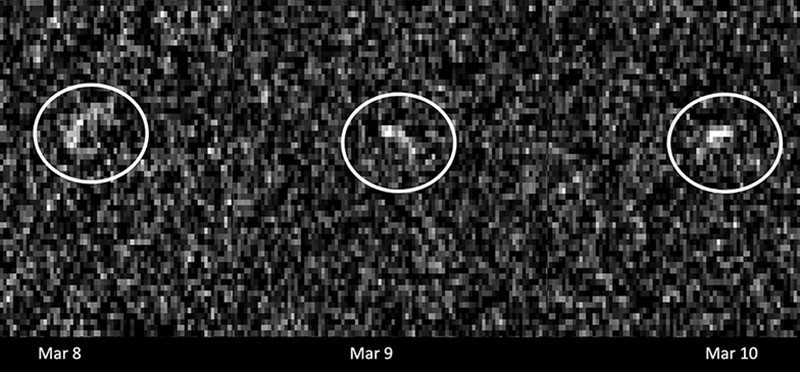
Radar measurements are particularly useful because they constrain distance and motion along the line of sight, complementing the positions measured by optical telescopes. Observations in 2021 helped remove the remaining impact possibilities over the next century. [1] [2]
The asteroid did not become safe because it changed course in response to being observed. The improved data allowed scientists to determine its course more accurately. A shrinking uncertainty region can remove an apparent risk that originated in incomplete information. [1] [2]
Earth will alter the asteroid’s path
During the encounter, Earth’s gravity will deflect Apophis and change its subsequent orbit around the Sun. This is a normal gravitational flyby, similar in principle to the trajectory changes spacecraft deliberately use during planetary encounters. [1] [3]
The near and far sides of the asteroid also experience slightly different pulls. Those tidal forces may alter rotation, move surface material or excite other mechanical responses. The magnitude of any change depends on its shape, spin and internal strength. [1] [3]
Researchers can compare observations before and after closest approach to test those effects. The encounter offers a natural experiment on an asteroid that cannot be reproduced by looking at a distant point of light alone. [1] [3]
Different observations answer different questions
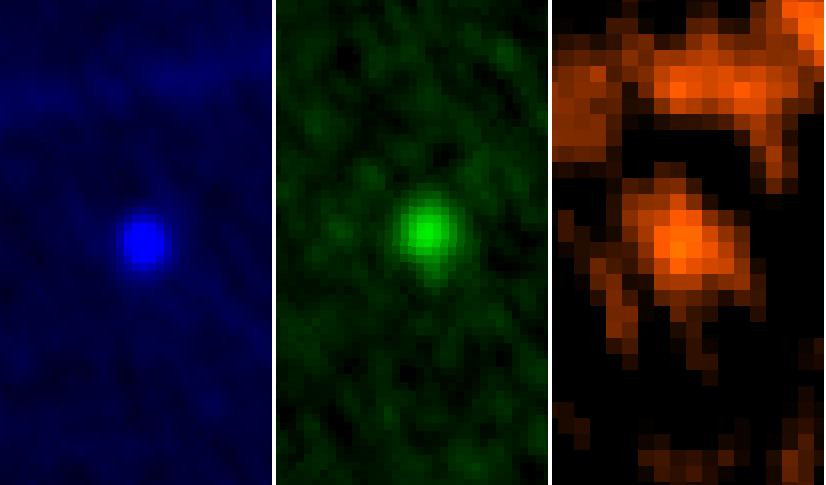
Radar can constrain shape, spin and surface structure. Optical brightness variations help track rotation and changes in viewing geometry. Infrared observations add information about temperature and how the surface stores and releases heat. [1] [3]
NASA’s OSIRIS-APEX mission is intended to investigate Apophis after the encounter. Combining spacecraft observations with Earth-based measurements can connect global changes in motion to the actual boulders, slopes and loose material on the ground. [1] [3]
No single measurement establishes every internal property. A change in spin, for example, must be interpreted alongside the body’s shape and possible surface rearrangement to constrain its structure. [1] [3]
A predictable encounter, with a useful open question
Visibility will depend on location, time, weather and sky brightness. A future observing plan needs local circumstances rather than a promise that every person on Earth will see the asteroid at the same moment. [1] [2]
The trajectory is sufficiently well determined to establish a safe passage. What remains scientifically interesting is how a small, irregular body responds during that passage. The encounter turns a former uncertainty about impact into a well-defined opportunity to measure gravitational change. [1] [2]
Sources & image credits
Related reading and objects
What did DART change in the Didymos system?
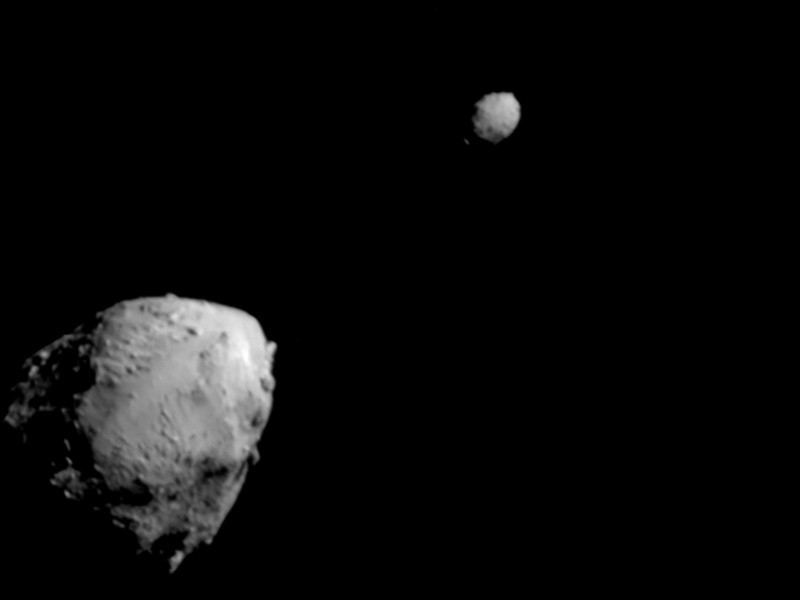
DART struck Dimorphos on 26 September 2022. The target was the small moon of Didymos, allowing researchers to measure a deliberate orbital change in a compact binary system that posed no impact threat to Earth.
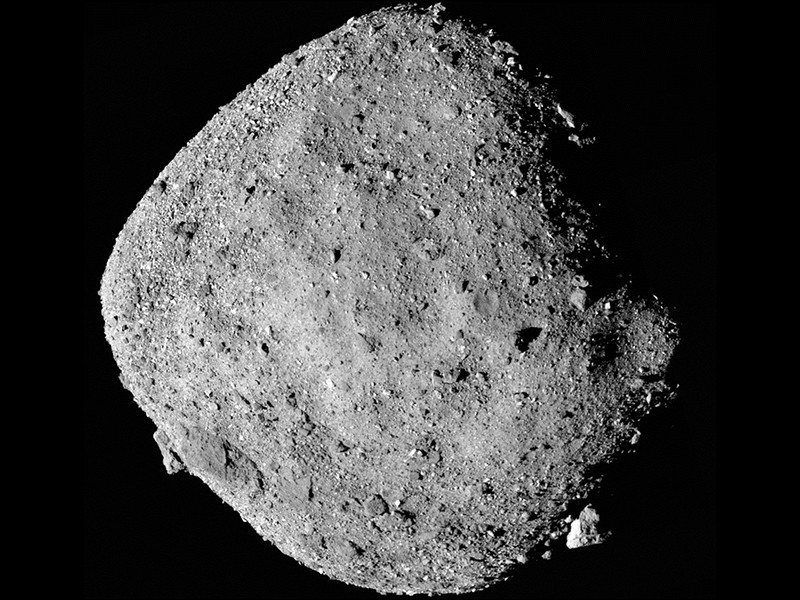
What did the Bennu sample bring back to Earth?
OSIRIS-REx delivered material from Bennu on 24 September 2023. In laboratories, the dark grains revealed a history that photographs could not: water-altered minerals, salts and a varied inventory of carbon chemistry inherited from the asteroid’s parent body.