

What did the Bennu sample bring back to Earth?
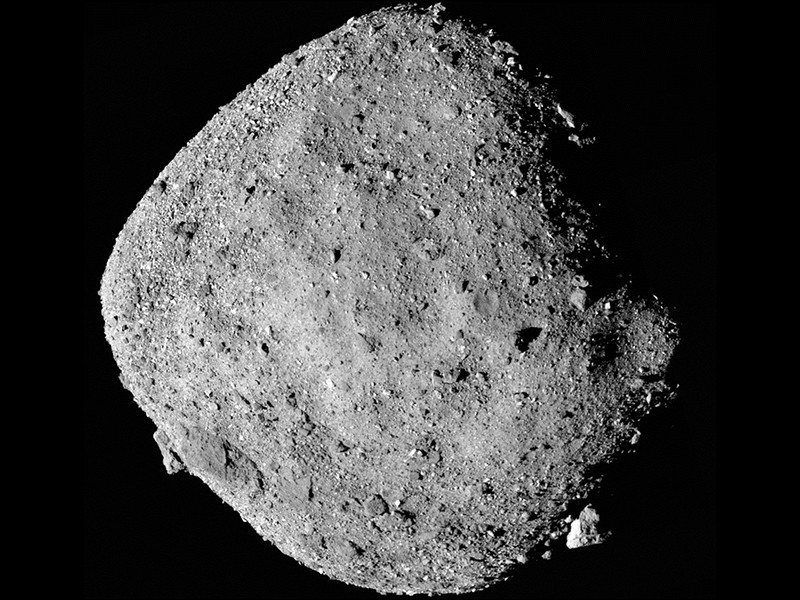
OSIRIS-REx delivered material from Bennu on 24 September 2023. In laboratories, the dark grains revealed a history that photographs could not: water-altered minerals, salts and a varied inventory of carbon chemistry inherited from the asteroid’s parent body.
A known origin changes the experiment
OSIRIS-REx collected material during a brief contact with Bennu in October 2020. The asteroid’s loose surface yielded unexpectedly easily, showing how weakly bound its particles were. The spacecraft ultimately returned 121.6 grams, more than twice the mission’s minimum requirement. [1]
A controlled sample return preserves a known origin and a documented collection history. Meteorites also deliver extraterrestrial material, but passage through the atmosphere and exposure on Earth can alter fragile components or complicate contamination checks. [1]
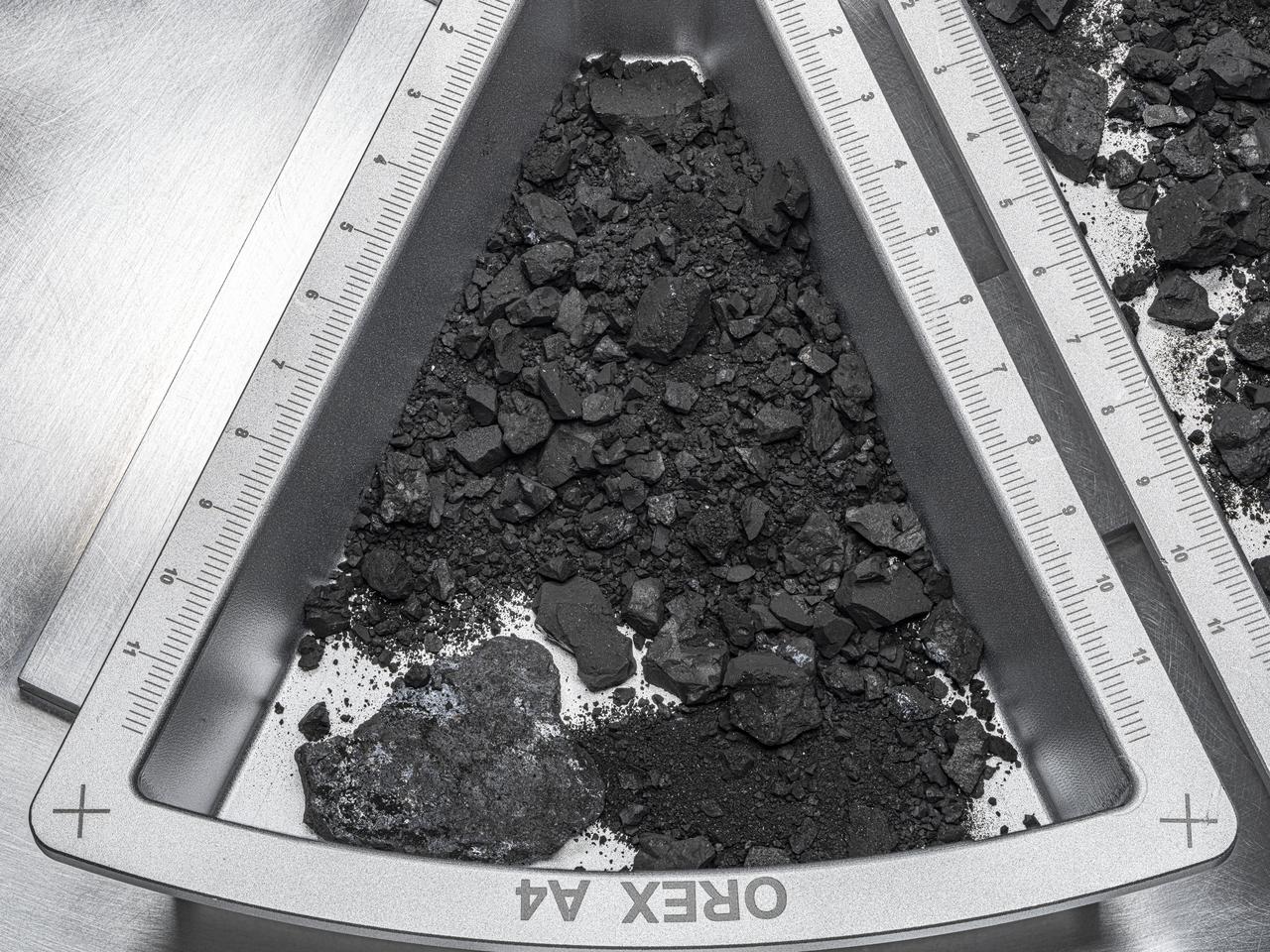
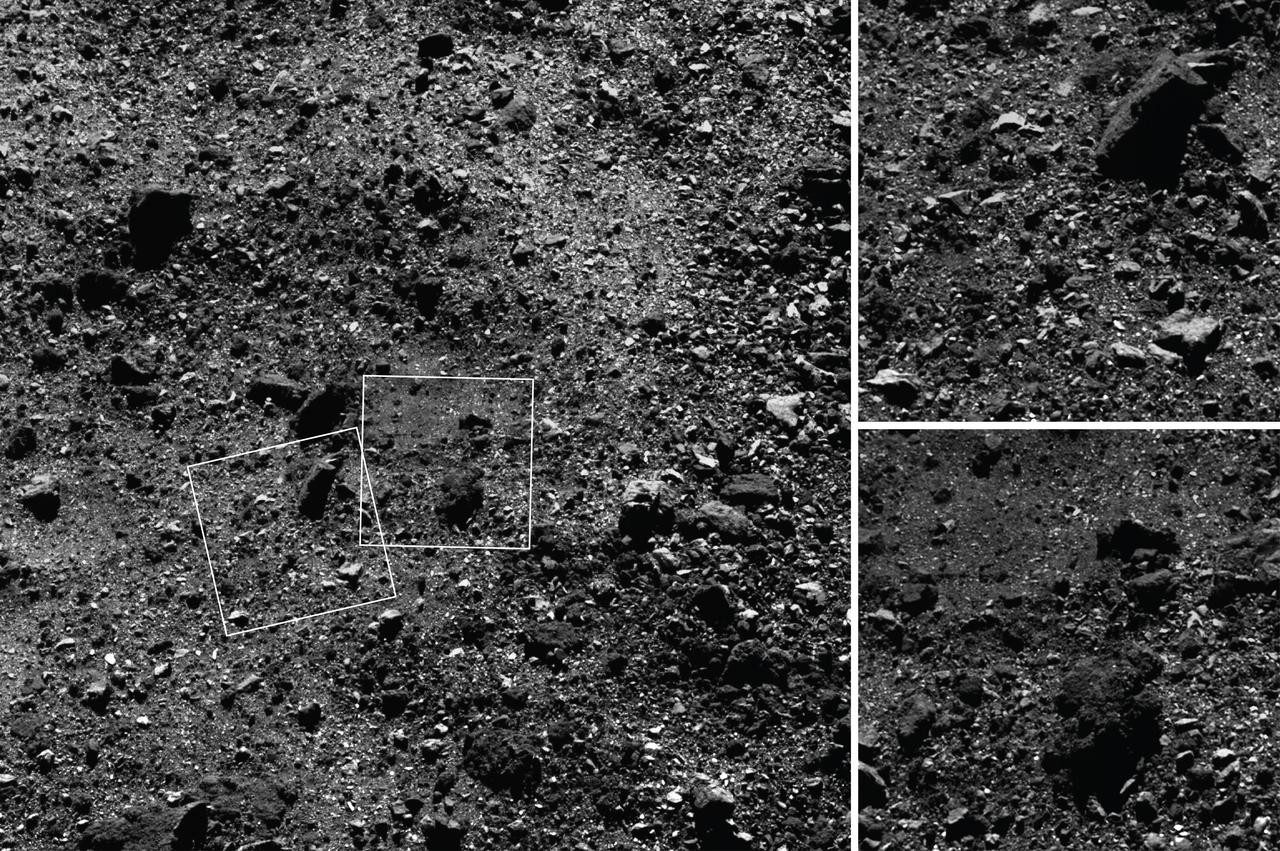
The Bennu sample was curated under controlled conditions so researchers could investigate delicate compounds and soluble minerals. That handling history is part of the evidence, especially when the molecules being sought are also common in Earth’s environment. [1]
Minerals remember liquid that is no longer there
Bennu today is a small rubble-pile asteroid, rather than an intact early planetesimal. Its grains preserve material from a larger parent body that experienced chemical reactions involving water before breaking apart. [1] [2]
Clay minerals and other alteration products record those reactions. Water does not have to remain as an open liquid reservoir in present-day Bennu for the rocks to preserve its former presence. The mineral structures and associated chemistry are the historical record. [1] [2]
Analyses reported in January 2025 identified a suite of salts associated with evaporating brines. As liquid water is lost, dissolved substances can become concentrated and precipitate in sequence. The preserved minerals therefore constrain a changing chemical environment inside the parent body. [1] [2]
Ingredients are not organisms
The same studies reported amino acids, including fourteen of the twenty used by terrestrial life to build proteins, and all five nucleobases used in DNA and RNA. The sample also contained abundant nitrogen-bearing chemistry. [2]
These are molecules, not genetic instructions or recovered cells. Abiotic reactions can produce organic compounds, and finding a component used by life does not establish that biology made it. What the detections show is that a chemically diverse supply of such ingredients existed outside Earth. [2]
That matters for the question of delivery. Asteroids could have added some prebiotic material to the young Earth, but measuring an inventory on Bennu does not determine the exact fraction of Earth’s chemistry that arrived that way. [2]
Later analyses extended the inventory
Results announced in December 2025 added sugars, including ribose and glucose, to the molecules identified in the returned material. Ribose forms part of RNA on Earth, while glucose has familiar biological roles. Their presence broadens the known extraterrestrial inventory without changing the distinction between chemistry and life. [3]
The same reporting described complex, gum-like organic material and ancient grains. Different analytical techniques interrogate different parts of the sample: some identify soluble molecules, others examine textures, isotopes or material at much smaller scales. [3]
The findings should therefore be assembled as complementary evidence rather than a checklist in which every new molecule is treated as a separate life detection. [3]
Why the small sample keeps yielding results
A returned grain can be revisited with a new instrument or method, while portions of the collection remain available for future work. Laboratory analysis can separate components that a remote spectrometer would blend into one signal. [1] [2] [3]
Bennu’s contribution is a physical archive of chemical processing: early ingredients entered a parent body, water altered minerals and concentrated salts, and later disruption assembled the small asteroid sampled by OSIRIS-REx. The sample connects those stages through material that can be measured directly, rather than treating today’s dark surface as the complete history. [1] [2] [3]
Sources & image credits
Related reading and objects
What does Ryugu preserve from the early Solar System?
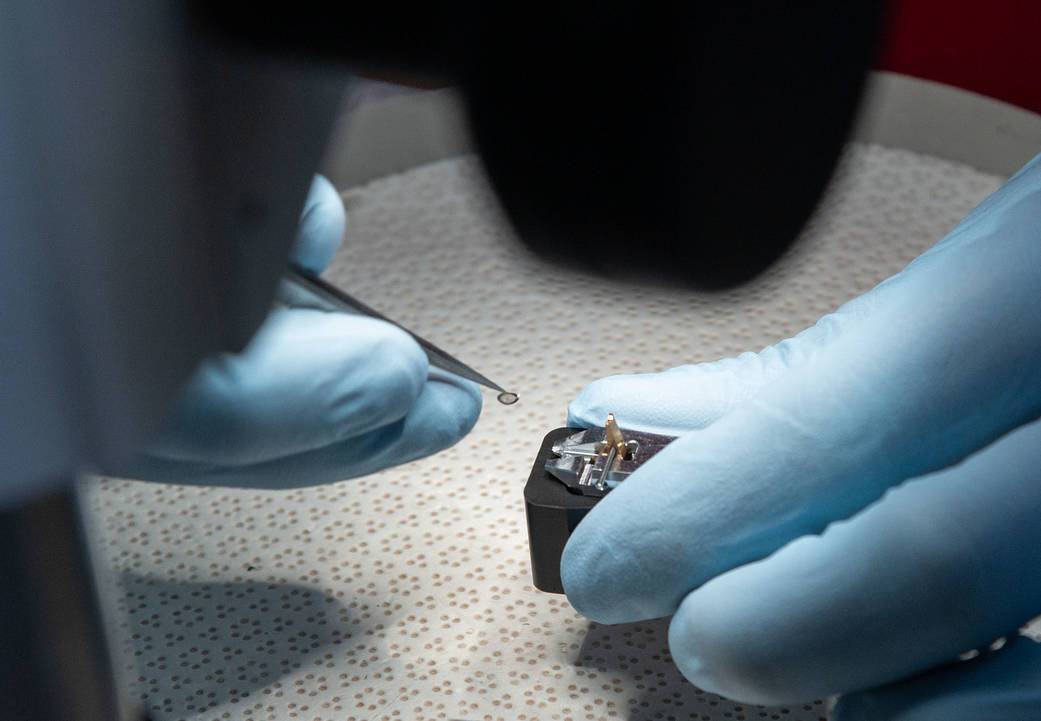
Hayabusa2 returned its Ryugu sample capsule to Earth in December 2020. The grains came from two carefully documented touchdowns, including one near an artificial impact crater. Their minerals and chemistry now connect a small rubble-pile asteroid to a much older, water-altered parent body.
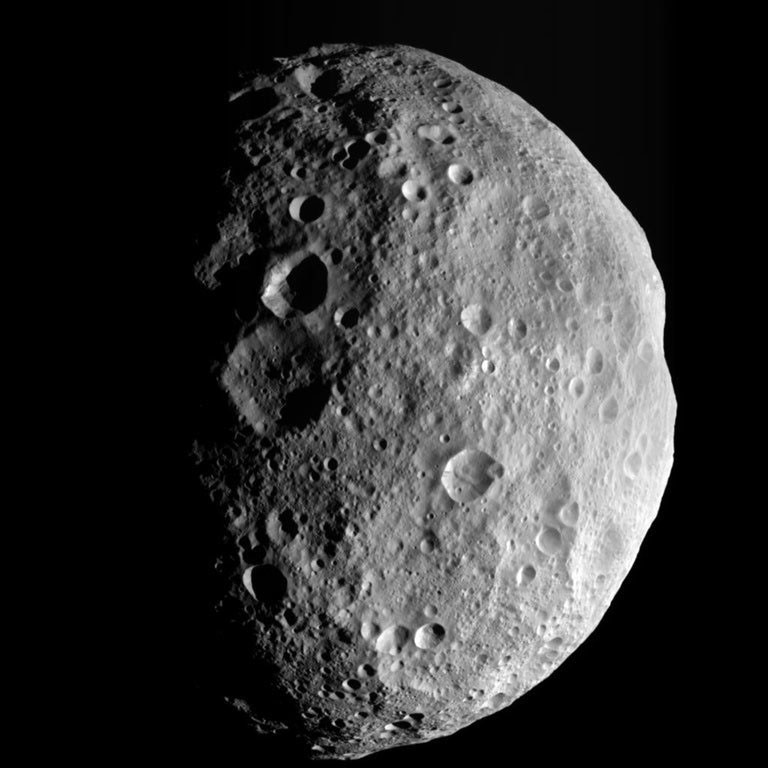
How can a meteorite be traced back to Vesta?
Long before Dawn orbited Vesta in 2011, laboratories held meteorites suspected to come from it. The spacecraft could test that connection by measuring the asteroid’s minerals, chemical composition and the impact scars capable of launching fragments into space.