

What does Ryugu preserve from the early Solar System?
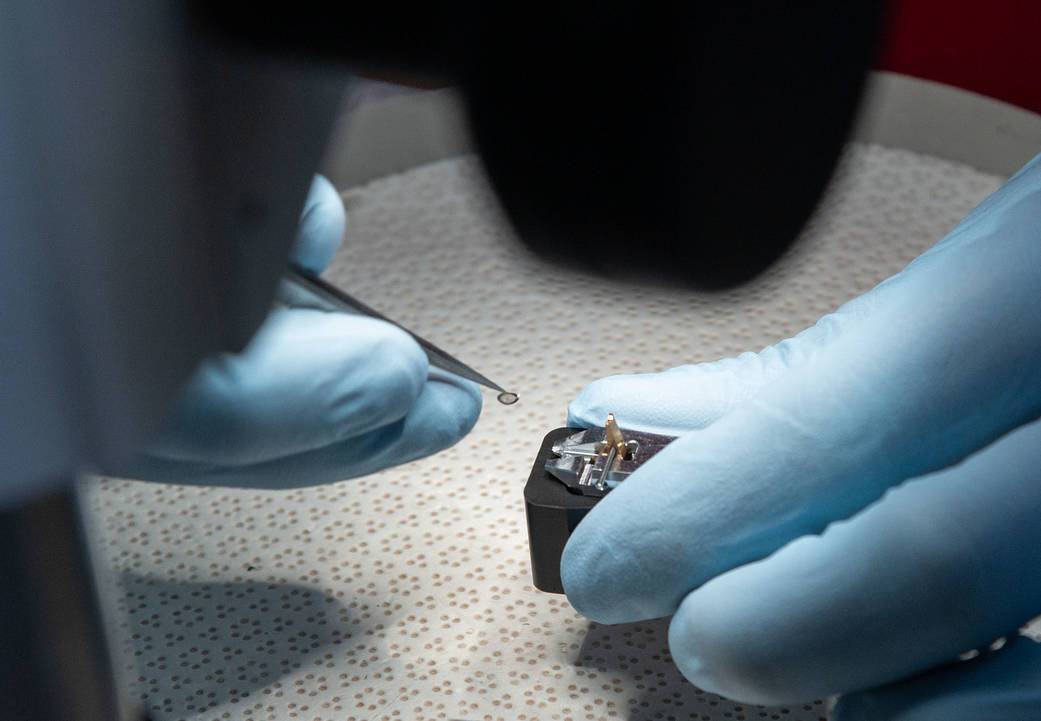
Hayabusa2 returned its Ryugu sample capsule to Earth in December 2020. The grains came from two carefully documented touchdowns, including one near an artificial impact crater. Their minerals and chemistry now connect a small rubble-pile asteroid to a much older, water-altered parent body.
Why the sampling locations matter
Hayabusa2 first touched Ryugu in February 2019. In April it deployed an impactor that excavated material, and in July it made a second touchdown near the artificial crater to collect material associated with the subsurface. [1]
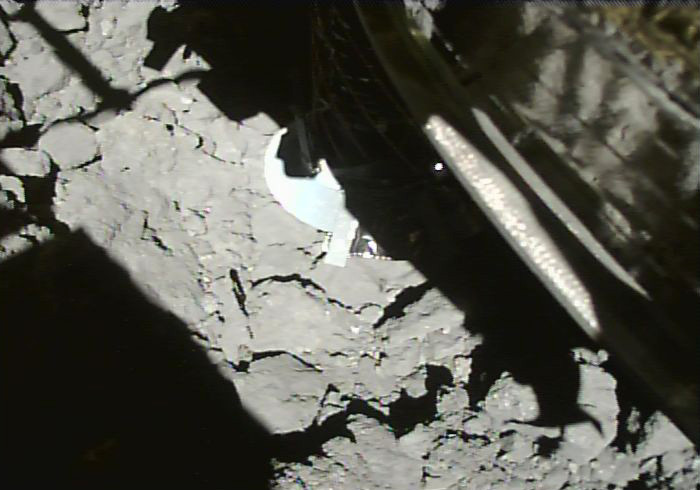
The two collections allow researchers to compare material with different exposure histories. The outermost surface experiences solar radiation, micrometeorite impacts and temperature cycling. Material recently excavated from below may preserve some properties differently. [1]
A laboratory grain is therefore more useful when its collection setting is known. The spacecraft’s cameras and instruments supplied the surrounding map, while the returned sample supplied the fine detail that those remote measurements could not resolve. [1]
The present asteroid is an assembly of fragments
Ryugu is roughly 900 metres across and has a top-like shape with many large boulders. Measurements of its bulk density indicate substantial porosity: empty space exists both within constituent material and between larger pieces. [1]
The density of one laboratory particle need not equal the density of the whole asteroid. A grain can contain small pores, while the assembled body contains additional gaps between rocks. Keeping those scales separate explains how a seemingly solid boulder-covered object can have a low average density. [1]
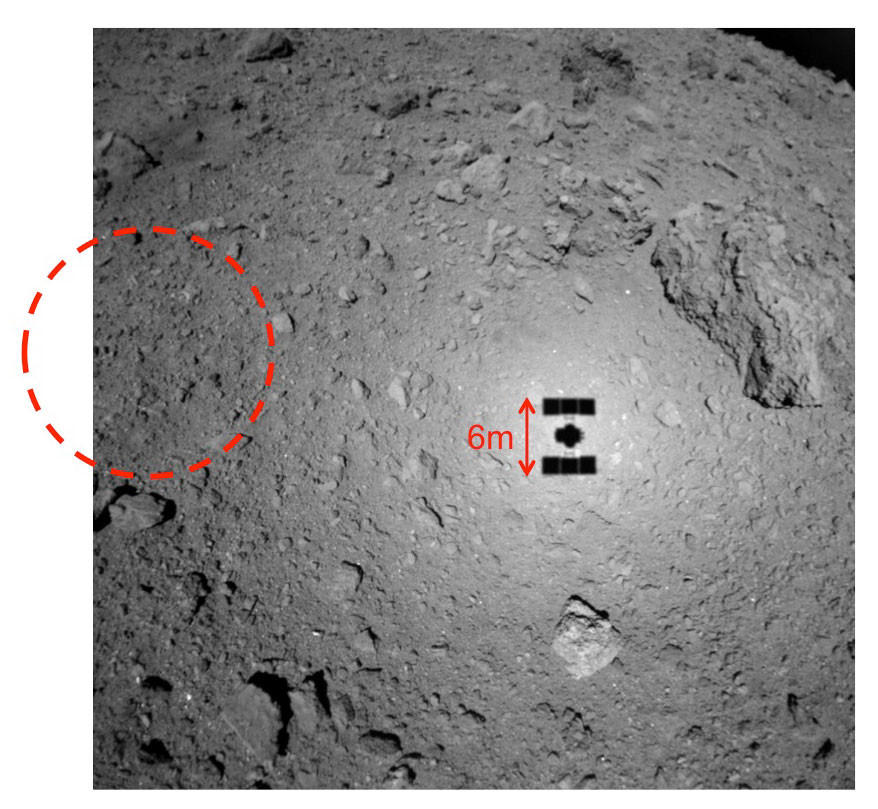
The structure points towards disruption and reassembly rather than a single unbroken rock preserved since formation. Its older chemical record belongs largely to the material from which it was assembled. [1]
Water changed the parent body
Returned samples contain abundant phyllosilicates, including clay-like minerals formed through reactions between water and rock. Their chemistry resembles rare Ivuna-type carbonaceous chondrites, an important reference group for studying early Solar System material. [1] [2] [3]
The water record is primarily mineralogical. Hydrogen and oxygen incorporated in altered minerals are different from a present-day ocean within Ryugu. Researchers also reported tiny fluid inclusions within crystals, preserving evidence of liquid involved in the parent body’s history. [1] [2] [3]
Models constrained by the samples describe an early larger body that warmed enough for aqueous alteration. Later collisions broke it apart, and fragments eventually assembled into the much smaller asteroid visited by Hayabusa2. The sequence explains why a currently dry-looking surface can contain evidence of earlier wet chemistry. [1] [2] [3]
Organic matter carries several histories
Ryugu’s carbon-bearing material includes complex insoluble organic matter mixed with altered minerals. Chemical structures and isotopic signatures help distinguish material inherited from cold early environments from components modified within the parent body. [1] [4]
The organic inventory is not evidence for organisms. Carbon chemistry occurs through non-biological processes in interstellar material, disks and small bodies. Its scientific value is that the samples preserve examples of those reactions and their subsequent alteration. [1] [4]
Associations between organic matter, carbonates and phyllosilicates can reveal how water, minerals and carbon compounds interacted. Examining their physical relationships is more informative than treating each detected molecule as an isolated result. [1] [4]
What Ryugu adds beside Bennu
Ryugu and Bennu give laboratories two independently collected records from carbon-rich asteroids. Similarities can identify processes shared across parent bodies, while differences test how location, temperature, water and later collisions changed the material. [1] [2]
Neither sample is a complete census of everything in its asteroid. Researchers work with particular grains and documented collection sites. Their strength is the ability to connect measured chemistry to a known extraterrestrial setting and revisit the material as methods improve. [1] [2]
Ryugu preserves early ingredients that were subsequently processed, disrupted and reassembled. Reconstructing that sequence turns a handful of dark grains into evidence about how water and organic material evolved before reaching the environments where planets formed. [1] [2]
Sources & image credits
- JAXA/ISAS · Hayabusa2 observations, sampling and scientific results ↗
- Yokoyama and colleagues · Ryugu samples and Ivuna-type carbonaceous meteorites, Science, 2022 ↗
- Nakamura and colleagues · Formation and evolution of carbonaceous asteroid Ryugu, Science, 2022 ↗
- Yabuta and colleagues · Macromolecular organic matter in returned Ryugu samples, Science, 2023 ↗
Related reading and objects
What did the Bennu sample bring back to Earth?
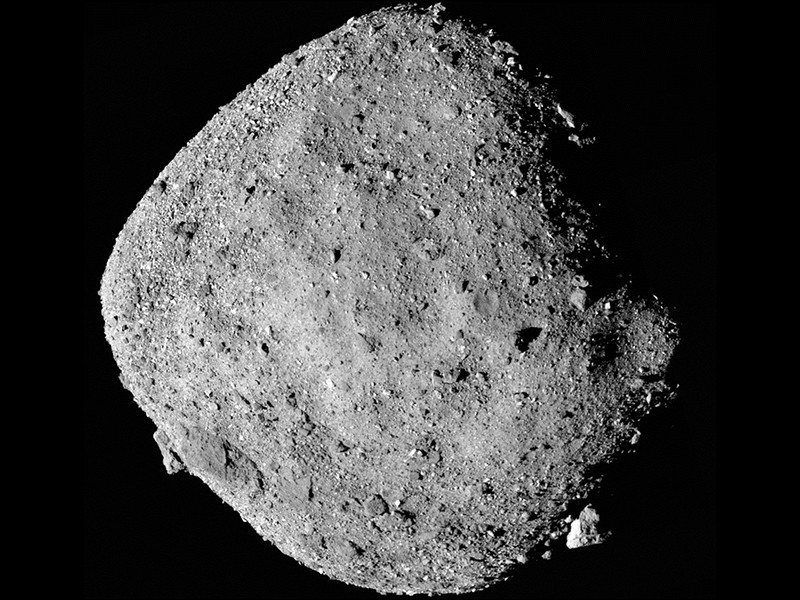
OSIRIS-REx delivered material from Bennu on 24 September 2023. In laboratories, the dark grains revealed a history that photographs could not: water-altered minerals, salts and a varied inventory of carbon chemistry inherited from the asteroid’s parent body.
Why is the origin of Mars’s moons still uncertain?
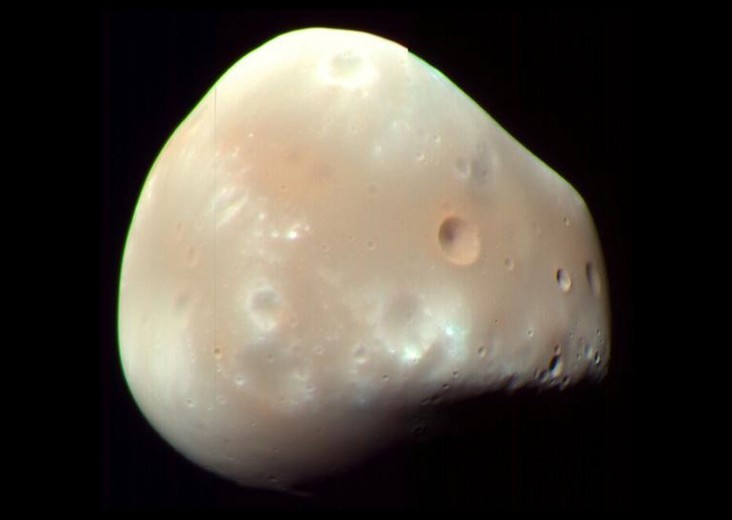
Mars Reconnaissance Orbiter photographed a dusty, cratered Deimos in February 2009. Its small, irregular shape resembles an asteroid. Explaining how that object ended up on a nearly circular orbit around Mars is harder than identifying the resemblance.