

Why is the origin of Mars’s moons still uncertain?
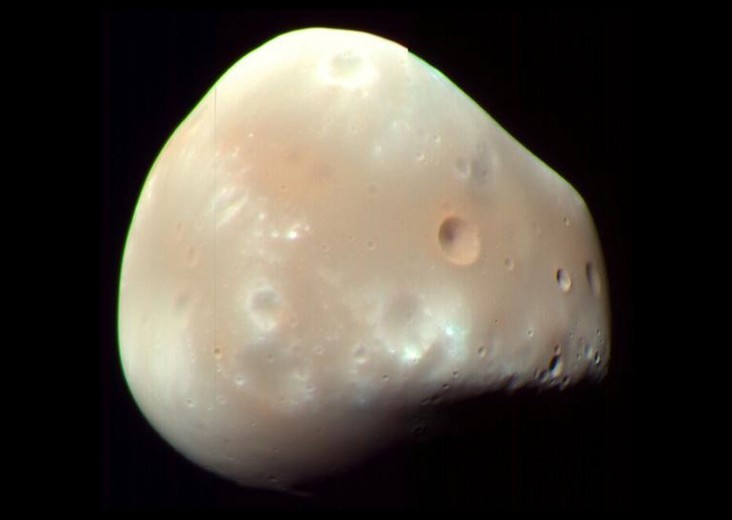
Mars Reconnaissance Orbiter photographed a dusty, cratered Deimos in February 2009. Its small, irregular shape resembles an asteroid. Explaining how that object ended up on a nearly circular orbit around Mars is harder than identifying the resemblance.
The clues that favour an asteroid connection
Deimos is only about 15 kilometres across its longest dimension. Its gravity is too weak to force it into the rounded shape of a large planet, and its dark surface resembles carbon-rich materials found on some asteroids. Phobos shares the broad combination of a dark exterior and irregular shape. [1] [2]
Those similarities make capture an attractive hypothesis. A small body formed elsewhere could have passed Mars and become a satellite. If the moons preserved primitive material from beyond Mars, their composition could reveal how solids and volatile ingredients moved through the early Solar System. [1] [2]
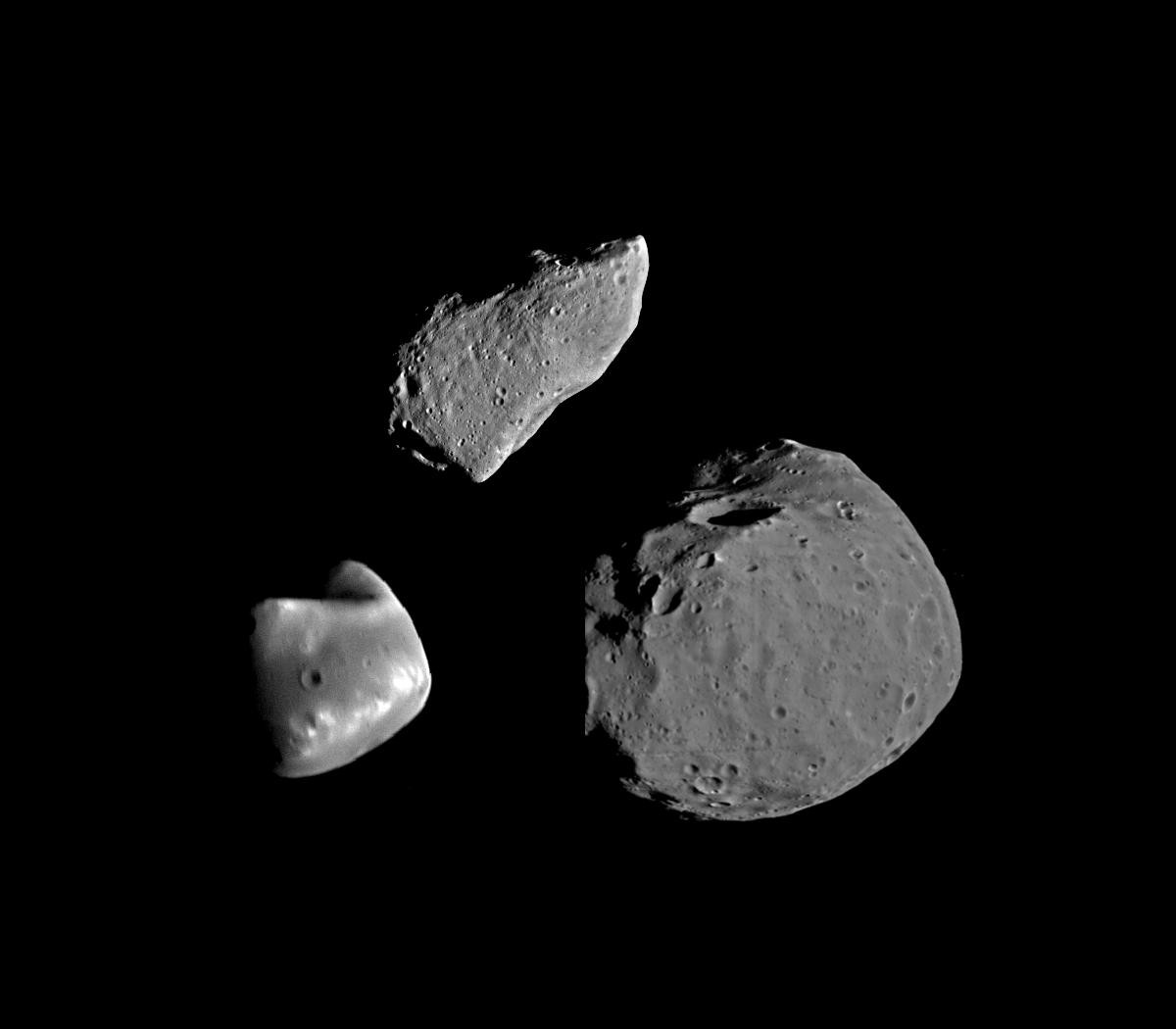
A resemblance is not yet a dynamical explanation. An incoming asteroid normally flies past or strikes a planet. To remain in orbit it has to lose energy, and the resulting trajectory must then evolve into the orbit observed today. [1] [2]
An impact provides a local source of material
The competing family of explanations begins with a large collision involving Mars. Debris thrown into orbit could form a disk and assemble into moons. In that scenario, at least some of the material would originate from Mars or the impacting body, rather than from an intact asteroid captured later. [3]
The useful distinction is measurable. Minerals, elemental abundances and chemical signatures can be compared with meteorites and known Martian materials. A sample may also record heating or alteration that constrains what happened before the moon assembled. [3]
Neither explanation can be judged from one visual trait. A successful model must account for material composition, present orbits and the evolution of the system over billions of years. The available observations still leave room for different histories. [3]
Why Deimos looks smoother than Phobos
Deimos has many craters, but fine debris partly fills them and softens its appearance. NASA describes a substantial regolith: a fragmented surface layer produced by repeated impacts. That dusty covering can obscure the shape of the underlying solid material. [1]
Small impacts can launch particles away from the moon because its escape speed is low. Some of that material can remain bound to Mars and later return to the moon’s orbital region. Redistribution therefore helps explain why a cratered body need not look as sharply sculpted as Phobos. [1]
The surface we photograph has been processed. It is not a pristine exposed interior, and its colour or texture cannot be treated as a simple label for the original building blocks. [1]
Use the pair as a joint constraint
Deimos completes an orbit in about 30 hours, while Phobos circles Mars several times each day. Their different distances expose them to different tidal conditions. Phobos is moving inwards today, a reminder that present orbits are the outcome of continuing evolution. [1] [2]
Their shared host makes comparison valuable. If both formed from one debris system, a model must explain how material reached both orbital locations. If they were captured separately or together, it must explain how the necessary energy was removed and the present arrangement established. [1] [2]
What MMX can add
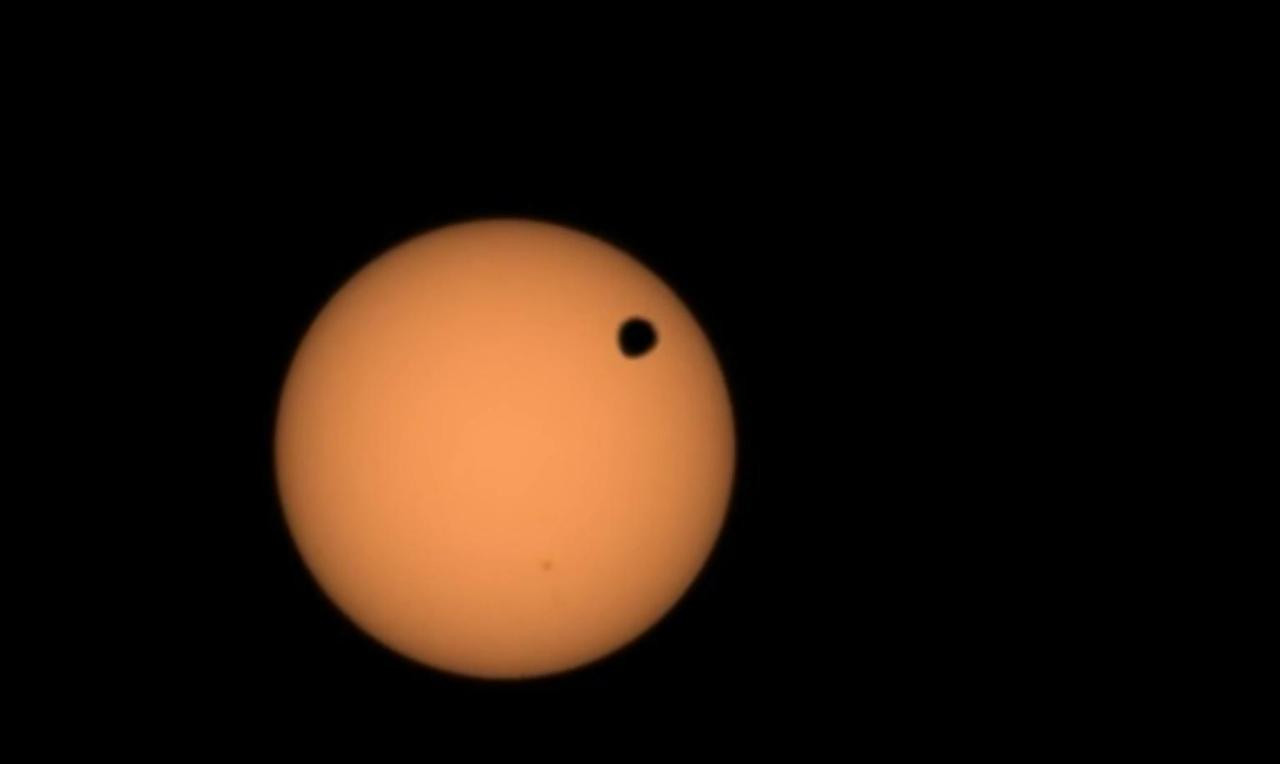
JAXA’s MMX mission is designed to observe both moons and bring a sample from Phobos to Earth. NASA’s MEGANE instrument will investigate elemental composition using gamma rays and neutrons, complementing other remote measurements and the returned grains. [3]
A Phobos sample is not a Deimos sample, so it cannot answer every question about the outer moon directly. Its value is to anchor the comparison in laboratory evidence. Combining that material with observations of both moons can test whether their apparent similarities reflect a common origin, a shared surface environment or different histories that produced similar-looking ground. [3]
Sources & image credits
Related reading and objects
Why is Phobos falling towards Mars?
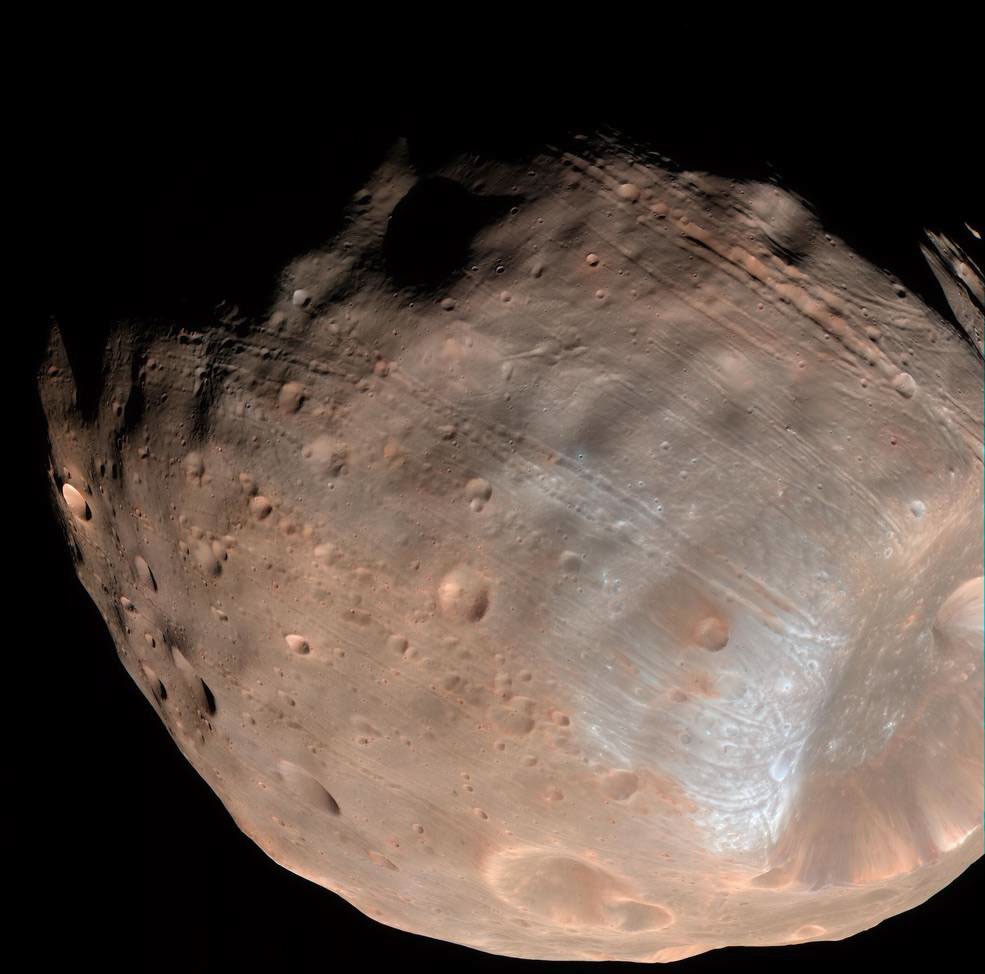
Images from Mars Reconnaissance Orbiter show Phobos as a battered, irregular moon dominated by Stickney crater. Its less visible change is orbital: Phobos is gradually moving closer to Mars because it travels around the planet faster than the planet turns.
What does Ryugu preserve from the early Solar System?
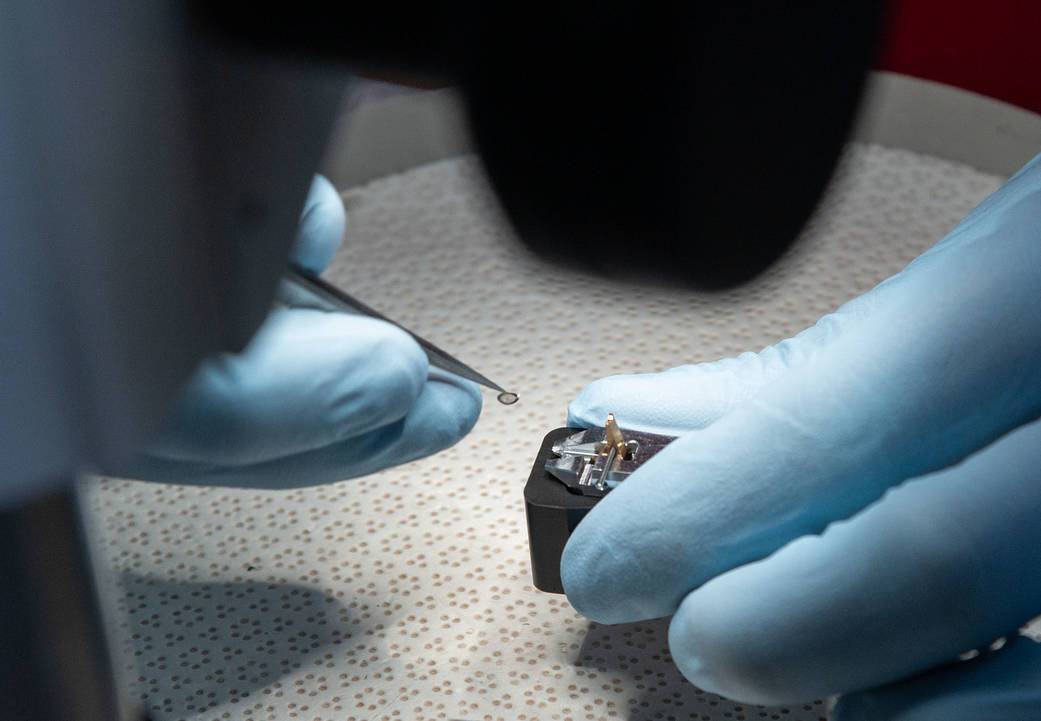
Hayabusa2 returned its Ryugu sample capsule to Earth in December 2020. The grains came from two carefully documented touchdowns, including one near an artificial impact crater. Their minerals and chemistry now connect a small rubble-pile asteroid to a much older, water-altered parent body.