The Moon / Field notes
Moon missions explained: flybys, orbiters and landers
One destination. Many ways to explore it.
- Average distance from Earth
- ≈384,000 km
- One-way light travel time
- ≈1.28 seconds
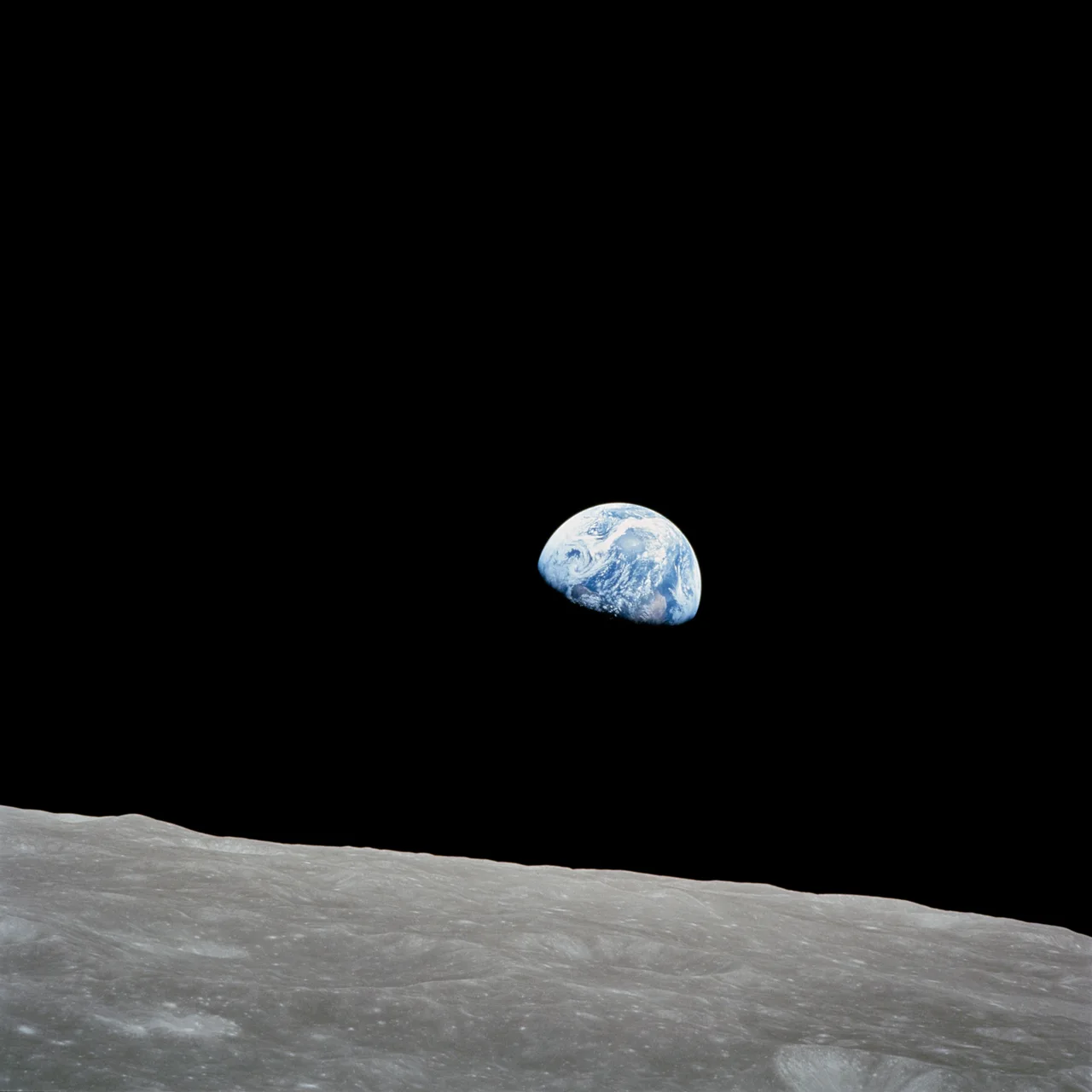
- Apollo 8’s Earthrise photograph
- 1968
A destination, not a mission type
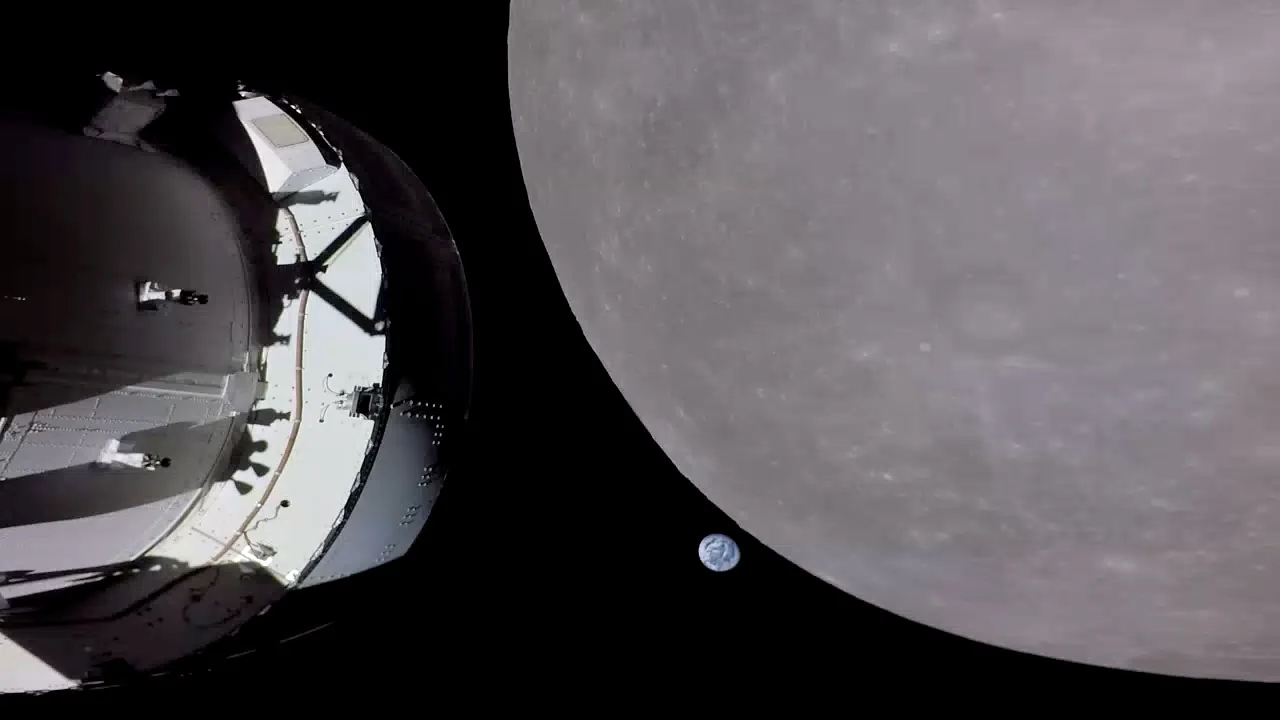
A lunar flyby passes the Moon without staying. An orbiter remains to observe it repeatedly. A lander has to reach the surface safely. These are different objectives: a successful flyby does not imply a landing, and a launch toward the Moon is only the beginning of the journey.
Pass the Moon
Encounter geometry and the onward or return trajectory matter.
Stay above it
Repeated observations can map terrain and study the environment.
Reach the surface
Descent, landing and surface operations add separate objectives.
Why the poles draw attention
The Moon’s small axial tilt leaves some polar crater interiors in permanent shadow. Water ice has been detected in these cold regions. Nearby terrain can have very different sunlight conditions, making the landscape both scientifically interesting and demanding for power, navigation and exploration.
The photograph that changed the view
Bill Anders photographed Earthrise from Apollo 8 on 24 December 1968. The crew orbited the Moon; they did not land. Looking at the photograph beside the mission record is a useful reminder to separate the destination, the flight profile and the reported outcome.
Follow the actual flight
Use the Moon schedule for the complete upcoming lunar collection. Open each record for its source description, target precision and status. For history, search the complete catalog by a mission or program name. Those results are text matches; they are not a claim that every matching record is a lunar flight.
Is the far side always dark?
No. The far side faces away from Earth, but it has day and night. “Far side” and a permanently shadowed polar crater describe different things.
From the complete catalog
Meet the missions.
Search by name across every launch and event record. Results keep their source IDs, dates and reported outcomes.
See upcoming Moon missions →Sources & further reading
NASA · Moon facts ↗NASA · Apollo 8’s Earthrise ↗Science explanations and historical imagery are reviewed separately from changing mission records. Sources and corrections