

How do we know ʻOumuamua came from another star system?
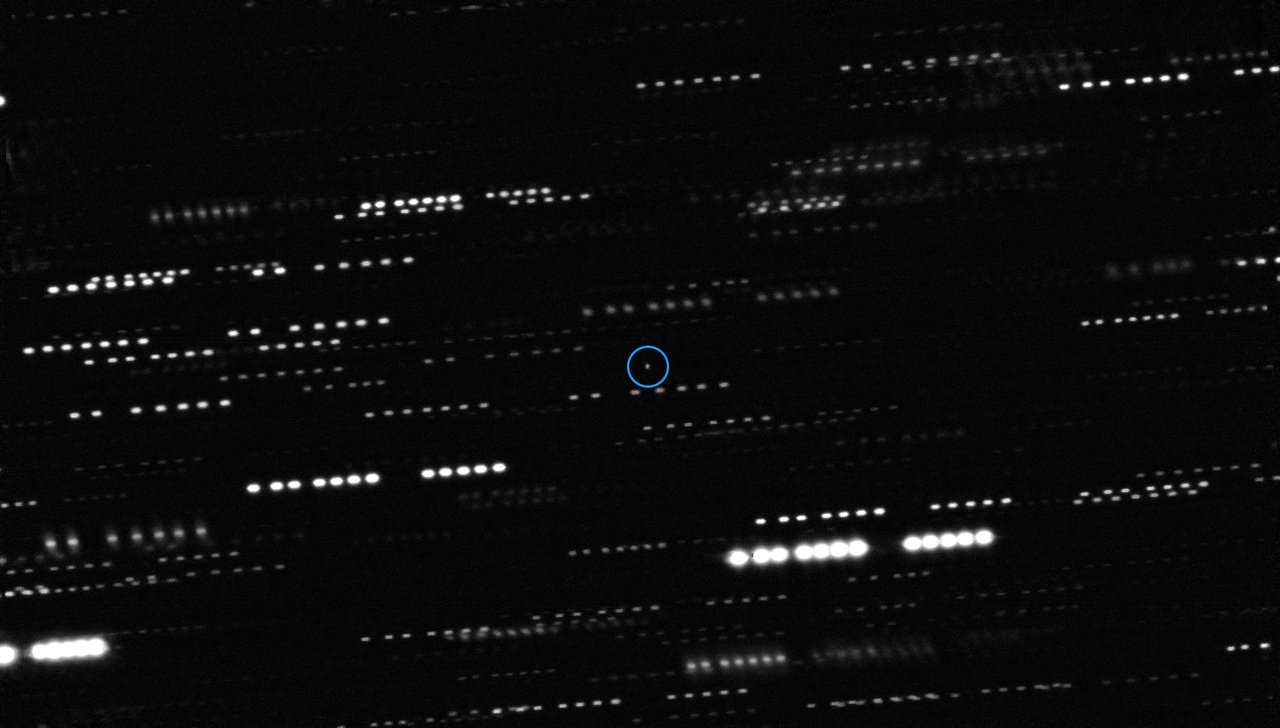
Pan-STARRS1 discovered ʻOumuamua on 19 October 2017, after it had already passed the Sun. Telescopes saw only an unresolved point of light. Tracking that point nevertheless established something decisive: it had arrived from beyond the Solar System and would leave again.
A one-time passage has a different energy
A body bound to the Sun follows an orbit from which solar gravity can bring it back. ʻOumuamua’s incoming speed and measured trajectory instead corresponded to an unbound, hyperbolic passage. Even after climbing away from the Sun, it would retain speed relative to it. [1]
The conclusion does not rest on the object merely moving fast near perihelion. Every small body accelerates as it falls towards the Sun. Researchers reconstructed the incoming motion and found that solar gravity alone could not account for its already high approach speed as a previously bound visitor. [1]
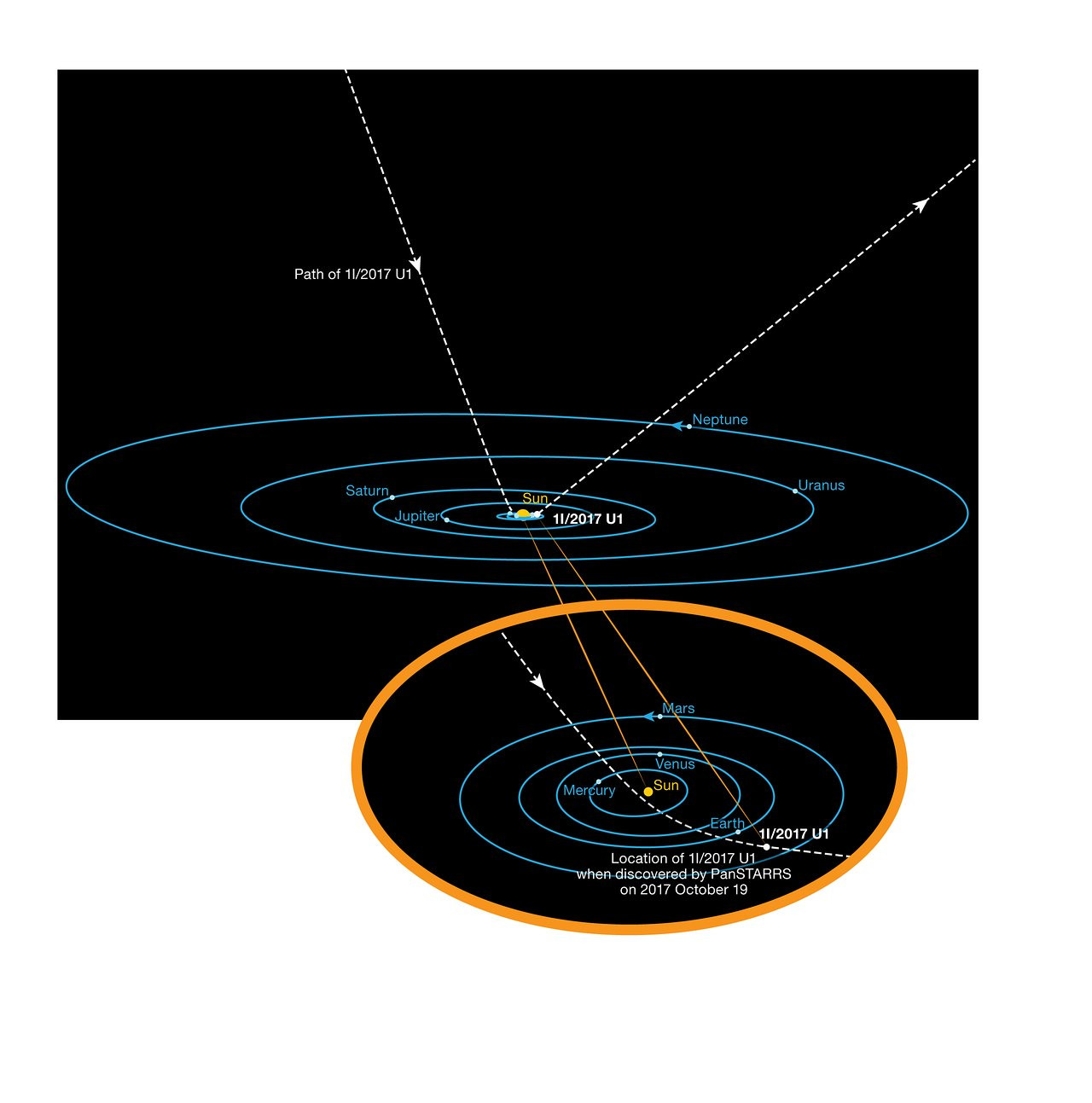
Nor was there a planetary encounter capable of explaining an ordinary Solar System body being launched onto that particular incoming trajectory. The orbital evidence established interstellar origin independently of debates about the object’s material. [1]
Brightness constrained shape without photographing it
As telescopes followed ʻOumuamua, its brightness changed dramatically. A non-spherical rotating body can present different illuminated areas to an observer, producing a changing light curve. Complex variations also indicated tumbling rather than a simple rotation about one fixed principal axis. [2] [1]
Models of those variations imply an extreme shape, but no telescope resolved a cigar, disk or detailed surface. The exact dimensions depend on assumed reflectivity and geometry. Widely reproduced close views are illustrations of possible interpretations. [2] [1]
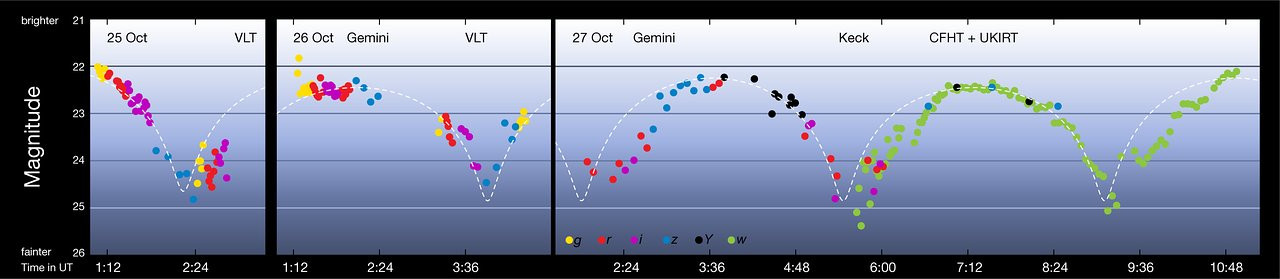
The firm observation is the changing light. Converting it into a three-dimensional shape requires a model, and more than one arrangement can reproduce aspects of a limited data set. [2] [1]
A small extra force appeared in the tracking
Precise positional measurements showed a small departure from a trajectory governed only by gravity. Gas escaping from a comet can supply such a force, acting as a weak natural thruster. [1]
ʻOumuamua did not display the conspicuous dusty coma expected of an active comet in the available observations. That made the combination unusual: a comet-like non-gravitational acceleration without a readily visible comet-like envelope. [1]
A missing dust cloud does not automatically exclude every kind of gas release. Different molecules, small dust quantities and the object’s size affect what instruments can detect. The challenge is to explain both the force and the observational limits at the same time. [1]
One proposal uses radiation-processed ice
A 2023 study proposed that energetic radiation could have produced molecular hydrogen inside water-rich ice during a long interstellar journey. Warming near the Sun could then rearrange the ice and release trapped hydrogen, providing thrust without a large dust coma. [3] [4]
The mechanism connects laboratory knowledge of irradiated ice with a model of the measured acceleration. It is a proposed natural explanation, not a direct detection of hydrogen from ʻOumuamua. The object’s composition was not sampled, and the short encounter left important parameters uncertain. [3] [4]
That distinction allows the idea to be useful without treating it as a uniquely established reconstruction. Future objects with similar behaviour can supply observations that were unavailable in 2017. [3] [4]
Interstellar does not identify a birthplace
The direction from which an object arrives is not a reliable address for its parent star. Stars move, gravitational encounters alter trajectories, and an interstellar journey can last much longer than the observational record used to reconstruct it. [1] [2]
ʻOumuamua’s source system remains unknown. Its lasting contribution is more definite: a measured orbit demonstrated that small bodies from other stellar systems pass through ours. The point of light established the journey, while its brightness and acceleration opened physical questions that a point alone could not completely answer. [1] [2]
Sources & image credits
Related reading and objects
What made Borisov an interstellar comet?
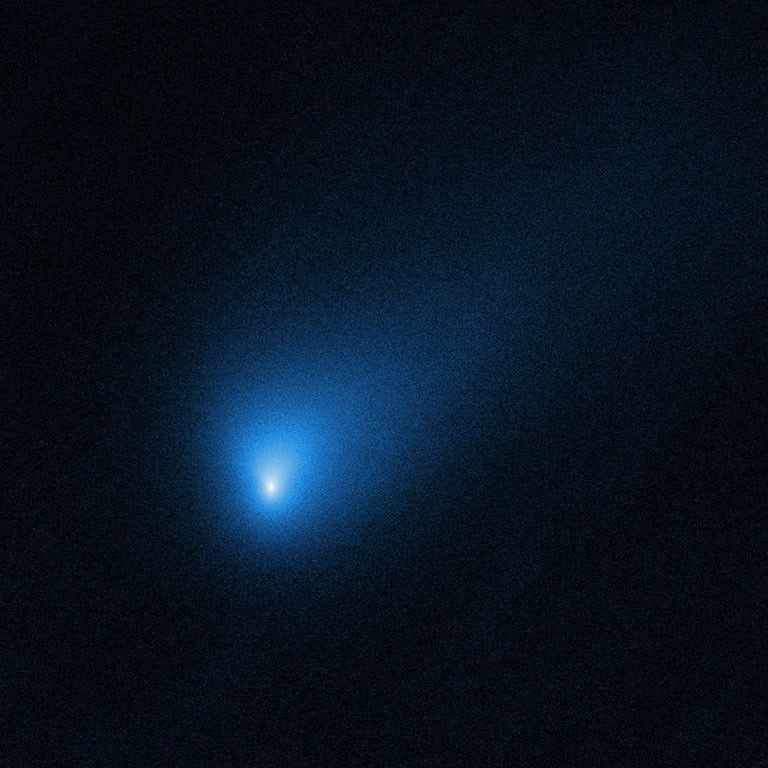
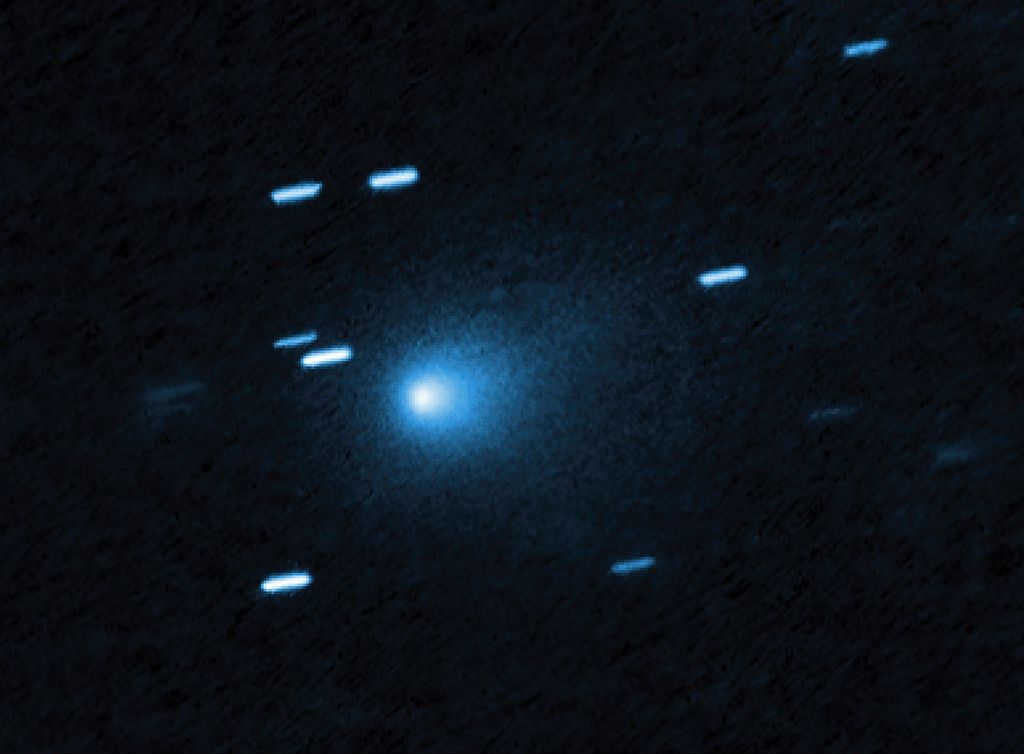
Gennady Borisov discovered the object now called 2I/Borisov on 30 August 2019. Unlike ʻOumuamua, it displayed a dusty coma. Its trajectory established an interstellar journey, while the escaping gas allowed astronomers to investigate material formed around another star.
What does 3I/ATLAS reveal about comets from other stars?
The ATLAS survey reported 3I/ATLAS on 1 July 2025. Its unbound trajectory identified an interstellar visitor, while its active coma gave telescopes access to gas and ice grains. Observations extending into 2026 turned that brief passage into a comparison with the ingredients of our own Solar System.