

Is Psyche really the exposed core of a lost planet?
Psyche reflects radar strongly and appears to contain substantial metal. That made it a candidate remnant of a planetesimal’s core, exposed after collisions removed outer rock. NASA’s Psyche mission is designed to test that interpretation rather than assume it.
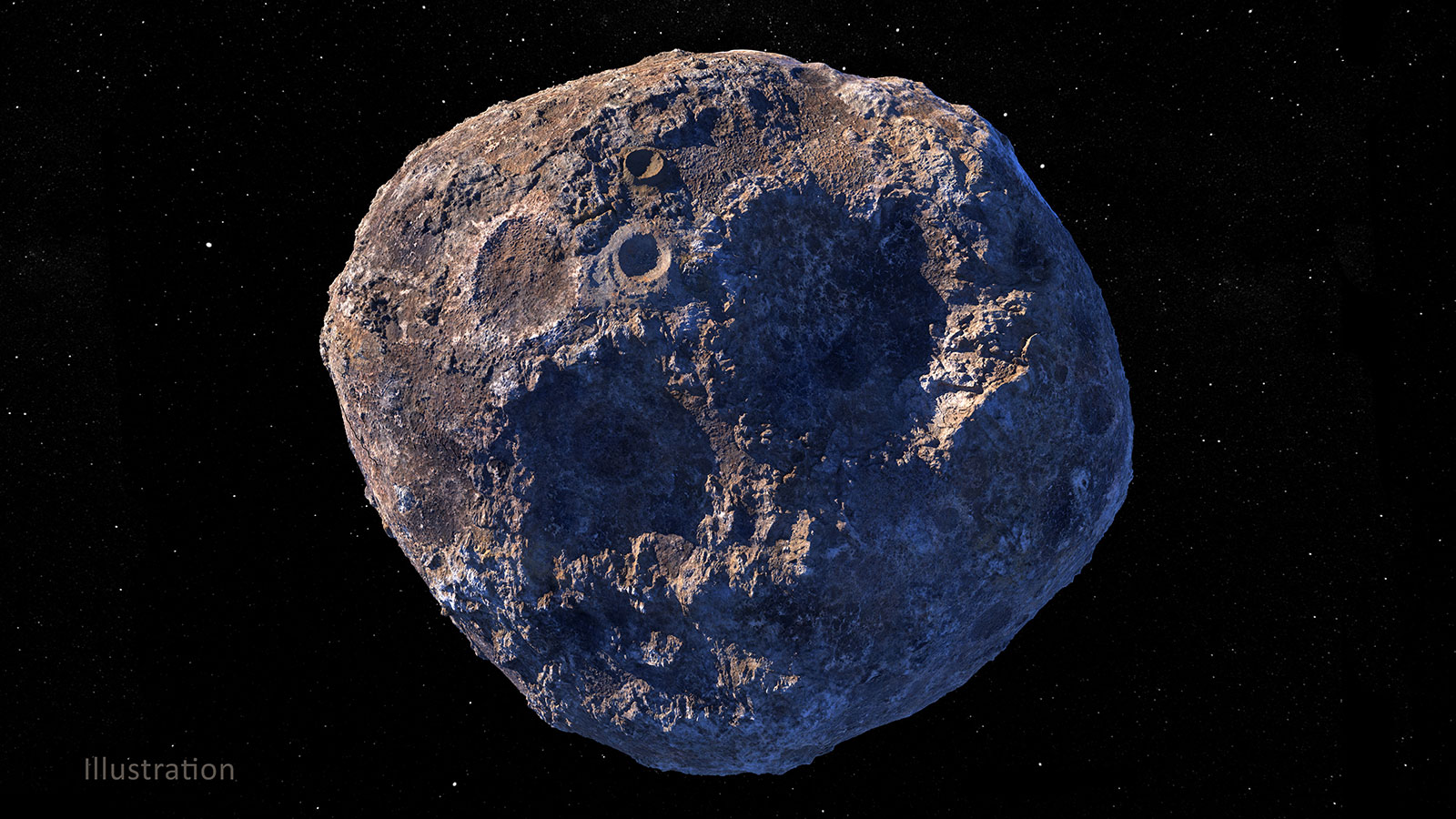
Metal-rich is a measured interpretation
Before a spacecraft arrives, astronomers infer Psyche’s properties from reflected light, radar, thermal emission and its gravitational effects. Each measurement constrains something different: shape, surface behaviour, heat retention or mass. [1]
Radar reflectivity helped establish the case for substantial metal. Modern estimates describe a mixture of metal and silicate material rather than a pure iron object. NASA’s overview gives a broad estimated metal fraction of roughly 30–60 percent by volume. [1]
The range matters. Surface roughness, porosity and the distribution of rock and metal complicate remote interpretation. A metallic appearance in an illustration cannot replace measurements of the real surface. [1]
What an exposed core would imply
A sufficiently heated early planetesimal could separate into a dense metallic interior and lighter rocky layers. Later collisions might strip away much of the exterior, leaving a metal-rich remnant accessible to a spacecraft. [1] [2]
If Psyche followed that history, studying it would offer a way to investigate material related to planetary cores without travelling through thousands of kilometres of overlying rock. The target would preserve a record of differentiation and violent collisions during planet formation. [1] [2]
But a metal-rich asteroid need not be a neatly uncovered, intact core. Mixtures produced by disruption, reassembly or other formation conditions can yield different interiors and surfaces. The mission’s science plan explicitly includes distinguishing a core remnant from material that did not undergo the same complete melting history. [1] [2]
Look for a field preserved in old material
A molten metallic core can once have sustained a dynamo, generating a magnetic field. As material cools in such a field, it may retain remanent magnetisation after the active dynamo stops. [2] [3]
Psyche’s magnetometer is designed to search for that magnetic record. A detected remanent field would constrain the asteroid’s thermal and magnetic past. It would not mean the body currently contains a working Earth-like dynamo. [2] [3]
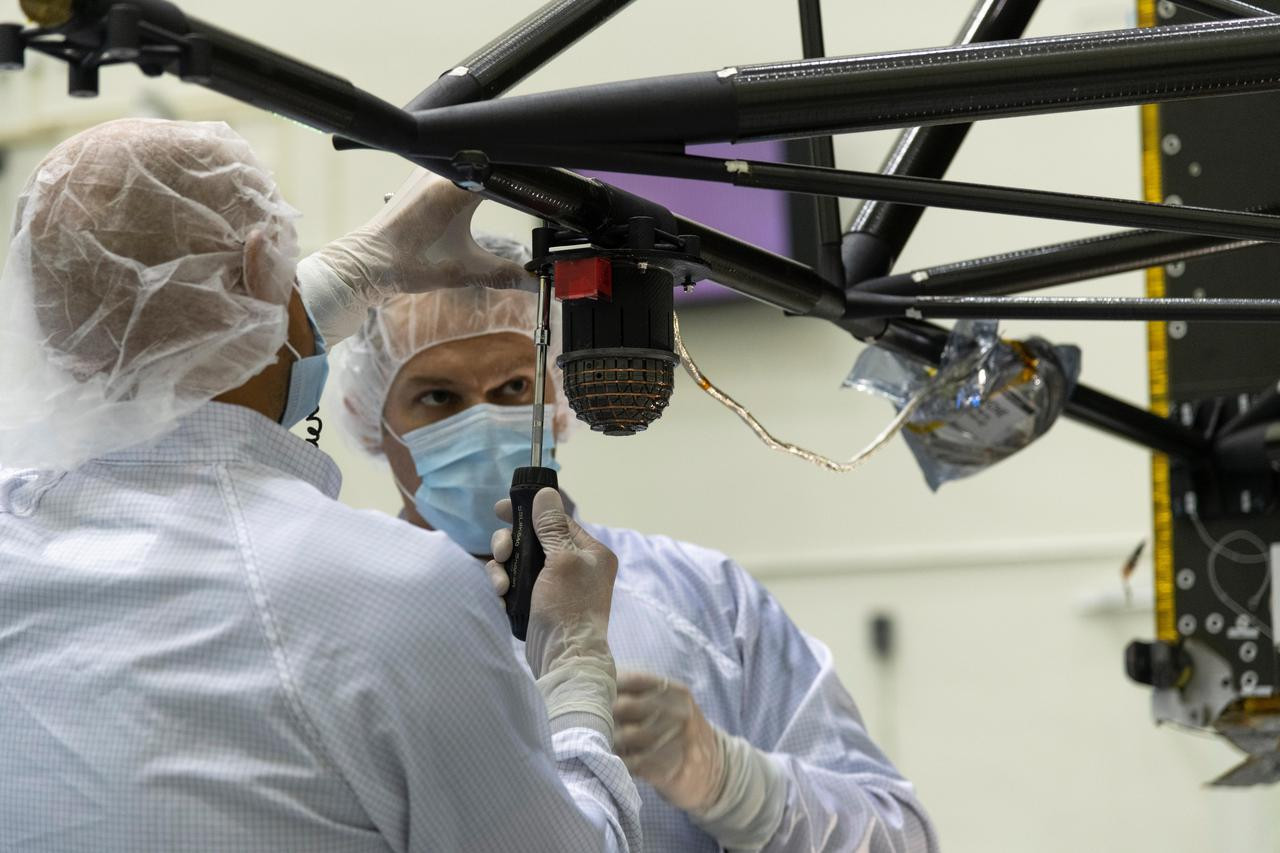
A missing field would also need careful interpretation. Later heating, disruption and the arrangement of magnetised fragments can affect what a spacecraft measures. The magnetic test is powerful when combined with geology and composition, rather than treated as one yes-or-no answer to every origin model. [2] [3]
Chemistry and gravity add independent constraints
Gamma-ray and neutron measurements can investigate elemental composition, while imaging maps surface features and differences in colour. Radio tracking of the spacecraft constrains the gravity field and hence how mass is distributed within the body. [2]
A dense, comparatively coherent metal-rich interior should not behave exactly like a porous aggregate of mixed fragments. Comparing measured mass, volume and compositional variation can test those alternatives. Craters may also expose material below the immediate surface and reveal how a metal-rich target responds to impacts. [2]
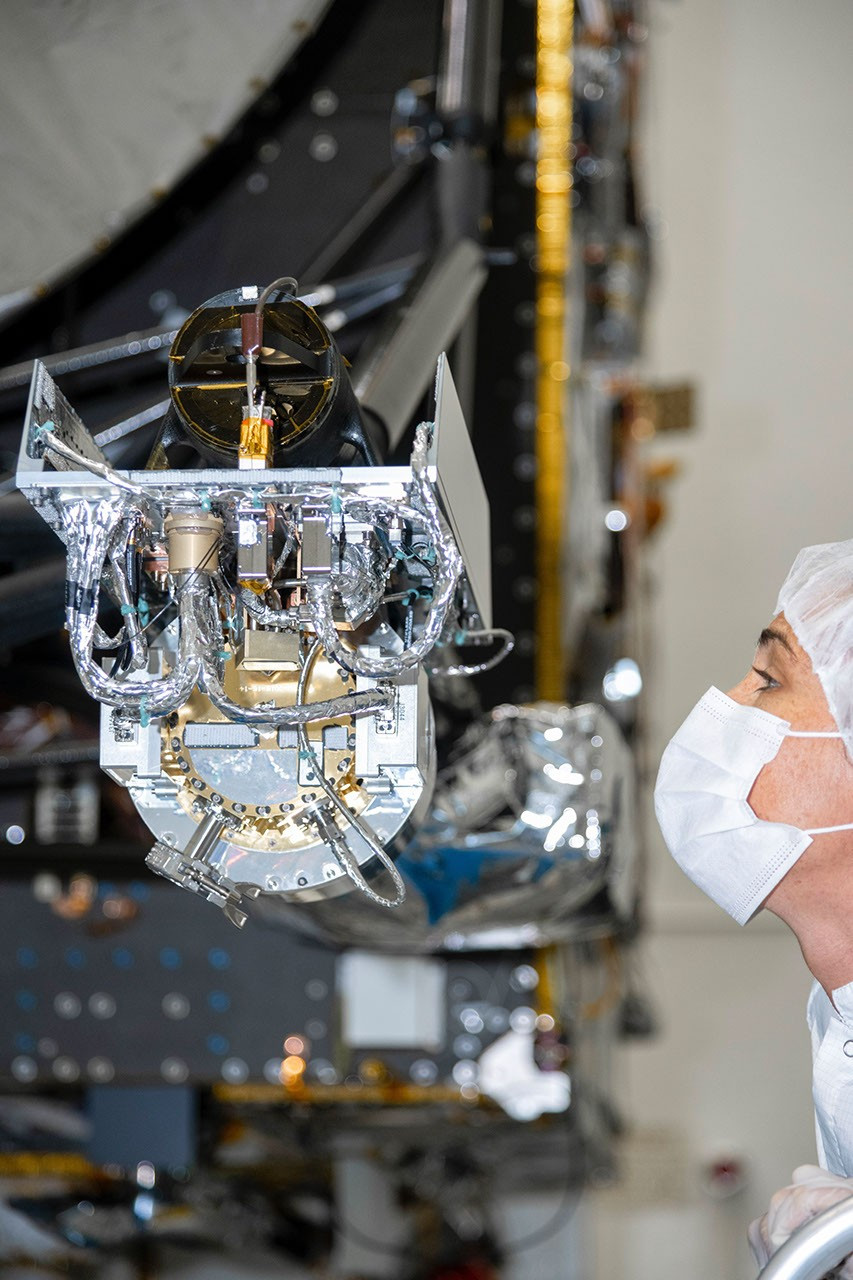
The scientific goal is therefore a coherent physical history. Several measurements must agree on what Psyche is made of, how it is arranged and what processes shaped it. [2]
Why the familiar rendering remains provisional
Psyche is an irregular main-belt asteroid, about 280 kilometres across its longest dimension. Radar-based shape models and artist’s concepts help plan observations, but no current close-up photograph establishes its actual landscape. [1] [2]
The core explanation makes a compelling testable question. It becomes a conclusion only if the measurements support the required history. The value of exploring Psyche is precisely that a metal-rich surface could preserve several different paths through early planet formation, and a spacecraft can distinguish among them. [1] [2]
Sources & image credits
Related reading and objects
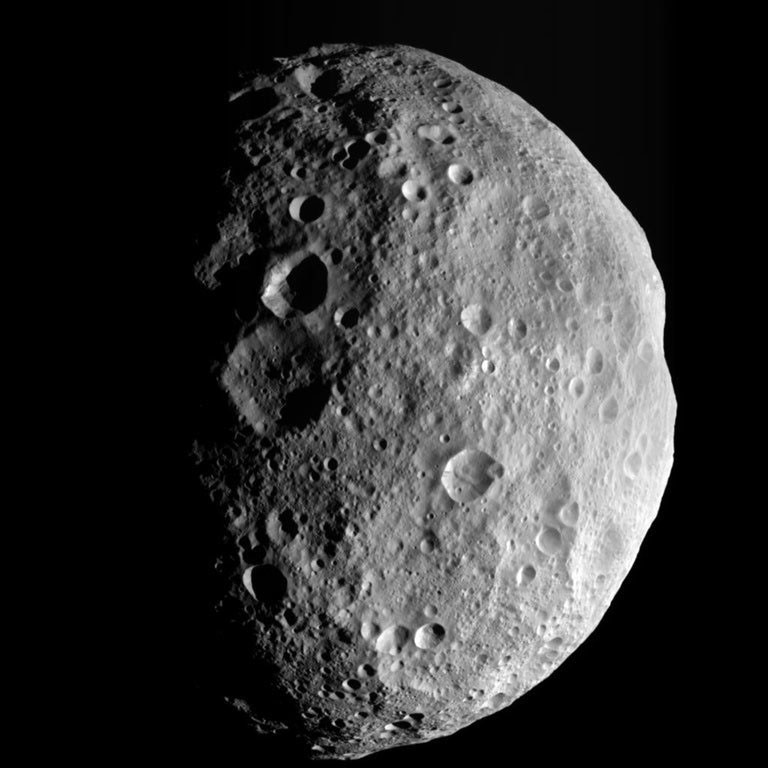
How can a meteorite be traced back to Vesta?
Long before Dawn orbited Vesta in 2011, laboratories held meteorites suspected to come from it. The spacecraft could test that connection by measuring the asteroid’s minerals, chemical composition and the impact scars capable of launching fragments into space.
Reading Earth’s magnetic field from orbit
ESA launched three Swarm satellites to measure a field made mostly thousands of kilometres beneath our feet. Their instruments also detect magnetised rocks, currents in space and even moving seawater. To understand Earth’s magnetic field, they must separate those signals.