

What does habitable zone mean for TOI-700 d?
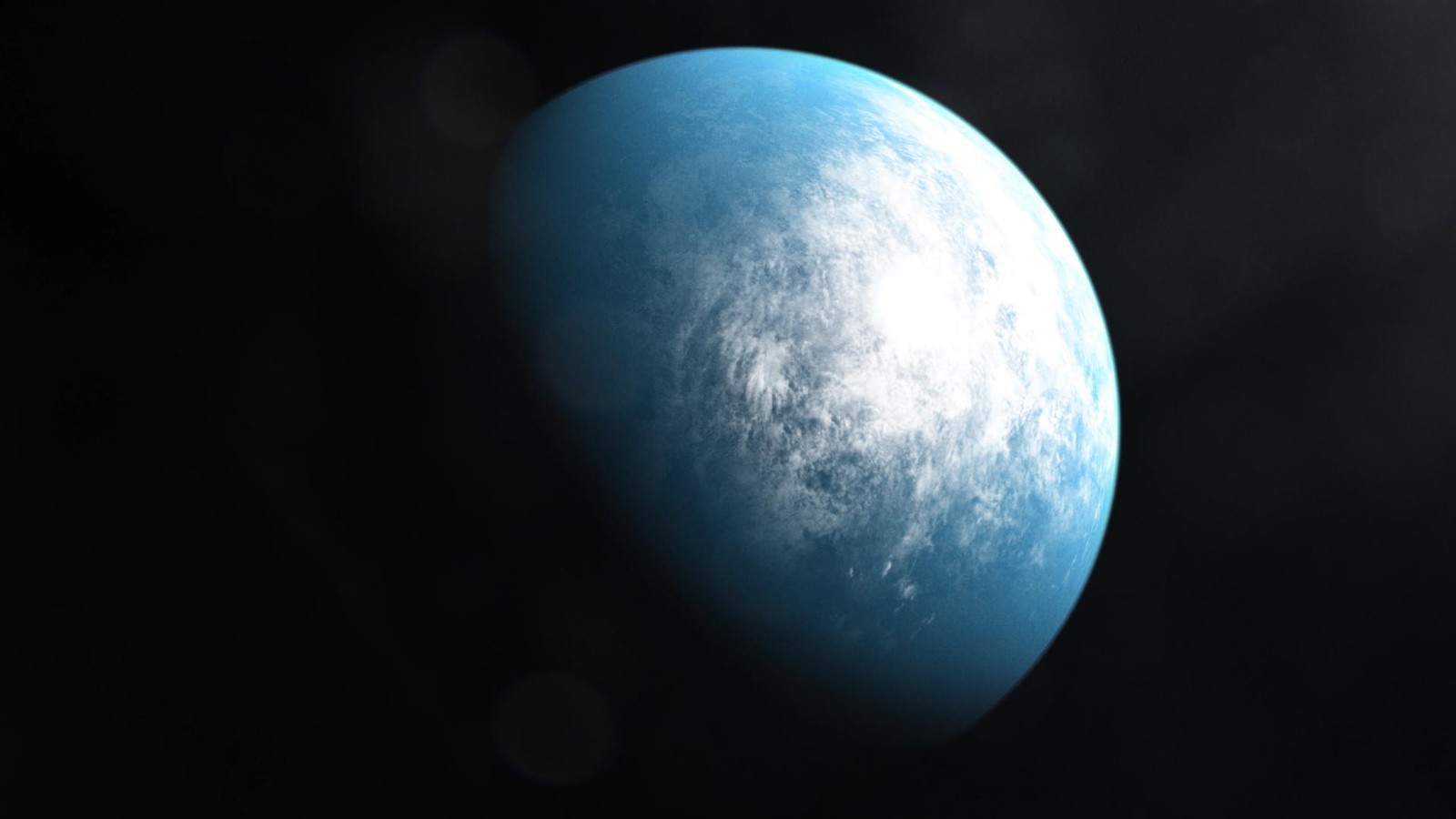
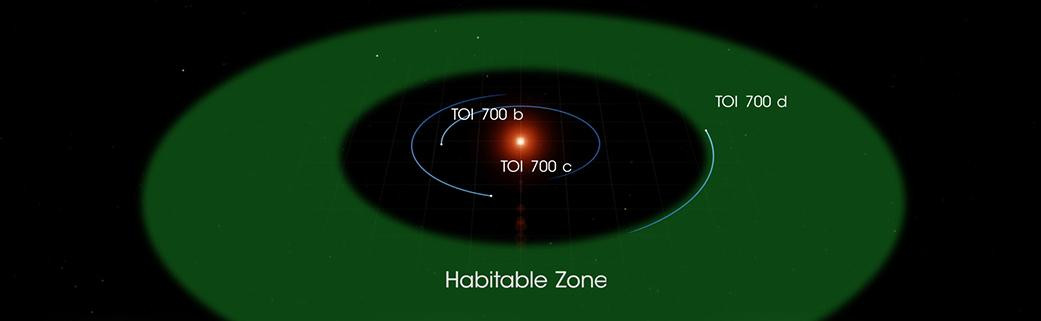
TESS discovered TOI-700 d through repeated dips in a cool star’s light, with the result announced in January 2020. Its orbit places it in the star’s habitable zone. That identifies an interesting energy range, while leaving its actual atmosphere and surface conditions to be determined.
Measure size relative to a measured star
TESS recorded recurring decreases in the star’s brightness as TOI-700 d crossed its face. The depth of a transit constrains the ratio of the planet’s size to the star’s size. Knowing the host star accurately is therefore essential to interpreting the planet. [1] [2]
The star was initially misclassified as more Sun-like. Correcting it to a smaller, cooler red dwarf also changed the inferred planetary sizes and irradiation. Spitzer observations then helped confirm TOI-700 d’s transits. [1] [2]
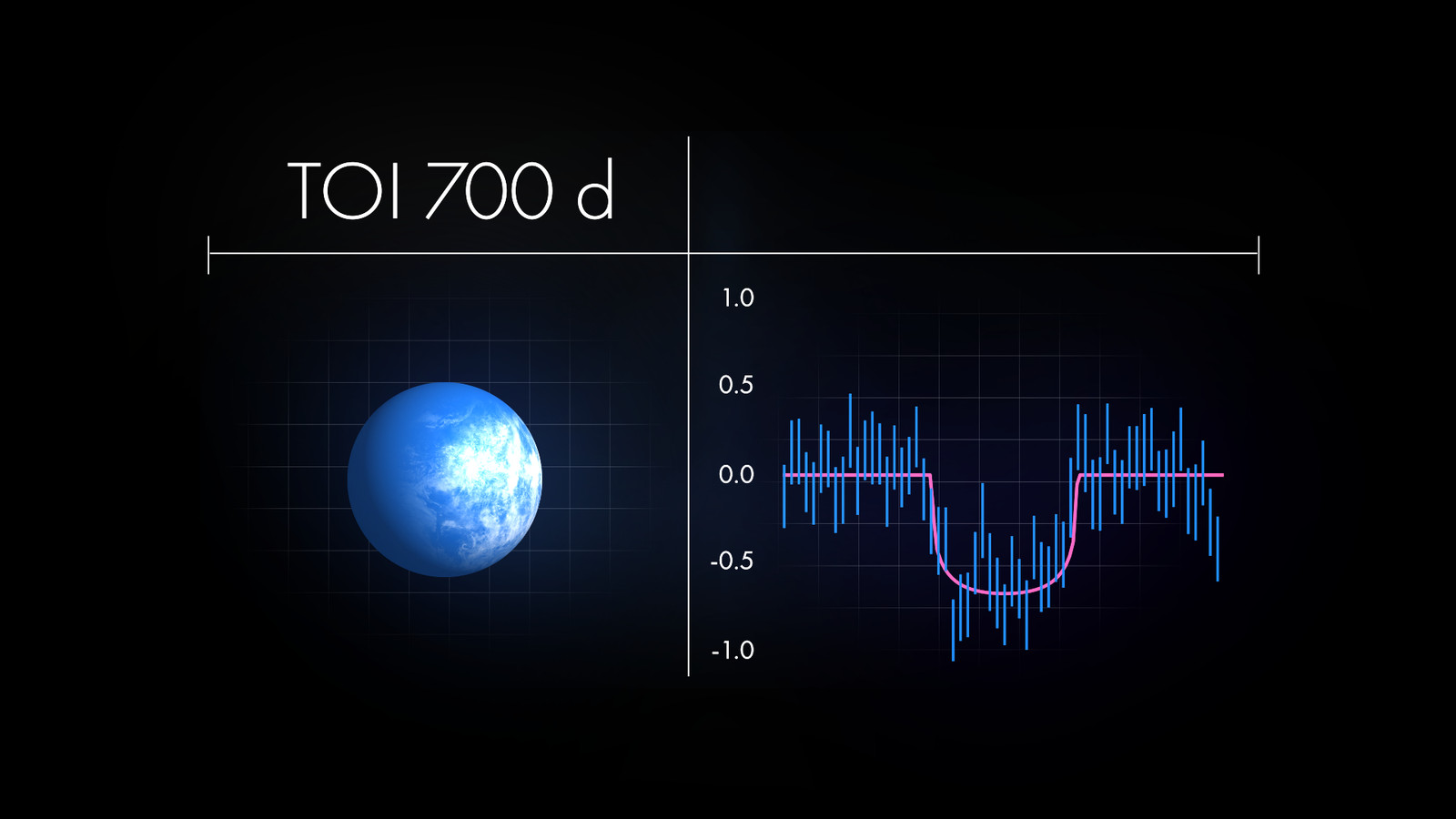
The planet is approximately Earth-sized and completes an orbit in about 37.4 days. A transit radius does not itself reveal whether its surface is covered in water, rock or a substantial atmosphere. Those possibilities require further physical constraints. [1] [2]
A cool star puts the useful distance range closer in
The habitable zone is a modelled range of distances where a planet with suitable atmospheric conditions could sustain liquid water on its surface. It depends on the star’s luminosity and spectrum as well as assumptions about the planet. [1] [3]
TOI 700 is smaller and cooler than the Sun, so a planet can orbit much closer while receiving a comparatively moderate energy supply. The discovery analysis estimated that d receives about 86 percent of the energy Earth receives from the Sun. [1] [3]
That number describes incoming energy. The climate also depends on how much is reflected, how effectively infrared radiation escapes and how heat moves between regions. Similar incident power does not guarantee an Earth-like surface temperature. [1] [3]
The missing layer changes the answer
An atmosphere can provide pressure needed for stable liquid water, absorb outgoing infrared radiation and transport energy. Its composition, mass and clouds can produce very different climates under the same stellar illumination. [3] [1]
A habitable-zone planet without a suitable atmosphere might be frozen, dry or unable to retain exposed liquid. Another with a strong greenhouse effect could be much warmer. The orbital label identifies a place to investigate, rather than confirming one of those outcomes. [3] [1]
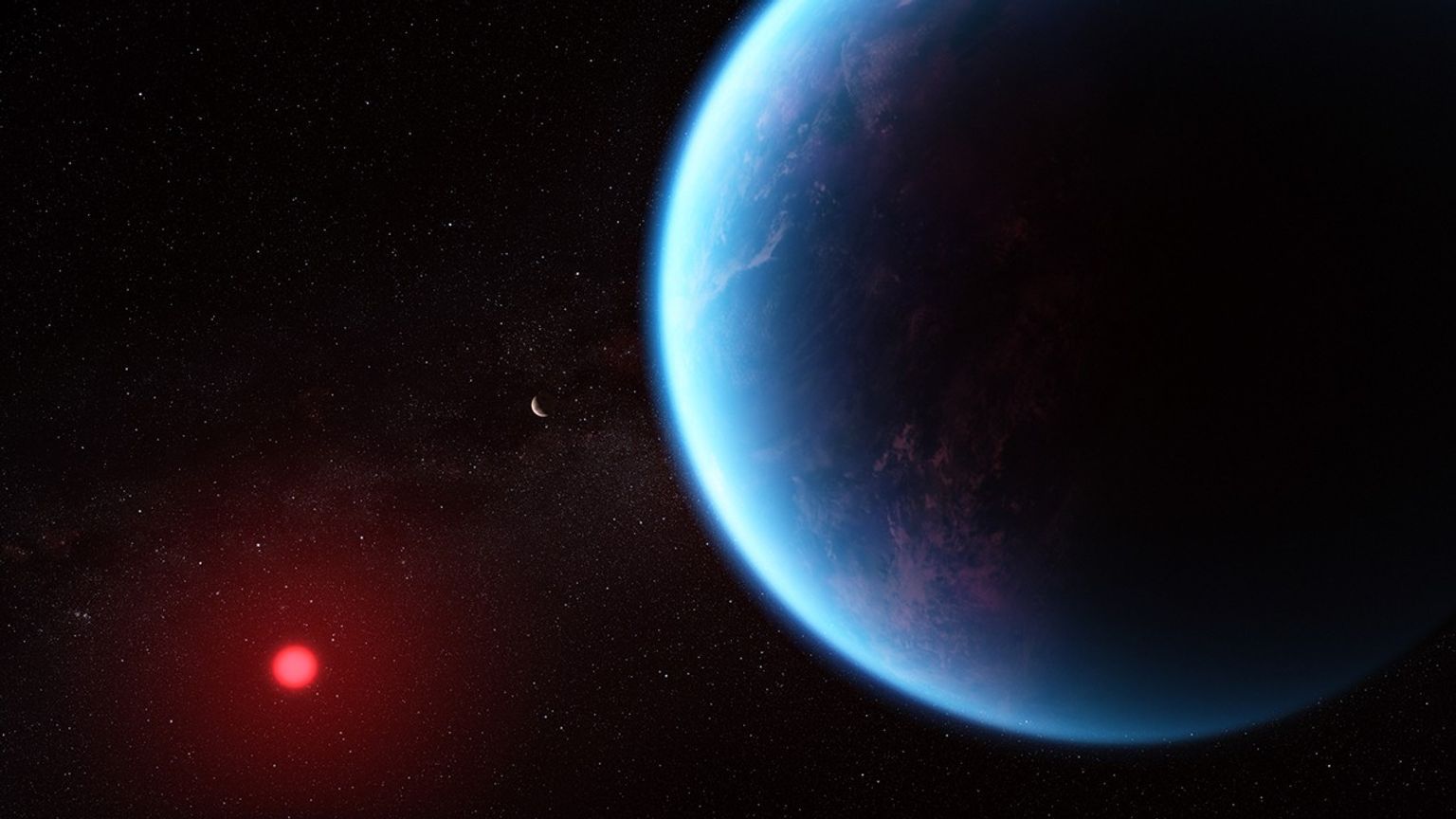
The atmospheric state of TOI-700 d is not established by the discovery transit. An illustrated blue ocean is one possible modelled scene, not a photograph of the world. [3] [1]
A permanent day side need not mean one uniform climate
Close-orbiting planets around red dwarfs may rotate synchronously, keeping roughly one hemisphere towards the star. Climate simulations for TOI-700 d explored that arrangement with different atmospheric and surface assumptions. [3] [1]
An atmosphere and ocean can redistribute heat, while clouds near the illuminated region alter reflection. A dry-land scenario can behave differently from a water-covered one. The models investigate how those components interact rather than predicting one measured weather map. [3] [1]
Comparing such scenarios also helps identify useful future observations. A difference in predicted thermal emission or atmospheric features suggests a way to distinguish physical conditions if sufficiently precise data become available. [3] [1]
The system provides more than one test
A second approximately Earth-sized planet, TOI-700 e, was announced in 2023 within the system’s broader optimistic habitable zone. Its existence adds a nearby comparison under the same host star while changing the original three-planet picture. [4] [1]
The planets receive different irradiation and need not share an atmosphere or surface history. A useful comparison asks which measured differences can account for different climates, rather than assigning every Earth-sized member the same conditions. [4] [1]
For TOI-700 d, the confirmed starting point is a small transiting planet on a measured orbit around a cool star. Habitable zone explains why that energy setting deserves attention. Whether it actually supports surface water remains a separate observational question. [4] [1]
Sources & image credits
Related reading and objects
Can the TRAPPIST-1 planets keep atmospheres?
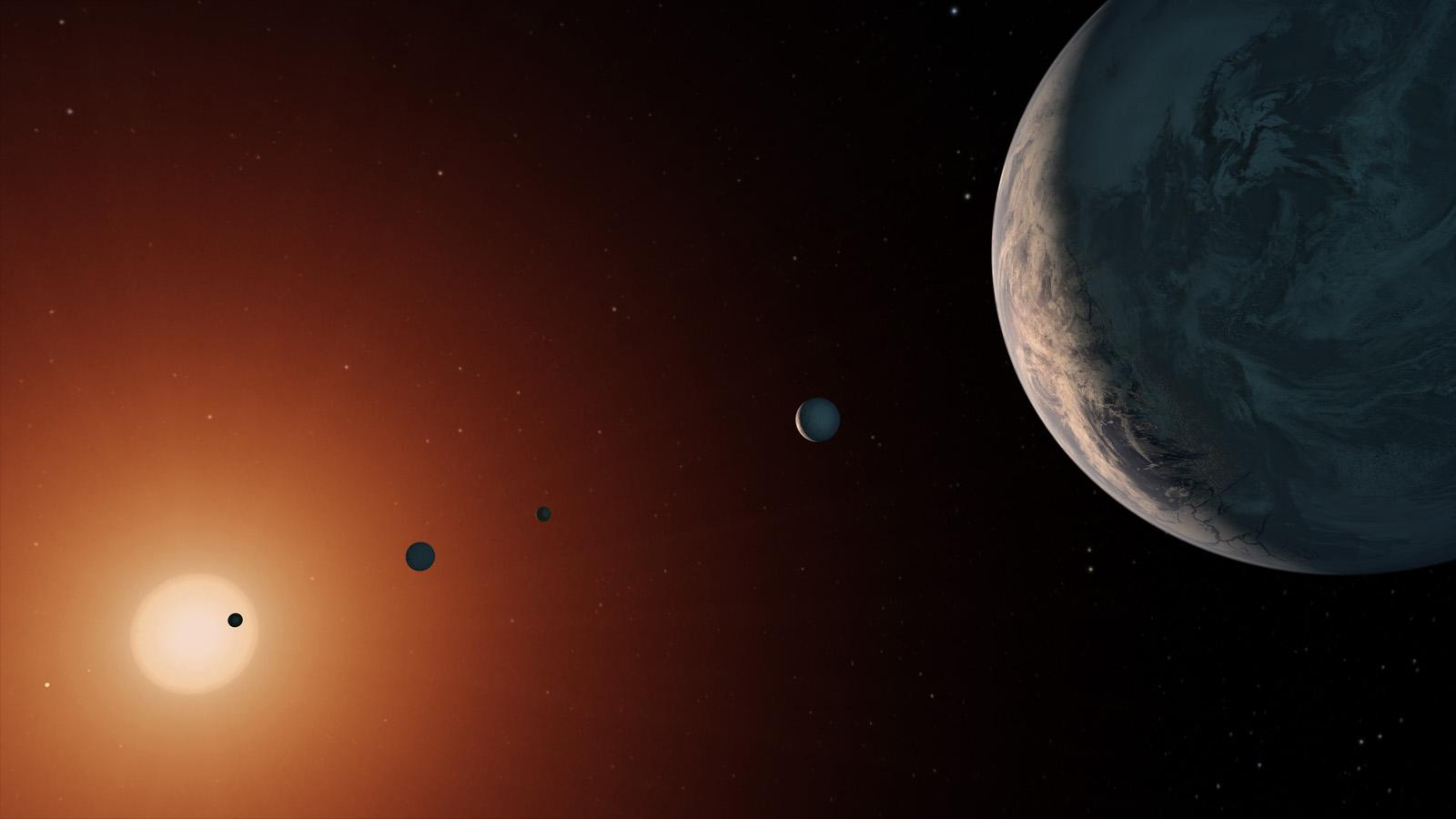
Webb’s observations of TRAPPIST-1 test a question that planet size alone cannot answer: which of its seven rocky worlds, if any, retain substantial atmospheres? The tightly packed system makes repeated measurements possible, but the small active star also contaminates the signals astronomers need.
What does K2-18 b’s spectrum actually establish?
Webb’s first reported spectrum of K2-18 b in 2023 prompted a question that later analyses made more demanding: which atmospheric molecules are securely identified, and which depend on how the small transit signal is processed? The answer determines how far any claim about the planet below can go.