記録日時
- Launch target
- January 6, 2027 · time to be confirmed
変更前の情報
- Launch target
- January 2027 · date to be confirmed

 Android テスト版参加グループを開く クローズドテスト版1.6.0(4)では、サインイン、プレミアム、通知を利用できません。まずGoogleグループに参加し、同じGoogleアカウントでGoogle Playのテストに登録 ↗してください。
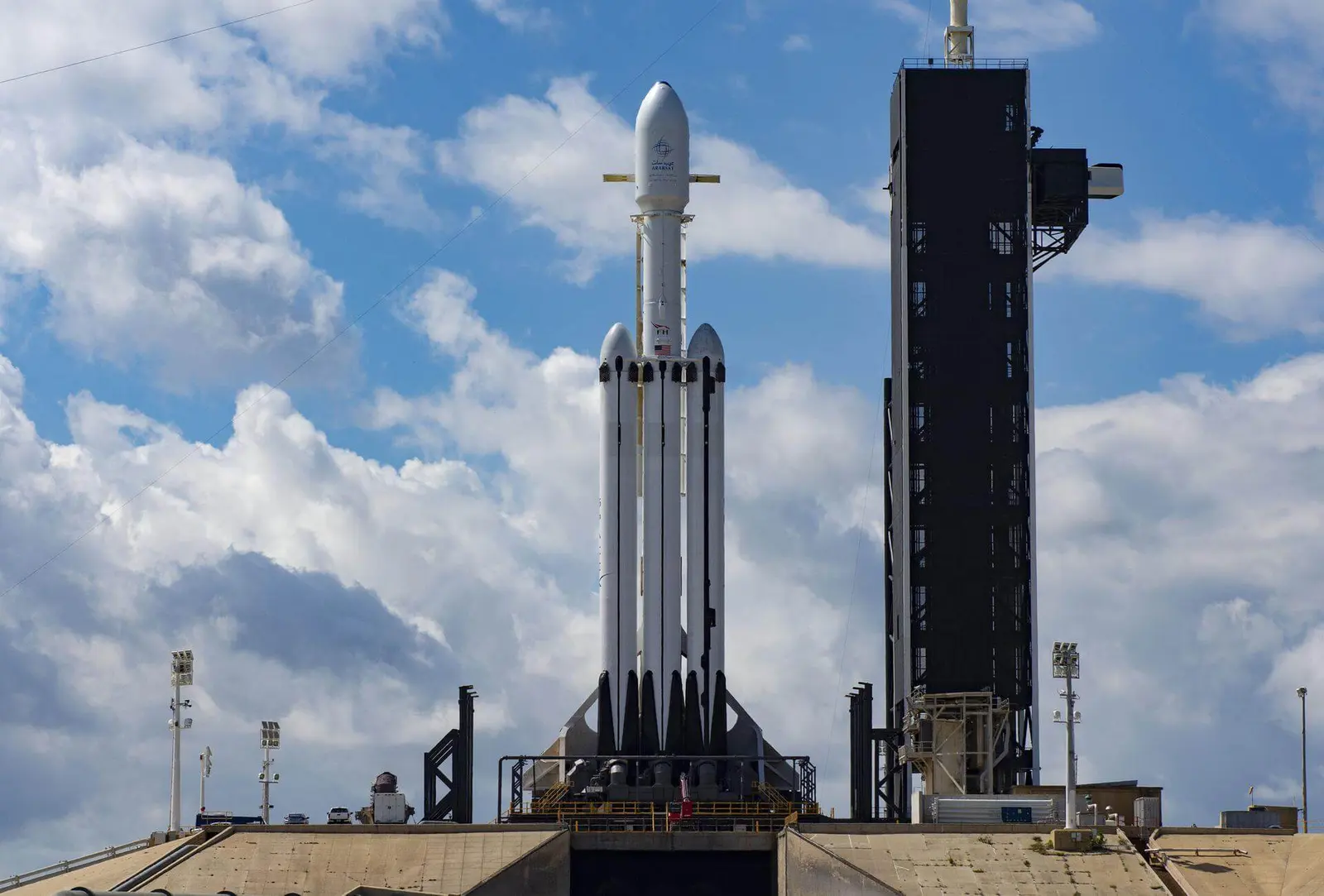
Falcon Heavy
Griffin Mission One is a Voyager Lunar Systems lunar lander assigned to launch on Falcon Heavy toward Nobile Crater near the Moon’s south pole. NASA reported completion of its JPL environmental-test campaign in late September 2026, followed by a return to Pittsburgh for final assembly. The mission plans to deliver the FLIP rover and other payloads; NASA and Voyager described a late-2026 target on 13 October; a firm launch date remains unconfirmed.
保存したミッションはマイページで確認できます。 リマインダーや予定変更の通知を受け取るには、iPhoneアプリでこのミッションをフォローしてください。
2027年1月6日。詳しい時刻は、まだ公表されていません。
発表元の更新:
発表元を確認:Launch Library ↗
発表元の情報が変わった時点の記録です。延期の理由を示すものではありません。
記録を始める前の変更は掲載していません。
このページを表示している間、予定の変更を確認します。
打ち上げ予定は変更される場合があります。
関連記事・英語
Griffin-1 has finished its JPL environmental tests before a planned Falcon Heavy flight. Heat, shaking, sound and electrical compatibility each answer a different question.
Griffin-1 still has a Falcon Heavy launch and a Moon landing ahead of it. Its latest milestone happened on Earth: NASA says the lander finished environmental testing at JPL in late September 2026 and returned to Pittsburgh for final assembly. NASA and Voyager described a late-2026 launch target in their 13 October reports; a firm launch date remains unconfirmed. The useful question is what those tests can establish before a spacecraft ever leaves the ground. [1] [5] [7]
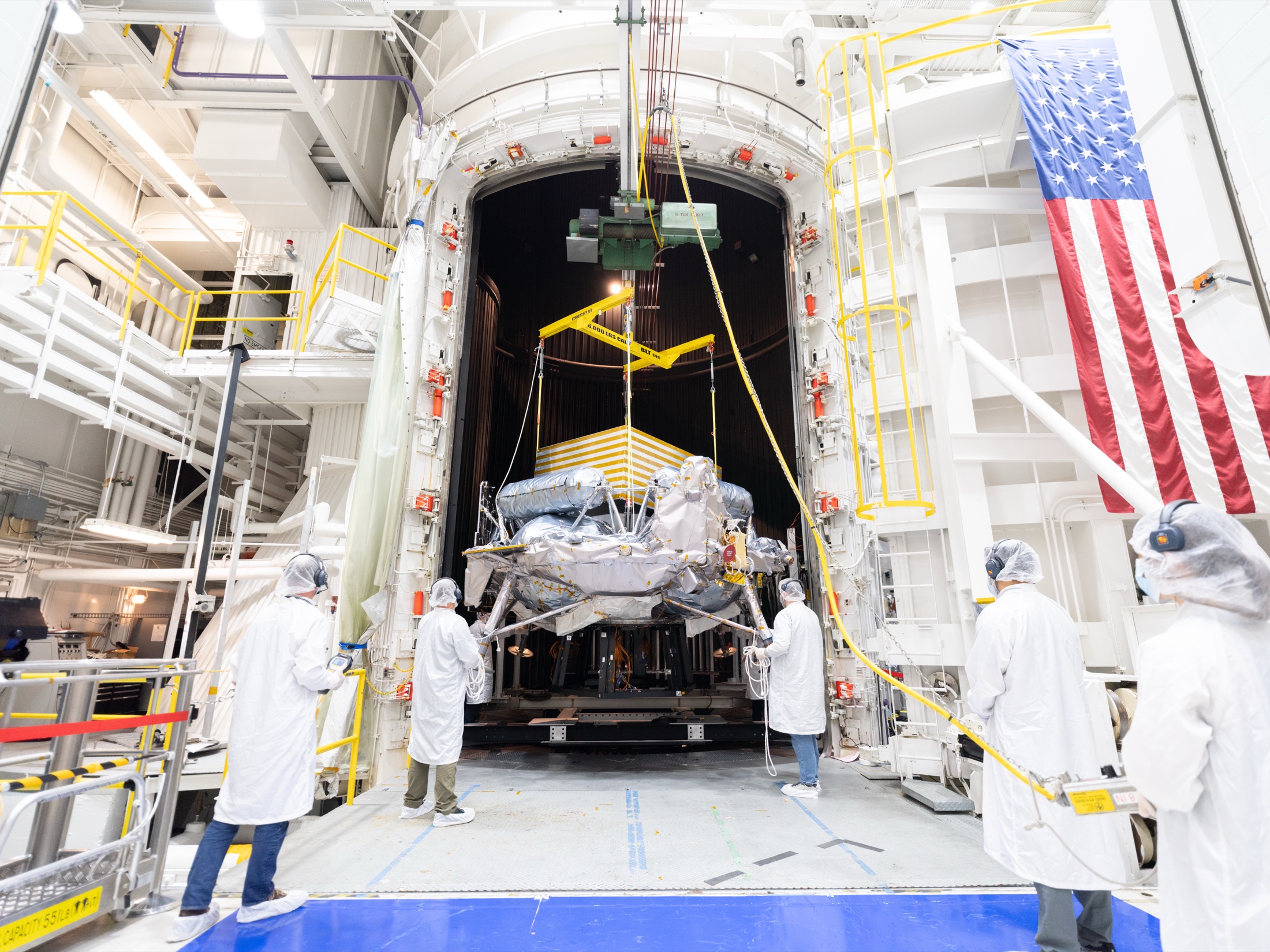
A lander can have sound structure and still suffer an electrical compatibility problem. It can communicate correctly at room temperature and still need a thermal test. These are different failure paths, so a single dramatic shake cannot stand in for the entire campaign. Environmental testing challenges the assembled system under specified conditions; completing it is evidence about that test envelope, rather than a guarantee of a successful mission. [2] [3]
The distinction starts with the hardware in the photographs. On 31 August, the yellow-striped box above Griffin was a simulator for the FLIP rover payload. It helped represent the test configuration. That dated image does not show the real rover already installed, and it does not establish today’s integration status. [1]
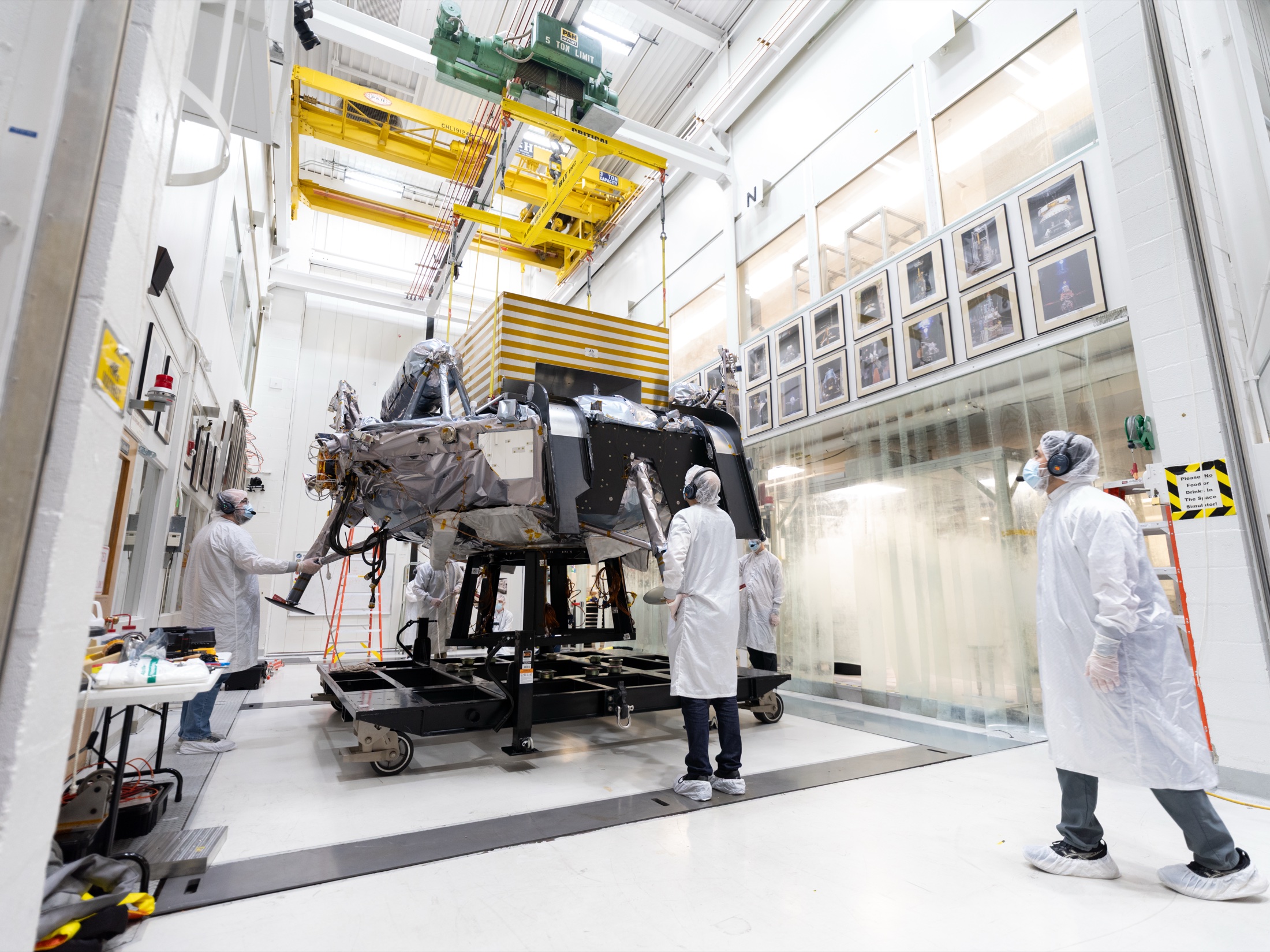
The Space Simulator combines a low-pressure environment with controlled thermal conditions. In a vacuum, a spacecraft cannot rely on surrounding air to carry heat away as it would in an ordinary room. Radiating heat and conducting it through the structure become central to keeping equipment within its operating limits. A thermal-vacuum trial therefore asks more than whether the outside looks hot or cold. [3]
For Griffin, NASA reports testing from as cold as minus 100 degrees Celsius to as hot as 75 degrees Celsius. Those are reported test conditions. They should not be read as a forecast for every component or a single temperature for the lunar south pole. [1]
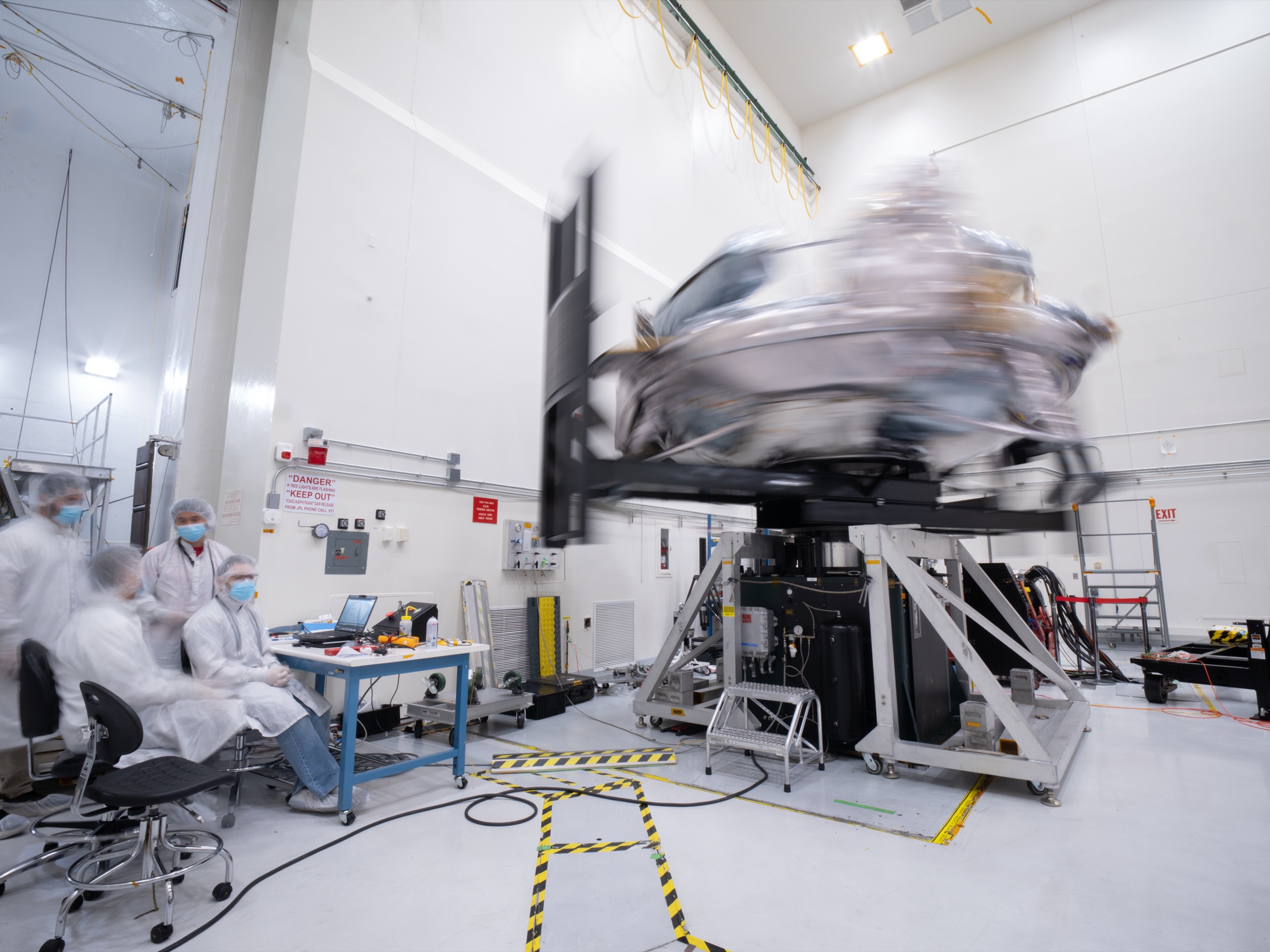
A spinning mass-properties test helps characterize how the assembled lander behaves when it rotates. That matters to the model used to control its motion. A vibration test asks a different question: how the spacecraft responds to mechanical excitation during a rocket ride. Identifying a mass distribution does not show that every bracket and connection has survived launch-like shaking. [2] [6]
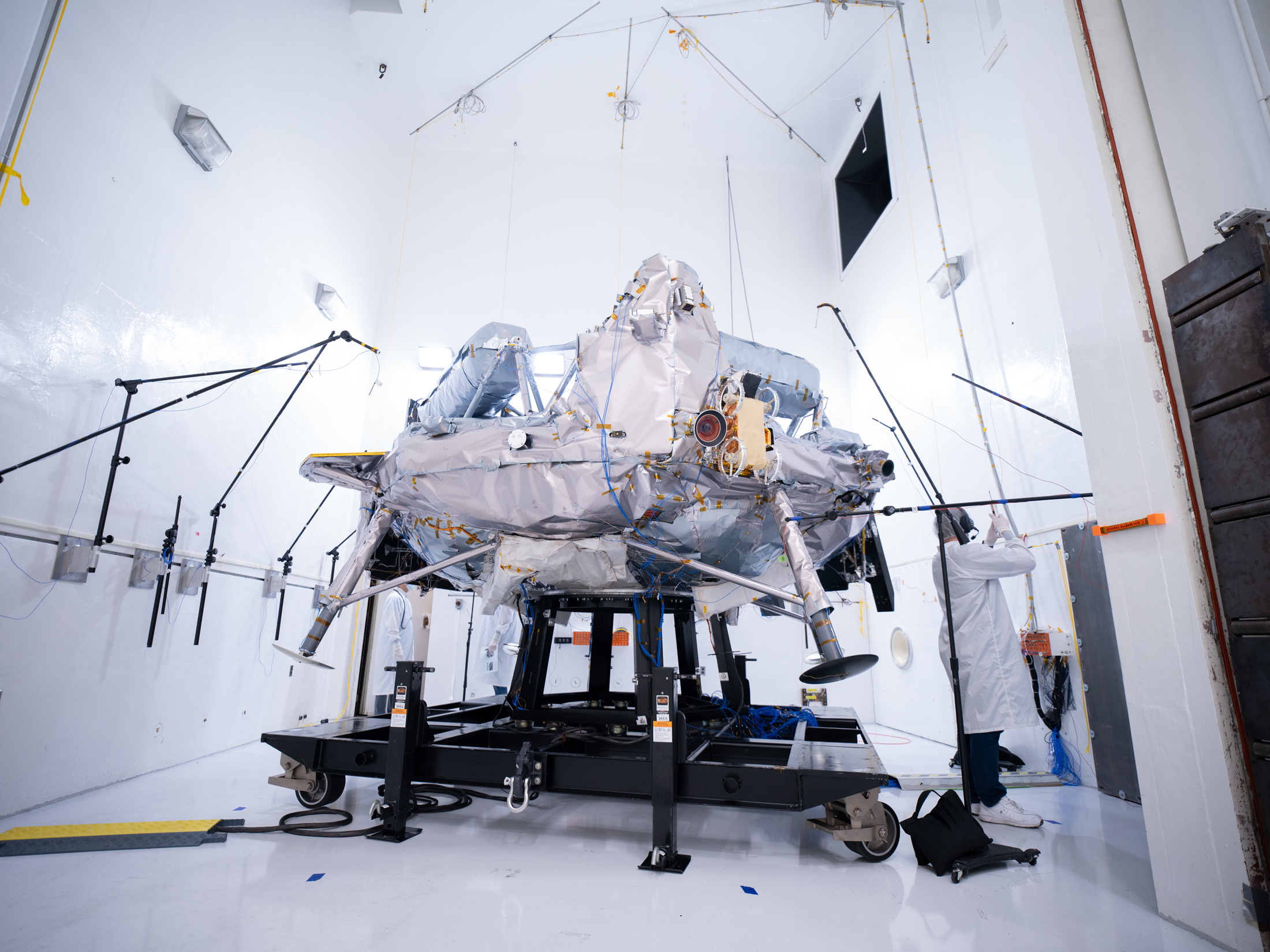
Griffin was tested in three vibration directions while sensors monitored the hardware. Its acoustic trial surrounded it with intense sound, reaching up to 153 decibels. Sound pressure loads surfaces differently from direct vibration through a mounting interface; both belong in the engineering picture. Neither should be confused with the electronics test in the dark absorber-lined room. [1] [2]
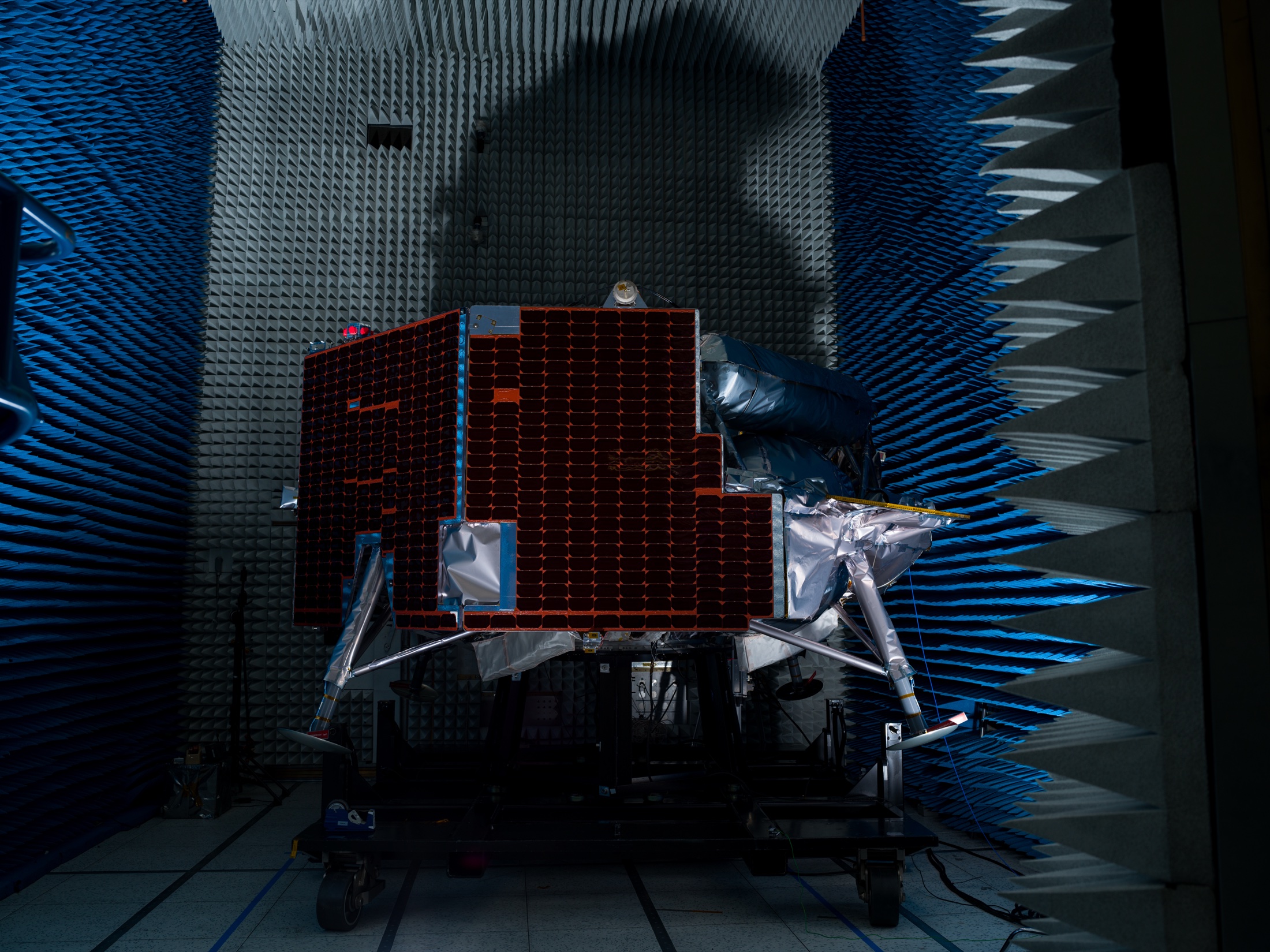
Electromagnetic compatibility work looks for interference among the spacecraft’s own electronic systems. An unwanted signal can create trouble without a visible crack or loose fastener. The chamber helps isolate that question. The microphones in the separate acoustic photograph document a different investigation: measuring the sound environment imposed on the lander. [2] [1]
The next stages are final assembly and launch-readiness work. Ground testing cannot supply the actual view of a lunar descent. Griffin’s planned LandCam-X experiment illustrates the gap: ESA says its images, paired with spacecraft motion data, will support later reconstruction and validation of vision-based navigation. It is a research dataset for future navigation work, not a claim that the camera is steering this landing. [1] [4]
That is the progression to watch: a specific ground-test question answered, then the next real flight question. The chamber photographs show substantial preparation for Griffin’s planned journey to Nobile Crater; the launch and landing remain future events. [5] [1]
公表された仕様と、この機体の飛行歴。
機体の説明・英語
The Falcon Heavy is a variant of the Falcon 9 full thrust launch vehicle and consists of a standard Falcon 9 rocket core, with two additional boosters derived from the Falcon 9 first stage.

詳しい打ち上げ可能時間帯は、まだ公表されていません。
Kennedy Space Center, FL, USA

Published destination: Lunar Orbit.
NASA geography with illustrative lighting. No live tracking or simulated ascent. NASA Blue Marble source.
Check the visitor complex’s viewing options, admission and availability for this specific launch.
延期に備えて日程に余裕を持ち、当日も予定時刻、現地の天気、道路の規制を確認してください。
Kennedy Space Center launch viewing ↗配信リンクは、まだ公開されていません。
Android テスト版参加グループを開く クローズドテスト版1.6.0(4)では、サインイン、プレミアム、通知を利用できません。まずGoogleグループに参加し、同じGoogleアカウントでGoogle Playのテストに登録 ↗してください。