Launch target updated
Previous target
Updated target
Recorded by Spacian . Mission source ↗

 Android BETAJoin beta group Closed guest beta · 1.6.0 (4). Join the group first, then join the test on Google Play ↗ using the same Google account. Account sign-in, Premium and alerts are unavailable in this beta.
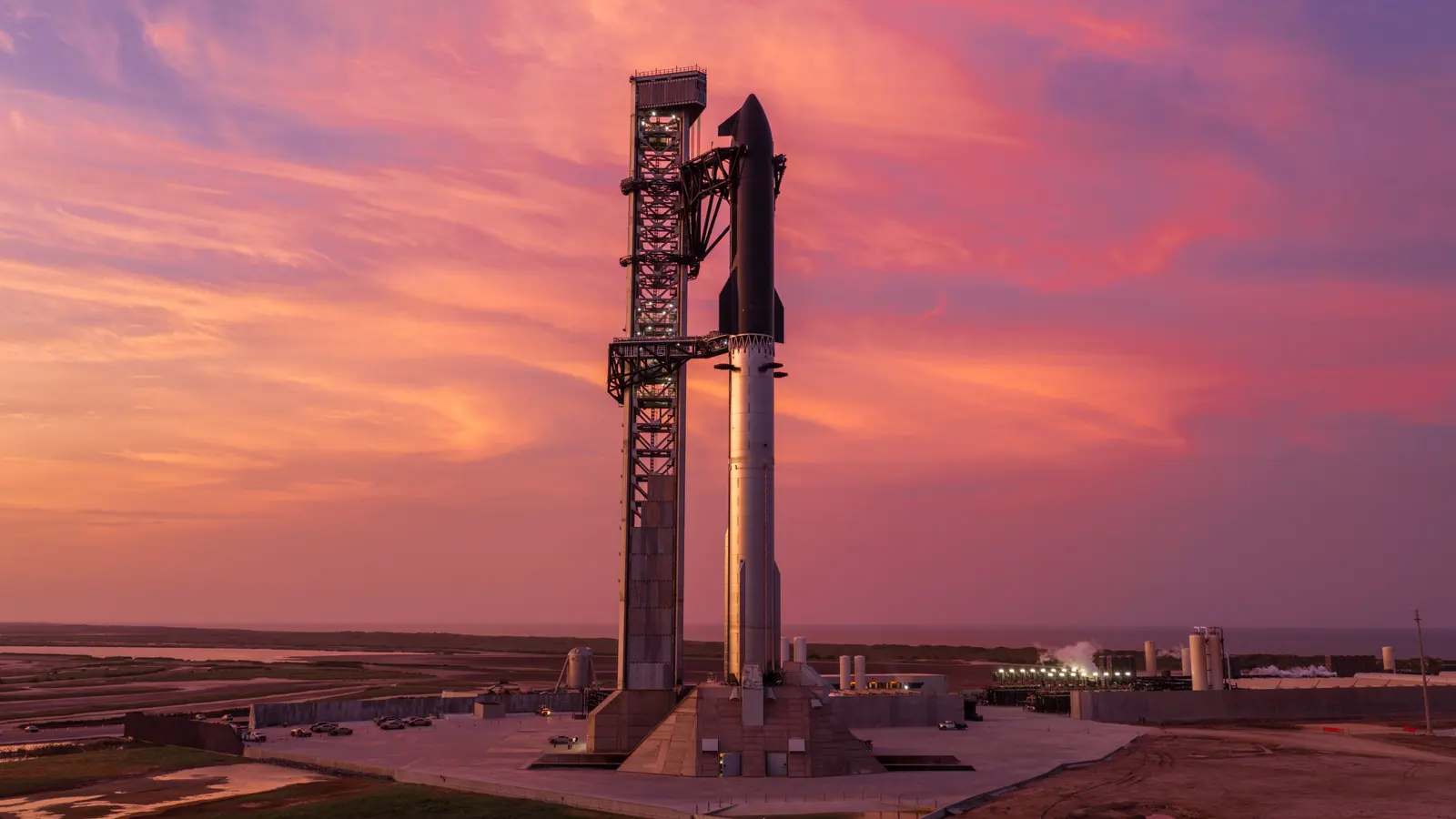
Starship V3
15th test flight of the two-stage Starship launch vehicle and 4th flight of Starship V3. Second Starship flight to deploy satellites (a group of Starlink satellites known as Starlink Group 31-2) into stable Low Earth Orbit and first ever to attempt returning the Starship 2nd stage back to the launch site. The ship is expected to fly at an altitude approximately 275 km above Earth and complete approximately 14 orbits around the planet for more than 22 hours, with the ship expected to attempt returning back to Starbase, Texas on its launch pad by pad arms catching. The booster’s primary test objective on Flight 15 will be executing a successful launch, ascent, stage separation, boostback burn, and landing by pad arms catching. This will also be the 1st Starship V3 booster to attempt returning to its launch site. Starship will deliver 26 Starlink V3 satellites to orbit for the second time, which aim to greatly expand the network's capacity and user speeds. Each Starlink V3 satellite will add 1 Tbps of capacity to the constellation. 3 of the satellites have been modified with a suite of cameras to scan Starship’s heatshield and transmit imagery down to operators.
This is the current published target, subject to schedule changes.
Source record updated
Check the source: SpaceX ↗ · Launch Library ↗ · Flight Club ↗
Recorded by Spacian . Mission source ↗
Recorded source changes. These do not establish the reason for a delay.
Earlier unrecorded changes are not reconstructed.
Checks for schedule changes while this page is visible.
Launch target may change.
15th test flight of the two-stage Starship launch vehicle and 4th flight of Starship V3. Second Starship flight to deploy satellites (a group of Starlink satellites known as Starlink Group 31-2) into stable Low Earth Orbit and first ever to attempt returning the Starship 2nd stage back to the launch site. The ship is expected to fly at an altitude approximately 275 km above Earth and complete approximately 14 orbits around the planet for more than 22 hours, with the ship expected to attempt returning back to Starbase, Texas on its launch pad by pad arms catching. The booster’s primary test objective on Flight 15 will be executing a successful launch, ascent, stage separation, boostback burn, and landing by pad arms catching. This will also be the 1st Starship V3 booster to attempt returning to its launch site. Starship will deliver 26 Starlink V3 satellites to orbit for the second time, which aim to greatly expand the network's capacity and user speeds. Each Starlink V3 satellite will add 1 Tbps of capacity to the constellation. 3 of the satellites have been modified with a suite of cameras to scan Starship’s heatshield and transmit imagery down to operators.
The Launch Library record describes Flight 15 as a Starship test flight using the V3 vehicle. That catalog description is a plan; it does not establish a confirmed flight configuration, payload manifest or launch appointment. SpaceX’s flight-specific announcement is the source to check when those details become available.
A published day, time window, flight objectives and recovery plan each answer a different question. Read the latest target above, then check the recorded changes and linked operator coverage. An earlier flight’s trajectory or landing plan should not be assumed to apply to Flight 15.
Context reviewed . Live target and status appear above. Published by Spacian · sources and corrections.
Sources: SpaceX Starship program ↗ · Launch Library ↗
Published configuration and flight history.
Third development version of the Starship reusable two-stage super heavy-lift launch vehicle.
Target ·
The target marker shows its position within the published window. The schedule may change before launch.
Planned sequence, not live telemetry. Times are relative to the launch target.
SpaceX Starbase, TX, USA
Explore the launch pad, then pull back to see the shape of the destination orbit.
Understand this orbitExplore Earth & Moon · this mission view is an illustration

Public viewing access varies by launch site. Check the operator’s official information before travelling.
Leave room for delays. Recheck the launch target, local weather and road closures on the day.
No viewing link has been published yet.
Get reminders and schedule-change alerts. One active mission free.
Open mission in Spacian ↗Android BETAJoin beta group Closed guest beta · 1.6.0 (4). Join the group first, then join the test on Google Play ↗ using the same Google account. Account sign-in, Premium and alerts are unavailable in this beta.