
Satellite in operation.
Update ↗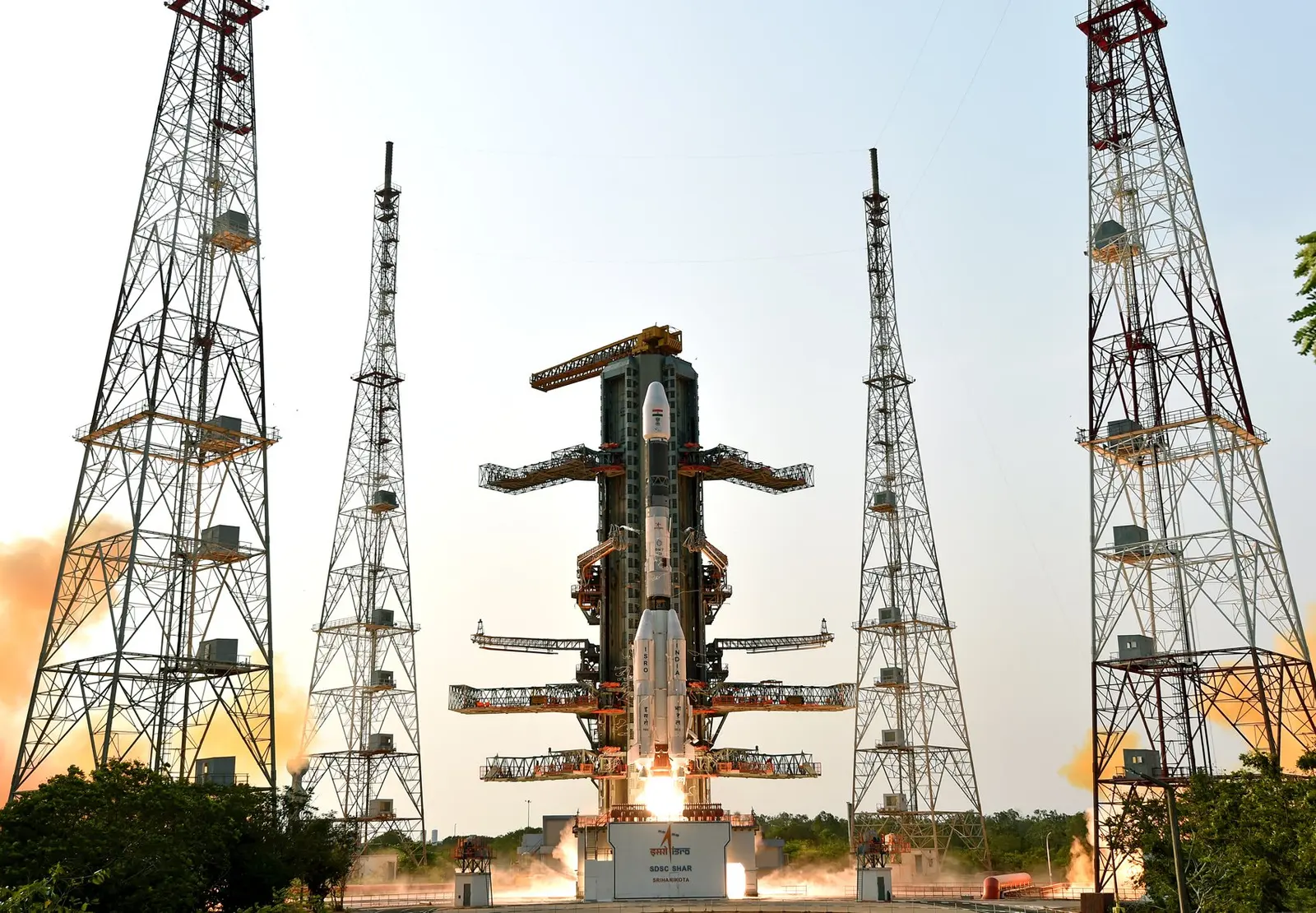
Indian Space Research OrganizationLaunch Successful
NISAR (NASA-ISRO Synthetic Aperture Radar)
GSLV Mk. II
Historical mission record
This page records GSLV Mk II | NISAR (NASA-ISRO Synthetic Aperture Radar) and its reported outcome: Launch Successful. The date above is a historical record.
Source record updated . This is a source update, not a confirmed launch time.
Check the source: ISRO’s GSLV-F16 will launch ISRO-NASA joint satellite, NISAR, on July 30, 2025 ↗ · NASA-ISRO SAR (NISAR) Satellite ↗ · Home – ↗
Mission status
Launch Successful
Status reported by the mission data provider.
LAUNCH SITESatish Dhawan Space Centre, India
Mission
The NASA-ISRO Synthetic Aperture Radar, or NISAR satellite, will use advanced radar imaging to map the elevation of Earth's land and ice masses 4 to 6 times a month at resolutions of 5 to 10 meters. It is designed to observe and measure some of the planet's most complex natural processes, including ecosystem disturbances, ice-sheet collapse, and natural hazards such as earthquakes, tsunamis, volcanoes and landslides. Under the terms of the agreement, NASA will provide the mission's L band synthetic aperture radar (SAR), a high-rate telecommunication subsystem for scientific data, GPS receivers, a solid-state recorder, and a payload data subsystem. ISRO will provide the satellite bus, an S band synthetic aperture radar, the launch vehicle, and associated launch services.
- Launch vehicle
- GSLV Mk. II
- Mission type
- Earth Science
- Destination orbit
- Sun-Synchronous Orbit
- Launch pad
- Satish Dhawan Space Centre Second Launch Pad
- Provider
- Indian Space Research Organization
The vehicle
Published configuration and flight history.
Launch vehicle
GSLV Mk. II
Geosynchronous Satellite Launch Vehicle Mark II (GSLV Mk II) is the largest launch vehicle developed by India, which is currently in operation. This fourth generation launch vehicle is a three stage vehicle with four liquid strap-ons. The indigenously developed cryogenic Upper Stage (CUS), which is flight proven, forms the third stage of GSLV Mk II. From January 2014, the vehicle has achieved four consecutive successes.
- Height
- 49 m
- Diameter
- 2.8 m
- Stages
- 3
- Recorded launches
- 12
- First flight
- 2010-04-15
Recorded timing
This is a mission record, not an upcoming calendar appointment.
Instantaneous windowPublished target
SCHEDULED MOMENT
A single scheduled moment. The schedule may change before launch.
Flight timeline
Planned sequence, not live telemetry. Times are relative to the launch target.
- T−00:00:05
Ignition
- T+00:00:00
Liftoff
- T+00:02:29
MECO
- T+00:02:30
SES
- T+00:02:31
Stage 2 Separation
- T+00:02:51
Fairing Separation
Show the full sequence (11 events)
- T+00:04:50
SECO
- T+00:04:53
Stage 3 Separation
- T+00:04:54
Stage 3 Ignition
- T+00:18:21
Stage 3 Cutoff
- T+00:18:36
Payload Separation
Launch site & orbit
Satish Dhawan Space Centre, India
The mission in perspective
Launch site & orbit
Explore the launch pad, then pull back to see the shape of the destination orbit.
Understand this orbit
Coverage & sources
Links supplied by the mission data provider.
Coverage and times may change.
Explore on iPhone
Browse mission details and discover upcoming launches in Spacian.
Open mission in Spacian ↗