← Back to launches
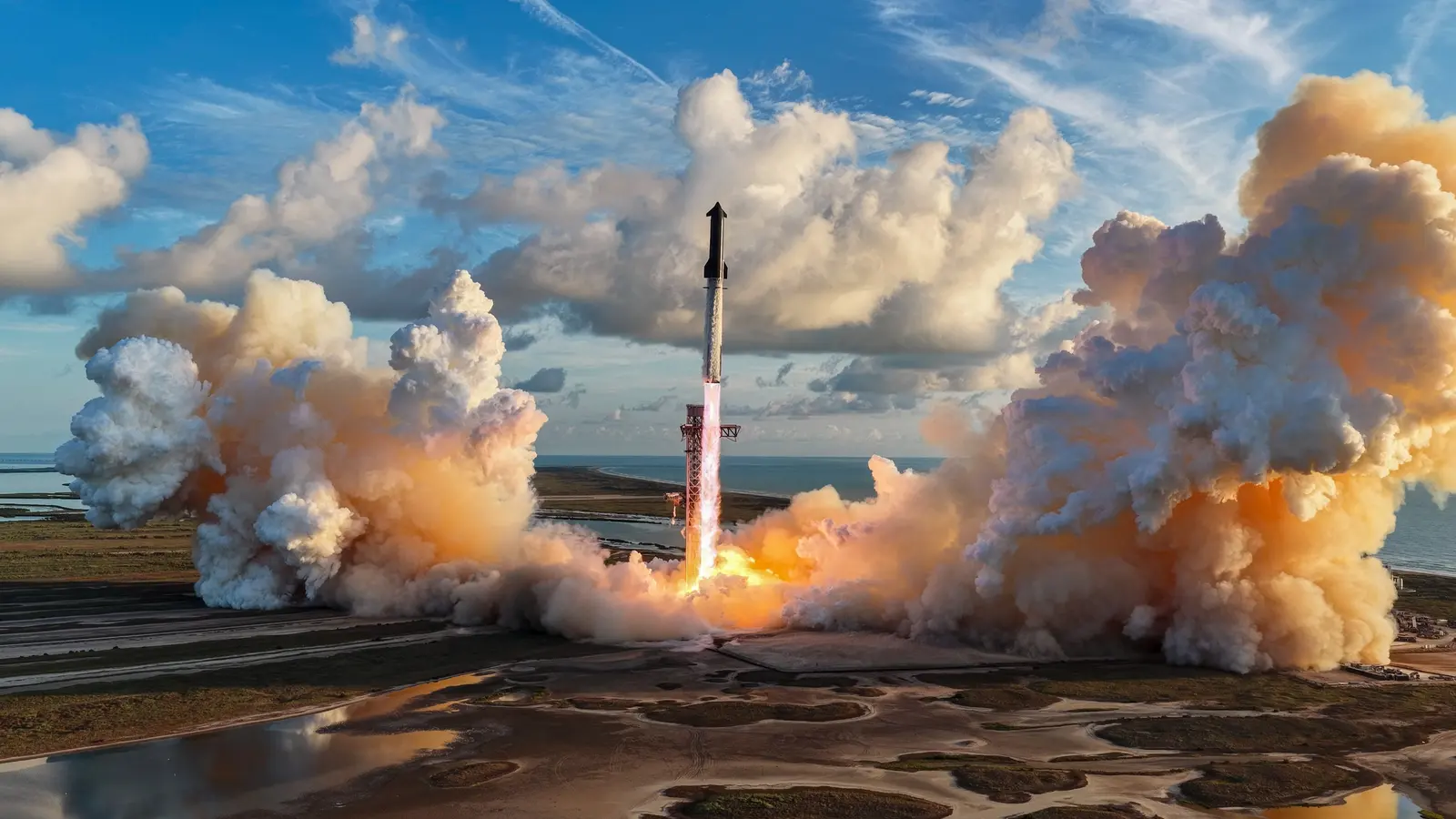
Starship | Starlink Group 31-1 (Starship Flight 14)
SpaceXLaunch Successful

Starlink Group 31-1 (Starship Flight 14)

Starship V3

Historical mission record

This page records Starship | Starlink Group 31-1 (Starship Flight 14) and its reported outcome: Launch Successful. The date above is a historical record.

Source record updated . This is a source update, not a confirmed launch time.

Check the source: SpaceX ↗ · Launch Library ↗ · Flight Club ↗

How to read launch targets and status

The latest on this mission

What changed?

Launch target updated
Previous target
Current target

Recorded by Spacian . Mission source ↗

Mission completed with Ship 41 soft splashdown in the Pacific Ocean.

Update ↗

All Starlink satellites deployed and in contact with ground stations.

Update ↗
Mission status
Launch Successful

Status reported by the mission data provider.

LAUNCH SITESpaceX Starbase, TX, USA

Mission

14th test flight of the two-stage Starship launch vehicle. 3rd flight of Starship V3 and the first Starship flight to deploy satellites (a group of Starlink satellites known as Starlink Group 31-1) into stable Low Earth Orbit. The ship is expected to fly at an altitude approximately 275 km above Earth and complete approximately 6 orbits around the planet for nearly 10 hours, with splashdown targeted in the Pacific Ocean west of Chile. The booster’s primary test objective on Flight 14 will be executing a successful launch, ascent, stage separation, boostback burn, and landing burn at an offshore landing point in the Gulf. Starship will deliver 26 Starlink V3 satellites to orbit for the first time, which aim to greatly expand the network's capacity and user speeds. Each Starlink V3 satellite will add 1 Tbps of capacity to the constellation.

Launch vehicle
Starship V3
Mission type
Communications
Destination orbit
Low Earth Orbit
Spacecraft
Ship 41
Destination
Low Earth Orbit
Launch pad
Orbital Launch Pad 2
Provider
SpaceX
Programs
Starlink, SpaceX Starship
Recovery
Ocean, The Super Heavy Booster 21 has performed a soft splashdown in the Gulf of Mexico. +1

Flight 14 and Starlink Group 31-1

Why are there two mission names?

The stored mission record associates Starship Flight 14 with Starlink Group 31-1. The flight number identifies the Starship test campaign, while the group identifies the satellite mission. Both names refer to this record, rather than two separately scheduled launches.

How should the outcome be read?

SpaceX reports that Flight 14 reached orbit and released 26 Starlink V3 satellites on September 28, 2026. The ship then performed a deorbit burn and splashed down in the Pacific. The operator also describes engine shutdowns during ascent and a shortened orbital phase. Its postflight account distinguishes achieved milestones from the original plan; the preflight timeline is not a record of actual event times.

Context reviewed . Live target and status appear above. Published by Spacian · sources and corrections.

Sources: SpaceX Flight 14 mission page ↗ · Launch Library ↗

The vehicle

Published configuration and flight history.

Launch vehicle

Starship V3

Third development version of the Starship reusable two-stage super heavy-lift launch vehicle.

Height
124.4 m
Diameter
9 m
Stages
2
Recorded launches
3
First flight
2026-05-22
Core

Booster 21

Flight 1NewLanding successful
Recovery
Gulf of Mexico
Landing method
Ocean

Recorded timing

This is a mission record, not an upcoming calendar appointment.

1h 15m windowPublished target
WINDOW OPENS
WINDOW CLOSES

Target ·

The target marker shows its position within the published window. The schedule may change before launch.

Flight timeline

Planned sequence, not live telemetry. Times are relative to the launch target.

  1. T−00:50:00

    GO for Prop Load

  2. T−00:36:33

    Stage 1 LOX Load

  3. T−00:35:00

    Stage 1 LNG Load

  4. T−00:34:13

    Stage 2 LOX Load

  5. T−00:34:11

    Stage 2 LNG Load

  6. T−00:21:40

    Engine Chill

Show the full sequence (32 events)
  1. T−00:02:50

    Stage 1 Propellant Load Complete

  2. T−00:02:10

    Stage 2 Propellant Load Complete

  3. T−00:00:30

    GO for Launch

  4. T−00:00:17

    Flame Deflector Activation

  5. T−00:00:03

    Ignition

  6. T+00:00:00

    Excitement Guaranteed

  7. T+00:00:00

    Liftoff

  8. T+00:00:58

    Max-Q

  9. T+00:02:20

    MECO

  10. T+00:02:22

    Stage 2 Separation

  11. T+00:02:27

    Booster Boostback Burn Startup

  12. T+00:03:07

    Booster Boostback Burn Shutdown

  13. T+00:06:35

    Stage 1 Landing Burn

  14. T+00:07:01

    Stage 1 Landing

  15. T+00:08:11

    SECO-1

  16. T+00:25:28

    Orbital Insertion Burn Start

  17. T+00:25:47

    Orbital Insertion Burn End

  18. T+00:34:18

    Payload Deployment Sequence Start

  19. T+01:04:50

    Payload Deployment Sequence End

  20. T+08:52:18

    Deorbit Burn Start

  21. T+08:52:29

    Deorbit Burn End

  22. T+09:28:52

    Atmospheric Entry

  23. T+09:47:30

    Starship Transonic

  24. T+09:48:07

    Starship Subsonic

  25. T+09:50:11

    Starship Landing Burn

  26. T+09:50:13

    Landing Flip

Launch site & orbit

SpaceX Starbase, TX, USA

The mission in perspective

Launch site & orbit

Explore the launch pad, then pull back to see the shape of the destination orbit.

Understand this orbit

NASA Blue Marble map of Earth's continents and oceans
Representative orbit · accelerated illustrationNo live tracking or simulated ascent. NASA Blue Marble.

Coverage & sources

Links supplied by the mission data provider.
Coverage and times may change.

Explore on iPhone

Browse mission details and discover upcoming launches in Spacian.

Open mission in Spacian ↗
Download on the App Store