
Adding launch NET November 2028
Update ↗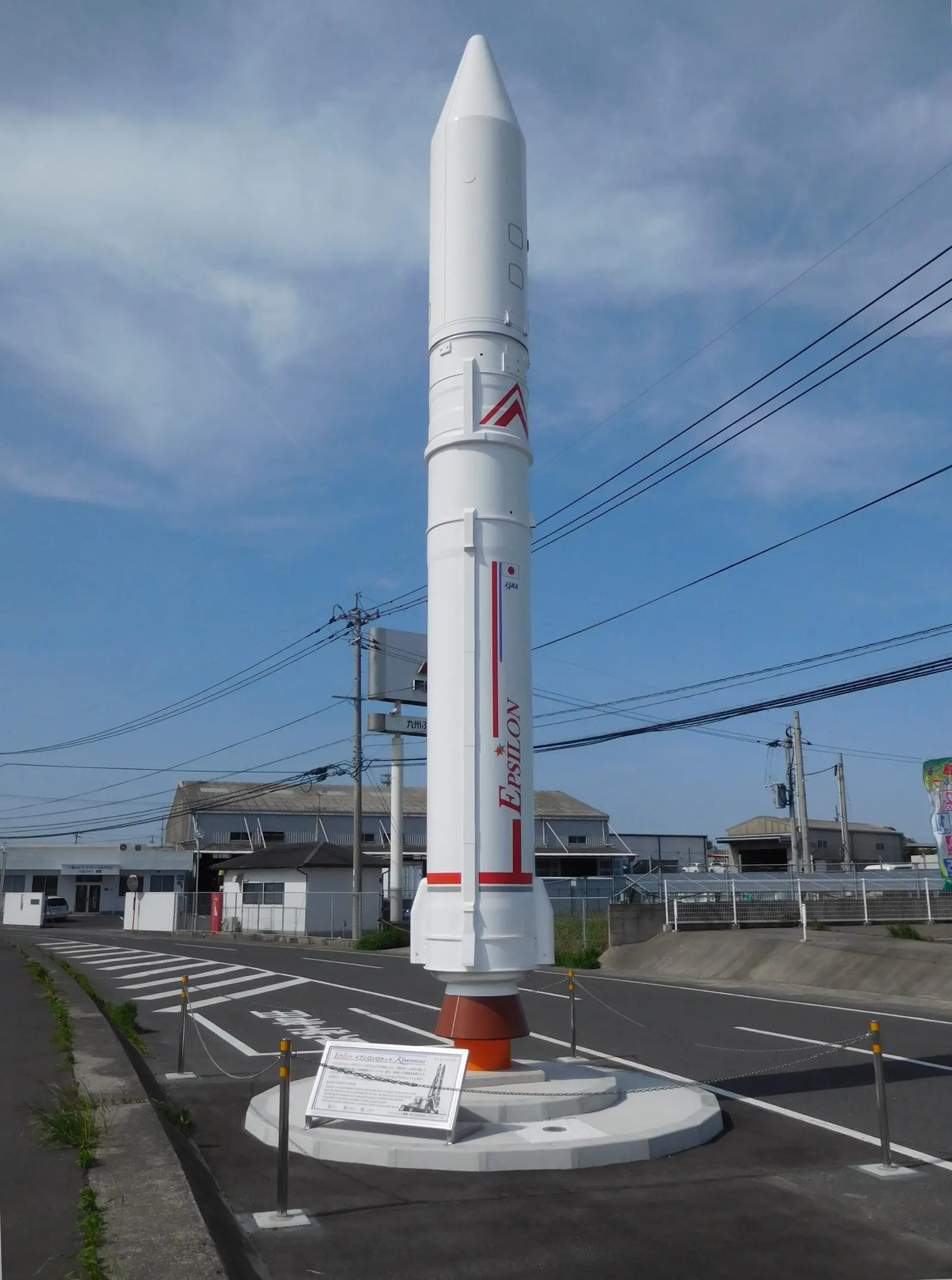
Japan Aerospace Exploration AgencyTo Be Determined
SOLAR-C
Epsilon S
November 2028 · day pending
Latest published target
November 2028 · date to be confirmed. The day and time remain unconfirmed.
Source record updated . This is a source update, not a confirmed launch time.
Check the source: Request Rejected ↗ · Launch Library ↗
The latest on this mission
What changed?
Checks for schedule changes while this page is visible.
Time to target
Target pending
Target time, not a confirmed liftoff.
LAUNCH SITEUchinoura Space Center, Japan
Mission
SOLAR-C is a Japan-led international mission with the cooperation by the US and European countries. It aims to gain new insights into the fundamental physical mechanisms driving solar plasma dynamics by performing three simultaneous UV observations. The first consists to observe the broad range of temperatures, spanning over three orders of magnitude from the 10,000 Kelvin chromosphere to the million Kelvin corona, and even to the 15 million Kelvin solar flares. The second consists to resolve the elemental structures at high spatial (0.4 arcsec) and temporal (1 sec) resolution and trace their evolutions by increasing the ability to collect the solar UV rays 10 to 30 times as much as before. The third consists to conduct a high dispersion spectroscopy (equivalent to a velocity resolution of 2 km/s) to obtain spectroscopic information that enables quantitative diagnostics (such as velocity, temperature, density, ionization degree, and abundance). By combining the three observations, SOLAR-C can analyze the dynamically evolving solar atmospheres over a wide altitude range from the chromosphere to the corona while resolving elemental structures.
- Launch vehicle
- Epsilon S
- Mission type
- Heliophysics
- Destination orbit
- Sun-Synchronous Orbit
- Launch pad
- Mu Center
- Provider
- Japan Aerospace Exploration Agency
The vehicle
Published configuration and flight history.
Launch vehicle
Epsilon S
The Epsilon S rocket is a Japanese solid-fuel rocket designed to launch scientific satellites. It is a follow-on project to the larger and more expensive M-V rocket which was retired in 2006. The Japan Aerospace Exploration Agency (JAXA) began developing the Epsilon in 2007. The first stage is based on SRB-3, the strap-on solid-rocket booster of H3
- Height
- 24.4 m
- Diameter
- 2.5 m
- Stages
- 4
- Recorded launches
- 0
- First flight
- 2013-09-14
Launch window
A calendar entry will be available when a date is confirmed.
A precise launch window has not been published.
Launch site & orbit
Uchinoura Space Center, Japan
The mission in perspective
Launch site & orbit
Explore the launch pad, then pull back to see the shape of the destination orbit.
Understand this orbit
Watch in person
Plan around the launch.
Public viewing access varies by launch site. Check the operator’s official information before travelling.
Leave room for delays. Recheck the launch target, local weather and road closures on the day.
Before you set off
- Confirm the target and launch window.
- Check official viewing access and any booking requirements.
- Use a permitted viewing area. The launch pad is not a visitor destination.
- Keep the mission’s coverage link as a backup.
Coverage & sources
Links supplied by the mission data provider.
Coverage and times may change.
Mission coverage
No viewing link has been published yet.
Follow on iPhone
Get reminders and schedule-change alerts. One active mission free.
Open mission in Spacian ↗