
NET March 2028
Update ↗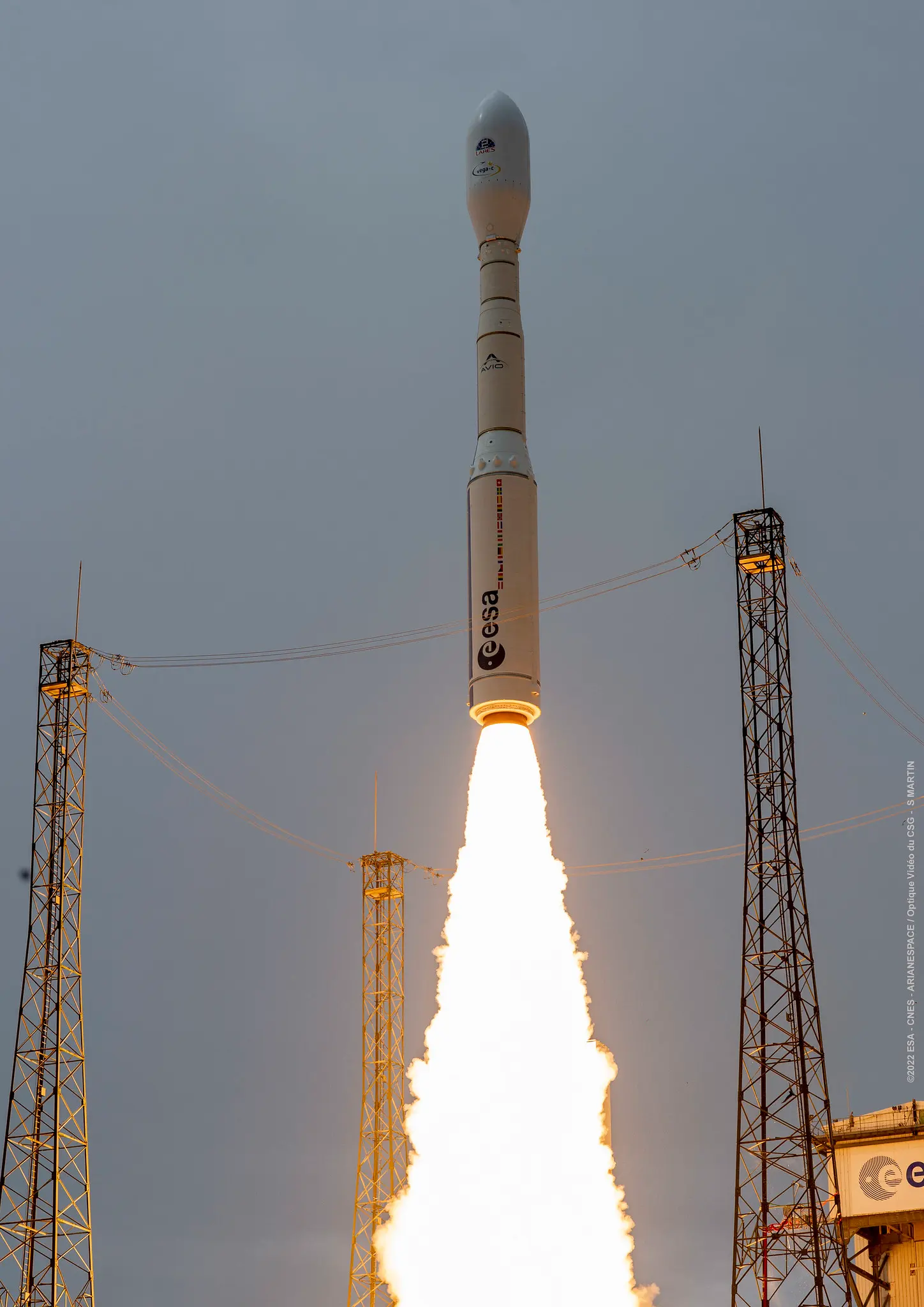
Avio S.p.ATo Be Determined
Sentinel CO2M-B
Vega-C
March 2028 · day pending
Latest published target
March 2028 · date to be confirmed. The day and time remain unconfirmed.
Source record updated . This is a source update, not a confirmed launch time.
Check the source: Launch Library ↗
Checks for schedule changes while this page is visible.
Time to target
Target pending
Target time, not a confirmed liftoff.
LAUNCH SITEGuiana Space Centre, French Guiana
Mission
Sentinel CO2M-B carries a near-infrared and shortwave-infrared spectrometer to measure atmospheric carbon dioxide produced by human activity, providing the EU with a unique and independent source of information, to assess the effectiveness of policy measures, and to track their impact towards decarbonizing Europe and meeting national emission reduction targets.
- Launch vehicle
- Vega-C
- Mission type
- Earth Science
- Destination orbit
- Sun-Synchronous Orbit
- Launch pad
- Ariane Launch Area 1 (ELV)
- Provider
- Avio S.p.A
- Programs
- Copernicus
The vehicle
Published configuration and flight history.
Launch vehicle
Vega-C
Vega-C is a single-body rocket nearly 35 m high with that weighs 210 tonnes on the launch pad. As with Vega, its main elements are three solid-propellant stages, an upper stage powered by a reignitable liquid-propellant engine and a payload fairing. Vega-C's P120C first stage replaces Vega’s smaller P80 to provide a significant increase in thrust at liftoff. It is also used as boosters (2 or 4) for the Ariane 6 rocket.
- Height
- 34.8 m
- Diameter
- 3 m
- Stages
- 4
- Recorded launches
- 6
- First flight
- 2022-07-13
Launch window
A calendar entry will be available when a date is confirmed.
A precise launch window has not been published.
Launch site & orbit
Guiana Space Centre, French Guiana
The mission in perspective
Launch site & orbit
Explore the launch pad, then pull back to see the shape of the destination orbit.
Understand this orbit
Watch in person
Plan around the launch.
Public viewing access varies by launch site. Check the operator’s official information before travelling.
Leave room for delays. Recheck the launch target, local weather and road closures on the day.
Before you set off
- Confirm the target and launch window.
- Check official viewing access and any booking requirements.
- Use a permitted viewing area. The launch pad is not a visitor destination.
- Keep the mission’s coverage link as a backup.
Coverage & sources
Links supplied by the mission data provider.
Coverage and times may change.
Mission coverage
No viewing link has been published yet.
Further reading
Launch Library ↗Follow on iPhone
Get reminders and schedule-change alerts. One active mission free.
Open mission in Spacian ↗