

Why does Halley’s Comet return?
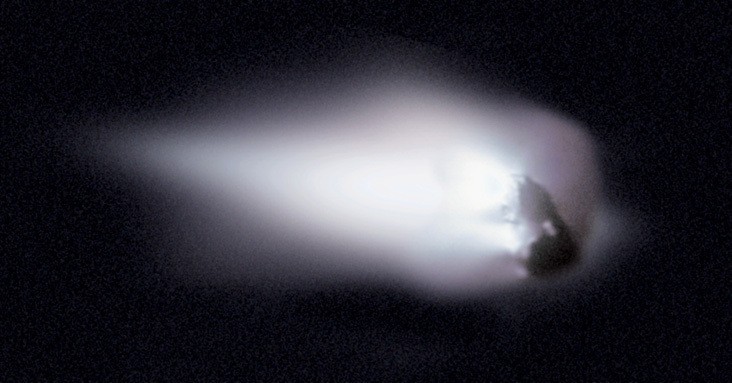
Giotto photographed Halley’s dark nucleus in March 1986, surrounded by escaping material. The comet’s next close passage by the Sun is expected in 2061. Its long absence from bright evening skies follows from the shape of its orbit, rather than a disappearance from the Solar System.
The same orbit connected three appearances
In 1705, Edmond Halley compared the calculated orbits of comets observed in 1531, 1607 and 1682. Their similarities suggested that one object was making repeated trips around the Sun. He predicted a return in 1758, which occurred after his death. [1]
The successful prediction changed how a bright comet could be understood. It was a moving member of the Solar System governed by gravity, rather than an unrelated visitor appearing each time. Its observational history has since been traced through records extending back more than two thousand years. [1]
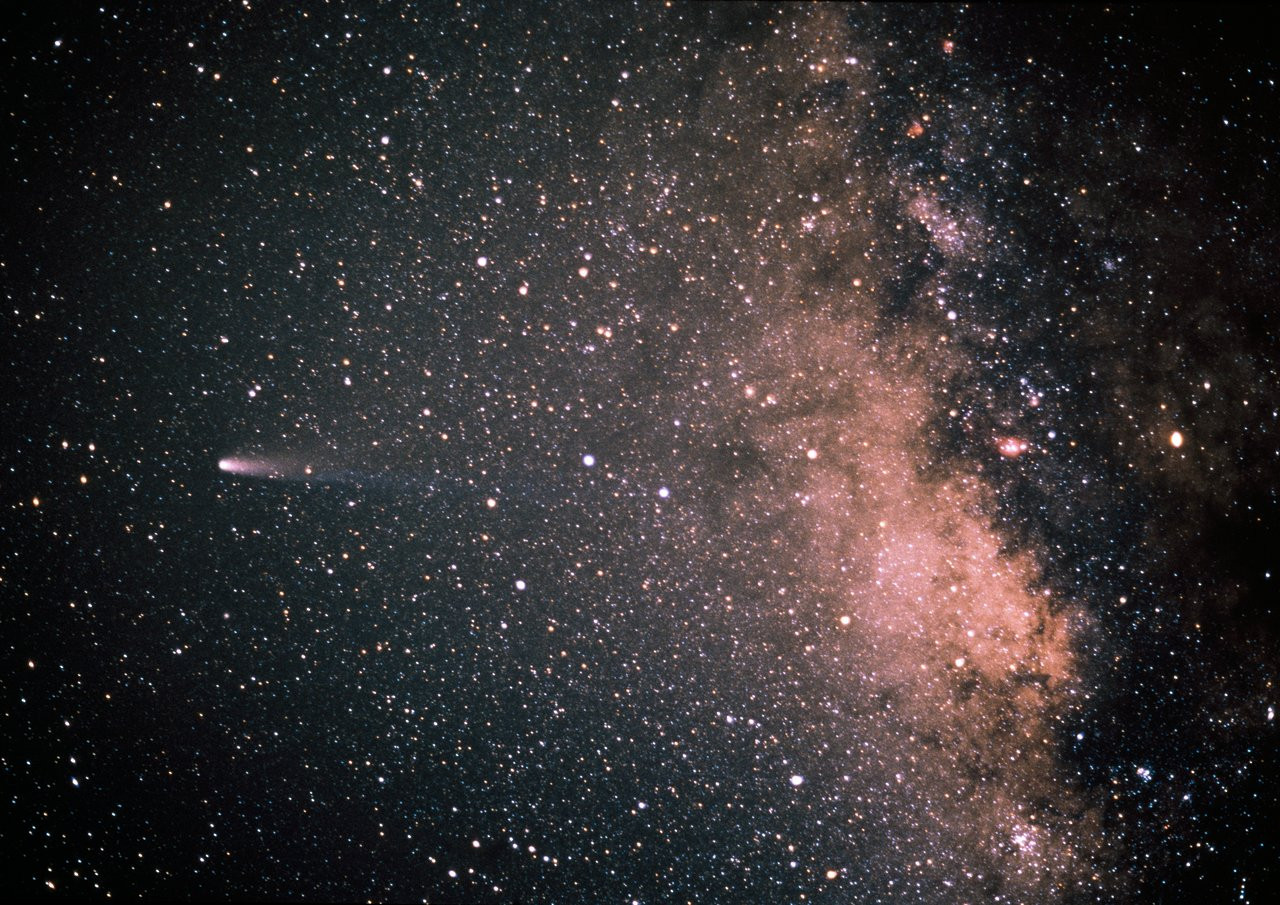
The letter P in 1P/Halley identifies a periodic comet. The familiar roughly 76-year interval is an average, not a perfectly fixed calendar: planetary perturbations alter the interval between successive close passages. [1]
Most of the journey happens far from the Sun
Halley follows a highly elongated ellipse. Near perihelion, its closest approach to the Sun, it travels inside Venus’s orbital distance. At the far end it reaches beyond Neptune’s distance from the Sun. [1]
The comet moves fastest during the short inner part of its journey and much more slowly near its farthest point. This uneven speed explains why the brief bright apparition occupies only a small part of the full orbit. [1]
Halley also travels in a retrograde direction, opposite to the planets’ general orbital motion. Its tilted path and changing distance mean that a favourable view from Earth depends on geometry as well as the amount of material it releases. [1]
A returning comet is not always a visible comet
Halley’s last perihelion occurred in 1986, and its next is expected in 2061. Much of the intervening time is spent far from the warm inner region where its familiar large coma and tails develop. Following a returning orbit does not make the comet continuously bright. [1]
An exact direction, distance or observing time requires an ephemeris for the chosen date and location. Even near a solar passage, distance from Earth and the relative positions of the Sun, comet and observer determine how easy it is to see. [1]
The 2061 return is therefore a consequence of a measured bound orbit. It differs fundamentally from an interstellar object on a one-time passage that retains enough energy to escape the Sun. [1]
Sunlight makes a small body look enormous
Halley’s solid nucleus is roughly 15 by 8 kilometres and reflects only a few percent of the light falling on it. Giotto’s close images showed a dark, irregular body with active regions releasing gas and dust. [1] [2]
Heating allows volatile material to escape, carrying particles into the surrounding coma. Sunlight and the solar wind then shape the extended tails. The bright object seen from Earth is therefore much larger than the solid nucleus that supplies it. [1] [2]
Repeated activity removes material. A comet’s orbit can remain recognisable while its surface and supply of volatile ingredients evolve. Long-term return does not imply an unchanged body. [1] [2]
Halley leaves material Earth encounters every year
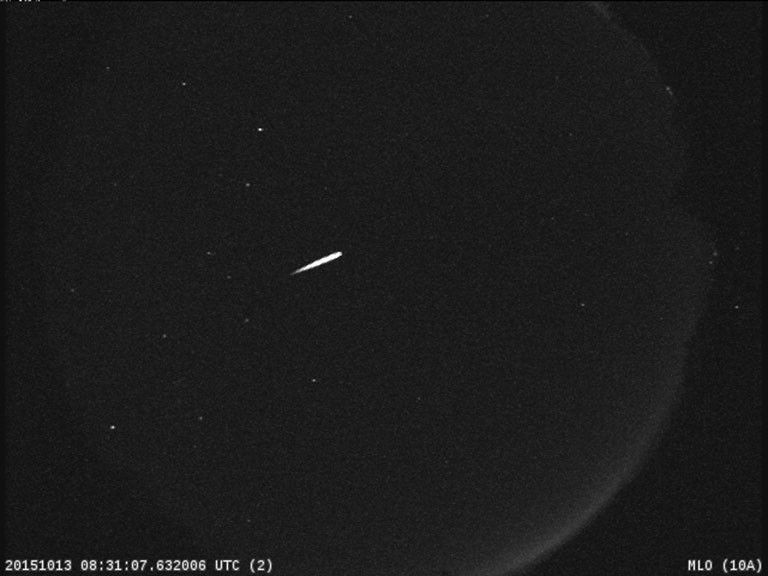
Earth crosses debris streams associated with Halley, producing the Eta Aquarids in May and the Orionids in October. The meteors are small particles entering Earth’s atmosphere, not fragments visibly falling from a nearby comet at that moment. [1]
The separation in time is the useful connection. Halley can remain far away while material spread along its orbital history reaches Earth’s path. Its return in 2061 and its annual meteor showers are two consequences of the same moving system: a surviving nucleus follows its long orbit, while previously released particles continue on journeys of their own. [1]
Sources & image credits
Related reading and objects
What did Rosetta learn by living beside a comet?
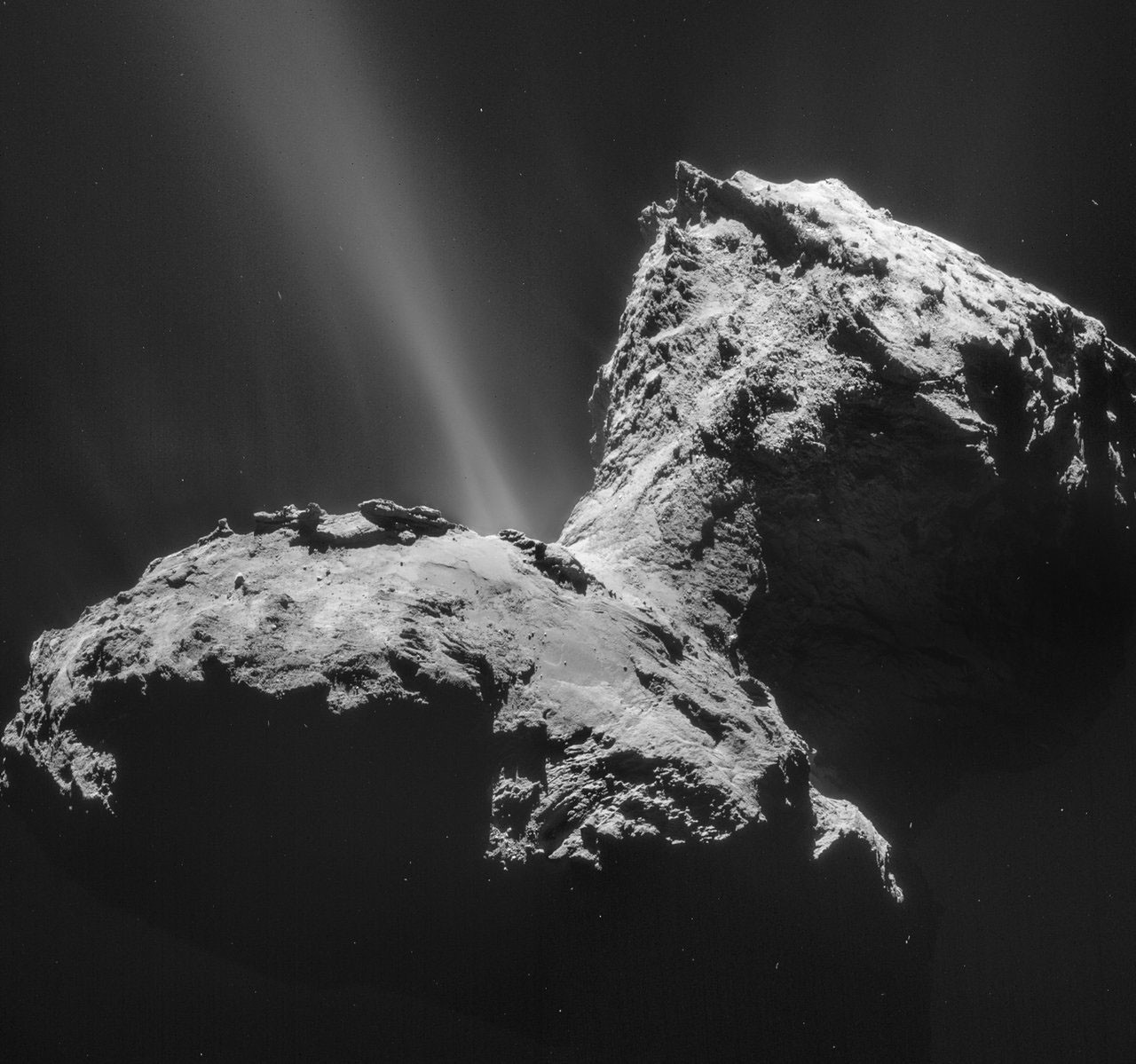
Rosetta reached comet 67P/Churyumov–Gerasimenko in August 2014 and stayed as it approached the Sun and moved away again. That long encounter let scientists connect a changing surface with the dust and gases escaping from it.
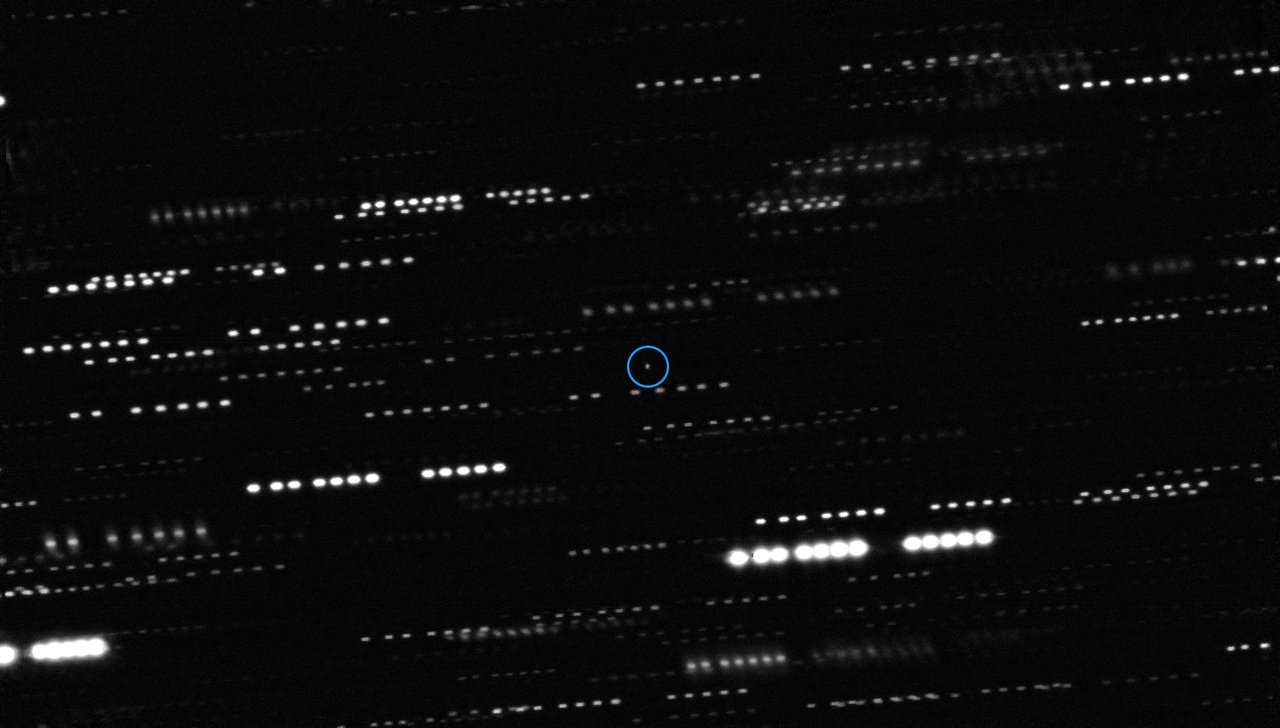
How do we know ʻOumuamua came from another star system?
Pan-STARRS1 discovered ʻOumuamua on 19 October 2017, after it had already passed the Sun. Telescopes saw only an unresolved point of light. Tracking that point nevertheless established something decisive: it had arrived from beyond the Solar System and would leave again.