

Solar System / 04Small worlds
How sunlight turns a comet into an active world
Rosetta followed comet 67P through a changing part of its orbit instead of taking only a brief flyby snapshot. That long view connected the solid nucleus, local activity and the expanding gas and dust around it.
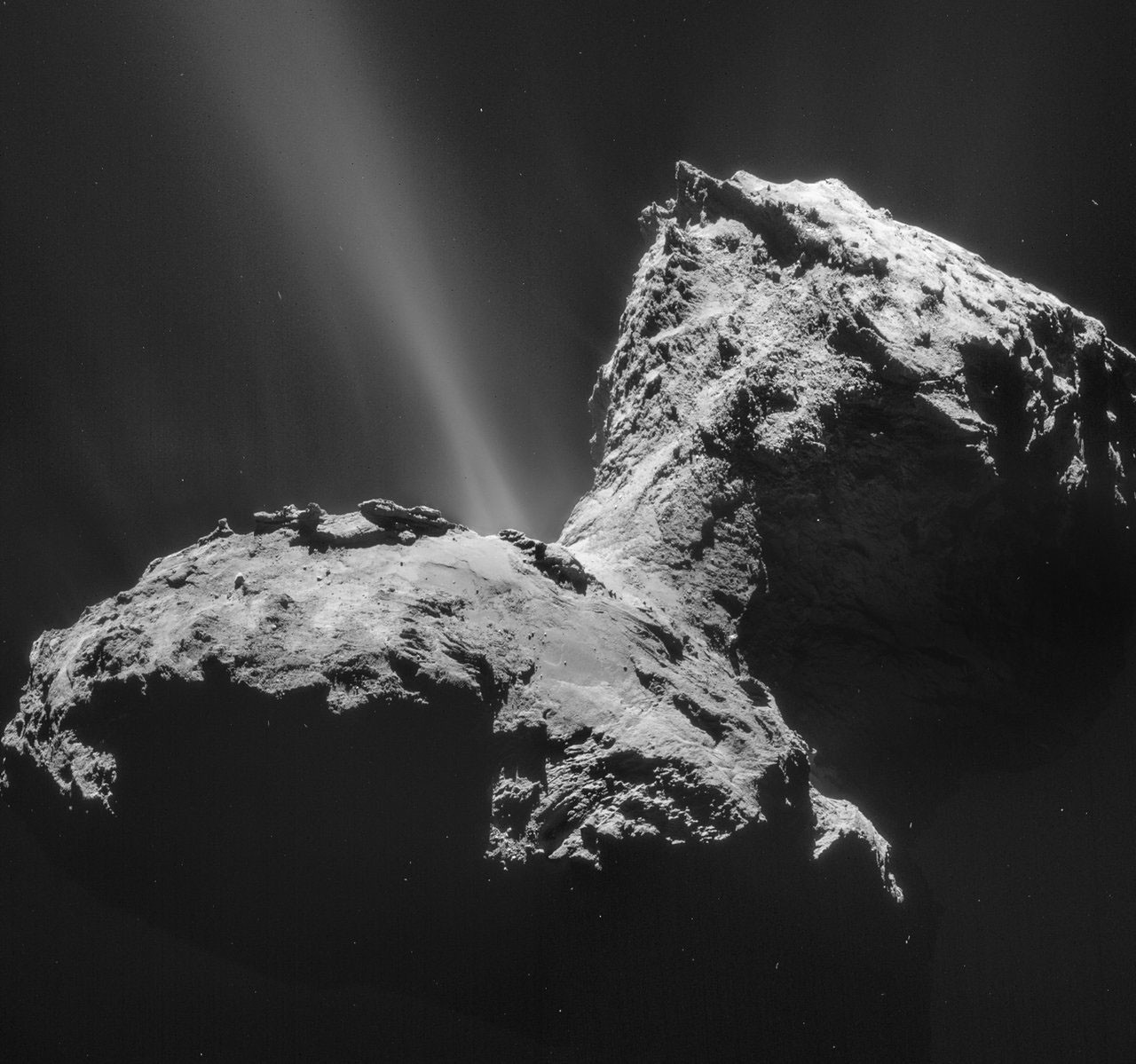
Begin with the solid object
A comet’s nucleus is a small body containing refractory material and volatile substances. Its surface can be dark, dusty and structurally complicated. Rosetta’s images of 67P show cliffs, depressions, boulders and two connected lobes. A bright, smooth ice ball is a poor substitute for the actual terrain. [1] [2]
The nucleus is also much smaller than the bright structure seen in a distant comet photograph. The surrounding coma is a cloud of released gas and dust, illuminated and changed by the Sun. Measuring that cloud is useful, but it does not directly give the nucleus’s outline or the location of every active patch. [3]
Sunlight supplies energy; escaping gas moves material
As solar energy reaches suitable material, volatile ices can turn into gas. Some of the escaping gas carries dust away from the surface. Local illumination, the material’s properties and whether ice is exposed or buried all influence that response. Distance from the Sun matters, but it is not the only variable controlling an individual source of activity. [3] [2]
The process is not a rocket engine pointed opposite the comet’s motion. The surface rotates, different places enter sunlight and shadows, and the gas expands away from local terrain. Images of jets should be interpreted alongside their observing geometry and the time of the observation, rather than treated as permanent pipes fixed in space. [2] [1]
Why an escort mission adds information
A close flyby can resolve a surface and sample its surroundings during one encounter. An escort such as Rosetta can compare observations over changing illumination and activity. It becomes possible to ask which regions change, whether material is redistributed and how a local event fits into the broader seasonal evolution. [2]
The comparison still has limits. A shadow can resemble a surface change, and two images taken from different locations do not provide identical views. Measurements from several instruments help connect visible terrain to gas, dust and composition. The history comes from the linked observations, not from one especially dramatic frame. [2] [1]
Dust and ions follow different dynamics
Dust released from a comet is influenced by solar gravity and radiation pressure. Grains of different sizes respond differently, and the dust retains a history of where and when it escaped. A dust tail can therefore curve. Its appearance also depends on the direction from which the observer views the comet’s orbit. [3]
Gas that becomes electrically charged interacts with the solar wind and its magnetic field. The ion tail and the dust tail need not have the same shape or point along the same apparent line. Neither is a reliable arrow showing the direction in which the solid nucleus is currently travelling. [3]
A dust particle preserves more than a silhouette
Stardust collected particles associated with comet Wild 2 and returned them to Earth. Those samples provide a different kind of evidence from Rosetta’s sustained remote and in-situ observations. Laboratory analyses can investigate individual grains, while the spacecraft records describe the encounter and collection environment. [4]
The useful picture combines these methods. Images resolve shape and terrain; instruments measure material around the nucleus; returned samples permit laboratory work. A change in brightness, a spectacular jet and a chemical identification are observations of different processes. They become an explanation only when their physical connection is established. [4] [2]
Read the evidence
Sources & image credits
- NASA · 67P/Churyumov–Gerasimenko ↗
- ESA · Rosetta at comet 67P ↗
- NASA · comet nuclei, activity and tails ↗
- NASA · Stardust’s comet samples ↗
Technical explanation by Spacian, reviewed against the linked sources. Photographs retain their original dates, creators and reuse terms in their captions. Original diagrams explain mechanisms and do not reproduce engineering drawings or flight telemetry. Editorial policy and corrections.
Continue the story
Continue exploring
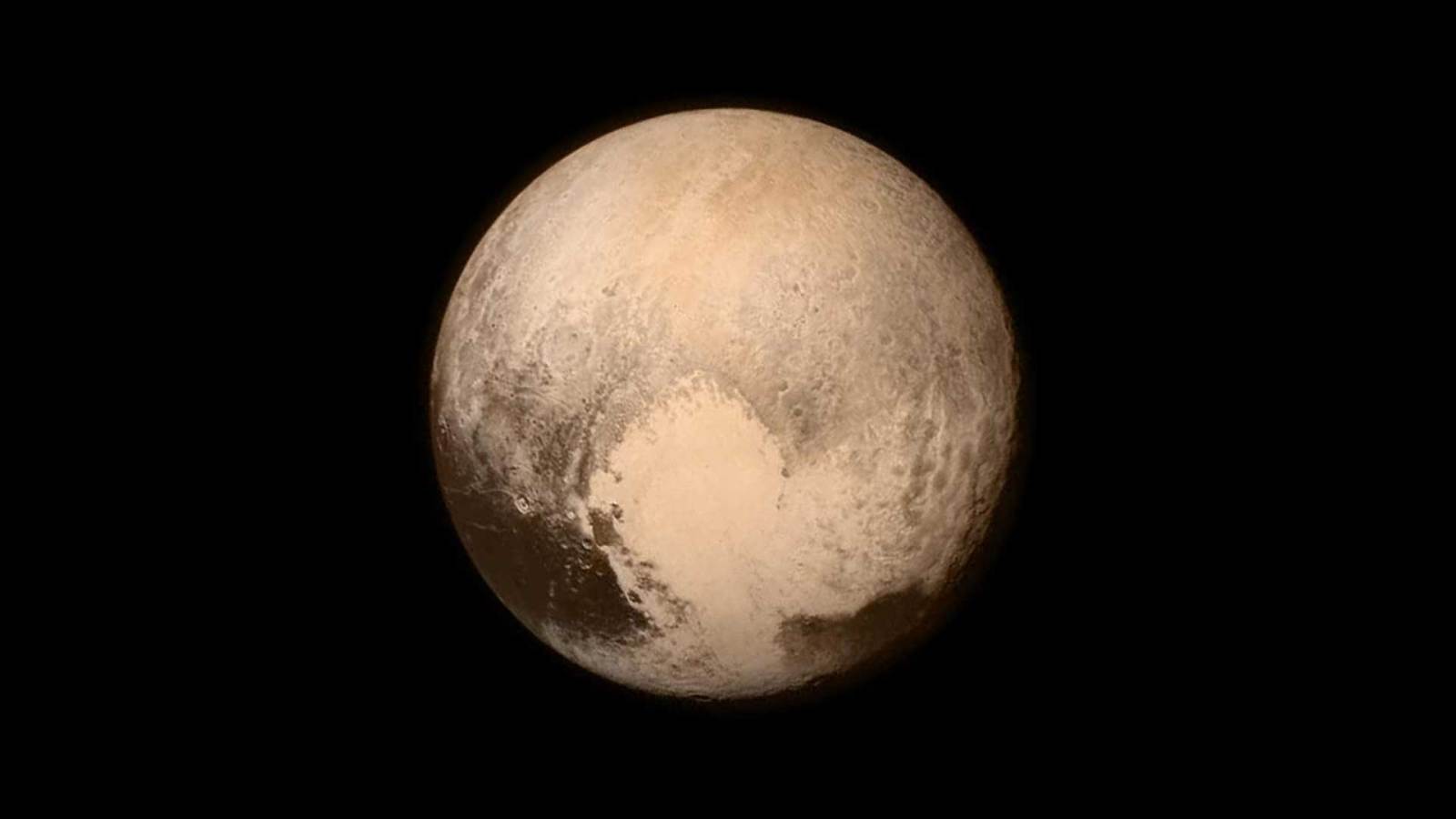 Small worlds
The Kuiper Belt is not the Oort Cloud
Separate the observed populations beyond Neptune from the much more distant proposed Oort Cloud, and compare what New Horizons learned at two targets.
Read the explanation