

Where Neptune gets its weather energy
Voyager 2 found a cold Neptune with fast winds and enormous storms in 1989. At about 30 times Earth’s distance from the Sun, the planet receives little sunlight. Its atmosphere also draws on energy escaping from a deep interior.
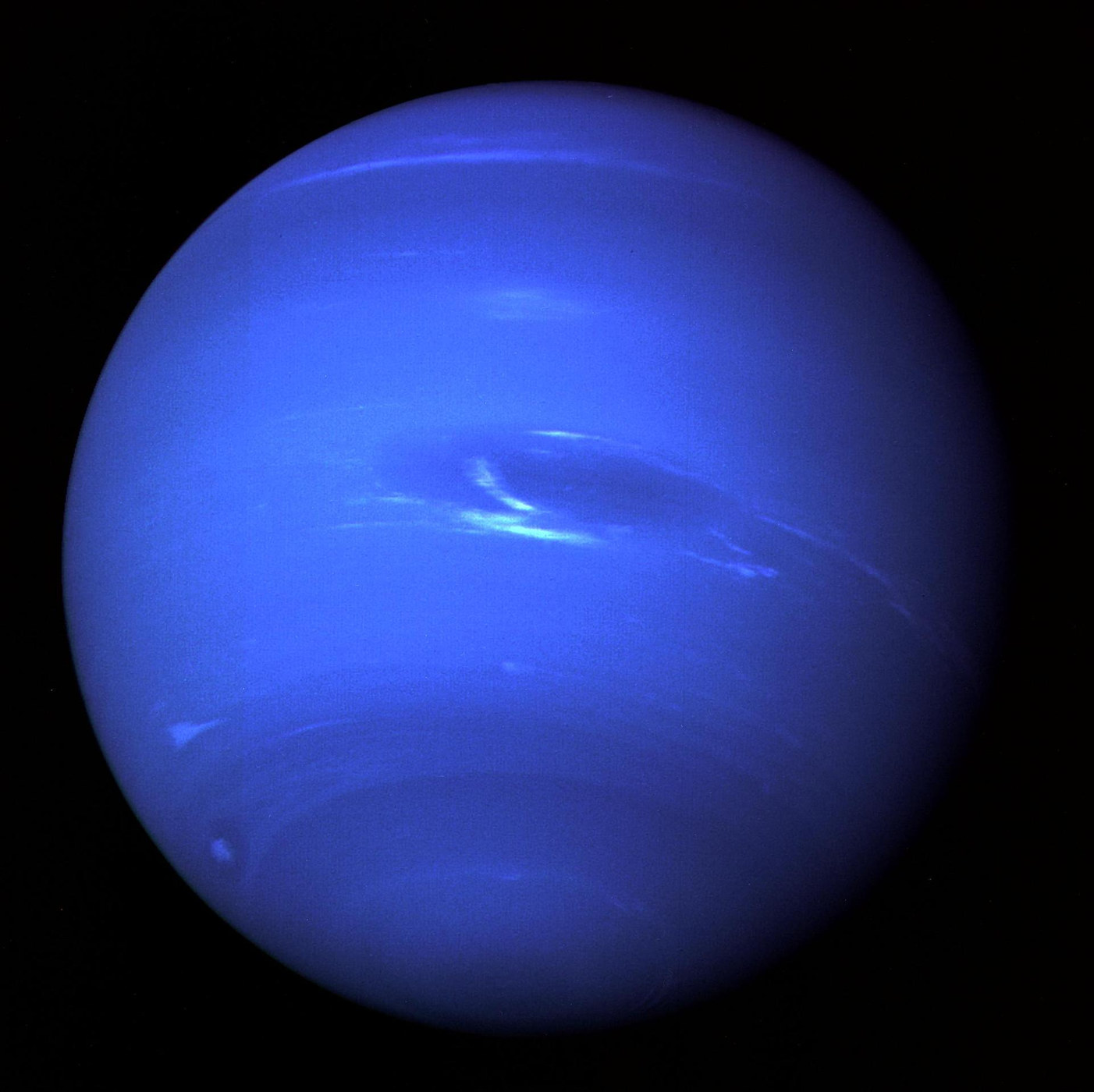
Distance sets one part of the energy budget
Neptune orbits roughly 30 astronomical units from the Sun. One astronomical unit is approximately the average Earth–Sun distance. As sunlight spreads out, its intensity falls with the square of distance: at 30 AU, a given area intercepts about one nine-hundredth of the solar power it would at 1 AU. [1] [2]
That establishes how weak the incoming sunlight is. To calculate the energy actually absorbed, researchers must also determine how much the planet reflects. The atmosphere then transports and releases energy at different depths. Distance alone cannot specify the temperature of every layer or the speed of a wind. [1] [2]
The distance-only sunlight comparison
Use 30 AU as a rounded orbital distance. This compares incoming solar intensity before reflection or absorption.
- Area over which the same solar power spreads
- 30 × Earth’s Sun distance30² = 900
- Solar intensity compared with Earth’s orbit
- 1 ÷ 900about 0.11%
A thermal observation answers a complementary question. Neptune radiates energy into space at infrared wavelengths. Comparing that emitted heat with the absorbed sunlight reveals whether solar heating can account for the full outgoing energy budget. [1] [2]
The excess must come from within
Neptune emits substantially more heat than it absorbs from the Sun. The excess requires an internal energy source. Giant planets retain energy from their formation and continue to evolve as they cool; their structure determines how effectively heat can move from the interior into the atmosphere and escape. [3] [1]
The phrase “ice giant” does not mean that Neptune contains an Earth-like frozen landscape beneath its clouds. At great depth, high pressures and temperatures change the behaviour of water-rich and other material. The composition and arrangement of these deep layers remain central uncertainties in models of the planet. [3] [1]
Uranus is a useful comparison because it is similar in size but has a different measured energy budget. Analyses reported in 2025 found a modest internal heat excess at Uranus, revising the older near-zero estimate. Neptune’s excess remains much larger. Similar appearance and size therefore do not justify assigning the two planets identical interiors or cooling histories. [3] [1]
Clouds measure motion, not the total fuel supply
Voyager repeatedly photographed atmospheric features during its approach and encounter. By tracking their positions over known intervals, researchers estimated winds reaching around 2,000 kilometres per hour. These are motions of features at the atmospheric levels being observed, rather than a direct measurement of every layer below them. [1] [2]
A large heat supply does not translate into one particular wind speed. Pressure differences drive motion, rotation organises the circulation, and friction and turbulence redistribute energy. Neptune’s relatively rapid rotation helps shape the atmosphere into bands and jets, within which large vortices can develop. [1] [2]
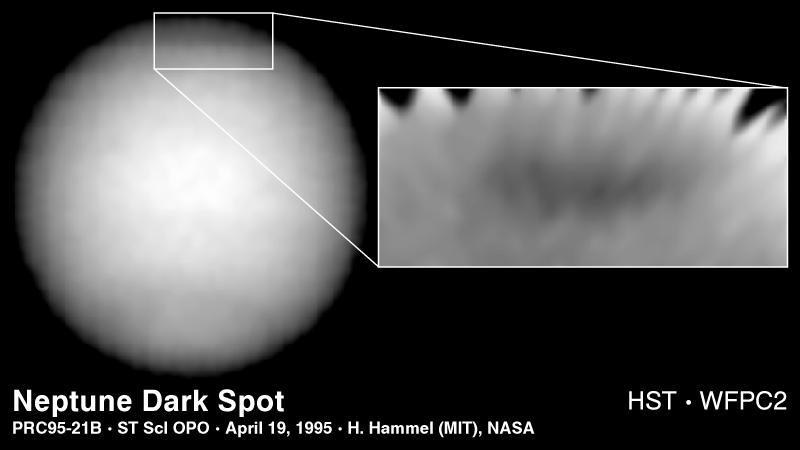
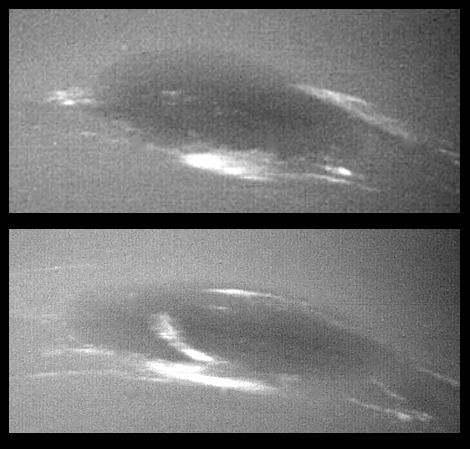
The Great Dark Spot seen in 1989 later disappeared. Other dark vortices have been observed since. A famous photograph therefore records a particular atmospheric state, not an object permanently fixed to Neptune. Repeated telescope observations are needed to distinguish a long-lived circulation pattern from an individual storm moving through it. [1] [2]
A single visit cannot follow a 165-year year
Voyager 2 remains the only spacecraft to have encountered Neptune up close. Its 1989 flyby supplied detailed images and measurements over a short period compared with the planet’s roughly 165-Earth-year orbit. The spacecraft could not remain to observe another season or return to the same storm decades later. [2] [4] [5]
Ground-based and space telescopes extend the record. Long studies follow cloud activity through time and compare it with changing illumination and the solar cycle. These observations measure aspects of the atmosphere that a brief encounter cannot settle, while the flyby provides detail and geometry that distant monitoring cannot fully reproduce. [2] [4] [5]
Image processing matters too. Many familiar Voyager portraits exaggerate Neptune’s blue colour to reveal features; reprocessed views show its colour is closer to Uranus’s than those portraits suggest. Neither colour is a map of the planet’s heat budget. Reflected visible light and emitted infrared heat are different observations. [2] [4] [5]
The result is a world powered from two directions: weak sunlight from above and a substantial flow of heat from below. Explaining its weather requires tracing how both are transported through the atmosphere. Voyager established that distant does not mean inactive; the remaining task is to connect the measured energy supply with the winds and storms it observed. [2] [4] [5]
Sources & image credits
Related reading and objects
Why Neptune’s dark spots come and go
Voyager 2 photographed Neptune’s Great Dark Spot in 1989. Later Hubble observations found that feature gone and other vortices appearing elsewhere. The comparison turns a famous planetary “landmark” into a study of changing weather.
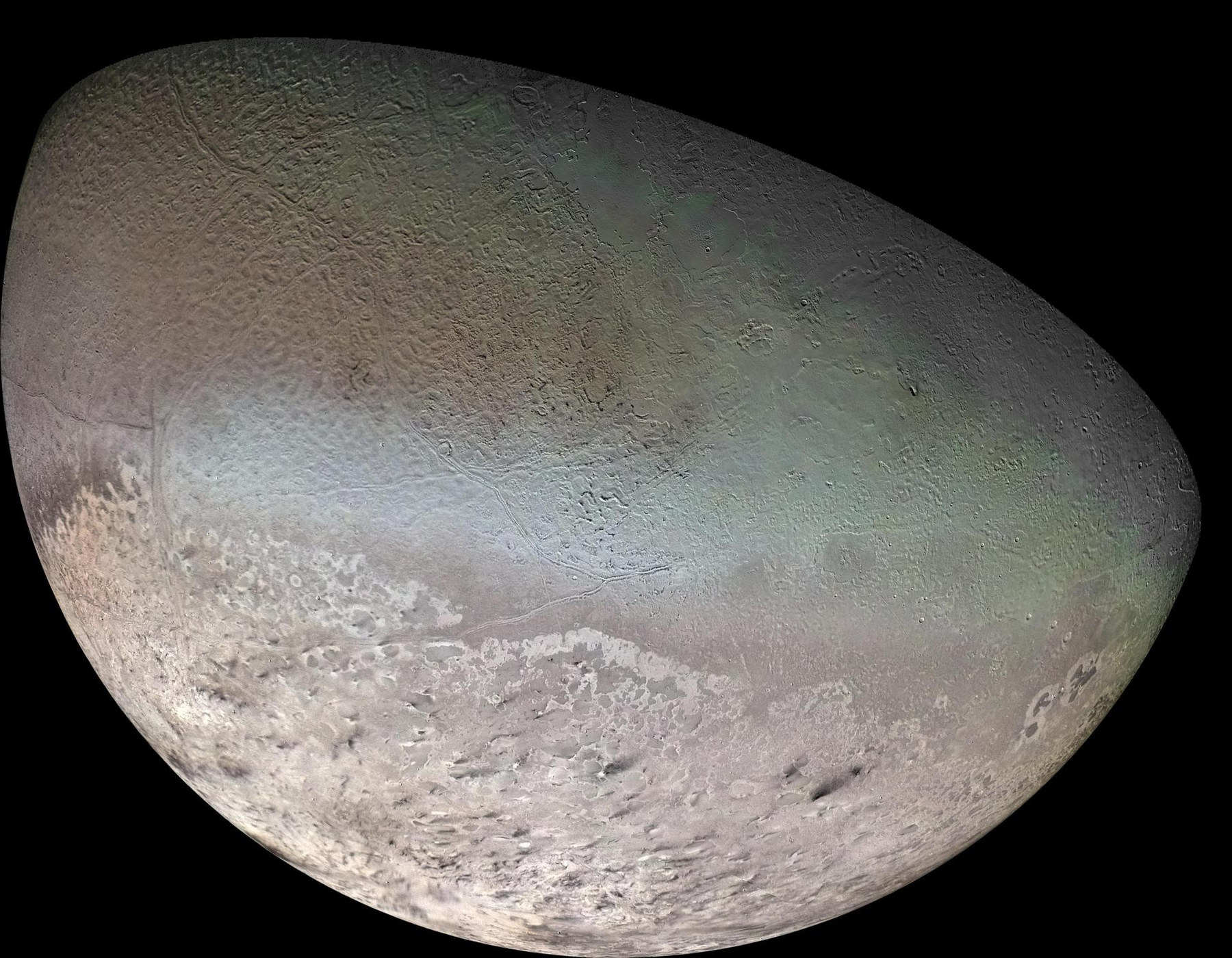
Why does Triton orbit Neptune backwards?
Voyager 2 reached Triton in August 1989 and photographed an unexpectedly active, icy world. Its orbit had already supplied a different clue: Neptune’s largest moon travels around the planet in the opposite direction to the planet’s rotation.