

Neptune
Neptune receives only about one nine-hundredth of Earth’s sunlight per unit area before reflection and absorption are considered. Yet it has fast winds, storms and a substantial internal heat supply. Voyager 2 provided the only spacecraft encounter in 1989, while telescopes continue to follow atmospheric changes. Its largest moon, Triton, travels in a retrograde orbit that points to capture from the population beyond Neptune.
- Mean diameter
- 49,244 km
- Rotation
- About 16.1 h
- Year
- 164.79 Earth years
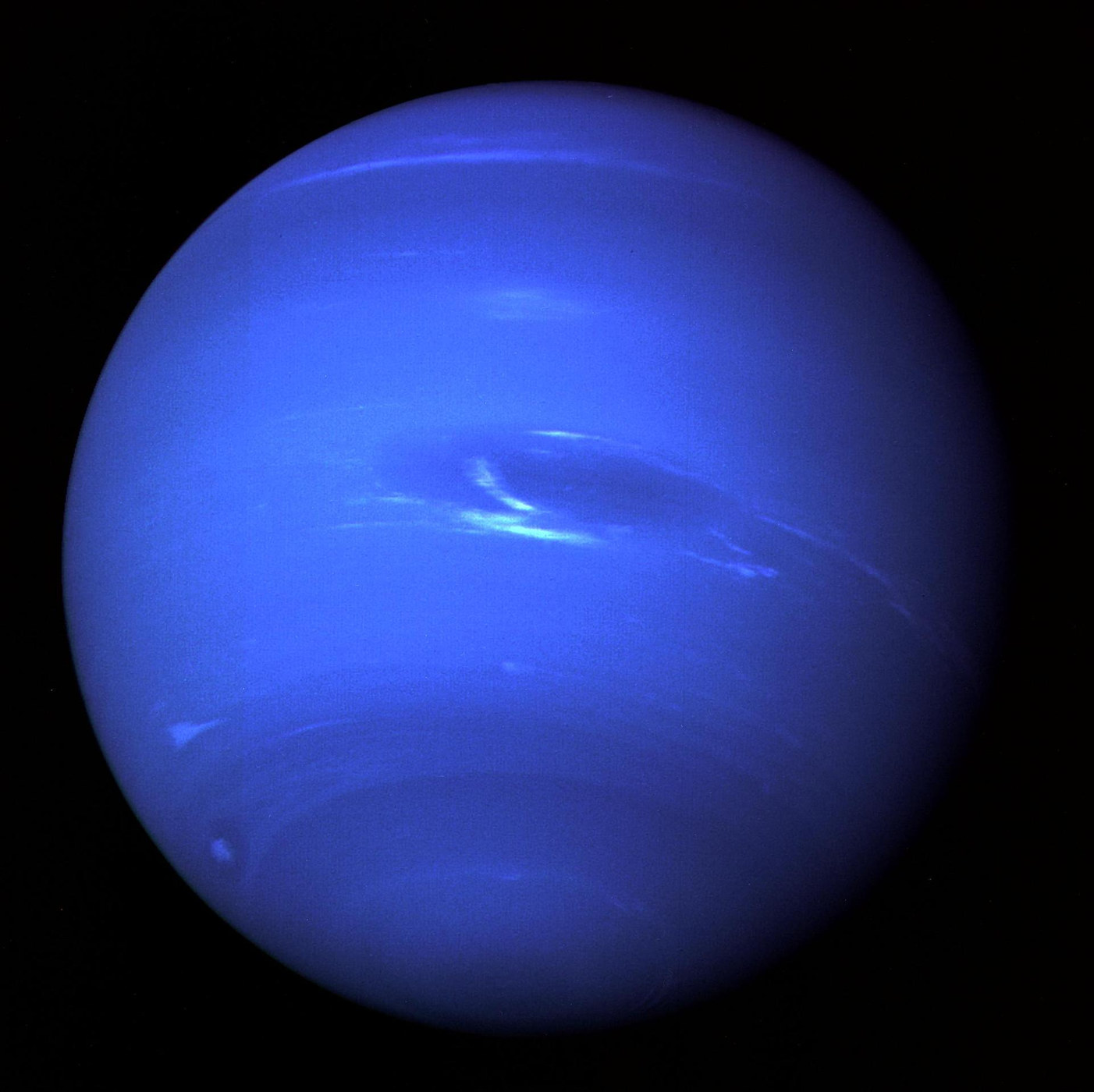
Changing dark spots
Weather tracked across decades
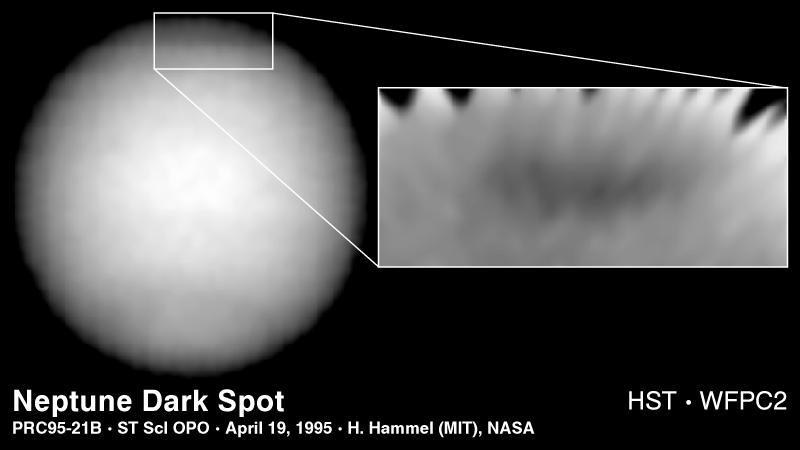
Voyager’s Great Dark Spot disappeared. Hubble followed other vortices forming, drifting and sometimes reversing direction.
Heat from within
Weak sunlight, strong circulation
At roughly 30 AU, sunlight is about 900 times weaker than at Earth. Neptune emits more energy than it absorbs, with an internal supply contributing to its atmosphere.
Triton
A captured moon with active ice
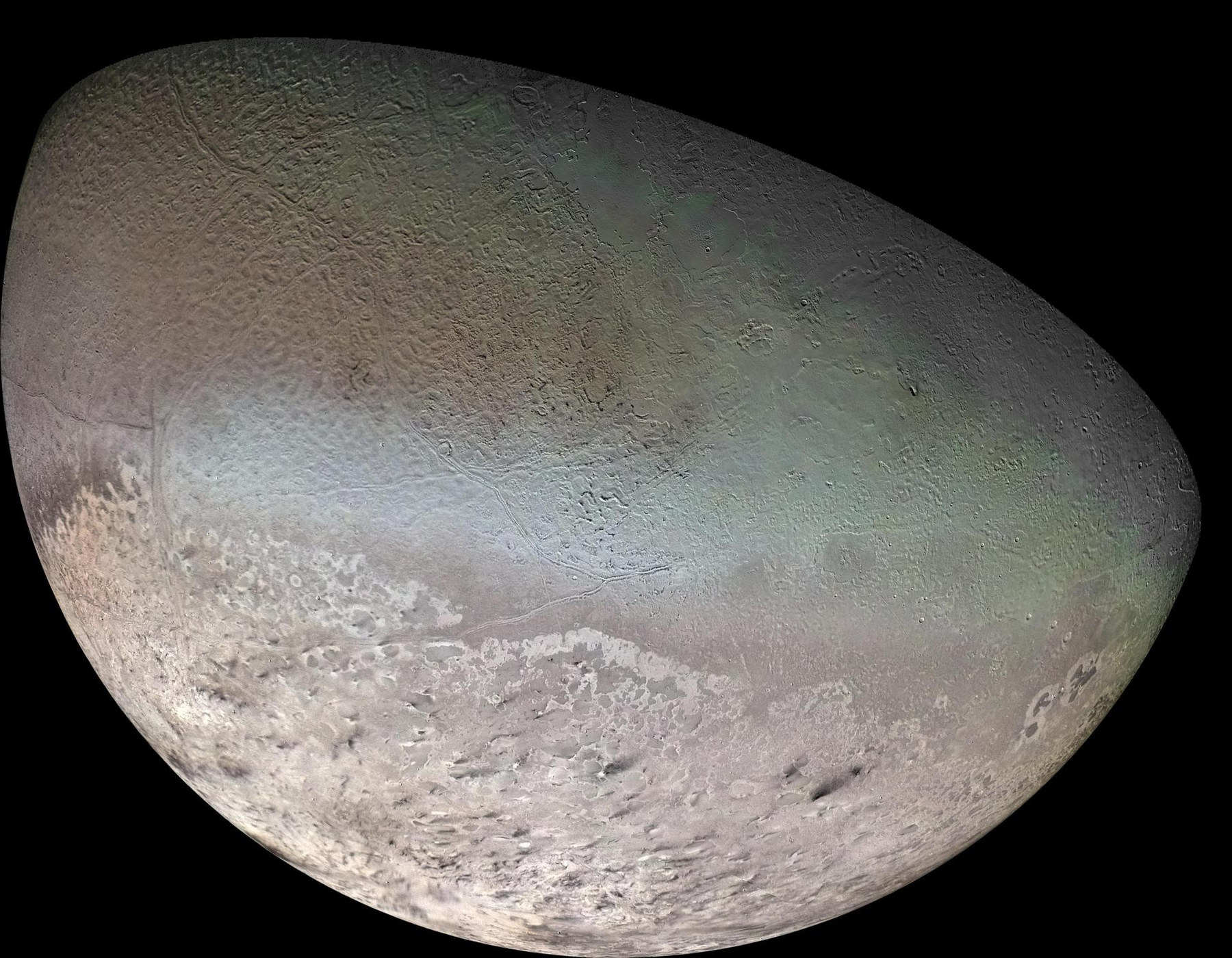
Triton’s large retrograde orbit points to capture. Voyager observed a thin atmosphere, diverse icy terrain and plumes above the surface.
More investigations
Through the instruments
Open an image for the full frame and its source.
Neptune in 1989
NASA/JPLA different dark spot
NASA/JPL/STScITriton’s southern hemisphere
NASA/JPL/USGSSuccessive Voyager views of changing bright clouds near Neptune’s Great Dark Spot
NASA/JPLFalse-colour Voyager map of Triton’s cantaloupe terrain and adjacent faulted ground
NASA/JPLDark plume streaks across Triton’s bright south-polar terrain
NASA/JPLMissions & milestones
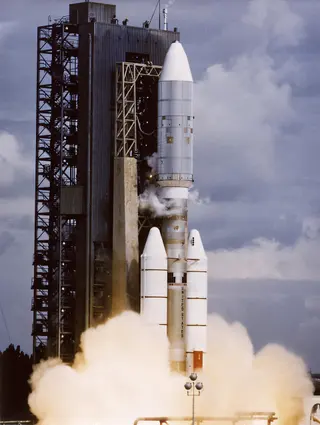
1 launch records · 0 linked events
1 related records
No records match these filters.
Programs (1)
About these records
The source cohort includes dedicated missions, attempts and reviewed scientific flybys or gravity assists. Launch outcomes describe the recorded flight. They do not establish whether an old spacecraft is operating today. Events show published targets unless the record confirms an outcome.