

Why does Triton orbit Neptune backwards?
Voyager 2 reached Triton in August 1989 and photographed an unexpectedly active, icy world. Its orbit had already supplied a different clue: Neptune’s largest moon travels around the planet in the opposite direction to the planet’s rotation.
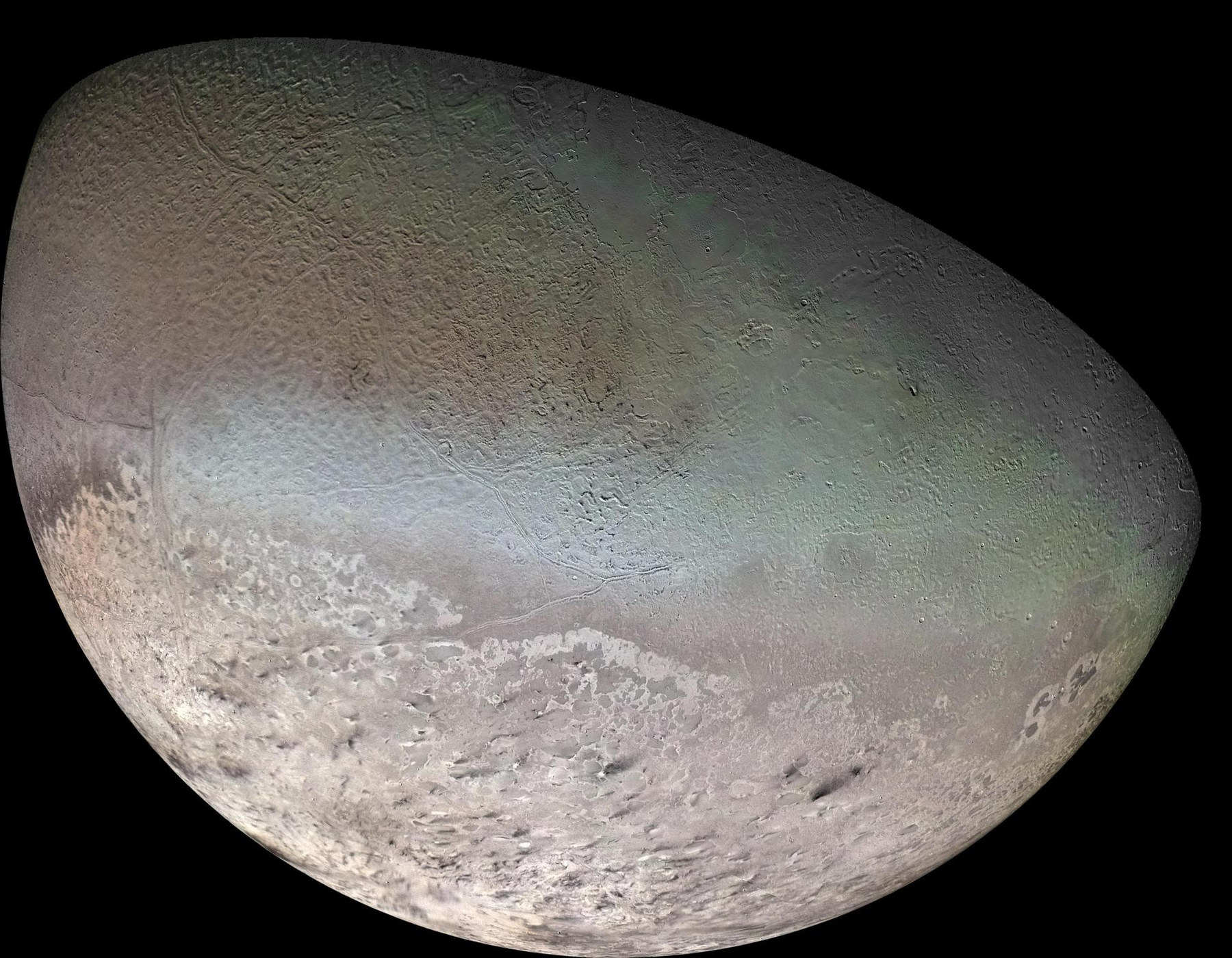
A large moon with an unusual direction
Most large moons move around their planets in the same sense as the planets rotate. That arrangement is consistent with formation inside a rotating disk of material around the growing planet. Triton’s retrograde orbit makes that ordinary explanation difficult. [1]
The leading interpretation is capture: Triton formed elsewhere, probably in the population of icy bodies beyond Neptune, and later became gravitationally bound to the planet. Its similarities to Pluto in size range, surface volatiles and broad composition strengthen the connection to that outer population. [1]
A backwards orbit is evidence about origin, not a complete recording of the encounter. The precise capture route and its consequences require dynamical models. A successful model must explain how an incoming object lost enough orbital energy to remain bound and how its orbit evolved afterwards. [1]
Backwards motion does not stop tidal locking
Triton keeps roughly the same hemisphere facing Neptune. It therefore rotates once for each trip around the planet, just as a synchronously rotating moon must. The backwards direction refers to its orbital motion relative to Neptune’s spin, not to a failure to rotate. [1]
These are different reference frames. An observer tracking a surface feature relative to Neptune sees a nearly fixed facing side; an observer comparing the orbit with the planet’s equator sees the retrograde motion. Keeping those frames separate removes an apparent contradiction in descriptions of Triton. [1]
A cold surface can still move material
Voyager measured an extraordinarily cold surface, around 38 kelvin in the regions it investigated. Nitrogen can remain frozen under those conditions, and bright frost reflects much of the already weak sunlight reaching the Neptune system. [1]
Water ice forms a much less volatile part of the moon’s solid body, while nitrogen participates more readily in exchange between surface deposits and the thin atmosphere. Temperature changes can therefore alter the distribution of frost without requiring the water-ice crust to melt. [1]

Voyager’s images also show smooth plains, pits and relatively few craters in some areas. Those landforms indicate a history of surface modification, although the processes that built ancient terrain need not be identical to the mechanism driving a plume during the flyby. [1]
The camera caught material rising
Sequential Voyager images revealed an active plume rising above the surface before material was carried sideways. The geometry showed that the dark streaks were more than stationary markings on the ground: material had entered the atmosphere and moved downwind. [2]
One proposed mechanism uses sunlight absorbed by dark particles within nitrogen ice. Heating below a relatively transparent layer raises gas pressure until nitrogen can escape, carrying fine material with it. The model connects an extremely cold environment with a local source of energy capable of driving activity. [2]
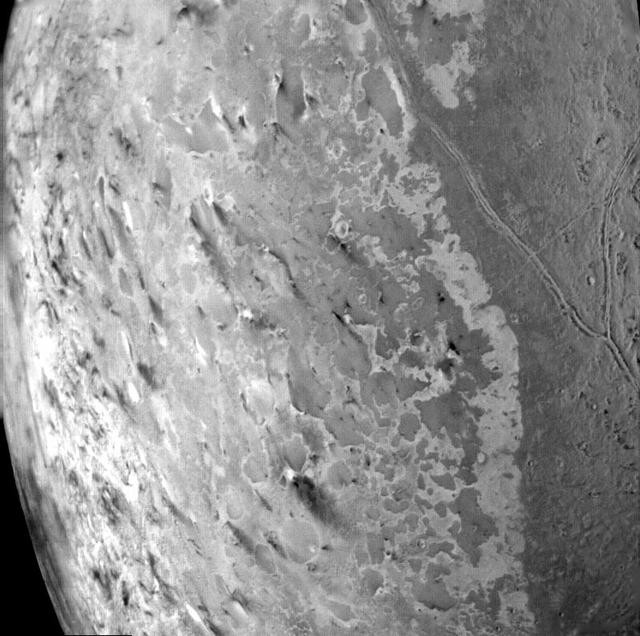
That explanation does not require a terrestrial-style chamber of molten rock beneath the photographed vent. It also does not settle whether deeper internal heat contributed to other episodes in Triton’s geological history. The observed plume and the broader terrain preserve different kinds of evidence. [2]
One flyby connects two separate mysteries
Voyager 2 remains the only spacecraft to have visited Neptune and Triton. Its close encounter supplied a brief, geographically uneven view, rather than a long survey through changing seasons. [1] [2] [3]
Triton’s orbit makes capture the central explanation for how it joined the Neptune system. Its surface and plume images show that the captured object did not simply remain a frozen relic. Understanding it means joining that dynamical history to the behaviour of nitrogen, water ice and heat—while recognising how much of the moon a single flyby left unseen. [1] [2] [3]
Sources & image credits
Related reading and objects
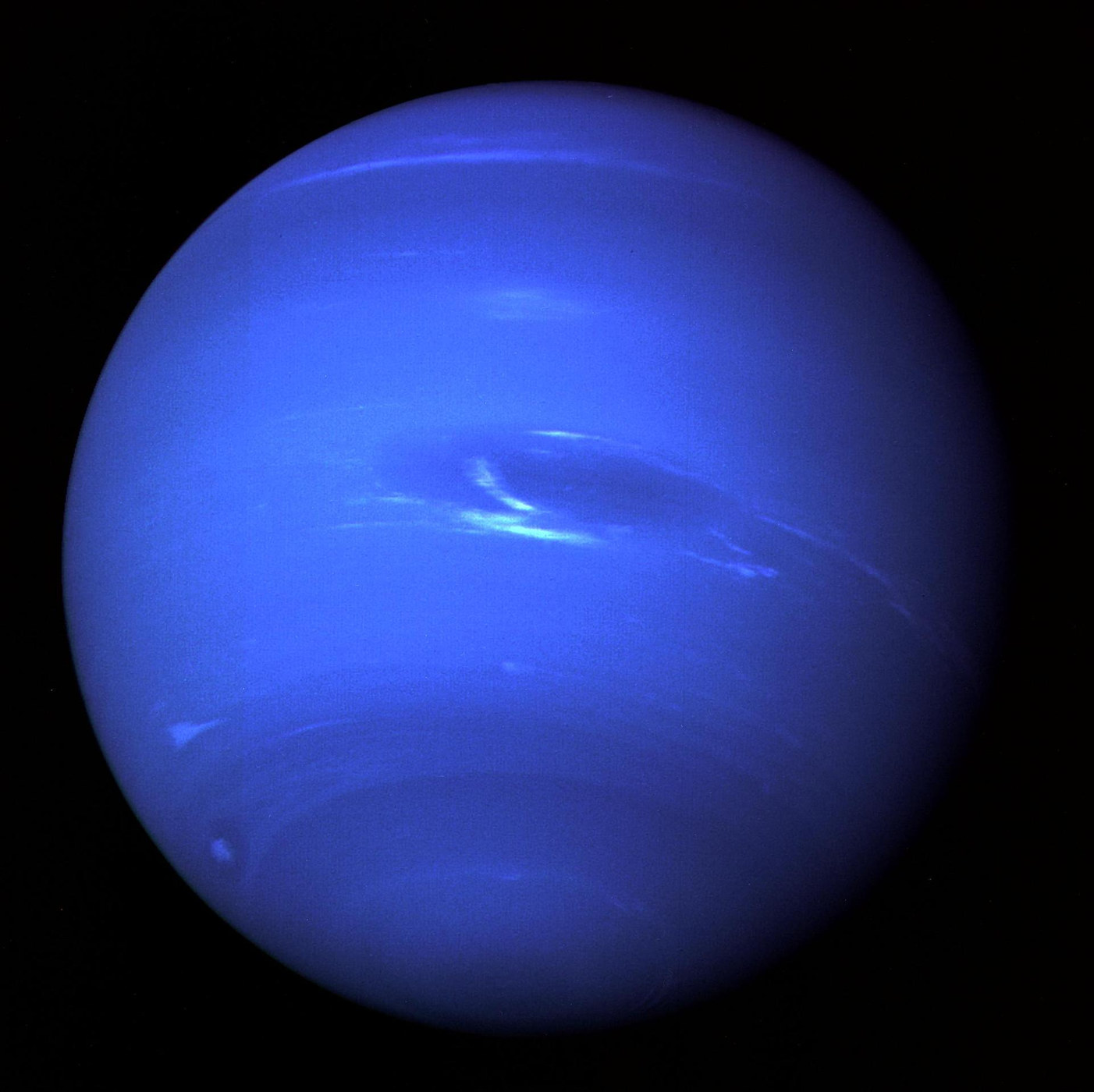
Where Neptune gets its weather energy
Voyager 2 found a cold Neptune with fast winds and enormous storms in 1989. At about 30 times Earth’s distance from the Sun, the planet receives little sunlight. Its atmosphere also draws on energy escaping from a deep interior.
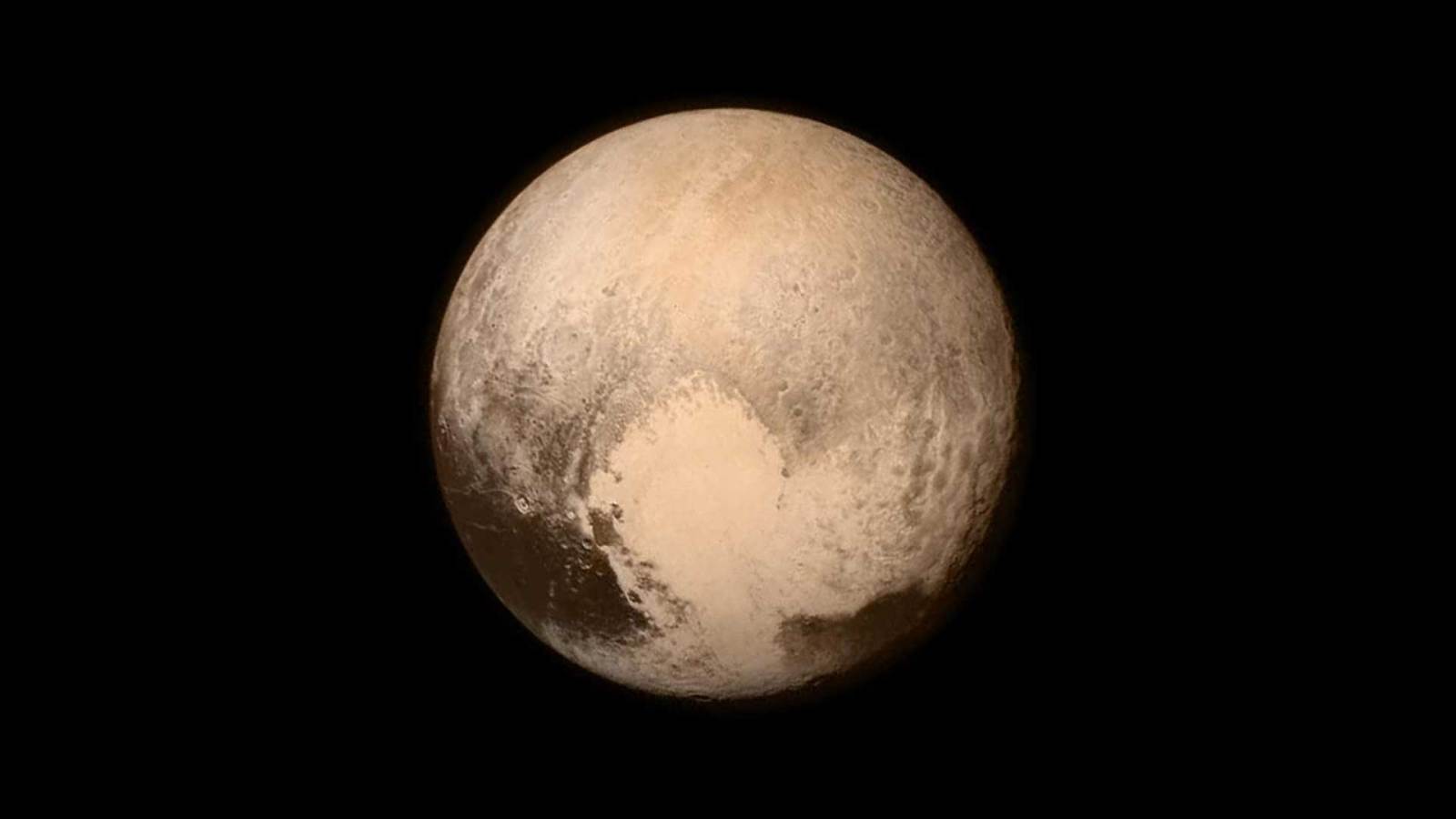
Why is Pluto a dwarf planet?
When New Horizons flew past Pluto in July 2015, the former ninth planet became a world of mountains and glaciers. Its new classification had changed its place in a list, but the flyby showed how much remained to explain about the place itself.