

Why Venus’s clouds outrun the planet
Akatsuki observed Venus at ultraviolet and infrared wavelengths to follow weather at different heights. Its target was a striking mismatch: the solid planet takes about 243 Earth days to rotate, while winds near the cloud tops can circle it in only a few days.
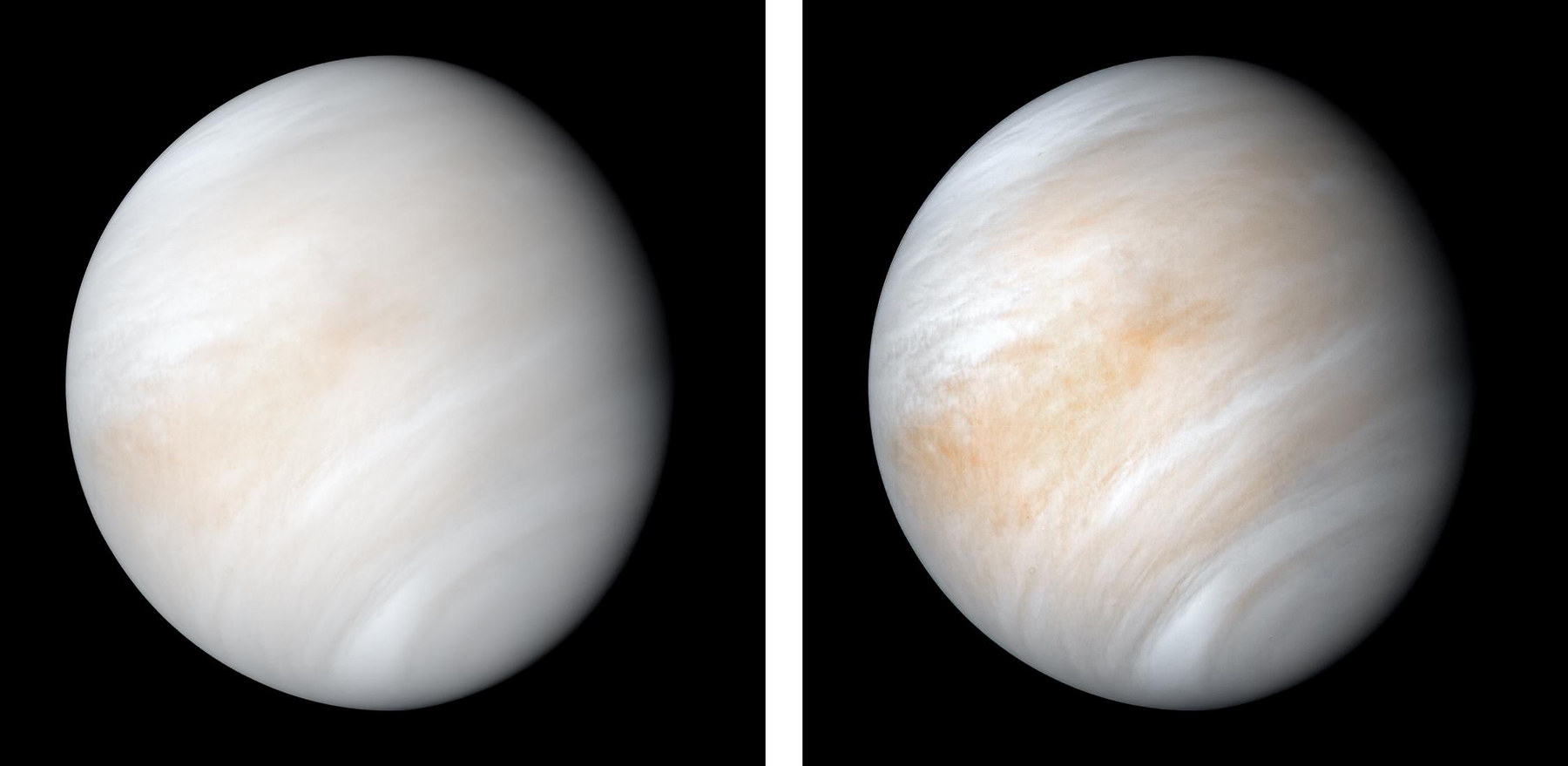
The ground and the atmosphere have separate motions
Venus rotates slowly and in the opposite direction to most planets. The atmosphere also circulates predominantly in that retrograde direction, but much faster. This atmospheric superrotation is a global pattern, not a single hurricane drifting over the surface. Its speed depends on altitude and latitude. [1] [2]
The 243-day rotation is measured against the stars. Sunrise to sunrise takes about 117 Earth days, because Venus is moving around the Sun while turning. Neither clock specifies how long a cloud takes to make a circuit. Keeping all three motions separate is necessary before interpreting a movie of the planet. [1] [2]
Follow a pattern through successive images
Cloud tracking compares structures in images taken at known times. Their displacement gives an estimate of the winds at the level contributing most strongly to those images. Akatsuki used several cameras so that observations could sample different cloud layers and temperatures rather than reducing the entire atmosphere to one visible outline. [3]
There are practical limits. A cloud can change shape between frames, and a moving wave can travel at a different speed from the gas carrying it. Researchers must identify comparable structures and account for the instrument’s geometry. A compelling time-lapse is an observation to analyse, not by itself a complete wind measurement. [3]
Waves can move momentum
An atmosphere does not keep its angular momentum in one uniform layer. Circulation and waves can redistribute it. Akatsuki observations revealed variable lower-cloud winds, including a reported equatorial jet, while other work followed a sharp, recurrent disruption in the lower clouds. These are constraints on how the circulation is maintained. [4] [5]
The cloud disruption crosses large parts of the planet and changes cloud properties as it passes. Its behaviour differs from the surrounding flow. Comparing observations at several wavelengths tests how far the disturbance extends vertically and where it weakens. That helps connect a visible pattern to transport through the atmosphere. [4] [5]
Why repeated observations matter
A single global photograph freezes one arrangement of clouds. A sequence can reveal propagation; a long record can reveal variability. The investigation therefore needs both frequent imaging and repeated coverage across latitude, local time and altitude. Observations that look similar to a casual viewer may be essential for measuring a small change in motion. [3] [4]
The Mariner 10 image here shows the cloud-covered planet that first made global cloud tracking possible from close range. Akatsuki’s later measurements extend the question into three dimensions. The goal is to explain how a slowly rotating rocky world sustains fast atmospheric circulation, with measurements at each layer testing the proposed mechanisms. [3] [4]
Sources & image credits
Related reading and objects
How radar draws a hidden planet
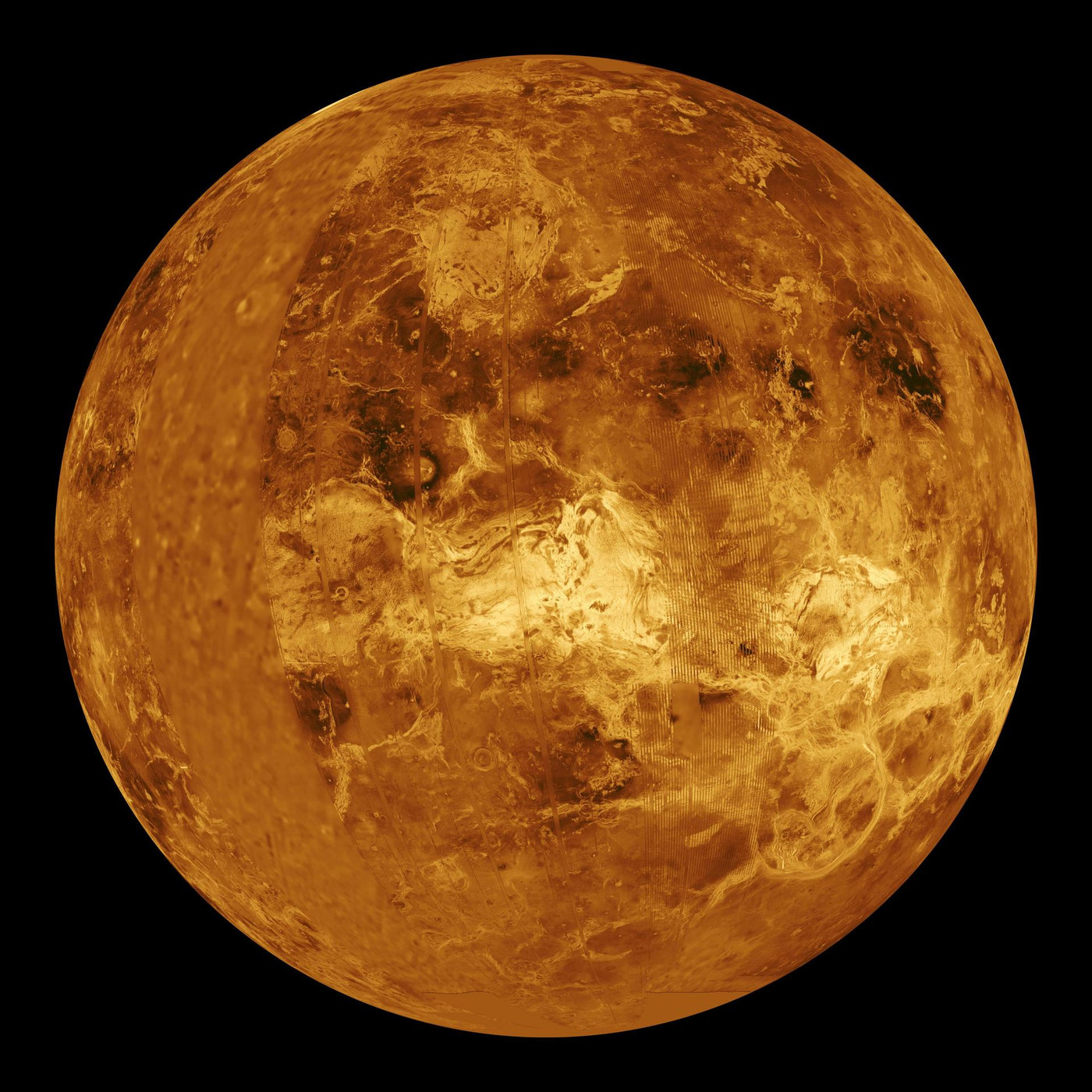
Magellan travelled to Venus aboard the STS-30 mission, then mapped a surface hidden beneath global cloud. Its radar images are measurements of returning radio signals. Learning to read them begins by separating a strong echo from a high mountain.
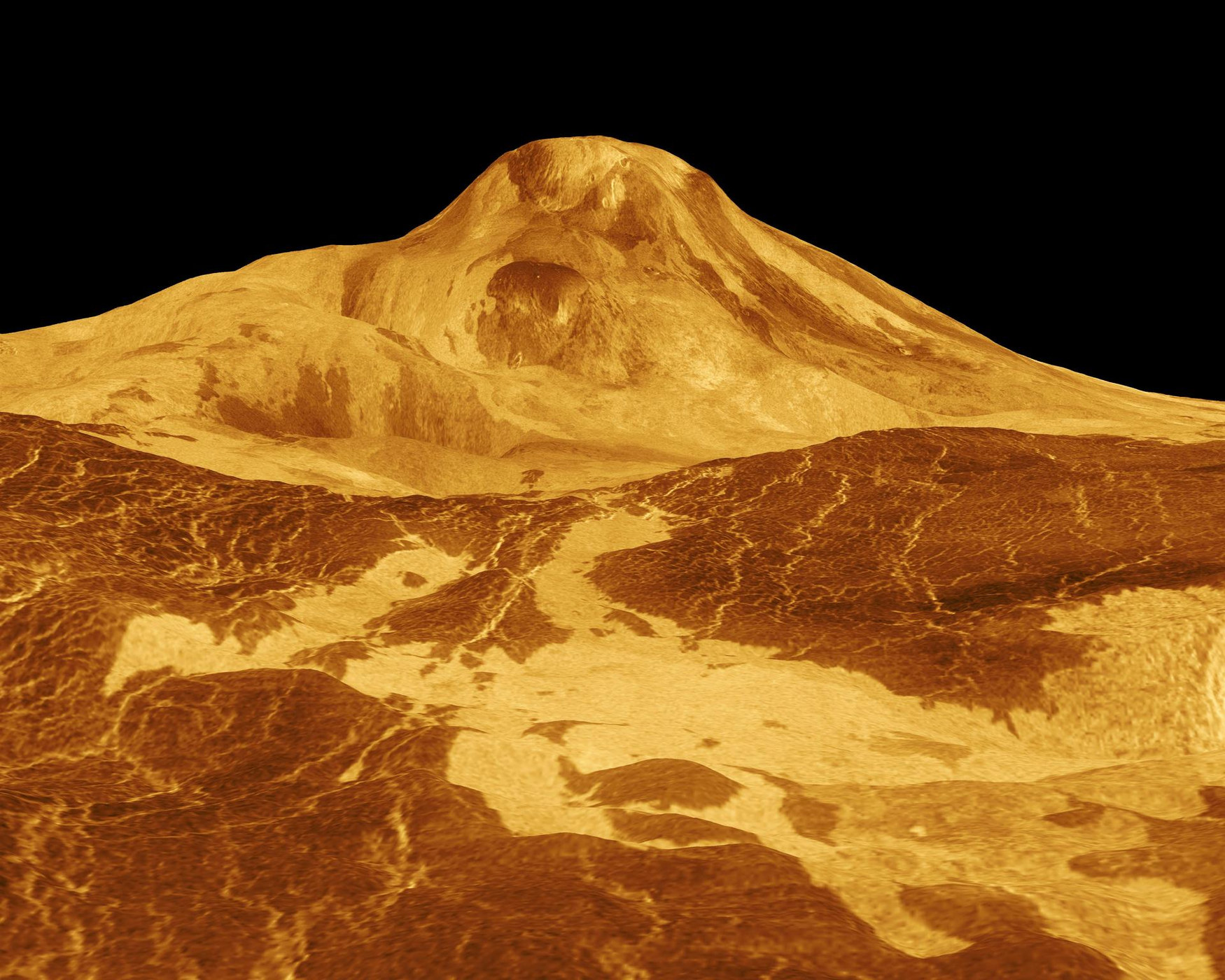
Why Venus holds its heat
Magellan mapped a rocky world hidden beneath Venus’s clouds. At the ground, temperatures are around 465°C—hotter than on Mercury. The explanation depends on where energy leaves Venus, as well as how much sunlight arrives.