

Why Venus holds its heat
Magellan mapped a rocky world hidden beneath Venus’s clouds. At the ground, temperatures are around 465°C—hotter than on Mercury. The explanation depends on where energy leaves Venus, as well as how much sunlight arrives.
A bright planet can have a hot surface
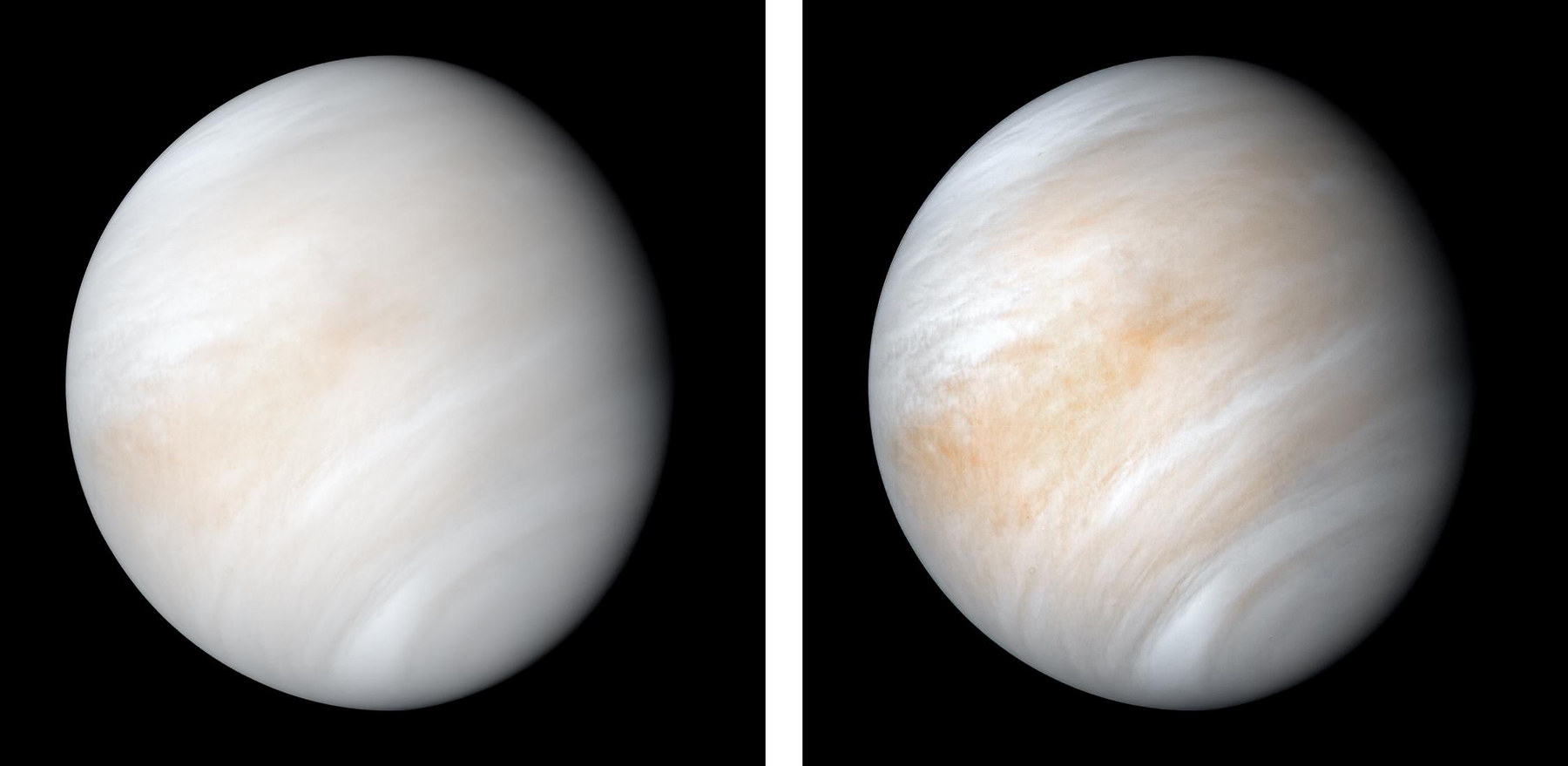
Venus shines brilliantly in our sky because its clouds reflect a large fraction of the sunlight falling on them. A reflective planet absorbs less solar energy than a darker one at the same distance. That might sound like a recipe for a cool world, until the outgoing energy is considered. [1]
A planet in long-term balance must emit the energy it absorbs. The hot ground emits mainly infrared radiation, which interacts strongly with Venus’s thick carbon-dioxide atmosphere. Infrared energy is repeatedly absorbed and emitted within that atmosphere; the radiation finally escaping to space comes largely from higher, colder levels. [1]
The surface must be much hotter than that emitting region. Convection and radiation together establish the vertical temperature structure, linking the dense lower air to the layers that can release energy to space. This is why a simple ranking by distance from the Sun puts Mercury and Venus in the wrong order. [1]
Follow a parcel down through the atmosphere
Venus’s surface pressure is about 92 times Earth’s sea-level pressure. It describes the enormous weight of gas overhead. Descend through that atmosphere and both pressure and temperature rise, so a cloud-level measurement and a surface measurement belong to very different environments. [1]
Pressure alone does not specify the temperature: the composition, absorption of radiation and movement of heat matter too. Carbon dioxide accounts for most of the air, with nitrogen making up much of the remainder. Clouds containing sulfuric-acid droplets sit well above the rocky surface, in conditions far cooler than those below. [1]
The lower atmosphere transfers heat effectively enough that the long nights do not make the ground cold in the way they do on Mercury. Venus rotates very slowly, but its night side is still extremely hot. High terrain can be cooler than lowlands because altitude changes its place within the atmospheric column, rather than removing it from the greenhouse. [1]
Different wavelengths reveal different parts of Venus
Visible light shows a largely cloud-covered disk. Ultraviolet observations bring out patterns that trace atmospheric circulation. Selected near-infrared wavelengths on the night side let instruments detect thermal radiation from deeper layers through windows where the gases absorb less strongly. [2] [3]
Akatsuki used observations at several wavelengths to investigate these layers and their winds. A fast-moving cloud pattern at one altitude does not mean that the same wind reaches the ground. Comparing different observations reveals the atmosphere’s vertical structure and the transport of energy within it. [2] [3]
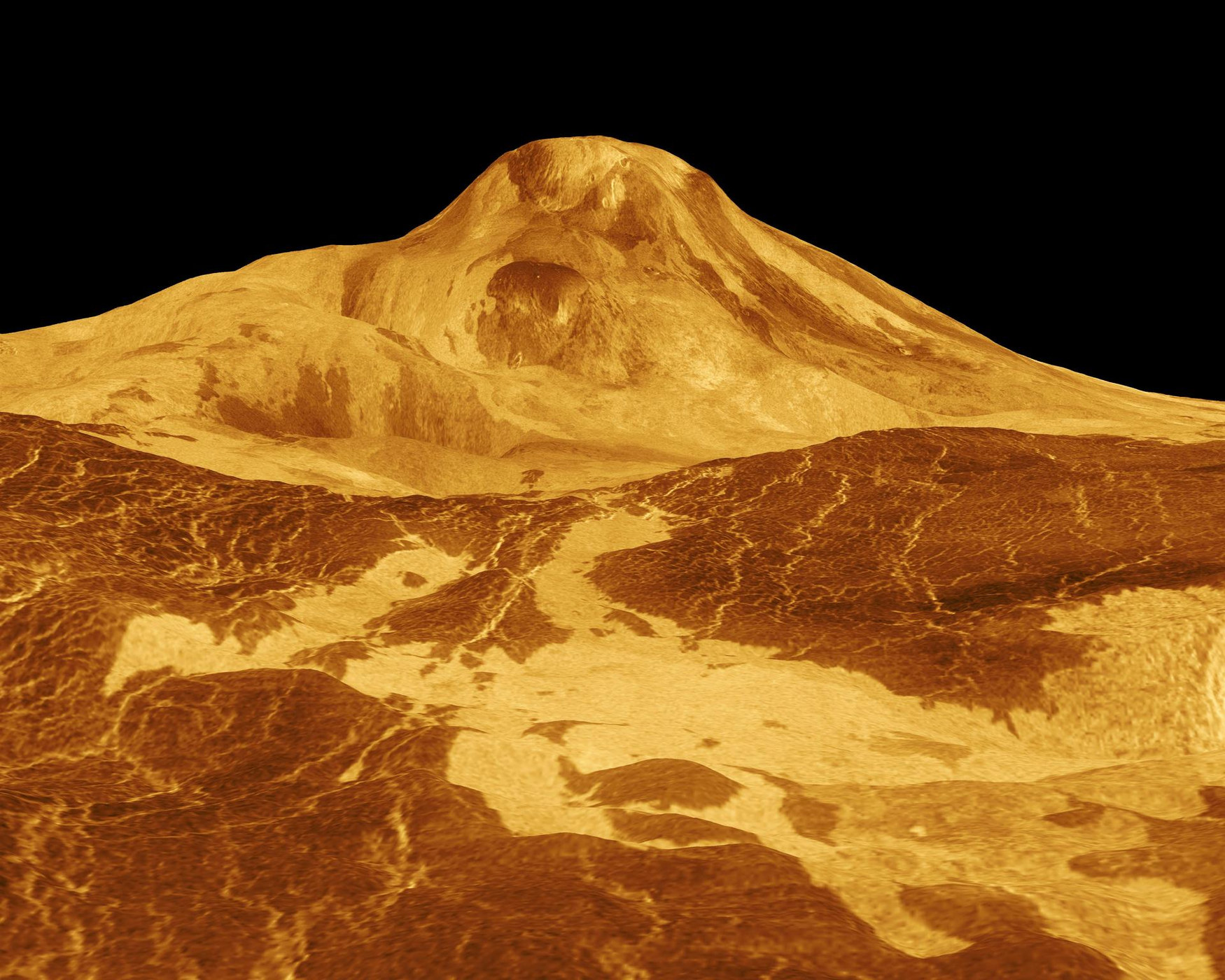
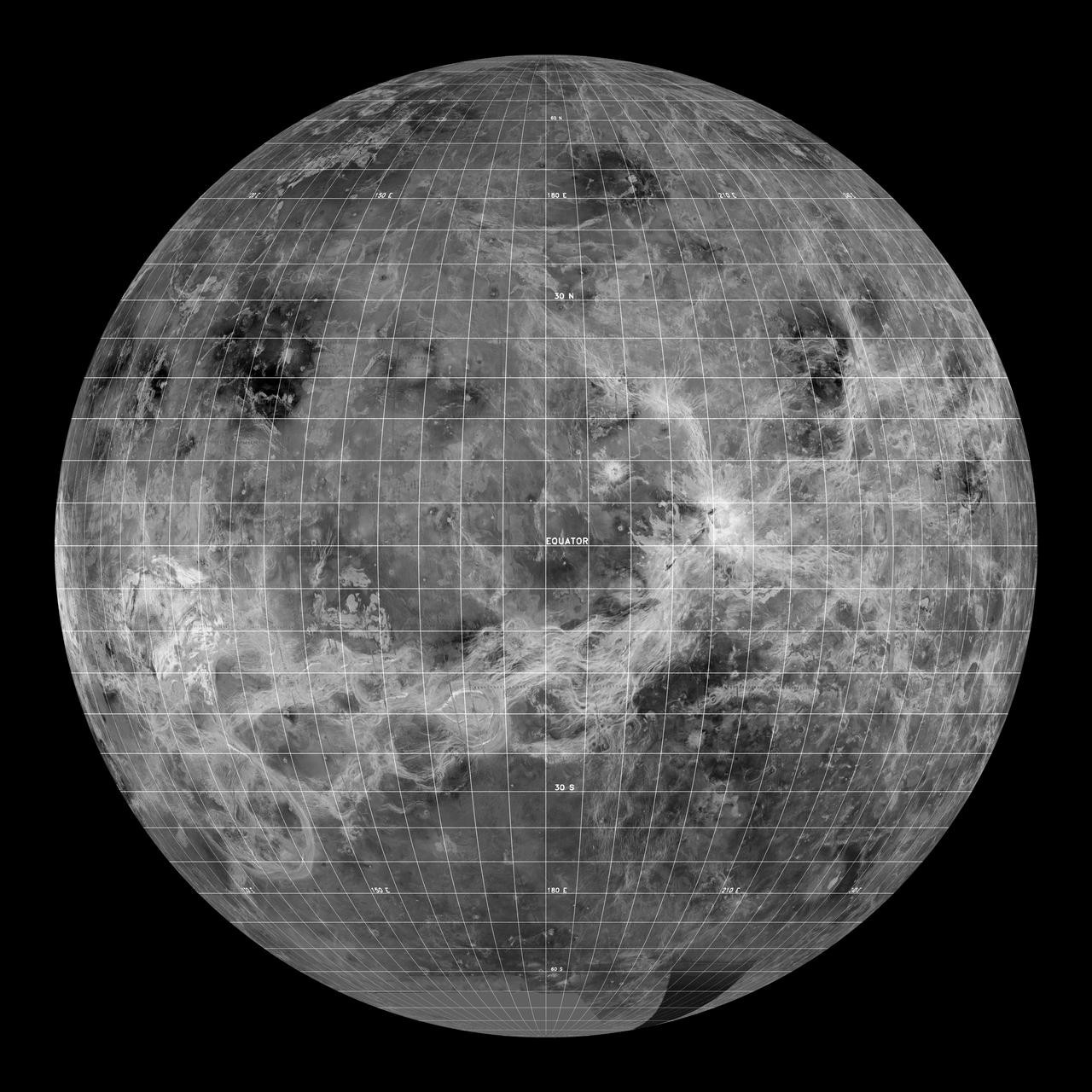
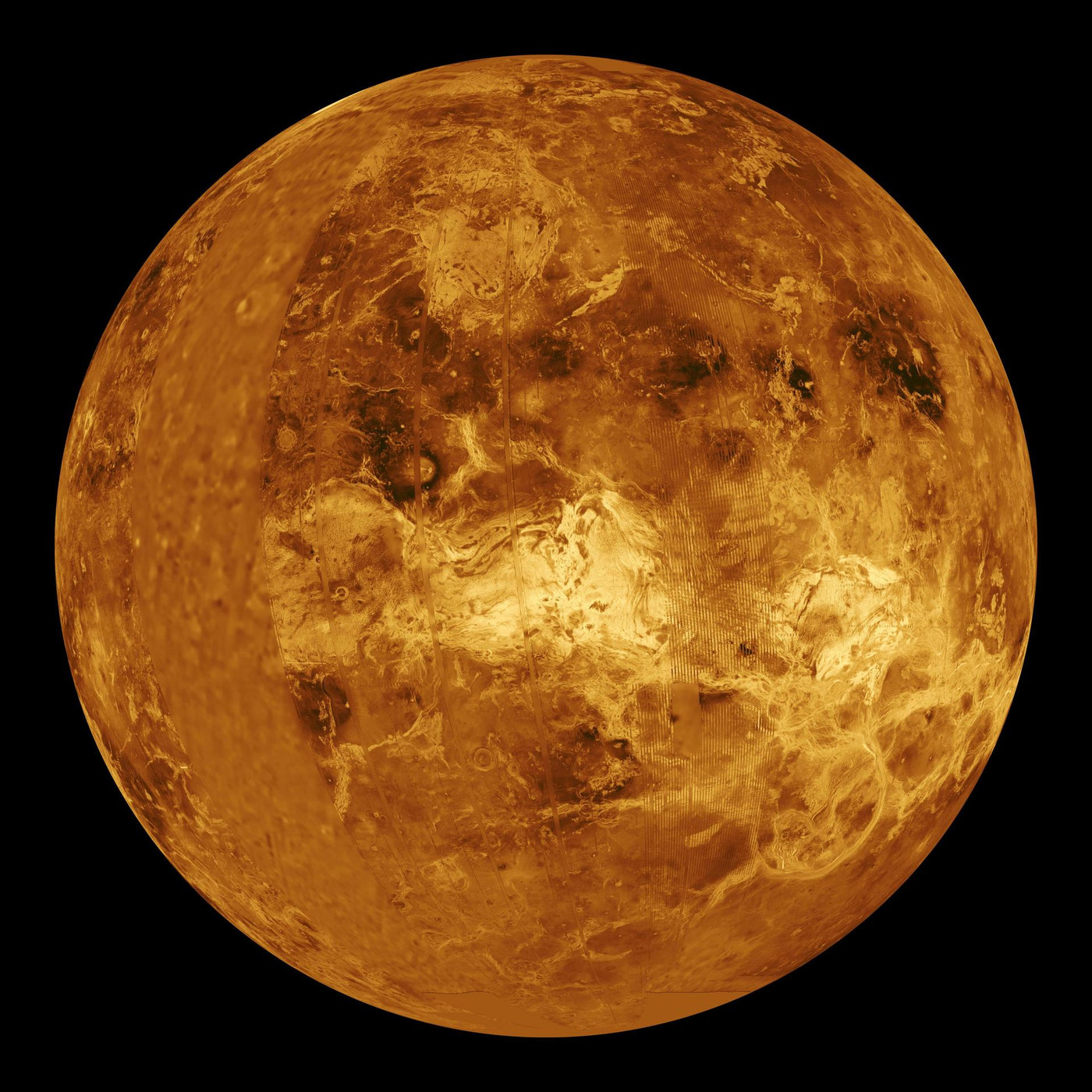
Magellan addressed another part of the problem with radar. Radio waves penetrated the clouds and returned echoes from the terrain, revealing plains, mountains and volcanic structures. The familiar orange radar landscapes use assigned colours; the shapes and radar measurements carry the geological information. The greenhouse explanation comes from atmospheric physics, not from the image’s orange appearance. [2] [3]
Today’s furnace leaves a question about the past
Venus and Earth are close in size, yet their present surfaces could hardly be more different. Comparing them requires reconstructing how each planet’s gases, rocks, water and energy budget evolved. Similar diameter does not guarantee a similar history, and the present atmosphere does not uniquely reveal its starting conditions. [4] [1]
Reanalysed Magellan images have revealed changes in volcanic features consistent with recent activity. Such observations connect the solid planet to the atmosphere: eruptions can supply gases, while weathering and other reactions can remove or transform them. The rates of those exchanges are part of the long climate history scientists want to recover. [4] [1]
The immediate answer to Venus’s heat is nevertheless clear. Its bright clouds limit incoming energy, while its massive atmosphere determines the large temperature difference between the ground and the region radiating to space. Mercury has the closer orbit; Venus has the atmosphere that keeps its surface far hotter. [4] [1]
Sources & image credits
Related reading and objects
How radar draws a hidden planet
Magellan travelled to Venus aboard the STS-30 mission, then mapped a surface hidden beneath global cloud. Its radar images are measurements of returning radio signals. Learning to read them begins by separating a strong echo from a high mountain.
Why Venus’s clouds outrun the planet
Akatsuki observed Venus at ultraviolet and infrared wavelengths to follow weather at different heights. Its target was a striking mismatch: the solid planet takes about 243 Earth days to rotate, while winds near the cloud tops can circle it in only a few days.