
NET June 2028.
Update ↗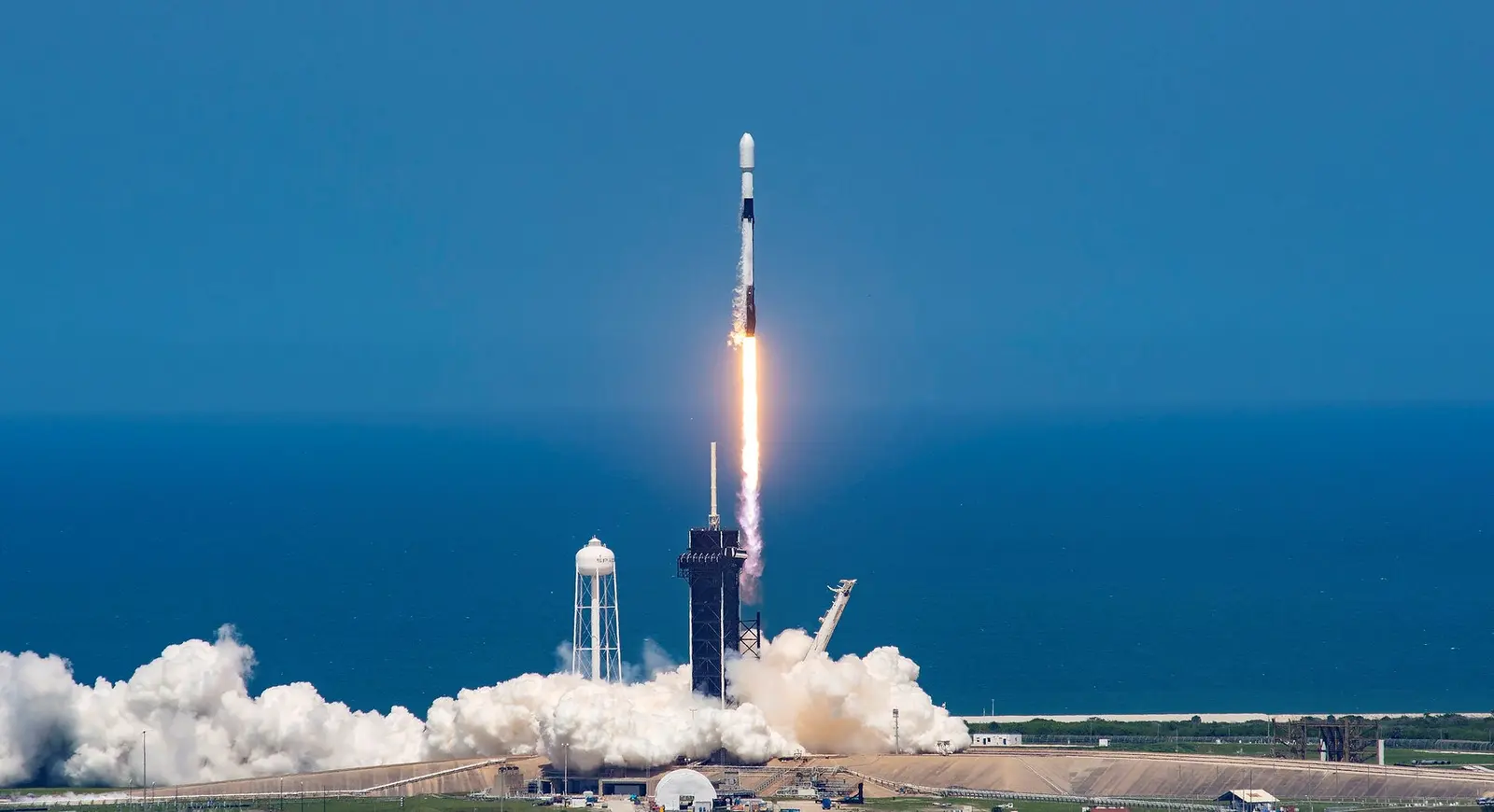
SpaceX日程未定
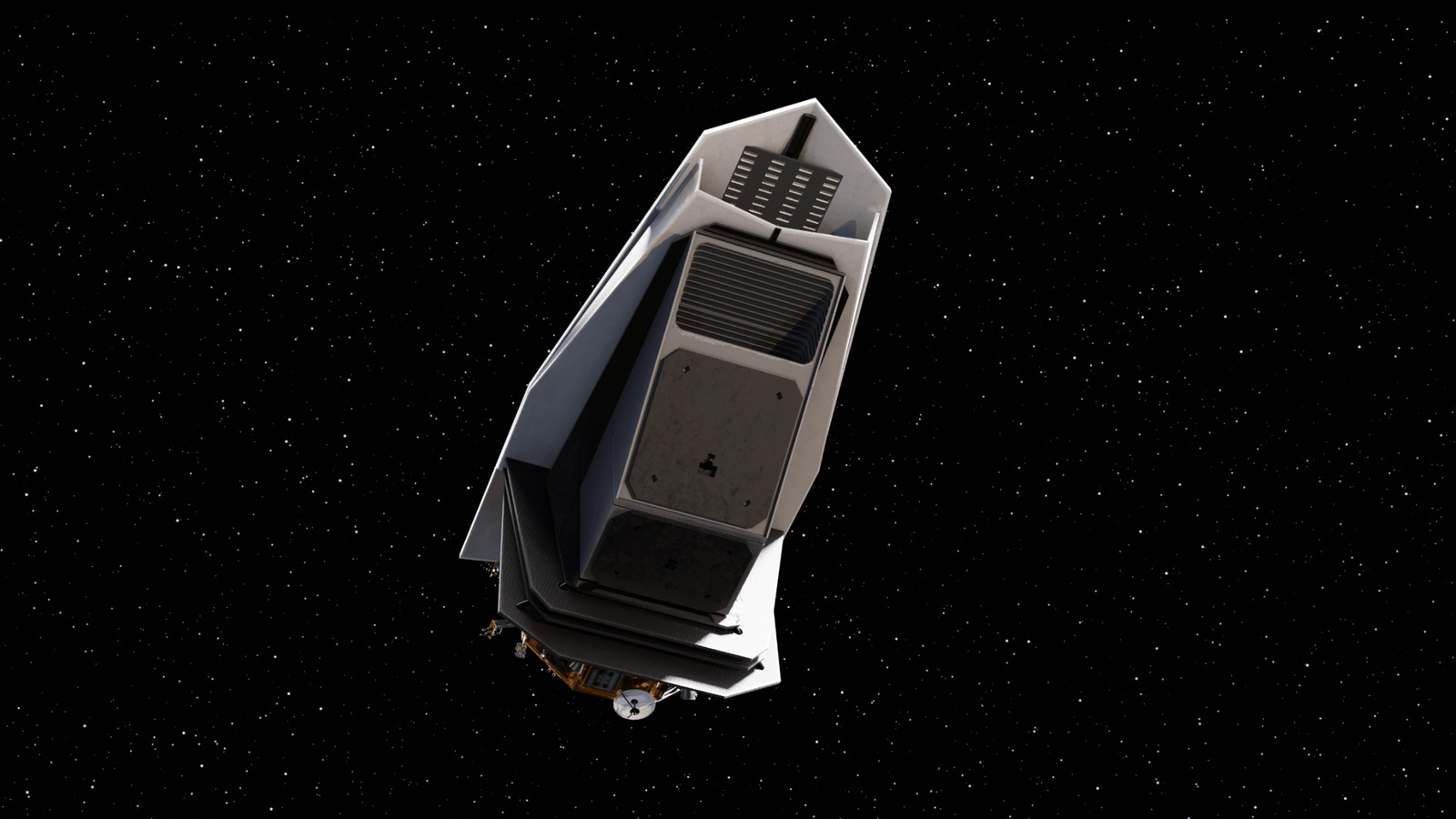
NEO Surveyor
Falcon 9 Block 5
ミッションの目的概要は英語
NASA's Near-Earth Object (NEO) Surveyor mission is designed to help advance planetary defense efforts to discover and characterize most of the potentially hazardous asteroids and comets that come within 30 million miles of Earth’s orbit. These are collectively known as near-earth objects, or NEOs. NEO Surveyor consists of a single scientific instrument: a 50 centimeter (nearly 20 inch) diameter telescope that operates in two heat-sensing infrared wavelengths. It will be capable of detecting both bright and dark asteroids, which are the most difficult type to find.
2028年6月・日付未定
保存したミッションはマイページで確認できます。 リマインダーや予定変更の通知を受け取るには、iPhoneアプリでこのミッションをフォローしてください。
公表されている予定
2028年6月。日付と時刻は未定です。
発表元の更新:
発表元を確認:Launch Library ↗
ミッションの更新
このページを表示している間、予定の変更を確認します。
このタブを開いて表示している間だけ、通知を受け取れます。
目標時刻まで
日時未定
打ち上げ予定は変更される場合があります。
発射場所Cape Canaveral SFS, FL, USA
関連記事・英語
Why does an asteroid hunter need shade?
NEO Surveyor will look for the heat of dark asteroids. Its telescope must keep sunlight and spacecraft heat from spoiling the view.
In this report
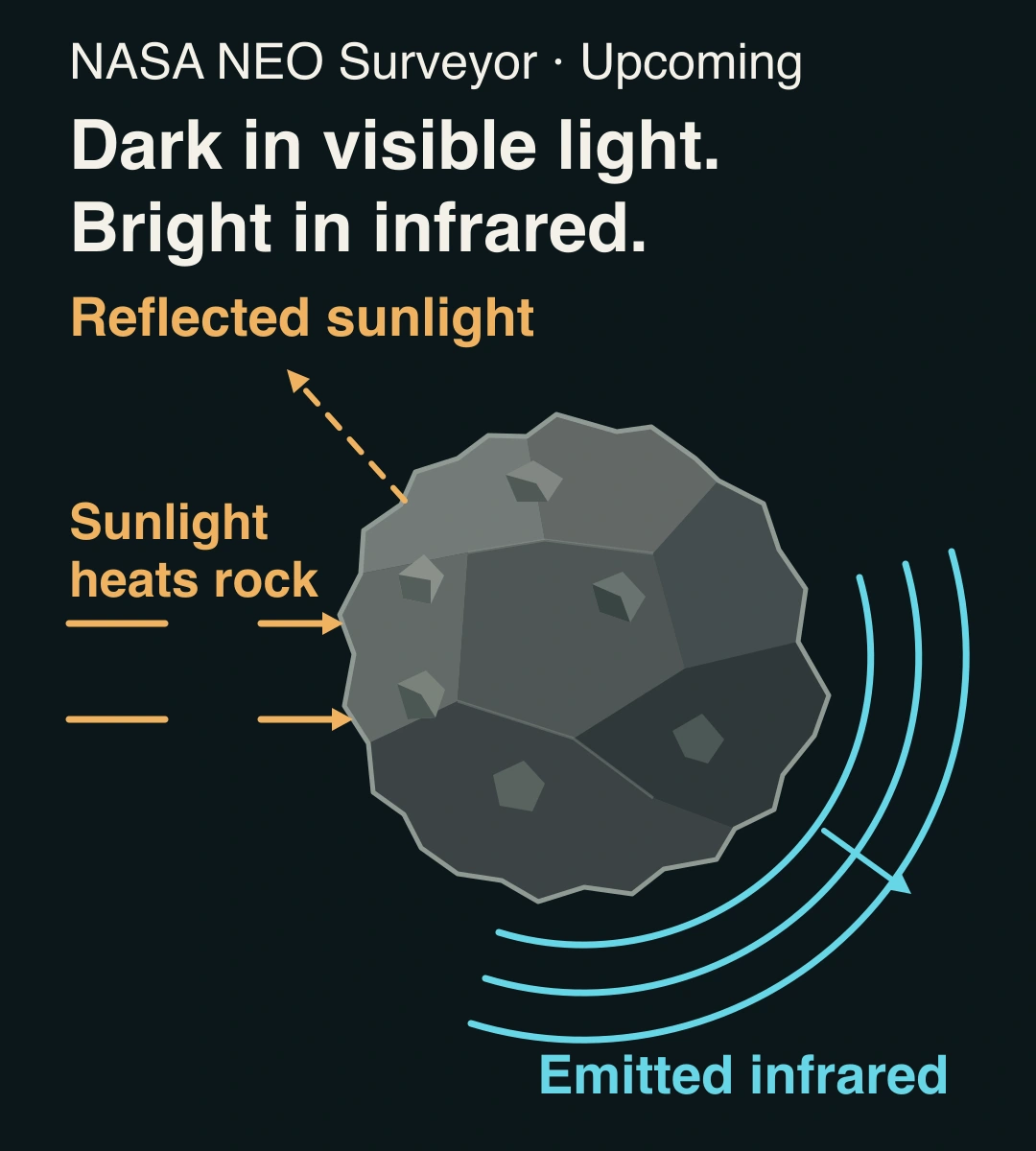
NASA’s upcoming NEO Surveyor will search for asteroids by the infrared light they emit after being warmed by the Sun. Its latest sunshade milestone poses an apparent puzzle: why does a telescope built to find warm objects need a large shield against sunlight? The answer starts with whose heat reaches the detector. [1] [3]
Sunlight supplies two different signals
An optical survey measures light reflected by an asteroid. A dark surface sends relatively little visible sunlight back toward a telescope, making the object harder to find. Yet the light it absorbs still warms the rock. That energy can leave again as thermal infrared radiation, at wavelengths beyond the visible spectrum. [1] [5]
This gives an infrared survey a useful way to find objects that an optical survey can struggle to see. A dark asteroid does not need to glow visibly red for its heat to be detectable. The instrument measures infrared radiation and turns it into data; the colours used to display those data are a choice made for the image. [1] [6]
Four dots can be one moving asteroid
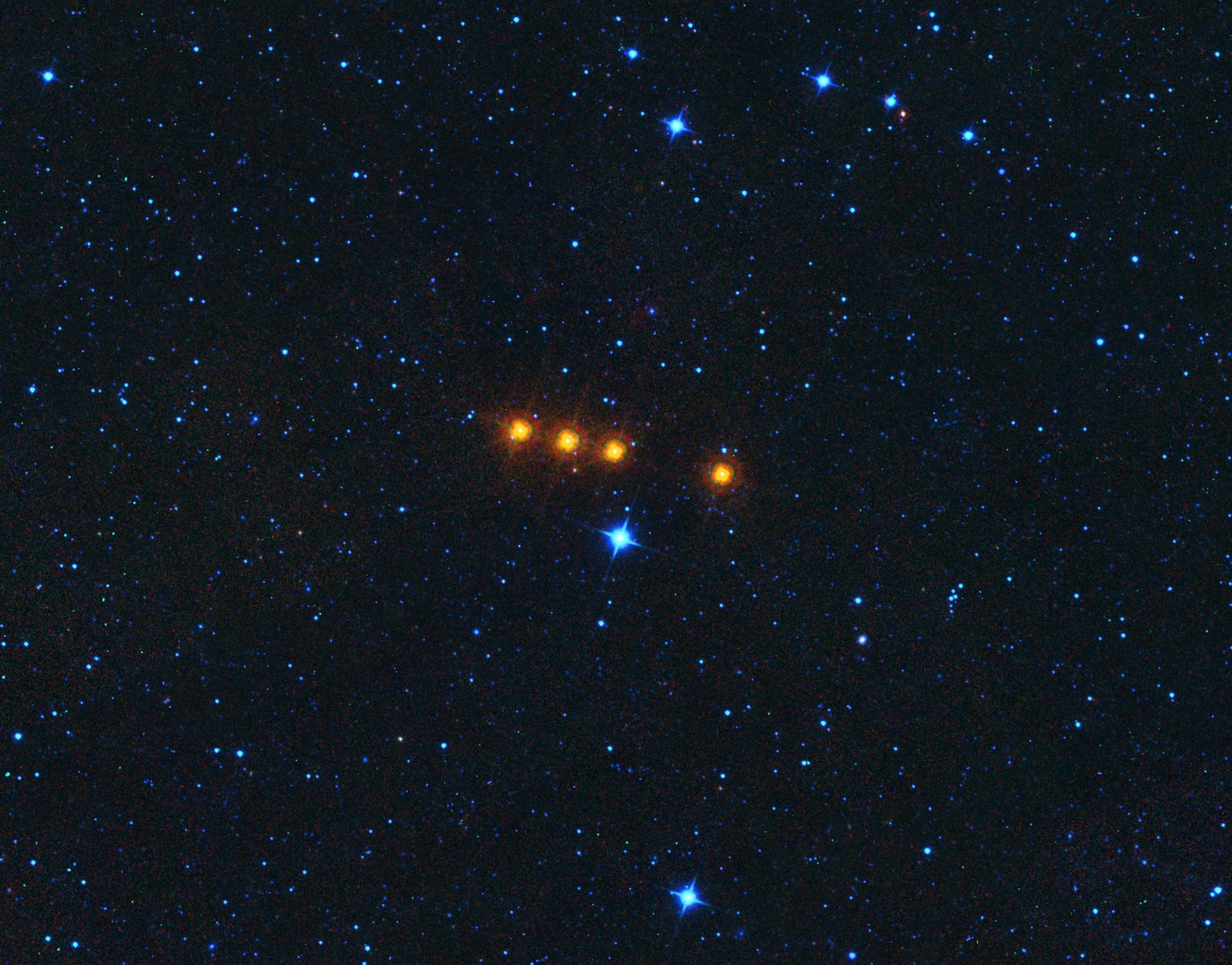
NASA’s WISE composite makes the principle visible. The red-orange points mark the main-belt asteroid Euphrosyne at four positions recorded over roughly a day in May 2010. Background stars remain in place while the asteroid moves across them. The longer-wavelength infrared signal is displayed in reddish colours, which makes the moving object easy to pick out. [6]
This is an archive observation from a different telescope, rather than an early result from NEO Surveyor. It shows both parts of a survey’s task: detect an object against the background, then connect its changing positions. A single bright point cannot, by itself, establish an orbit or a future close approach. [6] [3]
The telescope produces heat too
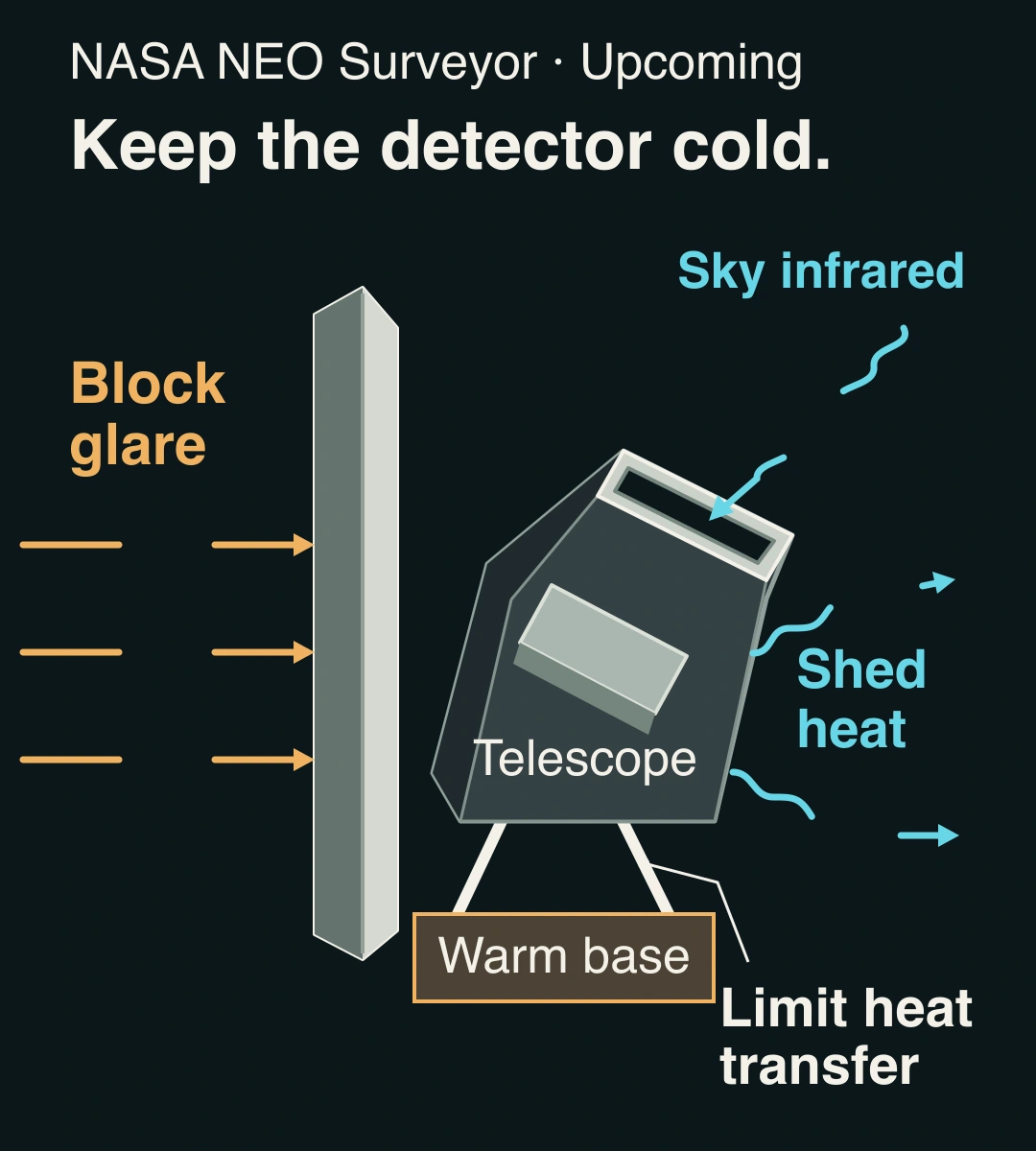
Infrared sensitivity brings an engineering problem. Heat from the spacecraft and telescope can interfere with the radiation the instrument is trying to measure. NASA’s enclosure design therefore allows heat to escape, while a system of supports limits heat passing from the spacecraft into the telescope. Keeping the instrument cold is part of making its measurements useful. [4] [5]
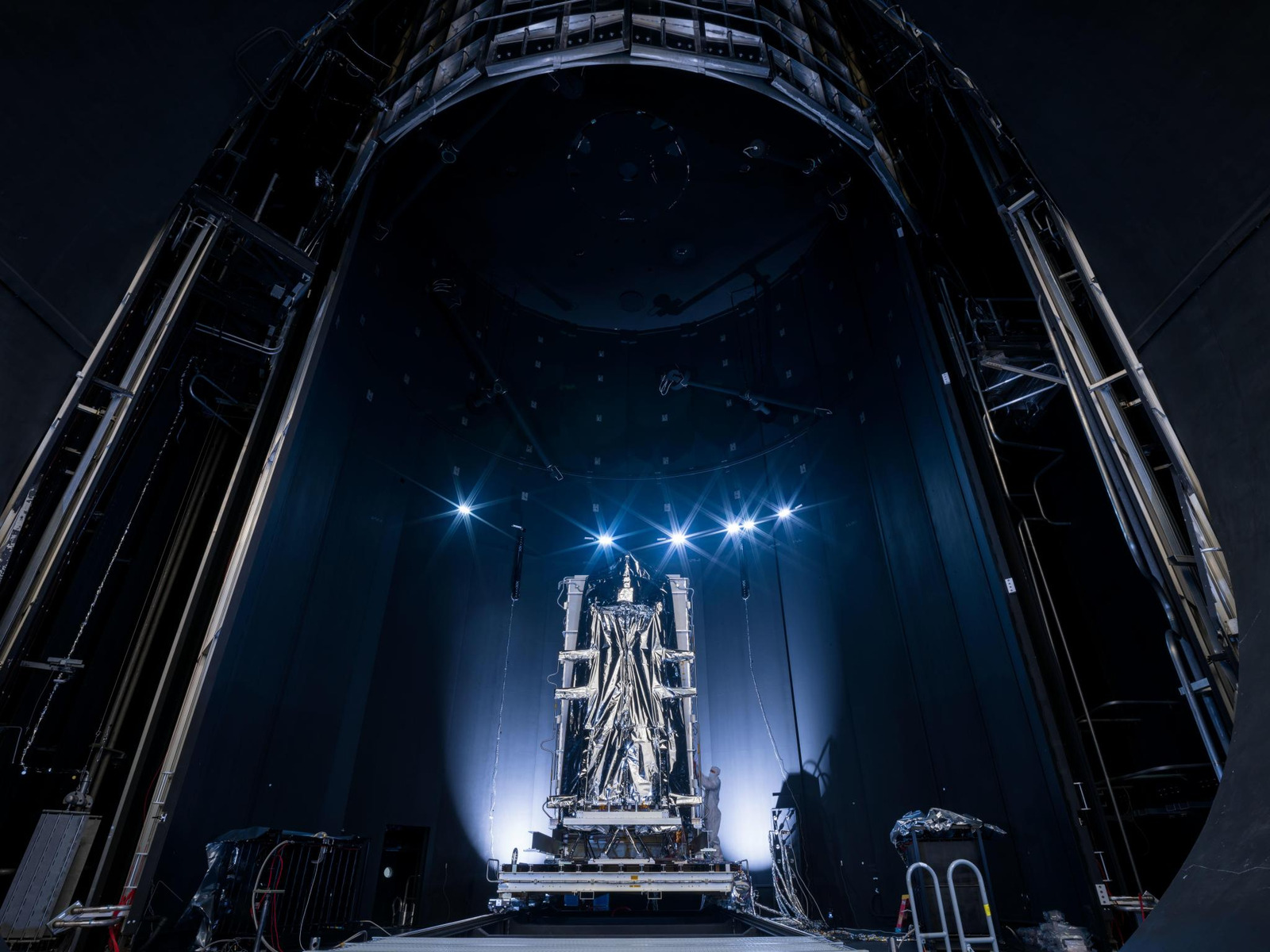
The sunshade has a separate job: block solar glare from the aperture and help keep the telescope cool. The enclosure removes heat; the supports reduce incoming heat through the structure. These are complementary measures. A shield against sunlight alone would not explain how the instrument deals with heat from the spacecraft beneath it. [3] [4] [5]
The Sun-facing side supplies power
NASA reported on 26 October 2026 that the team had completed work integrating solar arrays onto the six-metre sunshade. Those solar cells supply electricity for the spacecraft and its batteries, while the shade protects the telescope behind it. The warm, illuminated face and the protected instrument can serve different purposes within one observatory. [3]
Finding heat is the start of the measurement
NEO Surveyor’s two infrared detector bands will observe the same sky. The measurements will help estimate an object’s temperature and, from its thermal emission, its size. Repeated observations will also provide positions and motion. Together these data help characterize the population of potentially hazardous objects; finding an asteroid does not mean that it is predicted to hit Earth. [3] [5]
NASA’s programme page, updated 5 November 2026, lists a planned launch during 2028. The observatory is designed to survey for at least five years from near Sun–Earth L1, roughly 1.5 million kilometres sunward of Earth. Its current hardware reports describe a mission being assembled and tested, with the survey still ahead. [2] [5] [3]
The sunshade is there because the detector needs to distinguish an asteroid’s infrared radiation from unwanted glare and heat. The mission seeks warmer objects with a colder instrument. Protecting that contrast makes a dark rock easier to find—and gives subsequent observations something to follow. [3] [4] [5]
Watch the film
Loading the player connects to YouTube.
Follow the infrared measurement from a warm asteroid to a cold telescope, then through size estimates and orbit work on Earth.
Sources and credits (8)
- NEO Surveyor mission overviewNASA · Checked 2026-11-07
- Solar System Exploration ProgramNASA · Checked 2026-11-07
- Sunshade for NASA’s NEO Surveyor Mission Ready for Its Day in SunNASA · Checked 2026-11-07
- Work Is Under Way on NASA’s Next-Generation Asteroid HunterNASA · Checked 2026-11-07
- NASA’s Next-Gen Near-Earth Asteroid Space Telescope Takes ShapeNASA · Checked 2026-11-07
- Asteroid Euphrosyne As Seen by WISENASA · Checked 2026-11-07
- NEO Surveyor Instrument Enclosure Inside Historic Chamber ANASA · Checked 2026-11-07
- How NASA Plans to Find Dark AsteroidsSpacian · Checked 2026-11-13
ミッションのデータ
- 打ち上げ機
- Falcon 9 Block 5
- ミッションの種類
- Space Situational Awareness
- 投入先の軌道
- Heliocentric L1
- Launch pad
- Unknown Pad
- 運用機関
- SpaceX
機体の構成
公表された仕様と、この機体の飛行歴。
打ち上げ機
Falcon 9 Block 5
機体の説明・英語
Falcon 9 is a two-stage rocket designed and manufactured by SpaceX for the reliable and safe transport of satellites and the Dragon spacecraft into orbit. The Block 5 variant is the fifth major interval aimed at improving upon the ability for rapid reusability.
- 高さ
- 70 m
- 直径
- 3.65 m
- 段数
- 2
- 記録された打ち上げ数
- 646
- 初飛行
- 2018-05-11
打ち上げ可能時間帯
詳しい打ち上げ可能時間帯は、まだ公表されていません。
発射場所
Cape Canaveral SFS, FL, USA
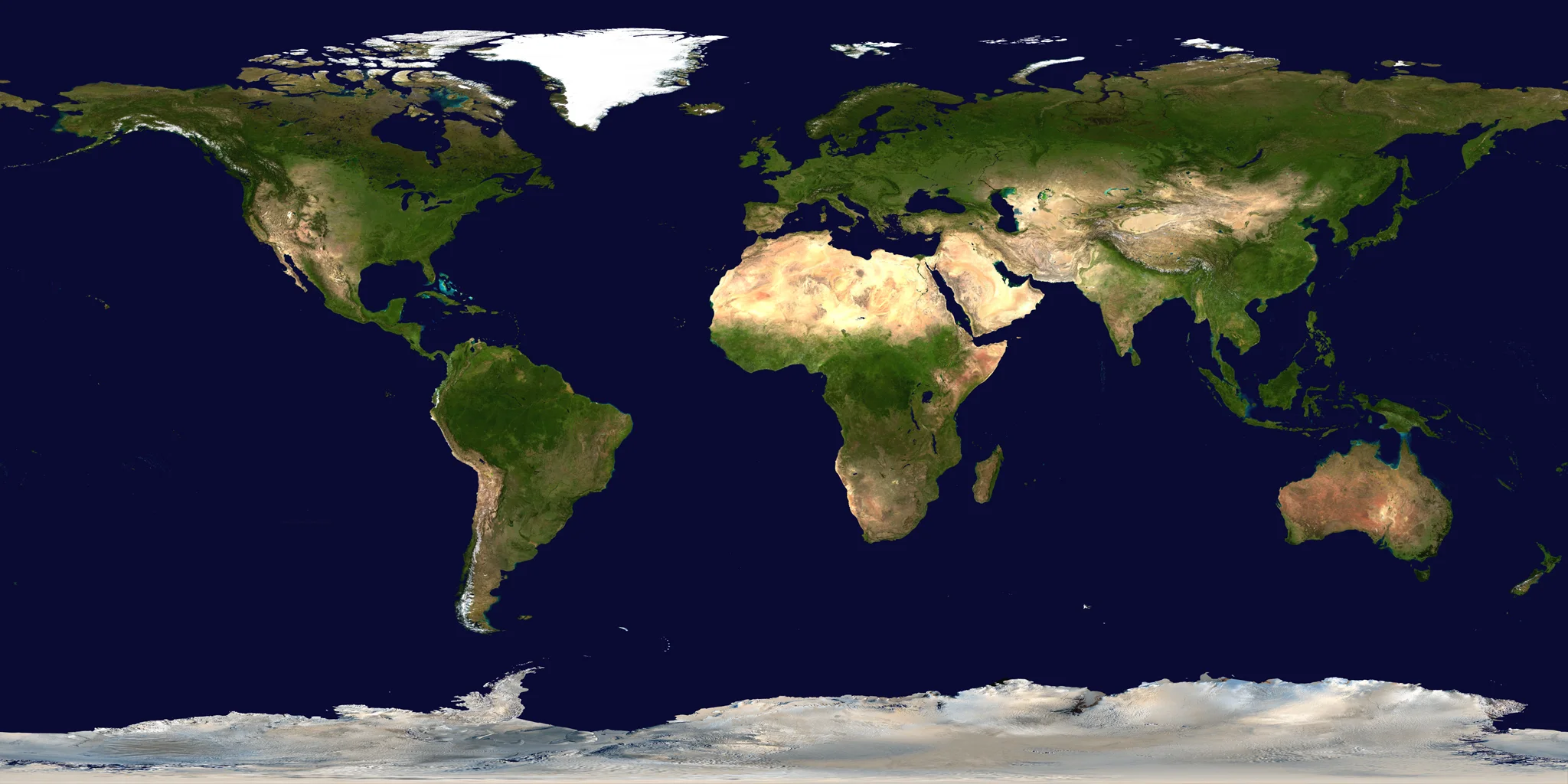
発射場所Unknown Pad
Drag to rotate
この表示について
Published destination: Heliocentric L1.
NASA geography with illustrative lighting. No live tracking or simulated ascent. NASA Blue Marble source.
現地で見る
見学前に確認すること
Check the visitor complex’s viewing options, admission and availability for this specific launch.
延期に備えて日程に余裕を持ち、当日も予定時刻、現地の天気、道路の規制を確認してください。
Kennedy Space Center launch viewing ↗出発前の確認
- 予定日時と打ち上げ可能時間帯を確認する。
- 公式の見学場所と、予約の要否を確認する。
- 許可された見学場所を利用する。発射台へ向かわない。
- 現地で見られない場合に備えて、配信のリンクを控えておく。
中継・出典
ミッションの中継
配信リンクは、まだ公開されていません。
関連する資料
Launch Library Android テスト版参加グループを開く クローズドテスト版1.6.0(4)では、サインイン、プレミアム、通知を利用できません。まずGoogleグループに参加し、同じGoogleアカウントでGoogle Playのテストに登録 ↗してください。