
Adding launch NET late 2027
Update ↗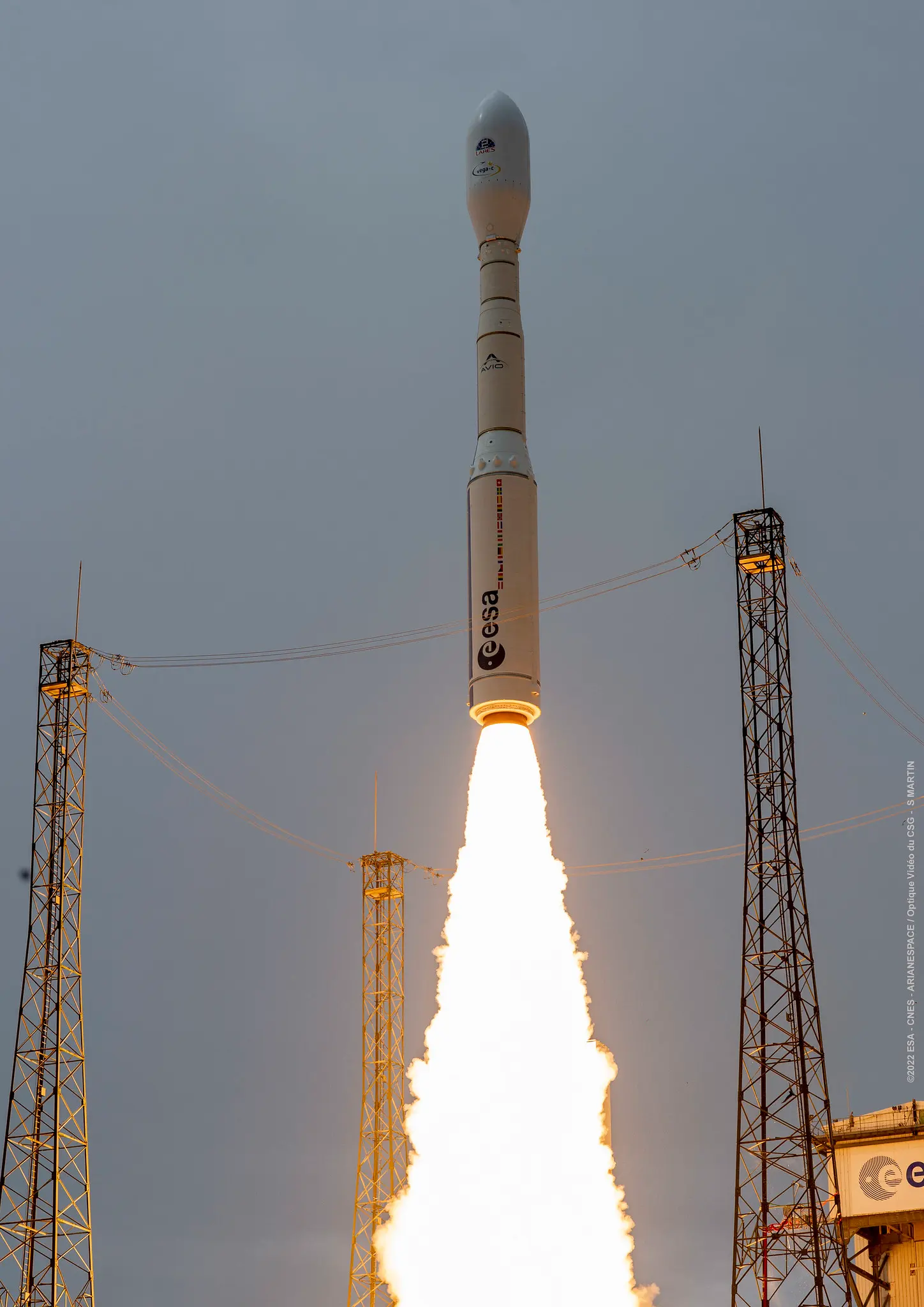
Avio S.p.ATo Be Determined
CRISTAL-A
Vega-C
CRISTAL-A is the first of two Copernicus satellites designed to measure sea-ice thickness, snow depth and ice-sheet elevation with a dual-frequency radar altimeter and a microwave radiometer. Assembly was completed at Airbus in September 2026, followed by solar-array deployment and launch-adapter checks. ESA plans environmental qualification in the Netherlands before a launch targeted for late 2027 to early 2028. CRISTAL-B is intended to continue the record near the end of the first spacecraft’s operating life.
Date to be confirmed
Has a launch date been confirmed?
A confirmed launch date has not been published in this record.
Source record updated
Check the source: Launch Library ↗
What changed?
Checks for schedule changes while this page is visible.
Time to target
Target pending
Launch target may change.
LAUNCH SITEGuiana Space Centre, French Guiana
CRISTAL-A prepares for launch: why its ice radar also measures snow
The future Copernicus satellite has completed panel-deployment and launch-adapter checks. Environmental qualification is next, ahead of ESA’s late-2027 to early-2028 launch target.
In this report
A spacecraft moving toward flight
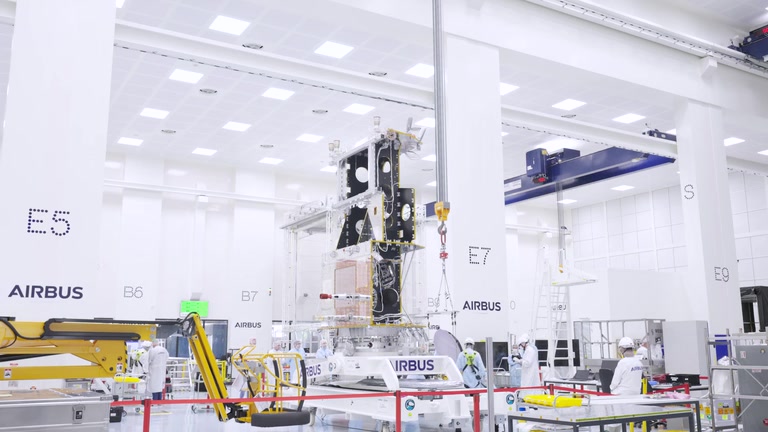
CRISTAL-A has taken another step toward launch. ESA reported on October 26 that the Copernicus spacecraft finished assembly at Airbus in September, then passed solar-array deployment and launch-adapter fit and release checks with Avio. Environmental qualification at ESA in the Netherlands is the next phase, with launch targeted for late 2027 to early 2028. [2]
Spacian’s current launch record lists CRISTAL-A on Vega-C. That vehicle listing comes from the mission-data provider; ESA’s latest test report gives the target interval without identifying a launcher. The adapter checks concern a practical handover: keeping the spacecraft attached to its ride to orbit, then releasing it. They do not establish an exact launch date. [1] [2]
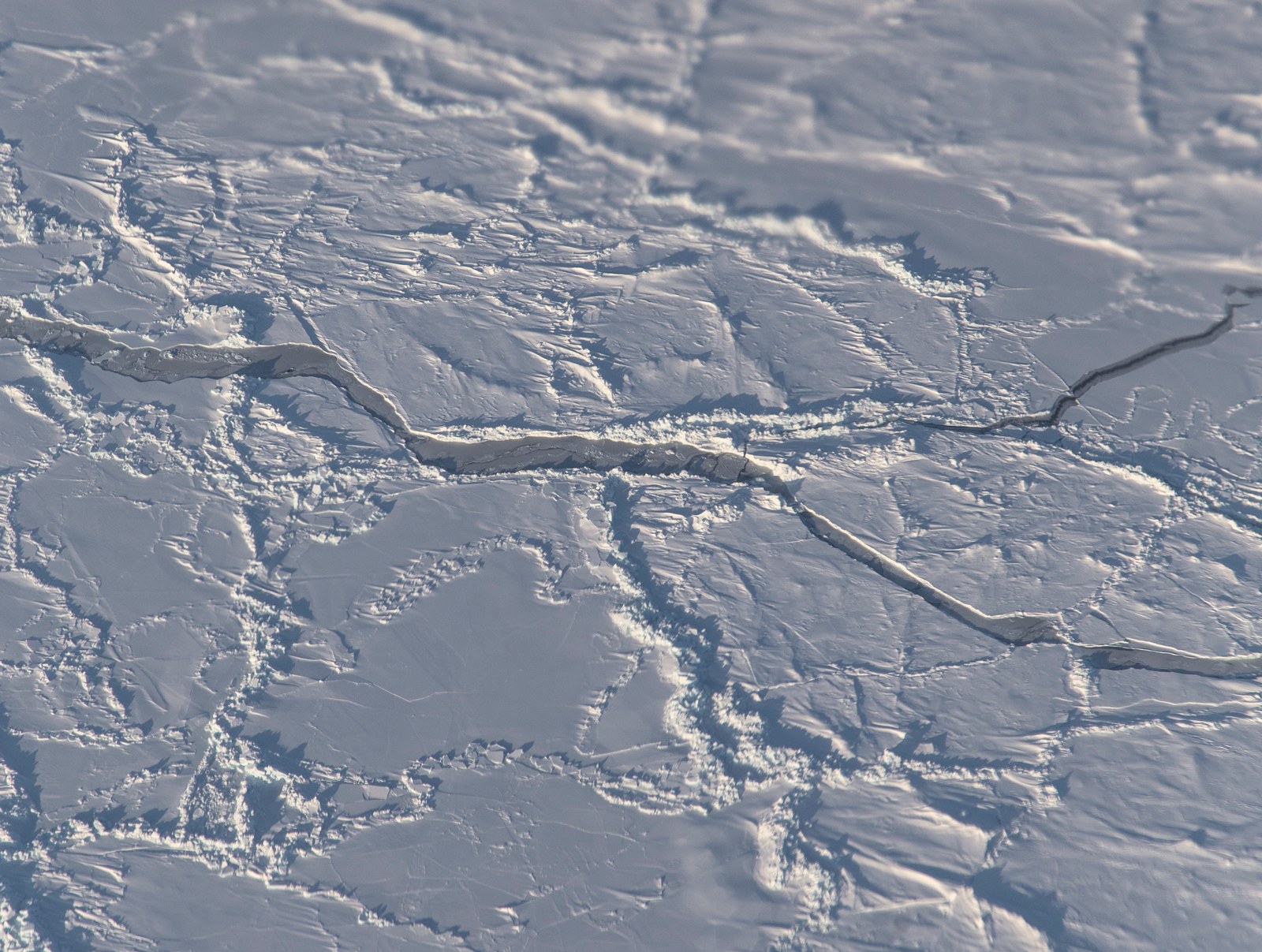
A satellite can measure a distance remarkably well and still need more information to estimate the thickness of floating sea ice. Snow changes the surface being observed and adds weight to the ice below. CRISTAL-A is being built to measure that snow alongside the ice, making the overlying layer part of the observation rather than only an outside assumption. [4] [3]
What lies between an echo and a thickness estimate
NASA’s ICESat-2 illustrates the interpretation problem. Its laser measures the height of the first surface that returns the light, which may be bare ice or the snow covering it. Scientists combine those heights with other information to estimate ice thickness. In a 2020 account, NASA described using modelled snowfall and comparisons with radar measurements to investigate differences between the resulting estimates. [4]
CRISTAL’s IRIS instrument approaches the problem with radar at two frequencies: Ku band at 13.5 GHz and Ka band at 35.75 GHz. The two measurements provide information for retrieving both snow depth and sea-ice thickness. A passive microwave radiometer adds information about surface type and snow-layer properties. The instruments are complementary; the radar does not simply look through to the submerged bottom of an ice floe. [3]
The processing is part of the mission’s capability. Researchers working on the CLEV2ER prototypes are studying how snow properties affect radar penetration and how to estimate uncertainty in the retrieved heights. Two frequencies do not make those questions disappear. They provide a richer observation from which to separate the effects of the snow and ice. [3]
One spacecraft, then another
The planned pair serves a longer record. ESA’s mission design places CRISTAL-B near the end of CRISTAL-A’s operating life, with the second spacecraft replacing the first before its seven-year-plus lifetime finishes. This is a succession plan for continuing observations, rather than an assertion that both satellites must launch together. [5]
That continuity matters beyond making a new polar map. The mission is intended to support navigation and other maritime activities in polar waters, observations of ice-sheet elevation, and applications involving coastal and inland water. Repeated measurements are what allow a change in height or thickness to become a record that users can examine over time. [5]
The next proving ground is on Earth
ESA’s latest target is late 2027 to early 2028. Before then, the assembled spacecraft must pass its environmental campaign. A successful panel deployment on the ground establishes one useful piece of evidence; qualification of the complete spacecraft is the next phase. The mission’s measurement capability remains planned, not a result already delivered from orbit. [2]
Sources and credits (6)
- Complete CRISTAL-A mission and vehicle recordSpacian / Launch Library · Checked 2026-10-28
- CRISTAL completes assembly and deployment checksESA · Checked 2026-10-28
- IRIS dual-band measurements and their processingCentre for Polar Observation and Modelling · Checked 2026-10-28
- Why height measurements need snow informationNASA · Checked 2026-10-28
- Two spacecraft for a continuing ice recordESA · Checked 2026-10-28
- CRISTAL AMR-CR integration, June 2025ESA · Checked 2026-10-28
Mission facts
- Launch vehicle
- Vega-C
- Mission type
- Earth Science
- Destination orbit
- Sun-Synchronous Orbit
- Launch pad
- Ariane Launch Area 1 (ELV)
- Provider
- Avio S.p.A
- Programs
- Copernicus
The vehicle
Published configuration and flight history.
Launch vehicle
Vega-C
Vega-C is a single-body rocket nearly 35 m high with that weighs 210 tonnes on the launch pad. As with Vega, its main elements are three solid-propellant stages, an upper stage powered by a reignitable liquid-propellant engine and a payload fairing. Vega-C's P120C first stage replaces Vega’s smaller P80 to provide a significant increase in thrust at liftoff. It is also used as boosters (2 or 4) for the Ariane 6 rocket.
- Height
- 34.8 m
- Diameter
- 3 m
- Stages
- 4
- Recorded launches
- 8
- First flight
- 2022-07-13
Launch window
A calendar entry will be available when a date is confirmed.
A precise launch window has not been published.
Launch site & orbit
Guiana Space Centre, French Guiana
The mission in perspective
Launch site & orbit
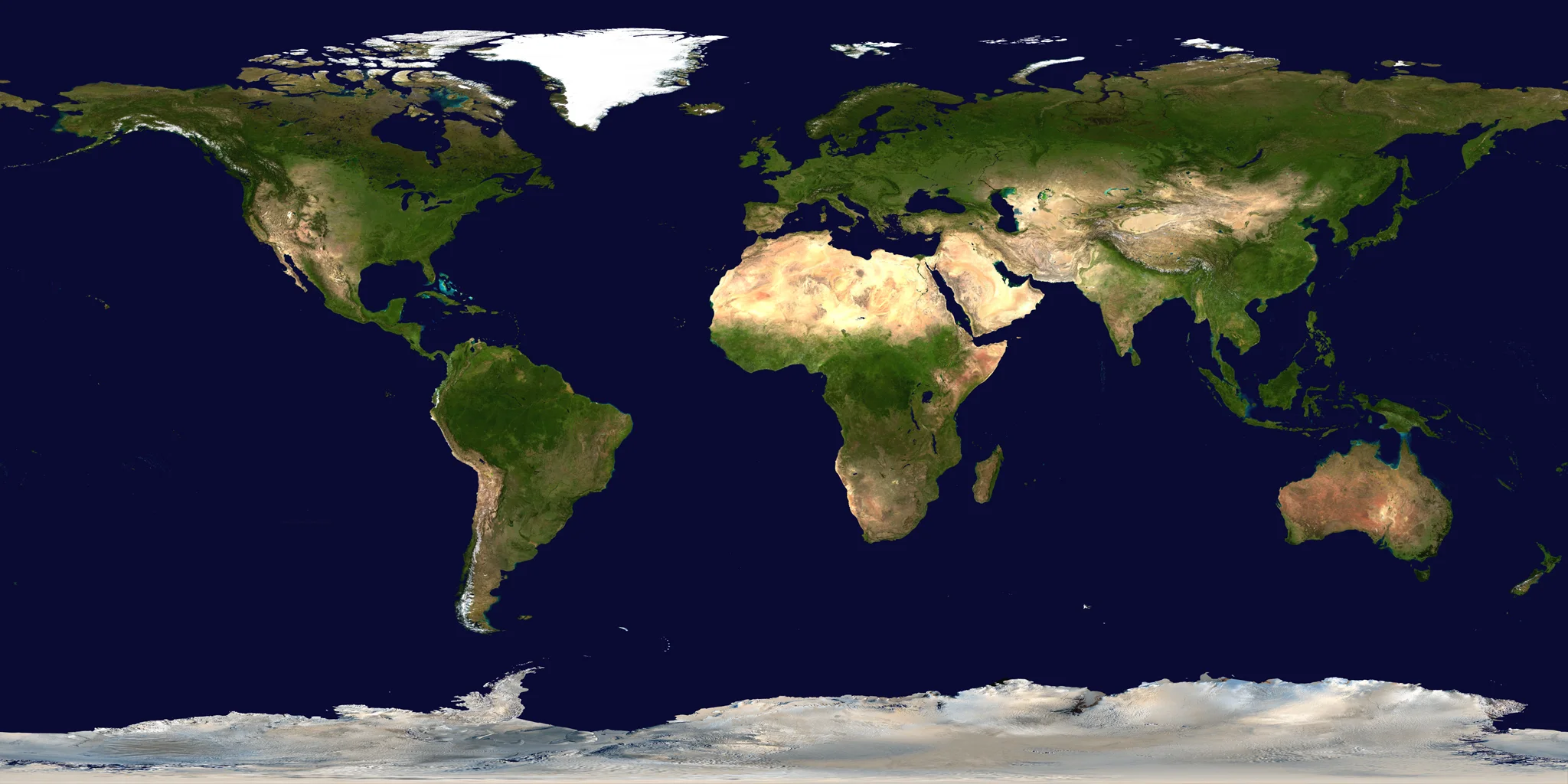
Explore the launch pad, then pull back to see the shape of the destination orbit.
Understand this orbitExplore Earth & Moon · this mission view is an illustration
Coverage & sources
Mission coverage
No viewing link has been published yet.
Further reading
Launch Library ↗Follow on iPhone
Get reminders and schedule-change alerts. One active mission free.
Open mission in Spacian ↗