

Mercury
Mercury combines a strongly heated dayside with polar craters whose floors remain permanently shaded. Radar reflections, MESSENGER’s hydrogen measurements and temperature models support deposits of water ice in these cold traps. Its low axial tilt makes that contrast possible: proximity to the Sun does not illuminate every piece of ground. The polar deposits preserve a record of volatile delivery and survival on a largely airless rocky planet.
- Mean diameter
- 4,879 km
- Rotation
- 58.65 Earth days
- Year
- 0.24 Earth years
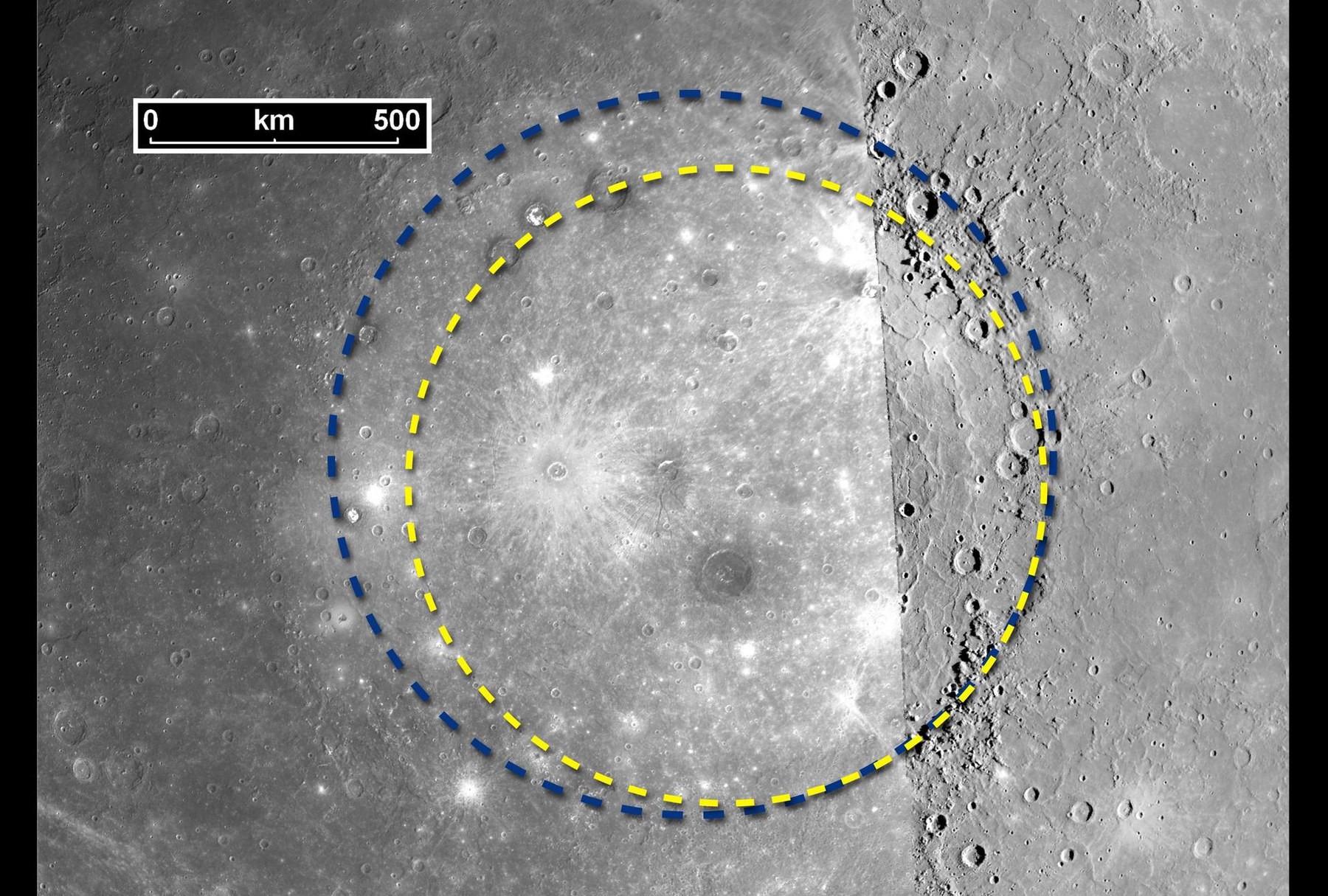
Caloris basin
An impact followed by lava
A basin about 1,550 kilometres wide preserves a sequence of impact, lava flooding and younger craters. Read the overlapping terrain in MESSENGER’s observations.
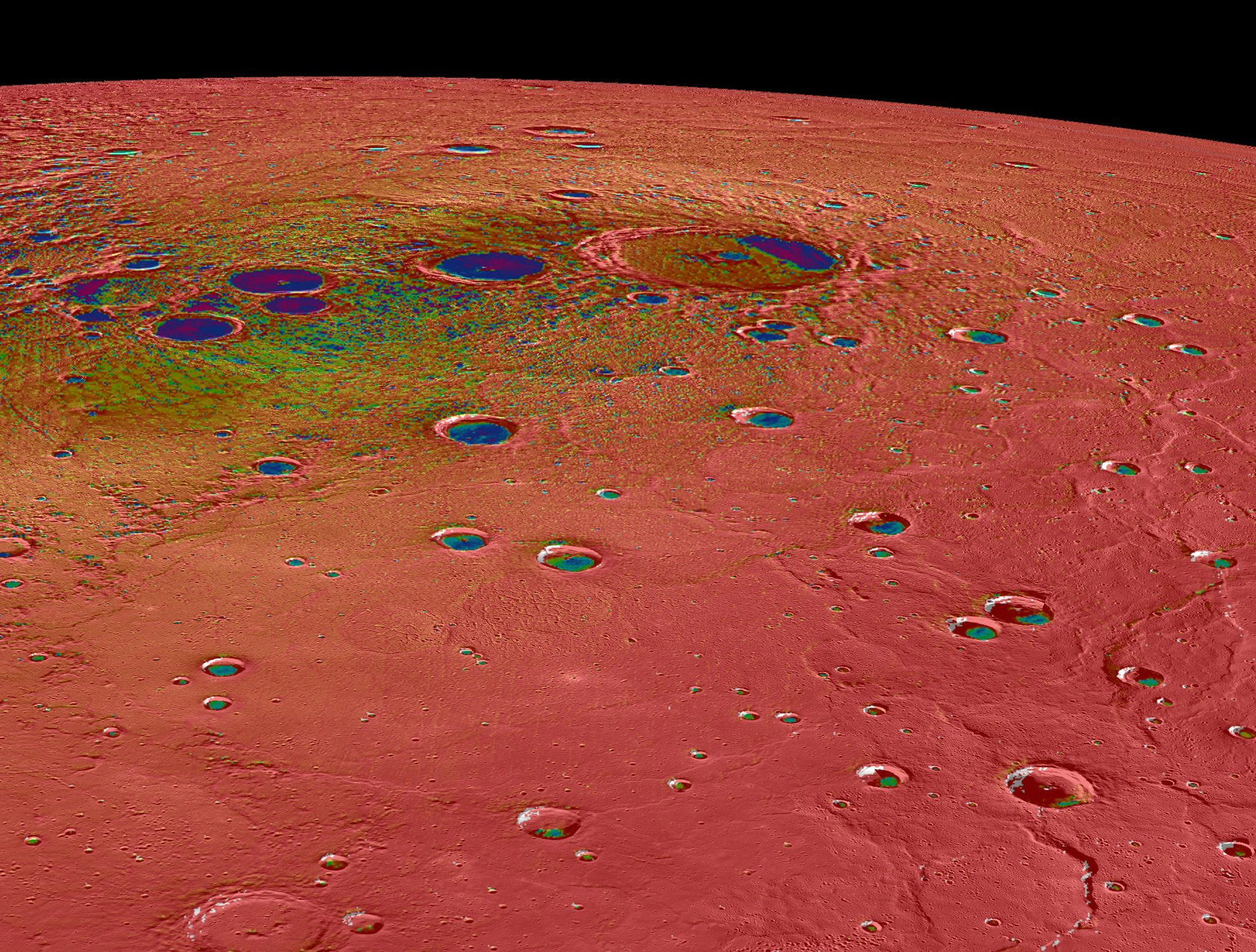
Polar cold traps
Water ice near the Sun
Radar echoes, hydrogen measurements and thermal models agree: permanently shadowed crater floors can preserve water ice even on the innermost planet.
A 176-day solar day
Three rotations, two orbits
Mercury turns three times in every two orbits. Its long illumination cycle and nearly upright axis help explain both hot plains and protected polar ice.
More investigations
Through the instruments
Open an image for the full frame and its source.
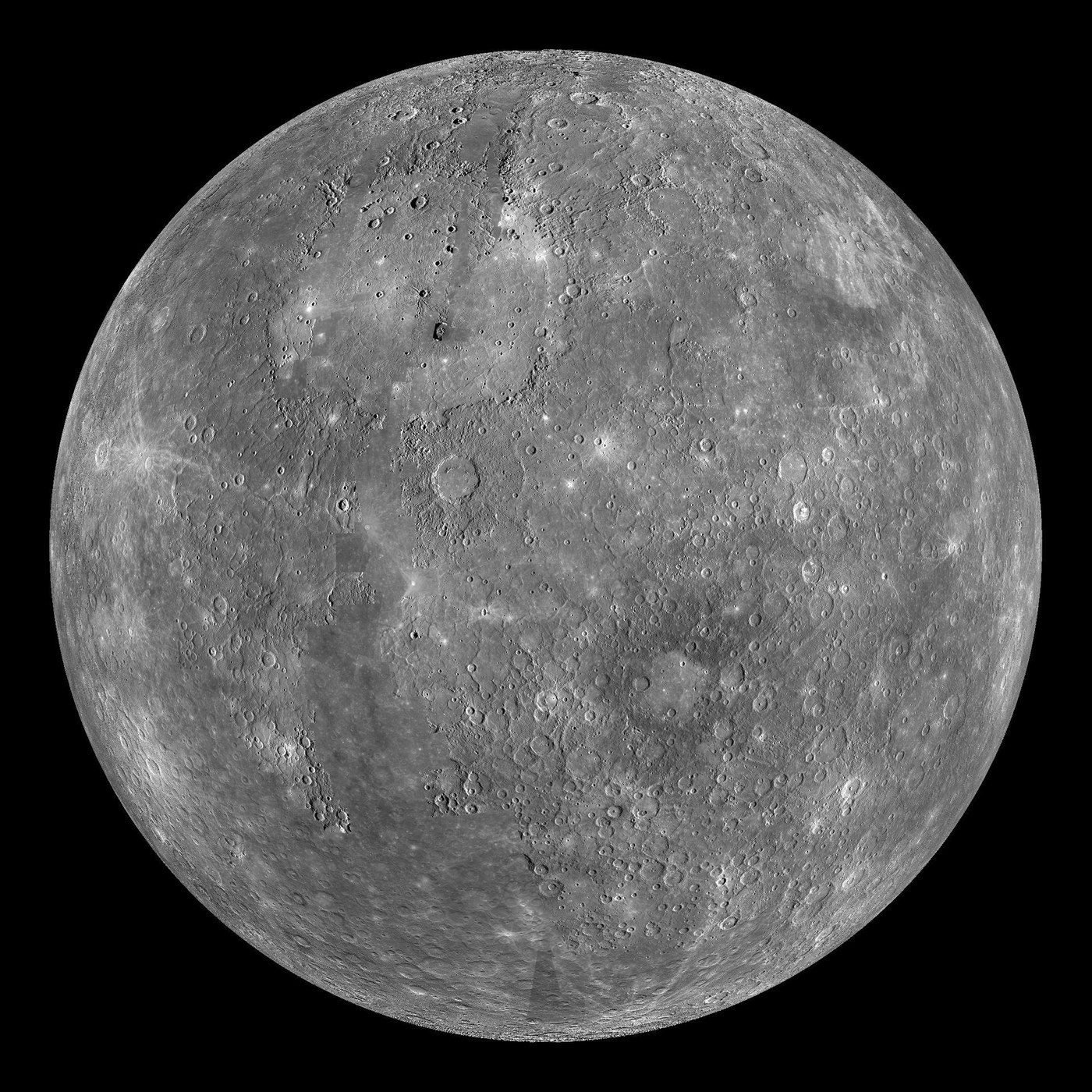
Mercury’s cratered hemisphere
NASA/Johns Hopkins University Applied Physics Laboratory/Carnegie Institution of WashingtonCaloris basin
NASA/Johns Hopkins University Applied Physics Laboratory/Carnegie Institution of Washington/Brown UniversityMercury’s polar cold traps
NASA/Johns Hopkins University Applied Physics Laboratory/Carnegie Institution of WashingtonRadar-bright ice deposits marked in yellow on Mercury’s north-polar map
NASA/Johns Hopkins University Applied Physics Laboratory/Carnegie Institution of WashingtonMissions & milestones
3 launch records · 11 linked events
14 related records
BepiColombo Mercury Orbit Insertion
November 2026 · date to be confirmed
European Space AgencyBepiColombo Mercury Arrival
September 3, 2026 · UTC
European Space AgencyBepiColombo Mercury Flyby
January 8, 2025 · UTC
European Space AgencyBepiColombo Mercury Flyby
December 1, 2024 · UTC
European Space AgencyBepiColombo Mercury Flyby
September 4, 2024 · UTC
European Space AgencyBepiColombo Mercury Flyby
June 20, 2023 · UTC
BepiColombo Mercury Flyby
June 23, 2022 · UTC
BepiColombo Mercury Flyby
October 1, 2021 · UTC
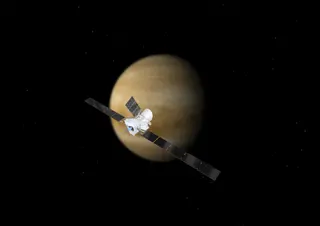
BepiColombo Venus Flyby
August 10, 2021 · UTC
BepiColombo Venus Flyby
October 15, 2020 · UTC

BepiColombo Earth Flyby
April 10, 2020 · UTC
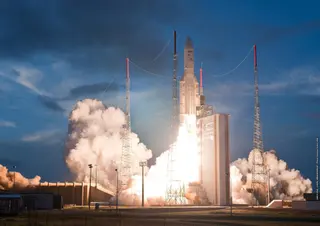
BepiColombo
October 20, 2018 · UTC
Arianespace · Ariane 5 ECA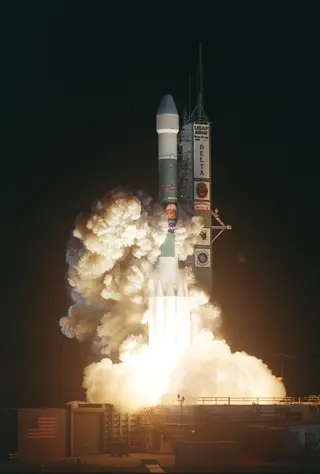
Messenger
August 3, 2004 · UTC
United States Air Force · Delta II 7925H-9.5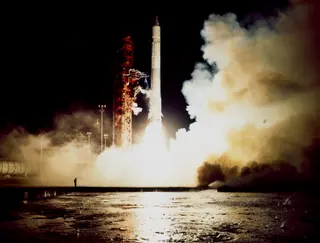
Mariner 10
November 3, 1973 · UTC
United States Air Force · Atlas SLV-3D CentaurNo records match these filters.
Programs (1)
About these records
The source cohort includes dedicated missions, attempts and reviewed scientific flybys or gravity assists. Launch outcomes describe the recorded flight. They do not establish whether an old spacecraft is operating today. Events show published targets unless the record confirms an outcome.