

Uranus
Uranus rotates on an axis tilted almost into its orbital plane, giving it extreme seasonal illumination. A season lasts about 21 Earth years, while a pole can experience roughly 42 years between sunrise and sunset. Long-term telescope observations track the resulting atmospheric changes. New energy-budget work reported in 2025 also found more internal heat than earlier estimates suggested, changing the comparison with the other giant planets.
- Mean diameter
- 50,724 km
- Rotation
- About 17.2 h
- Year
- 84.02 Earth years
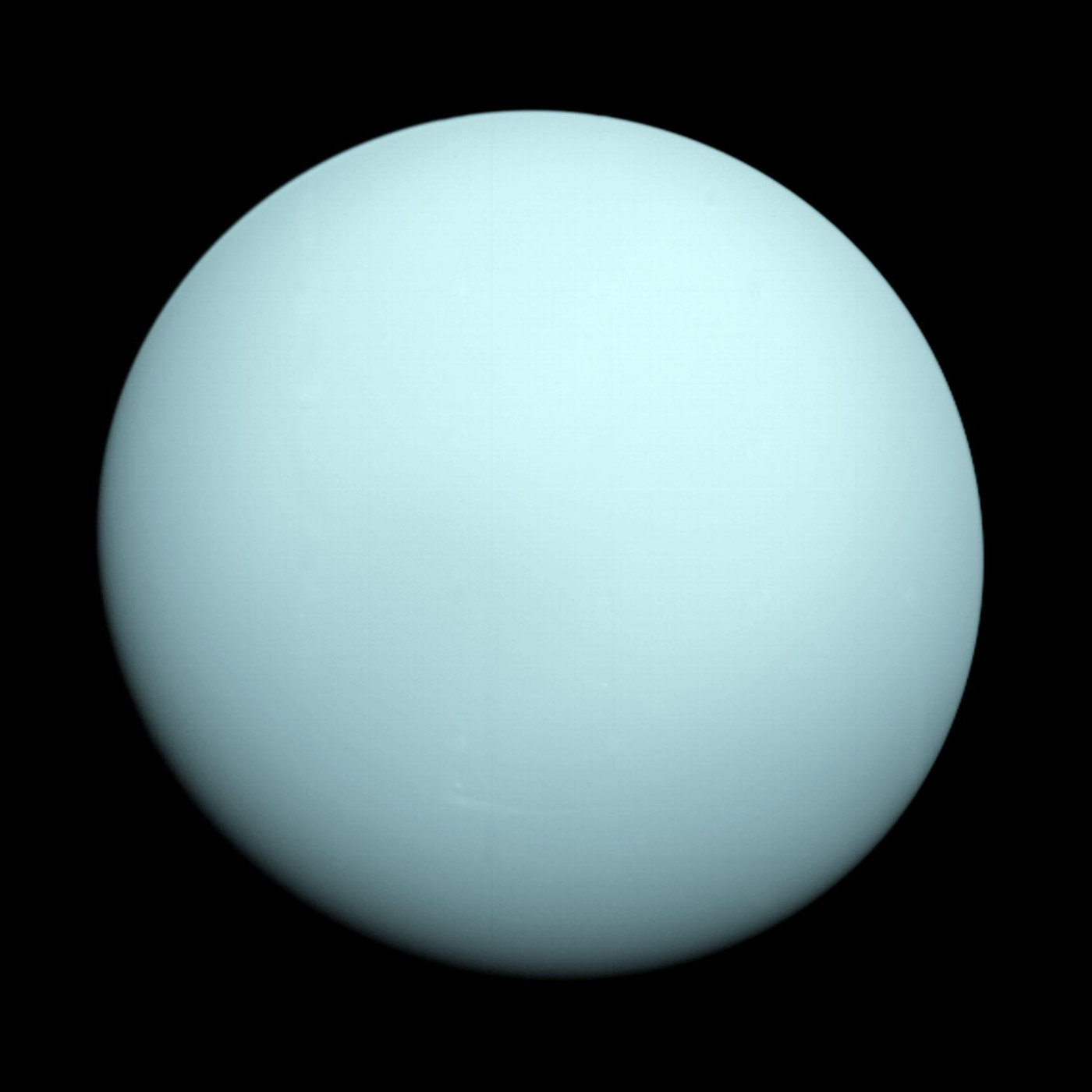
Extreme seasons
An 84-year orbit on a tilted axis
With an axial tilt near 98 degrees, each pole experiences prolonged summer and winter. Voyager’s 1986 images show one part of that long cycle.
The ice giant
Hot material below cold clouds
“Ice giant” describes a compositional family. It does not imply a frozen solid interior. Gravity, atmospheric spectra and the energy budget constrain the models.
A changing magnetosphere
One encounter, unusual solar weather
Voyager found a strongly tilted and offset field. Later analysis showed that a solar-wind compression may have made the sampled environment exceptional.
More investigations
Through the instruments
Open an image for the full frame and its source.
Uranus from Voyager 2
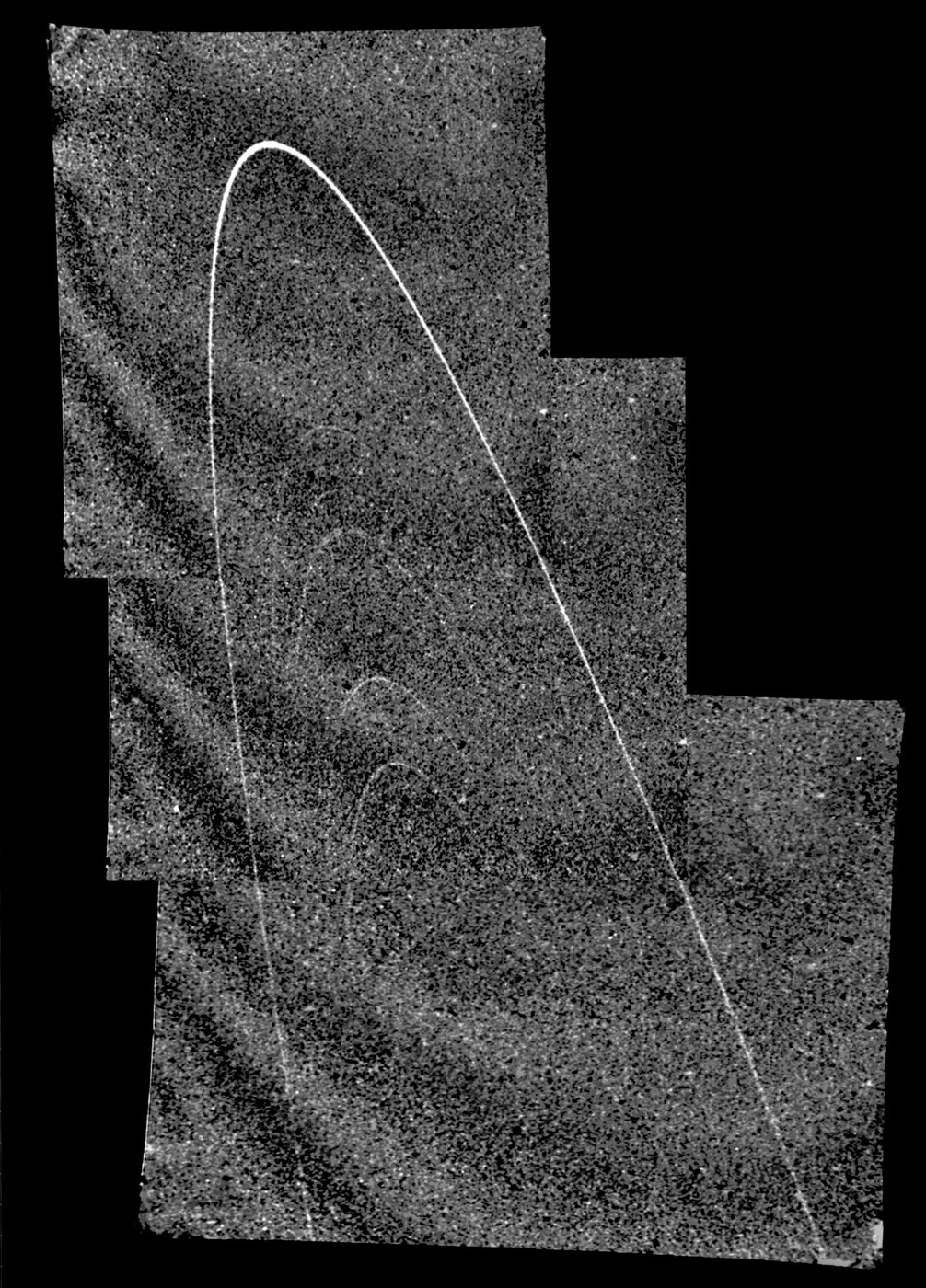
NASA/JPL-CaltechUranus’s narrow rings
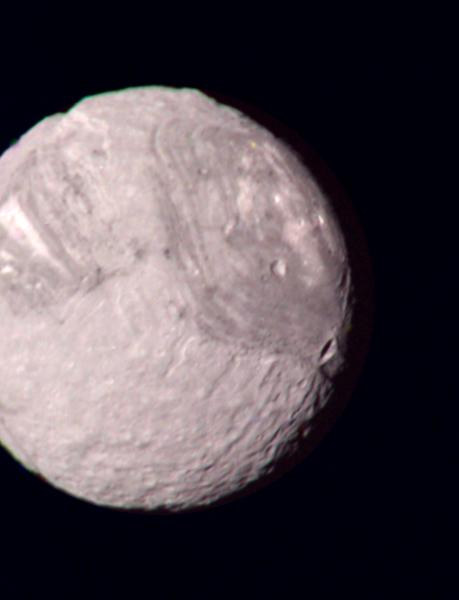
NASA/JPLMiranda’s broken terrain
NASA/JPLHubble comparison of Uranus in 2014 and 2022, showing a brighter polar cap
NASA, ESA, STScI, Amy Simon (NASA-GSFC), Michael Wong (UC Berkeley); Image Processing: Joseph DePasquale (STScI)Ridged terrain and cratered ground on Miranda photographed by Voyager 2
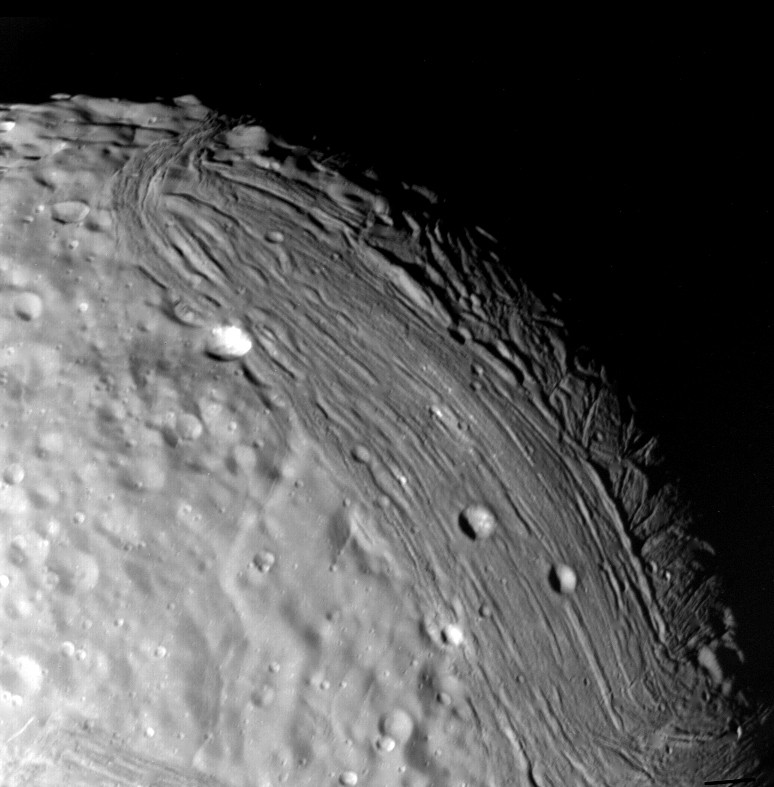
NASA/JPLChevron-shaped ridges and contrasting geological regions on Miranda
NASA/JPLBanded scarps and a deep trough on Miranda
NASA/JPLMissions & milestones
1 launch records · 0 linked events
1 related records
No records match these filters.
Programs (1)
About these records
The source cohort includes dedicated missions, attempts and reviewed scientific flybys or gravity assists. Launch outcomes describe the recorded flight. They do not establish whether an old spacecraft is operating today. Events show published targets unless the record confirms an outcome.