

木星
この天体の資料・解説は英語です。
Jupiter’s Great Red Spot is a long-lived atmospheric vortex whose visible clouds form only the outermost view. Juno’s microwave and gravity measurements constrain how storms and jets extend below the cloud tops. The planet’s rapid rotation helps organise its bands and circulation, while its internal heat supplies energy beyond absorbed sunlight. Comparing different instruments reveals why a colourful cloud image cannot be read as a complete map of the weather system.
- 平均直径
- 139,822 km
- 自転周期
- 9 h 56 min
- 年
- 11.86 Earth years
The Great Red Spot
Hundreds of kilometres beneath the clouds
Juno combined microwave observations with precise gravity measurements to constrain the depth of Jupiter’s long-lived vortex.
Inside Jupiter
Reading the gravity field
Tiny changes in a spacecraft’s motion constrain the mass below the clouds. Juno’s results support a broad, dilute heavy-element core.
A system of worlds
Volcanoes, ice and radiation
Io’s volcanism, Europa’s icy shell and Jupiter’s intense particle environment connect the moons to their parent planet. Explore the complete satellite catalog.
ほかの調査内容
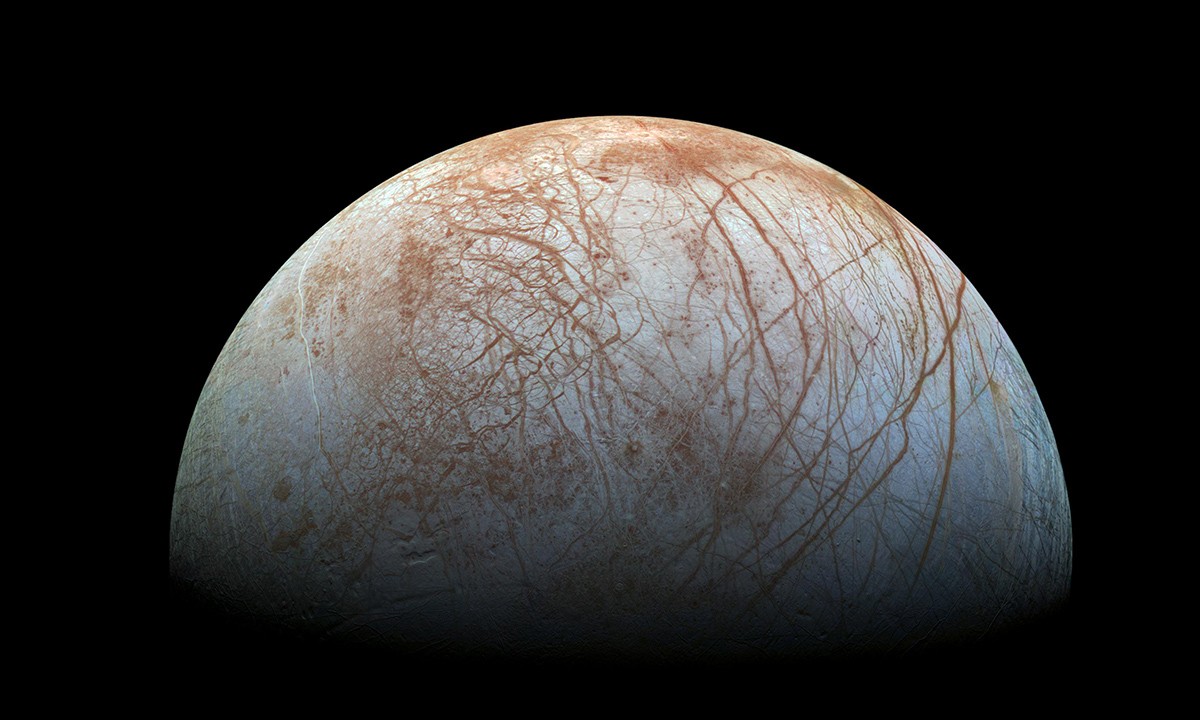
How we investigate Europa’s hidden ocean
4 min read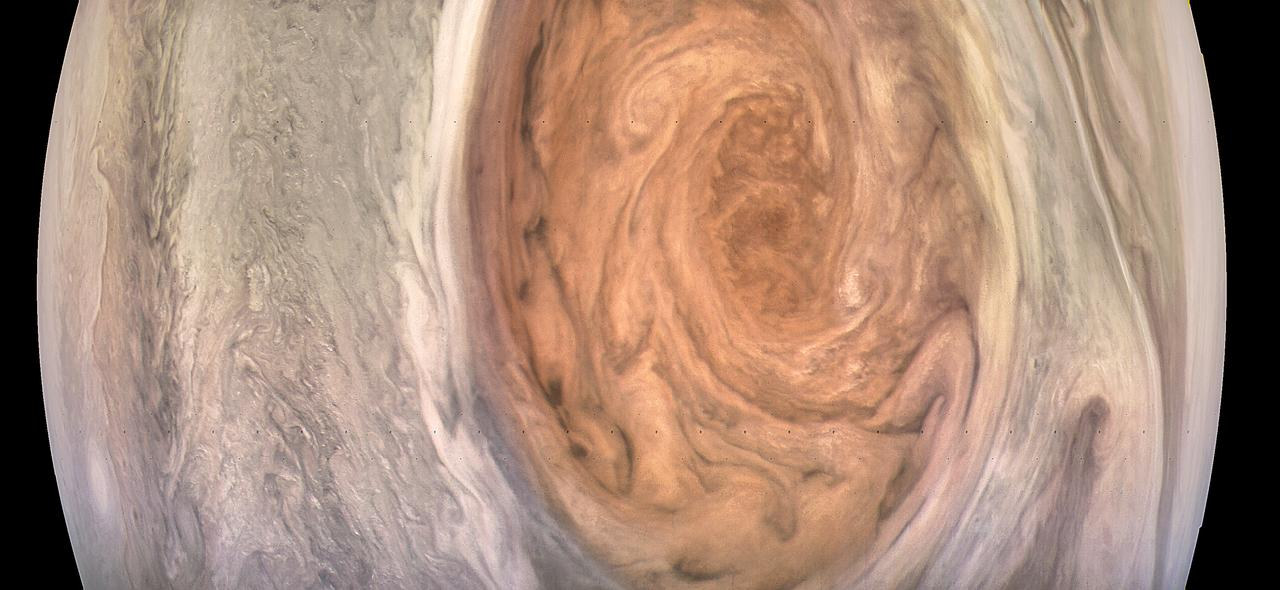
How deep does Jupiter’s Great Red Spot go?
4 min read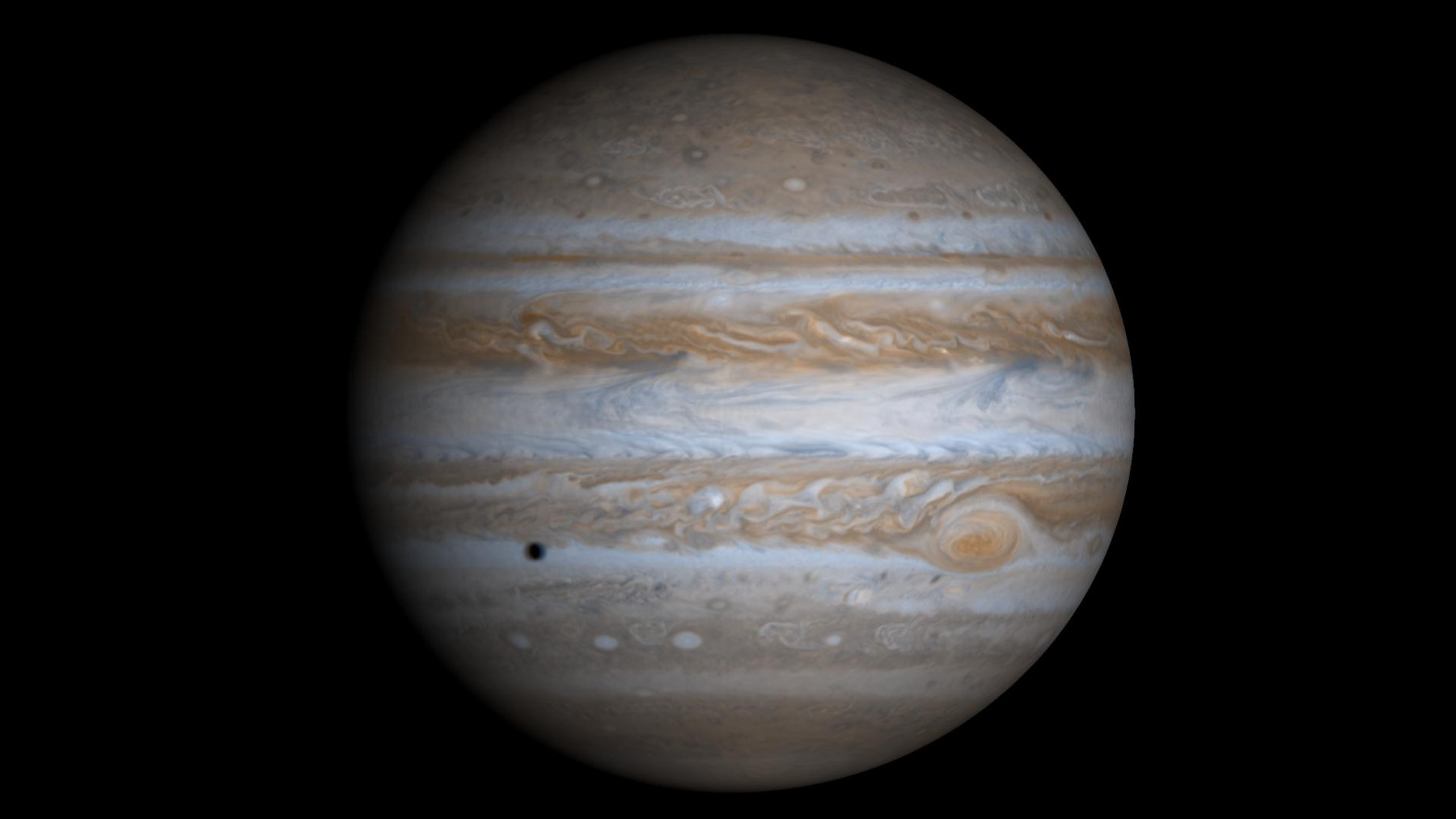
How Juno weighs Jupiter’s hidden interior
3 min read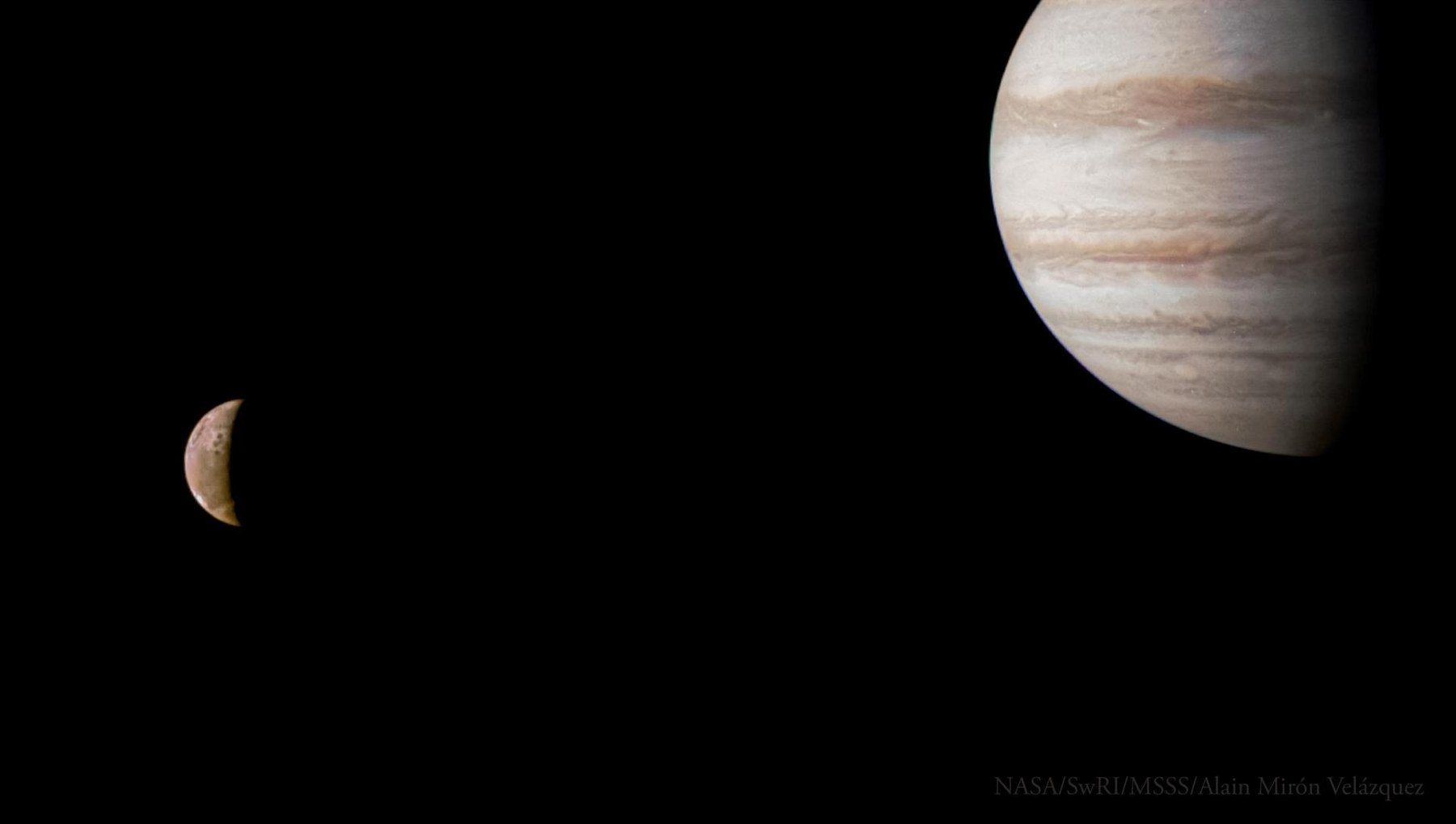
Why Jupiter must be explored with its moons
3 min read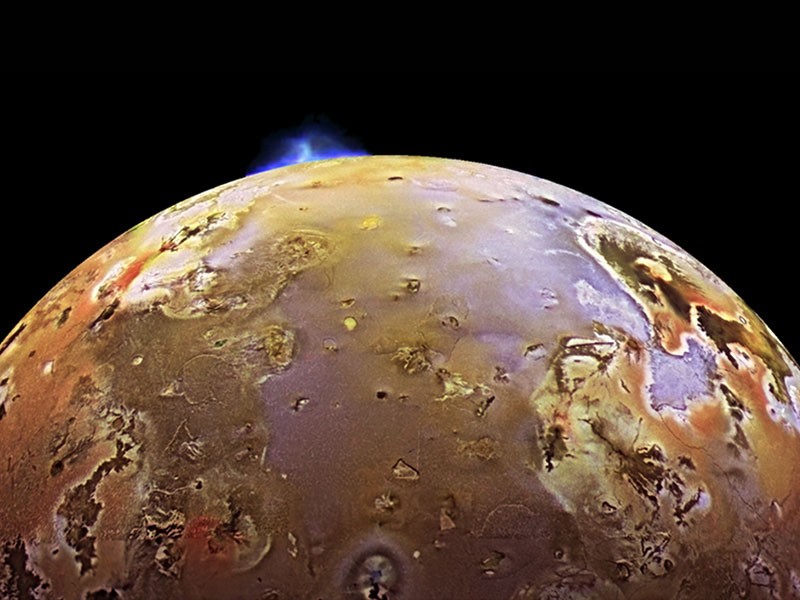
What keeps Io’s volcanoes erupting?
4 min read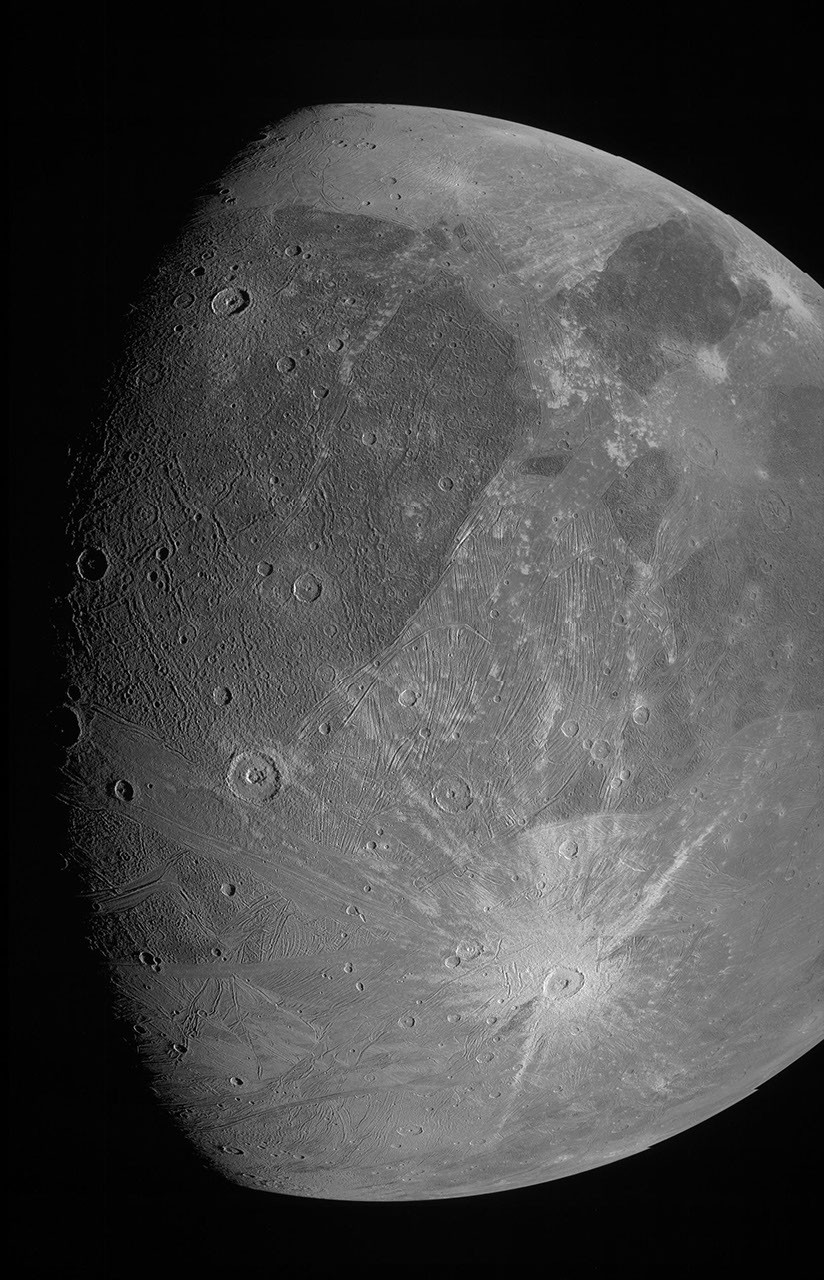
What generates Ganymede’s magnetic field?
3 min read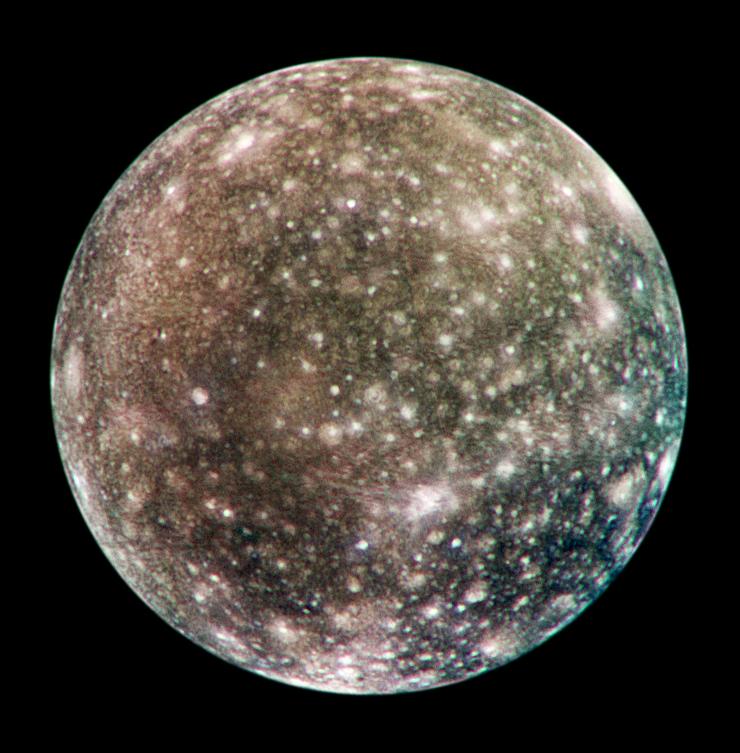
What do Callisto’s craters preserve?
4 min read観測装置が捉えた姿
画像を開くと、全体と出典を確認できます。
Jupiter through Cassini’s cameras
NASA/JPL/University of ArizonaJupiter’s north-polar cyclones
NASA/JPL-Caltech/SwRI/ASI/INAF/JIRAMIo beside Jupiter
Image data: NASA/JPL-Caltech/SwRI/MSSS Image processing by Alain Mirón Velázquez © CC BYThe Great Red Spot
Enhanced image by Kevin M. Gill (CC BY), using NASA/JPL-Caltech/SwRI/MSSS dataEuropa
NASA/JPL-Caltech/SETI InstituteEuropa’s fractured and disrupted terrain near Agenor Linea in enhanced colour
NASA/JPL-Caltech/SETI InstituteJuno close-up of Europa’s intersecting ridges and dark surface patches
NASA/JPL-Caltech/SwRIVoyager 1 close-up mosaic of Jupiter’s Great Red Spot and surrounding cloud bands
NASA/JPLA plume rises above Io’s limb over a yellow and orange volcanic surface
NASA/JPL/University of ArizonaTwo Juno views of Io with infrared volcanic hot spots overlaid
NASA/JPL-Caltech/SwRI/ASI/INAF/JIRAMVoyager mosaic of Loki Patera and surrounding volcanic plains on Io
NASA/JPL/USGSGanymede’s bright rays and grooved terrain in a Juno spacecraft image
NASA/JPL-Caltech/SwRIUltraviolet auroral emission overlaid on a visible-light image of Ganymede
NASA, ESA, and J. Saur (University of Cologne, Germany)Grooved bands and cratered terrain intersecting on Ganymede
NASA/JPL/Brown UniversityBright impact scars cover Callisto’s darker surface
NASA/JPLCallisto’s Valhalla impact structure with an enlarged view of its concentric rings
NASA/JPL/ASUA chain of overlapping impact craters on Callisto
NASA/JPL/ASUMissions & milestones
11 launch records · 16 linked events
27 related records
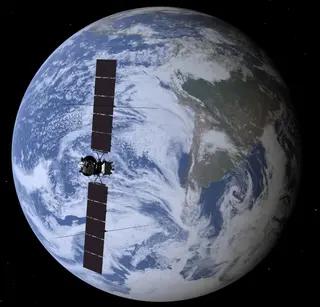
Europa Clipper Earth Flyby
2026年12月・日付未定
Jet Propulsion Laboratory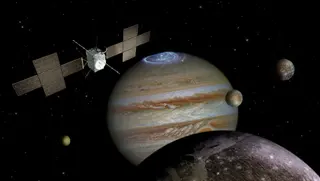
Juice Earth Flyby
2029年1月・日付未定
European Space AgencyJuice Jupiter Orbit Insertion
2031年7月・日付未定
European Space AgencyJuice Ganymede Orbit Insertion
2034年12月・日付未定
European Space AgencyJuice Ganymede Impact
日時未定
European Space Agency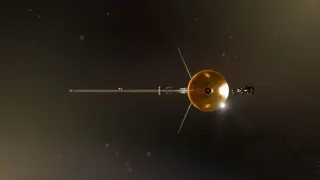
Voyager 1 Light-Day Mission Update
November 19, 2026 · UTC
Jet Propulsion LaboratoryJuice Earth Flyby
September 28, 2026 · UTC
European Space AgencyJuice Venus Flyby
August 31, 2025 · UTC
European Space Agency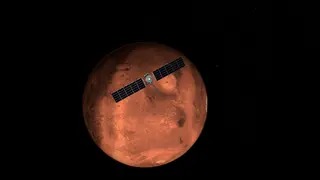
Europa Clipper Mars Flyby
March 1, 2025 · UTC
Jet Propulsion Laboratory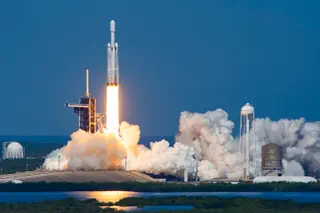
Europa Clipper
October 14, 2024 · UTC
SpaceX · Falcon Heavy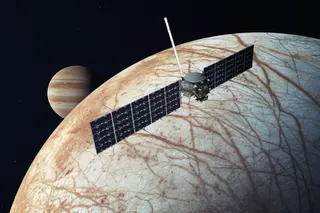
Europa Clipper News Conference
September 17, 2024 · UTC
Jet Propulsion LaboratoryEuropa Clipper Update Briefing
September 9, 2024 · UTC
Jet Propulsion LaboratoryJuice Moon-Earth Flyby
August 19, 2024 · UTC
European Space AgencyEuropa Clipper One Year From Launch Public Talk
October 20, 2023 · UTC
National Aeronautics and Space Administration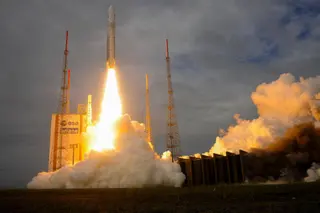
JUICE (JUpiter ICy moons Explorer)
April 14, 2023 · UTC
Arianespace · Ariane 5 ECA+ESA JUICE Pre-Launch Press Briefing
April 6, 2023 · UTC
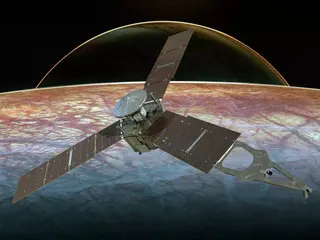
Juno Europa Flyby
September 29, 2022 · UTC
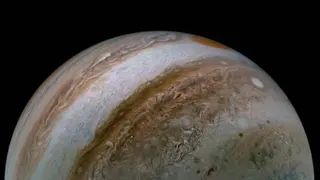
Juno's New Findings Press Conference
October 28, 2021 · UTC
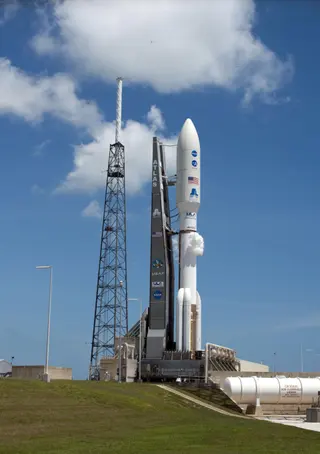
Juno
August 5, 2011 · UTC
United Launch Alliance · Atlas V 551New Horizons
January 19, 2006 · UTC
United Launch Alliance · Atlas V 551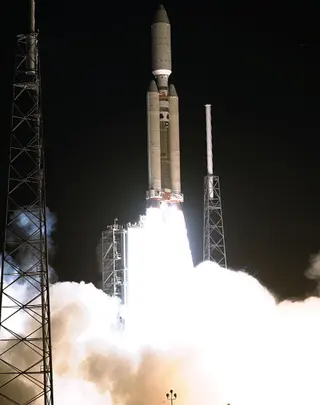
Titan IVB/Centaur | Cassini-Huygens
October 15, 1997 · UTC
Lockheed Martin · Titan IVB/Centaur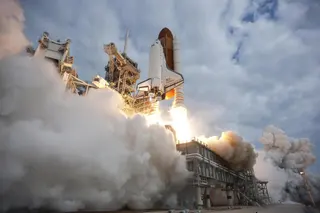
STS-41
October 6, 1990 · UTC
Lockheed Space Operations Company · Space ShuttleSTS-34 (Galileo)
October 18, 1989 · UTC
Lockheed Space Operations Company · Space Shuttle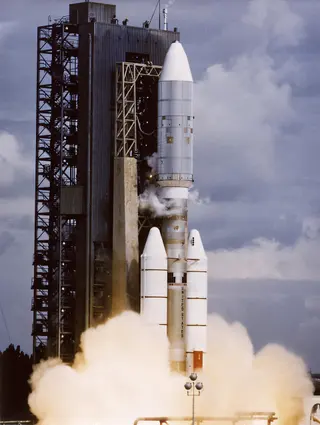
Voyager 1
September 5, 1977 · UTC
Lockheed Martin · Titan IIIEVoyager 2
August 20, 1977 · UTC
Lockheed Martin · Titan IIIE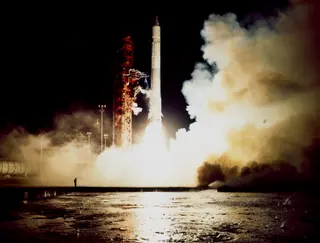
Pioneer 11
April 6, 1973 · UTC
United States Air Force · Atlas SLV-3D Centaur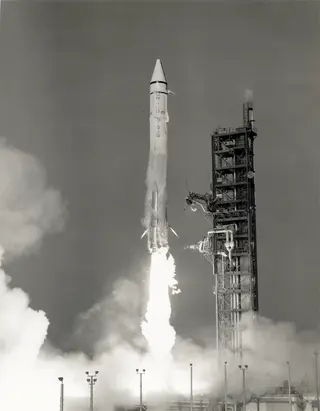
Pioneer 10
March 3, 1972 · UTC
United States Air Force · Atlas SLV-3C Centaurこの条件に合う記録はありません。
Programs (2)
この記録について
The source cohort includes dedicated missions, attempts and reviewed scientific flybys or gravity assists. Launch outcomes describe the recorded flight. They do not establish whether an old spacecraft is operating today. Events show published targets unless the record confirms an outcome.