

What do Callisto’s craters preserve?
Galileo’s images of Callisto show bright impact scars scattered across dark, ancient ground. Its magnetic measurements raised a separate question: could a moon that preserves so much old terrain still contain a salty ocean?
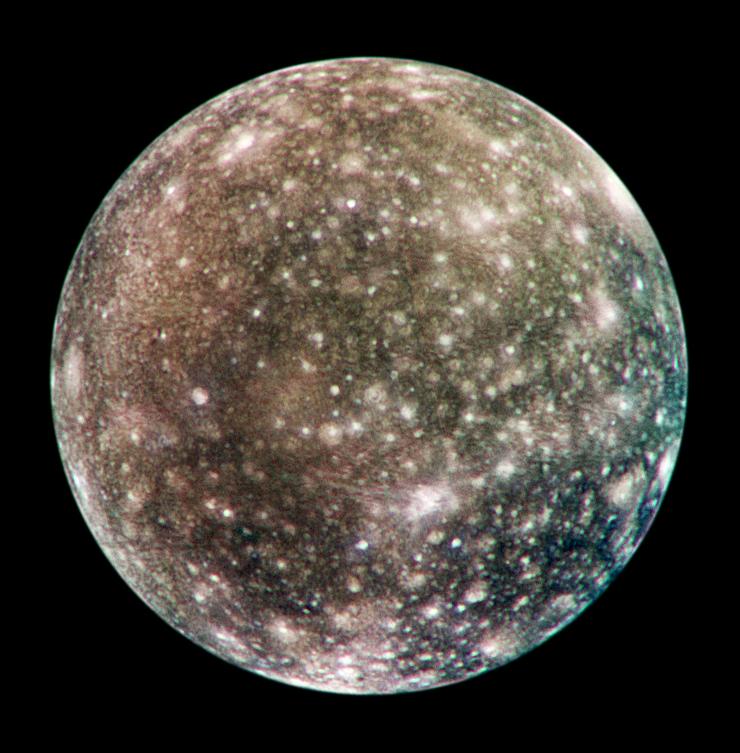
A surface without a widespread reset
An impact crater survives only until something removes or obscures it. Lava can bury it, tectonic deformation can break it apart, and erosion can wear down its walls. On an icy moon, warmer material can also deform slowly enough to soften old relief. [1] [2]
Callisto retains an exceptionally dense record of impacts. Large areas of its surface are approximately four billion years old, although individual craters formed at different times. The overall appearance indicates much less large-scale resurfacing than on nearby Europa or volcanically active Io. [1] [2]
That makes the craters useful records of relative history. A smaller crater lying across the rim of a larger one formed later. A region with many preserved craters has generally accumulated impacts for longer than a recently renewed surface, provided differences in the impact environment and preservation are considered. [1] [2]
A large impact changes more than the central pit
Valhalla, Callisto’s largest multiring impact structure, contains a bright central region surrounded by concentric rings rather than one simple bowl. These structures record deformation around a large collision, extending far beyond the central excavation. [1]
Ice and rock under an enormous impact behave differently from a rigid block struck by a small stone. Material moves, the ground collapses and fractures spread through the surrounding crust. The resulting rings preserve information about the properties of the target as well as the energy of the impact. [1]
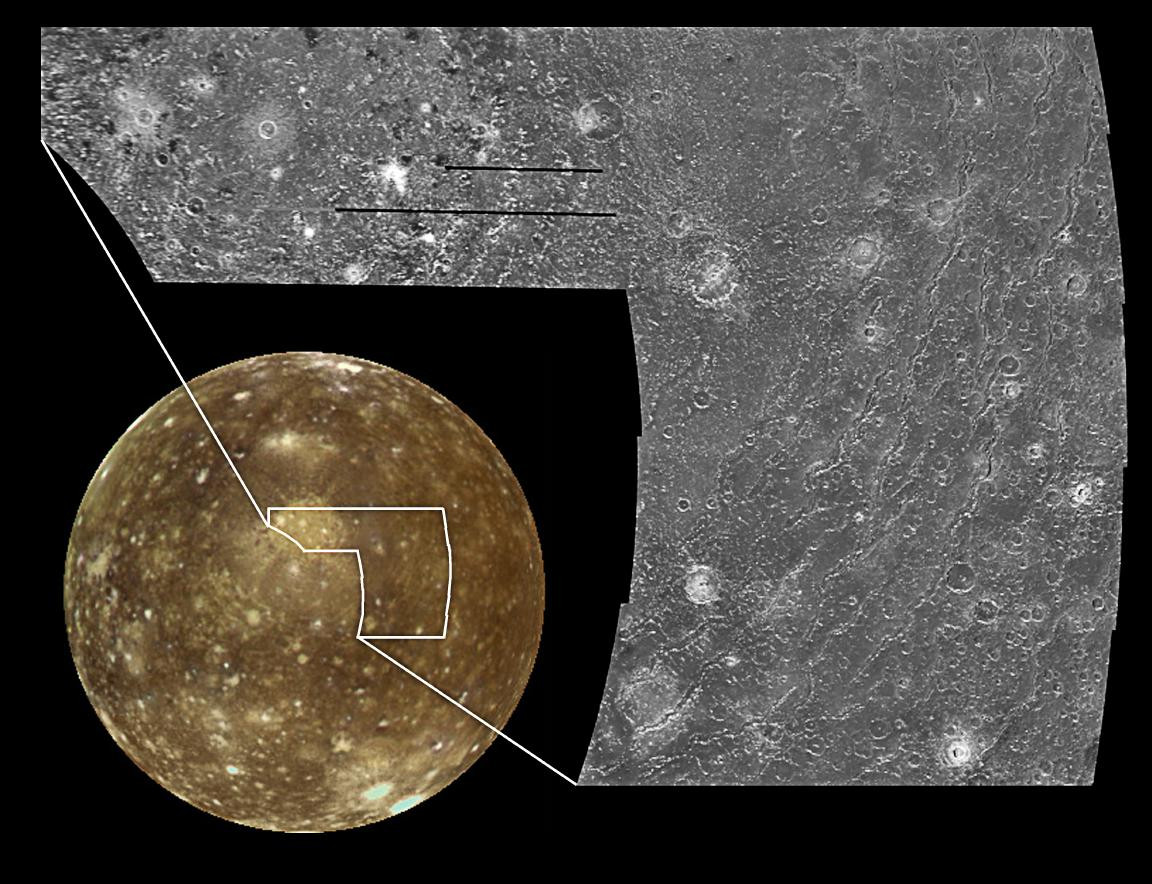
The bright markings are also informative. Freshly exposed or redistributed icy material can contrast strongly with darker surrounding ground. A bright scar does not require a recent eruption: an impact can uncover material that was previously below the weathered surface. [1]
An ancient landscape still changes locally
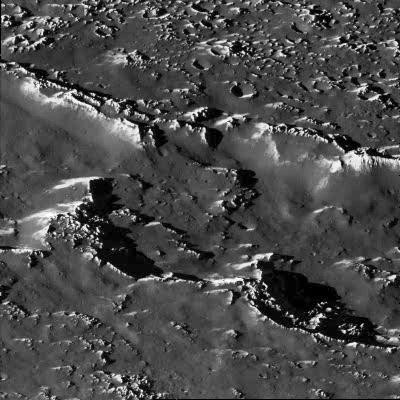
Calling Callisto’s ground ancient does not mean every grain has remained still. Later impacts excavate earlier deposits, smaller collisions break down exposed material, and surface ice can be redistributed or lost. These processes work on terrain whose large-scale structure has survived for a very long time. [1]
The visible crater pattern is therefore a record filtered by preservation. Two areas can have different small-crater populations because their surface materials have evolved differently, even if both sit on ancient ground. Interpreting the record requires mapping the terrain rather than counting every circular feature as an independent clock. [1]
Why Juice will compare Callisto with its neighbours
Juice will investigate Callisto alongside Ganymede and Europa. Those moons formed in the same broad Jovian setting but preserve very different geological histories. Comparing their ice, internal structures and magnetic environments can help explain why some surfaces changed dramatically while Callisto retained much of its impact record. [2] [1]
Callisto’s value lies in that combination. Its visible ground offers a long record of collisions; its possible conducting interior prevents the photographs from being the whole story. The next measurements need to connect the old surface to the physical state beneath it, rather than infer one directly from the other. [2] [1]
Sources & image credits
Related reading and objects
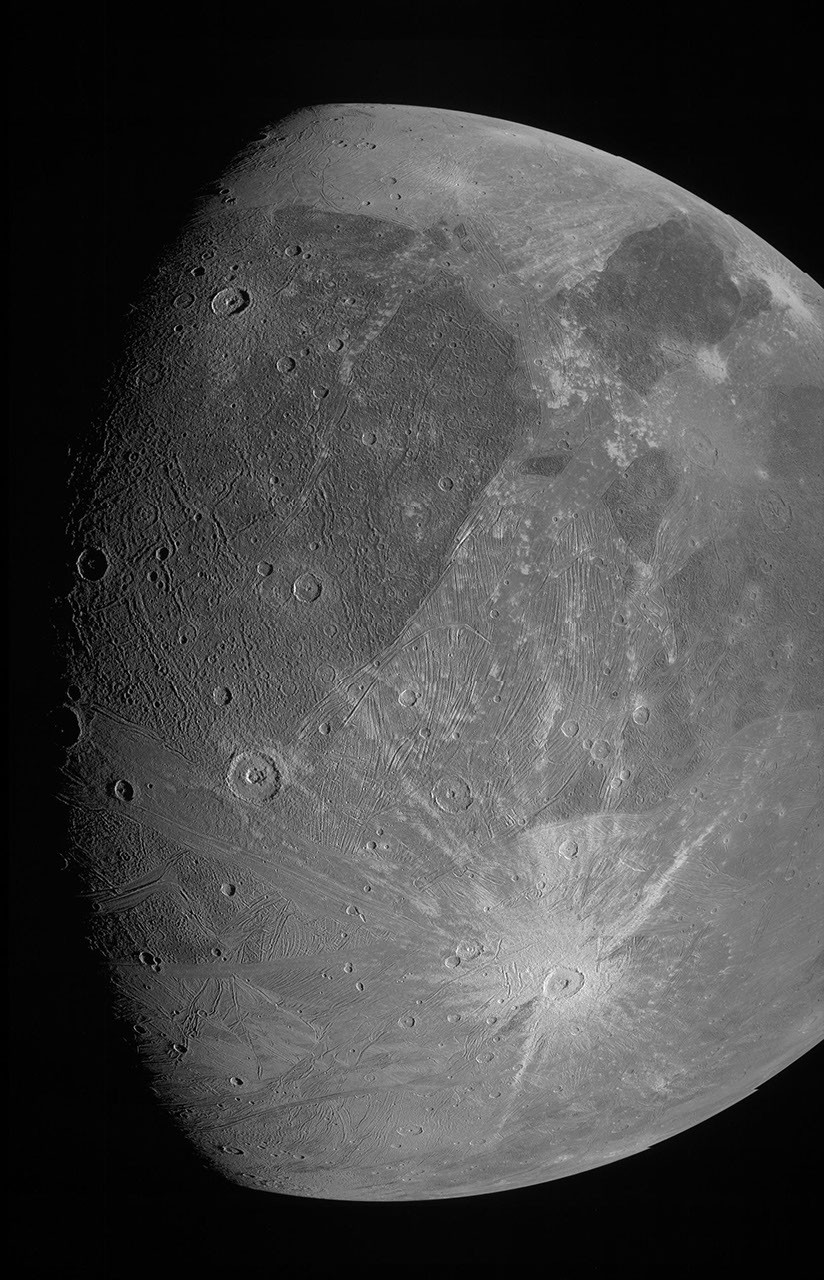
What generates Ganymede’s magnetic field?
When Galileo flew past Ganymede in 1996, its instruments found something no spacecraft had measured at another moon: an internally generated magnetic field. That discovery made the largest moon of Jupiter a place to investigate both a metallic core and a buried ocean.
How we investigate Europa’s hidden ocean
Europa Clipper is travelling towards Jupiter to investigate whether Europa has environments that could support life. The target lies largely beneath ice. Its investigation starts with a magnetic response that Galileo measured and a fractured surface that cameras can see.